Glass catfish
Kryptopterus vitreolus
Also known as Asian Glass Cat
FreshwaterFish
Care at a glance
- Temperature
- 70–79°F
- 21–26°C
- pH
- 6.0–7.0
- Adult size
- 2.8 in
- 7 cm
- Minimum tank
- 30 gal
- 115 L
- Temperament
- Peaceful
- Social behavior
- Schooling
- Swim level
- Middle
- Difficulty
- Easy
- Breeding
- No record
- Rarity
- Common
- Family
- Siluridae
- Origin
- Thailand
Overview
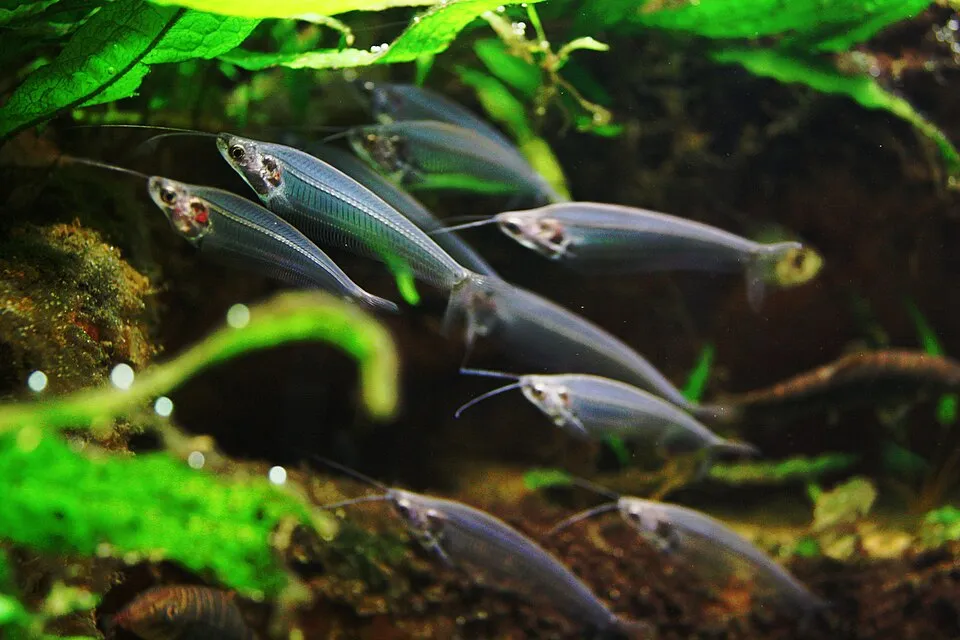
These are true schooling fish. Keep at least six, and a group of eight or more looks much better and keeps them calm. A lone glass catfish or a small group will hide, stress, and often waste away. They hang in the middle of the water column, frequently facing into the flow, and they are peaceful with other calm fish. Aim for the low to mid 20s C and a pH around 6 to 7. Feed small live and frozen foods like daphnia and baby brine shrimp, along with fine micro pellets.
In the wild
Glass catfish come from slow rivers and forest streams in Thailand. The water there is soft, slightly acidic, and shaded, with gentle flow. Give them a planted tank with some open swimming space, subdued lighting, and a soft current. Driftwood and tannins help them settle in and feel secure.
Good to know
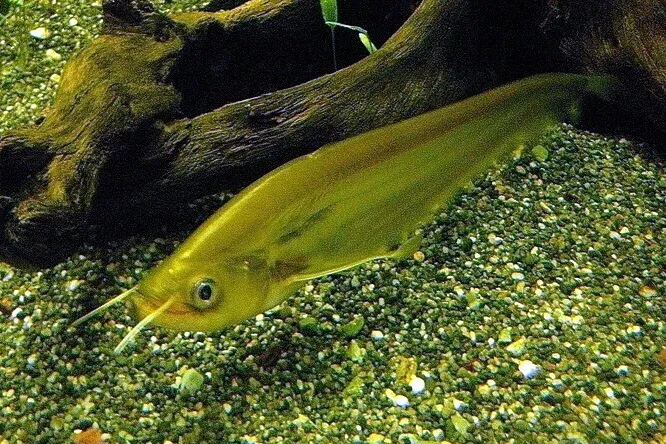
This is a catfish in the family Siluridae. Adults reach about 7 cm. The transparent body is real, not a trick of the light. You can see the spine and internal organs through the flesh. Breeding in home aquariums is essentially undocumented, and most fish in the trade are wild caught.
Did you know
They hold a slight head-up, tail-down posture while hovering in place, almost suspended in the water. Watch under angled light and you can see flashes of color refracted through the clear body.
Weekly picks
Tank mates
Glass catfish is a peaceful, schooling species that keeps to the middle. These picks share a community profile with it, are safe together in both directions, and overlap on water type, temperature and pH.
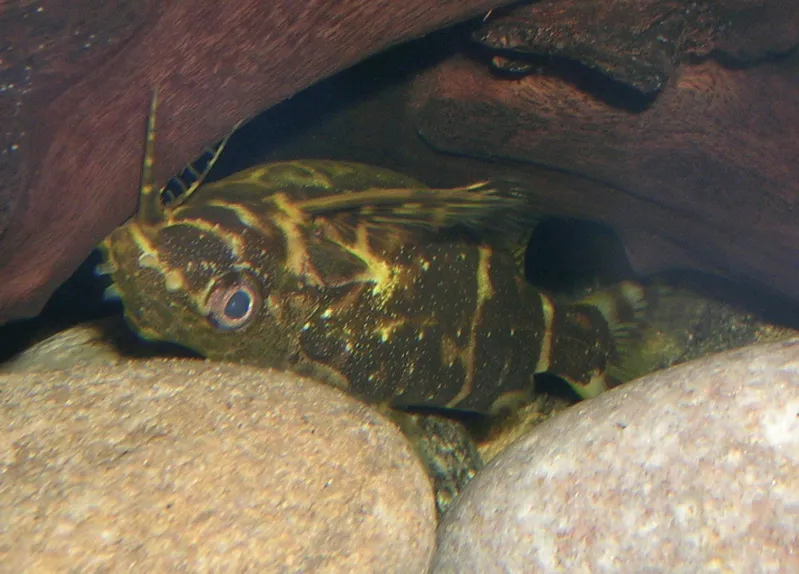
Upside-down catfish
Synodontis nigriventris
Freshwater3.9 in (10 cm) · 30 gal (115 L)75–82°F (24–28°C)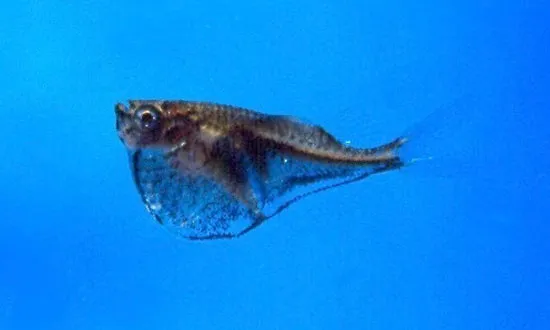
Blackwing hatchetfish
Carnegiella marthae
Freshwater1.4 in (3.5 cm) · 30 gal (115 L)68–82°F (20–28°C)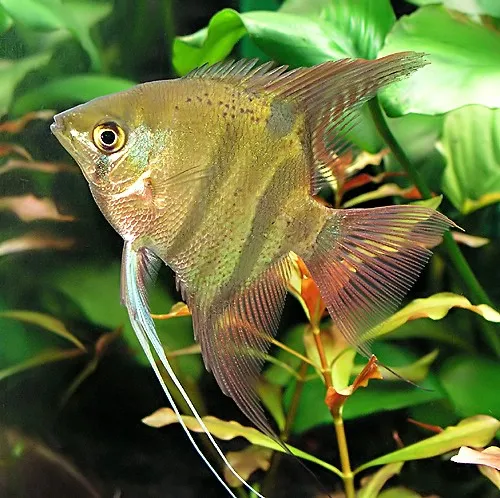
Roman nose angelfish
Pterophyllum leopoldi
Freshwater3.9 in (10 cm) · 30 gal (115 L)72–84°F (22–29°C)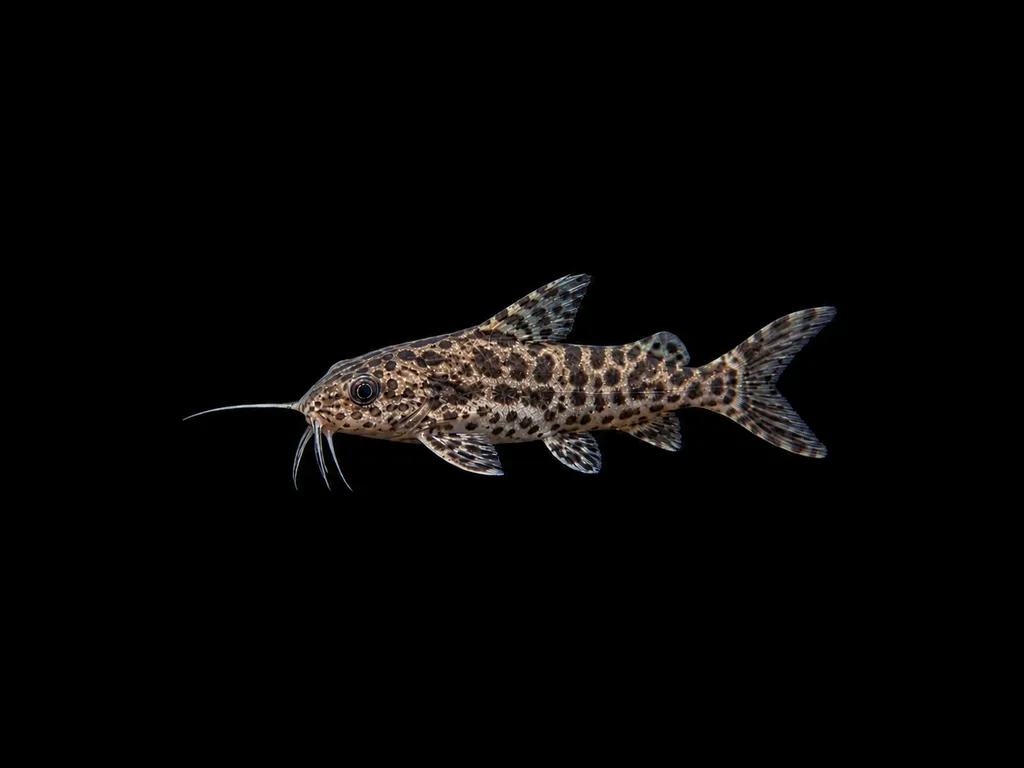
Bugeye squeaker
Synodontis contractus
Freshwater3.9 in (10 cm) · 30 gal (114 L)72–79°F (22–26°C)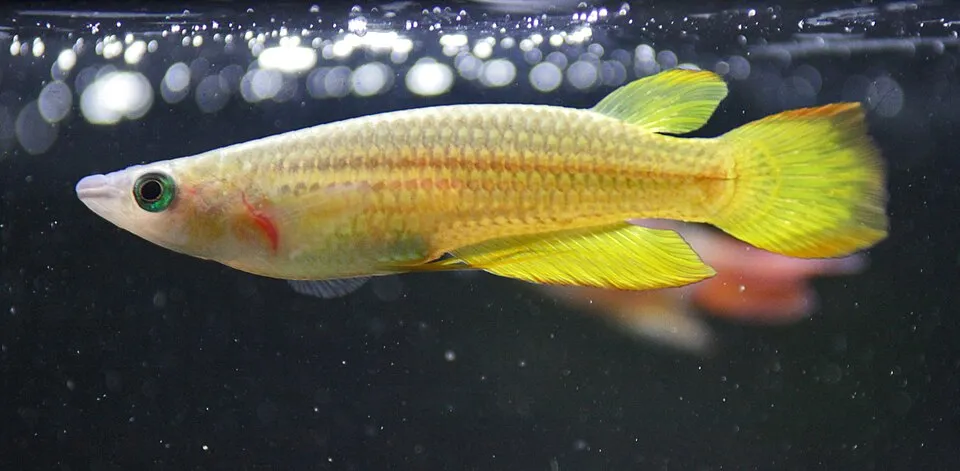
Striped panchax
Aplocheilus lineatus
Freshwater4.3 in (11 cm) · 30 gal (115 L)72–77°F (22–25°C)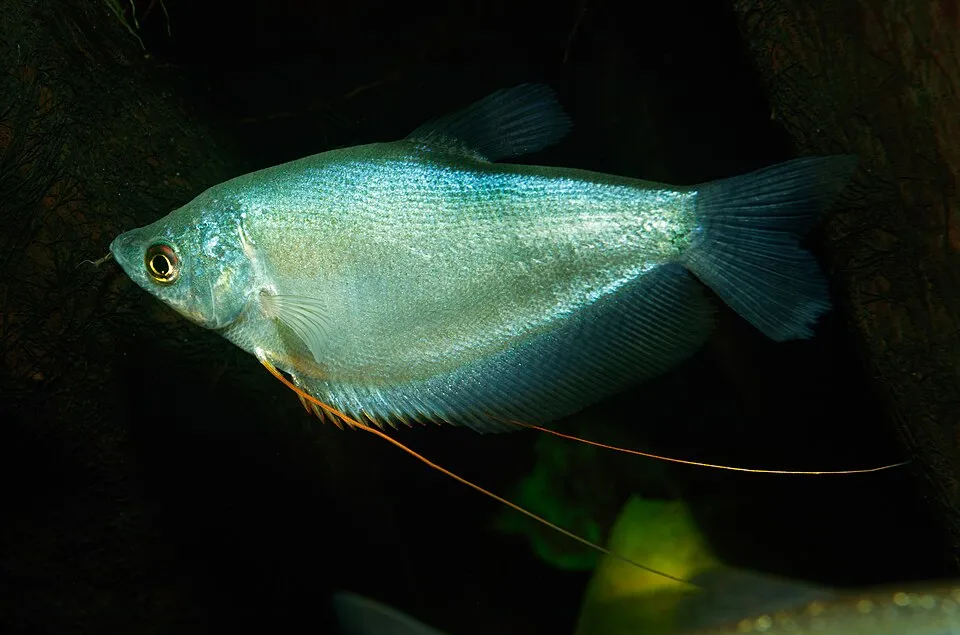
Moonlight gourami
Trichopodus microlepis
Freshwater5.9 in (15 cm) · 30 gal (115 L)77–86°F (25–30°C)
Common questions
What size tank does a Glass catfish need?
A Glass catfish needs at least 30 gal (115 L). It spends most of its time in the middle.
What temperature and pH does a Glass catfish need?
A Glass catfish is comfortable at 70–79°F (21–26°C) with a pH of 6.0–7.0.
How big does a Glass catfish get?
An adult Glass catfish reaches about 2.8 in (7 cm).
Does a Glass catfish need a group?
Yes. A Glass catfish is a schooling species and should be kept in a group, not singly.
Related species
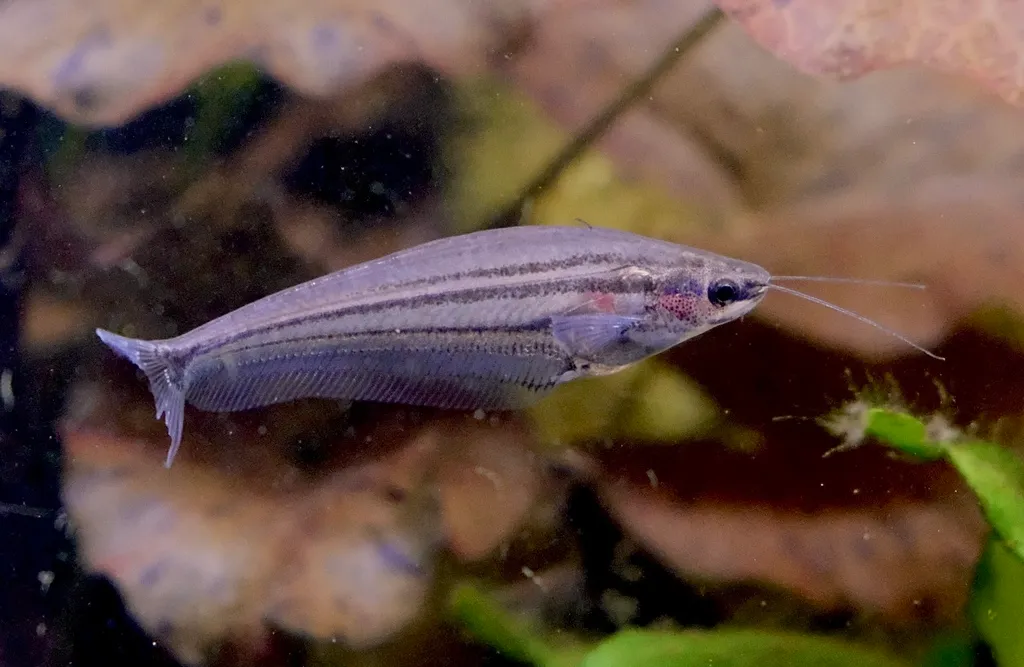 3.5 in (9 cm)36 gal (135 L)70–79°F (21–26°C)
Striped glass catfish
Kryptopterus macrocephalus
3.5 in (9 cm) · 36 gal (135 L)
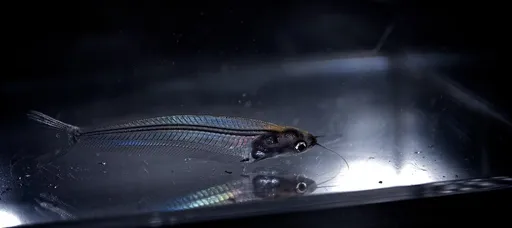 5.9 in (15 cm)26 gal (100 L)70–79°F (21–26°C)
True glass catfish
Kryptopterus bicirrhis
5.9 in (15 cm) · 26 gal (100 L)
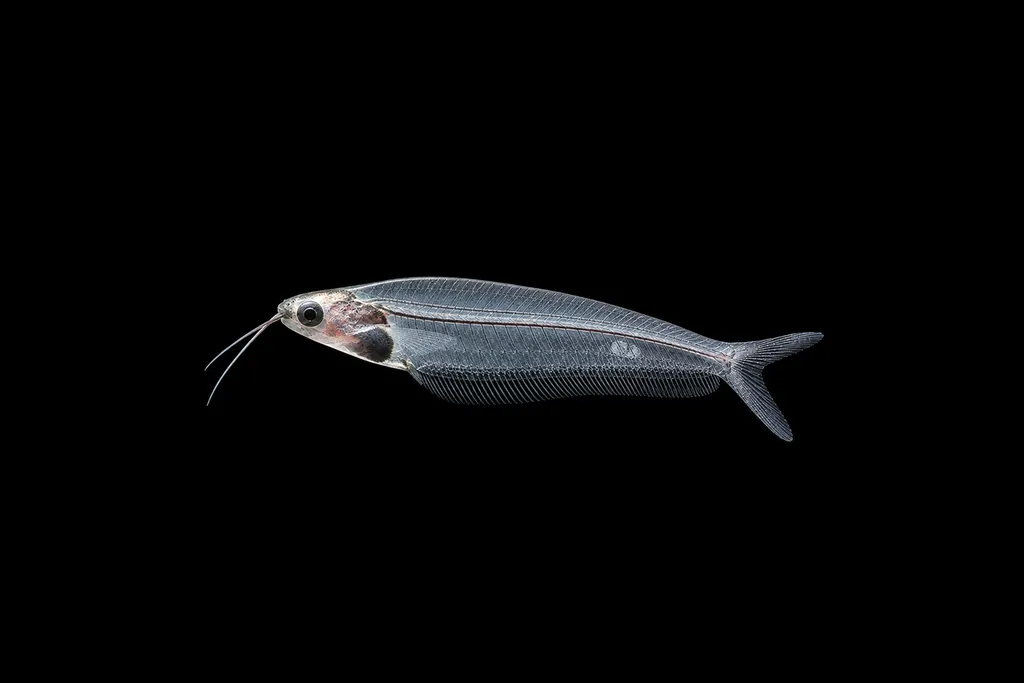 11.8 in (30 cm)119 gal (450 L)73–81°F (23–27°C)
Mekong glass sheatfish
Kryptopterus limpok
11.8 in (30 cm) · 119 gal (450 L)
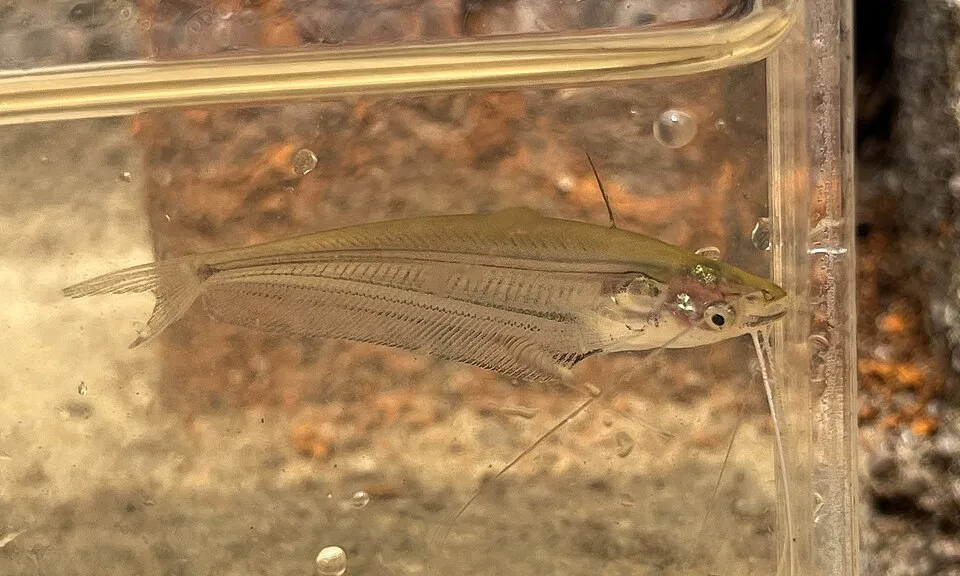 6.5 in (16.5 cm)45 gal (170 L)70–82°F (21–28°C)
Borneo glass catfish
Ompok eugeneiatus
6.5 in (16.5 cm) · 45 gal (170 L)
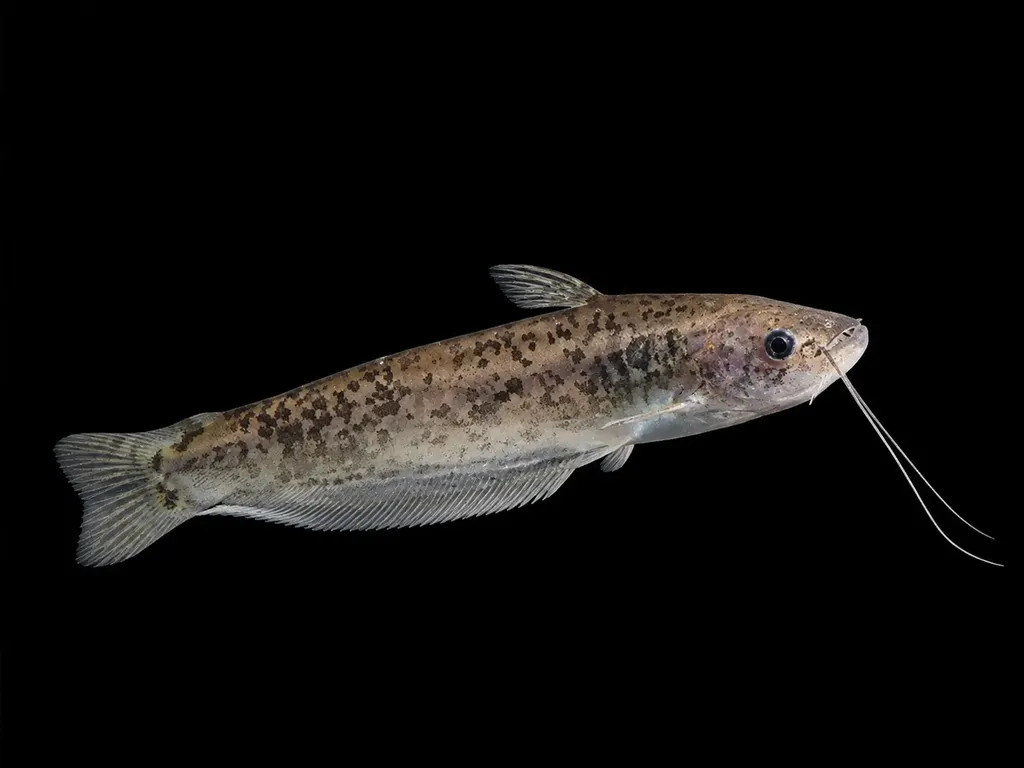 11.8 in (30 cm)106 gal (400 L)73–81°F (23–27°C)
Ompok catfish
Ompok pabda
11.8 in (30 cm) · 106 gal (400 L)
 31.5 in (80 cm)238 gal (900 L)73–81°F (23–27°C)
Blue neon sheatfish
Belodontichthys dinema
31.5 in (80 cm) · 238 gal (900 L)