Borneo glass catfish
Ompok eugeneiatus
FreshwaterFish
Care at a glance
- Temperature
- 70–82°F
- 21–28°C
- pH
- 6.0–7.5
- Adult size
- 6.5 in
- 16.5 cm
- Minimum tank
- 45 gal
- 170 L
- Temperament
- Peaceful
- Social behavior
- Schooling
- Tankmates
- With caution
- Swim level
- Middle
- Difficulty
- Difficult
- Breeding
- No record
- Rarity
- Very rare
- Family
- Siluridae
- Origin
- Malaysia, Sunda Islands
Overview
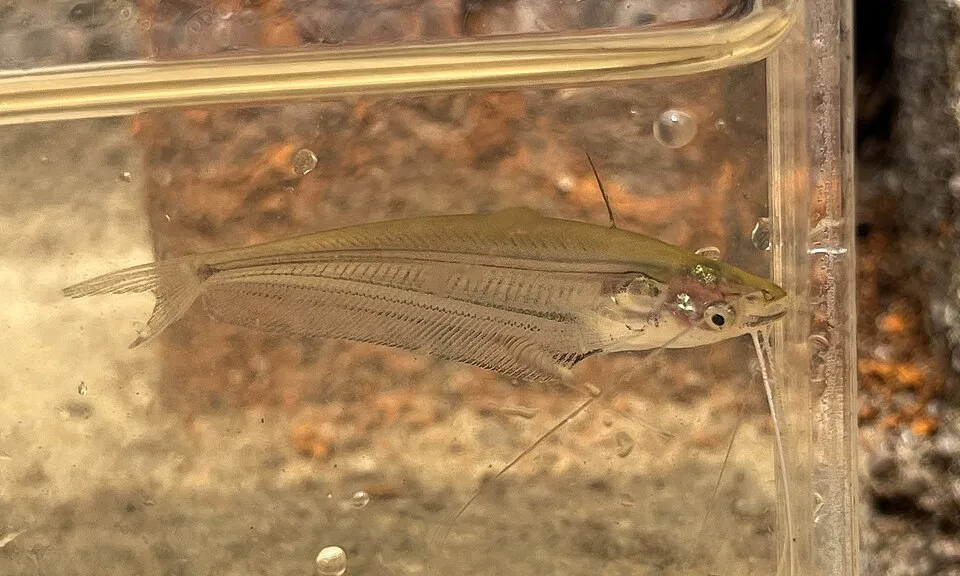
The Borneo glass catfish is a slender, active silurid that patrols open water and shaded margins rather than resting on the floor. It is peaceful and happiest in a group, so keep several together for a more settled, natural shoal. It is a mild predator that will take small fish and fry, so choose tankmates it cannot swallow, but it mixes well with calm, similarly sized community fish. Offer sinking pellets, frozen bloodworms, and small meaty foods, and provide open swimming space alongside driftwood and planted cover. It is sensitive to poor water and prone to jumping, so keep the tank clean and tightly covered, around 170 liters or larger.
In the wild
This species is found in Malaysia and the Sunda Islands, including Borneo, where it lives in soft, often tannin-stained forest rivers and streams with plenty of submerged wood and vegetation. Keep it warm, from around 21 to 28 C, with a pH between 6 and 7.5, gentle to moderate flow, and clean, well-oxygenated water. A dim tank with driftwood, roots, some dense planting, and open lanes for swimming suits it, and floating plants to soften the light help it feel secure.
Good to know
The Borneo glass catfish belongs to Siluridae, the sheatfish family, and grows to about 16.5 cm. Like its relatives it has a very long anal fin that runs most of the underside, a tiny or absent dorsal fin, and a semi-transparent, faintly iridescent body. It is a nimble, open-water hunter that feeds on small invertebrates and fish in the wild. It is considered a sensitive species to keep, and there are no established records of it breeding in home aquariums.
Did you know
Like other sheatfishes, the Borneo glass catfish has almost no dorsal fin and an anal fin that stretches nearly the length of its underside, which it ripples in a smooth wave to hover and glide through open water.
Common questions
What size tank does a Borneo glass catfish need?
A Borneo glass catfish needs at least 45 gal (170 L). It spends most of its time in the middle.
What temperature and pH does a Borneo glass catfish need?
A Borneo glass catfish is comfortable at 70–82°F (21–28°C) with a pH of 6.0–7.5.
How big does a Borneo glass catfish get?
An adult Borneo glass catfish reaches about 6.5 in (16.5 cm).
Does a Borneo glass catfish need a group?
Yes. A Borneo glass catfish is a schooling species and should be kept in a group, not singly.
Related species
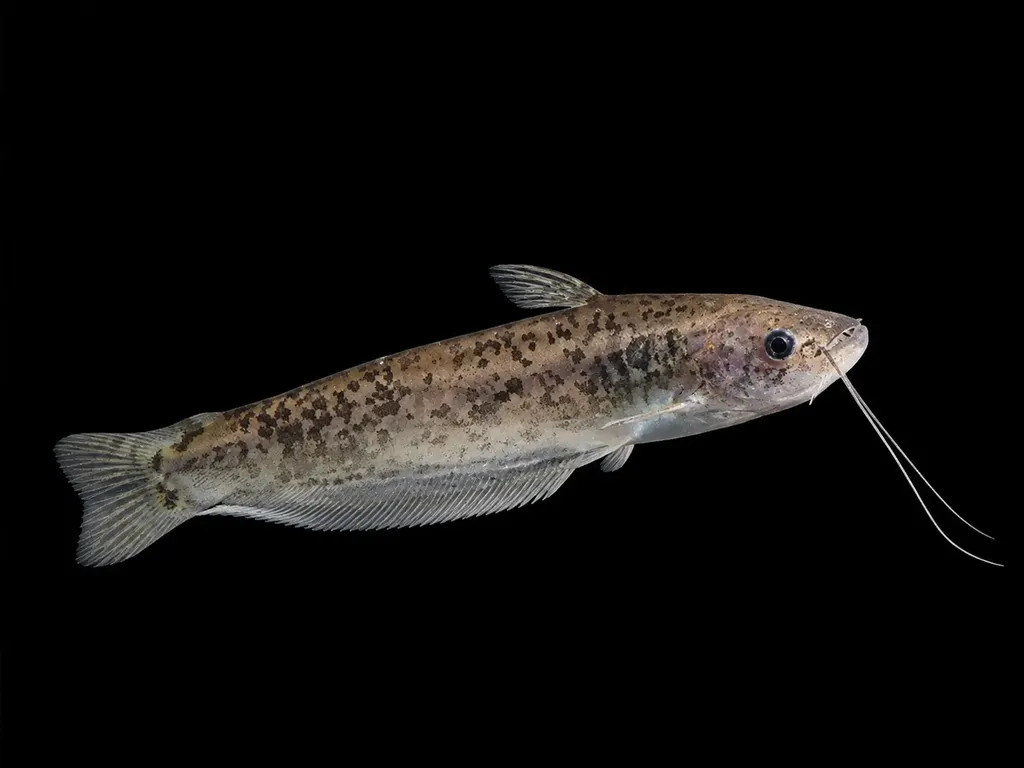 11.8 in (30 cm)106 gal (400 L)73–81°F (23–27°C)
Ompok catfish
Ompok pabda
11.8 in (30 cm) · 106 gal (400 L)
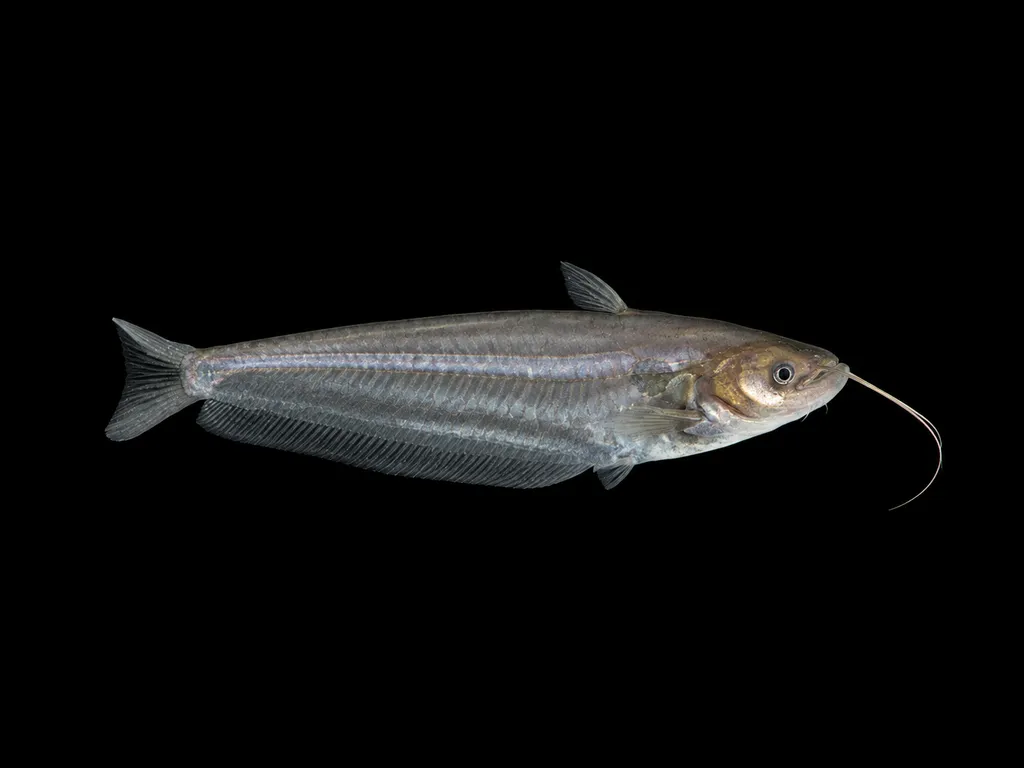 17.7 in (45 cm)53 gal (200 L)68–82°F (20–28°C)
Butter catfish
Ompok bimaculatus
17.7 in (45 cm) · 53 gal (200 L)
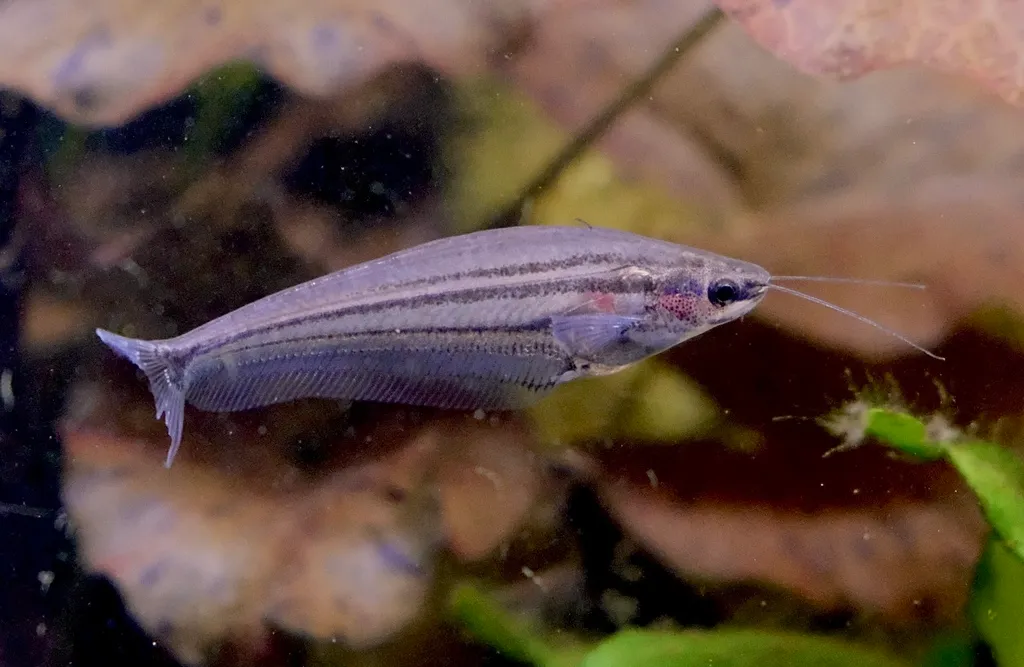 3.5 in (9 cm)36 gal (135 L)70–79°F (21–26°C)
Striped glass catfish
Kryptopterus macrocephalus
3.5 in (9 cm) · 36 gal (135 L)
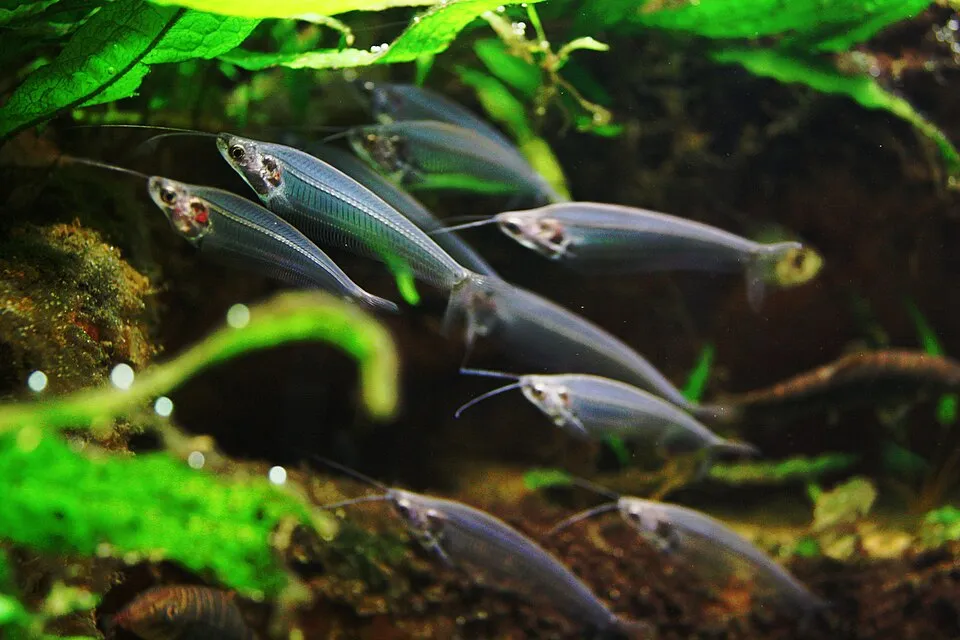 2.8 in (7 cm)30 gal (115 L)70–79°F (21–26°C)
Glass catfish
Kryptopterus vitreolus
2.8 in (7 cm) · 30 gal (115 L)
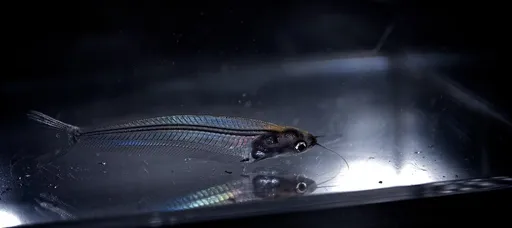 5.9 in (15 cm)26 gal (100 L)70–79°F (21–26°C)
True glass catfish
Kryptopterus bicirrhis
5.9 in (15 cm) · 26 gal (100 L)
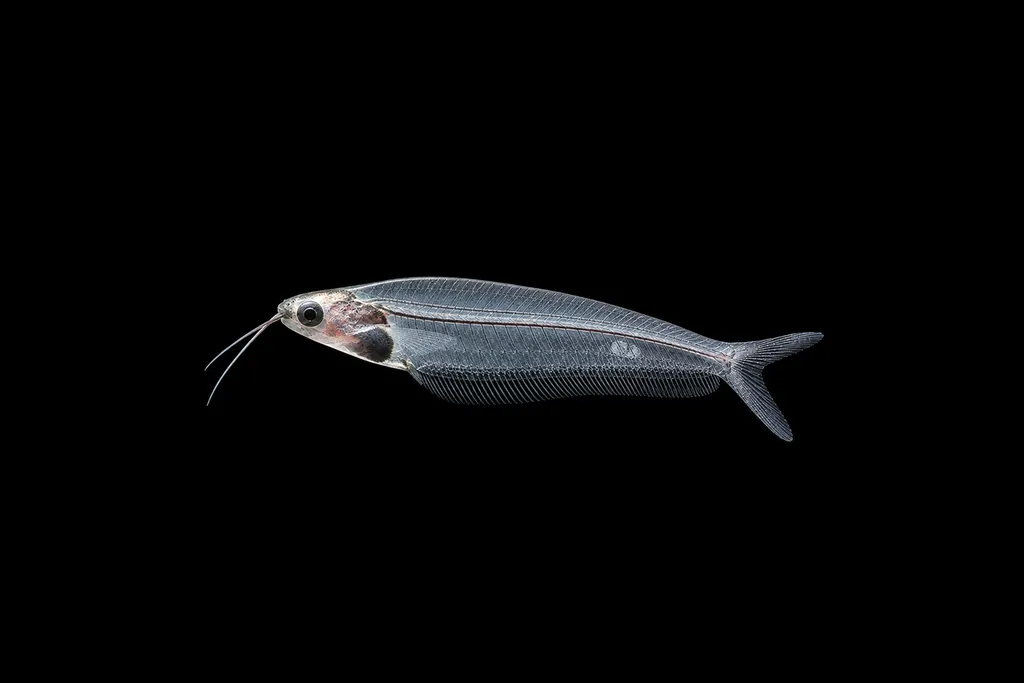 11.8 in (30 cm)119 gal (450 L)73–81°F (23–27°C)
Mekong glass sheatfish
Kryptopterus limpok
11.8 in (30 cm) · 119 gal (450 L)