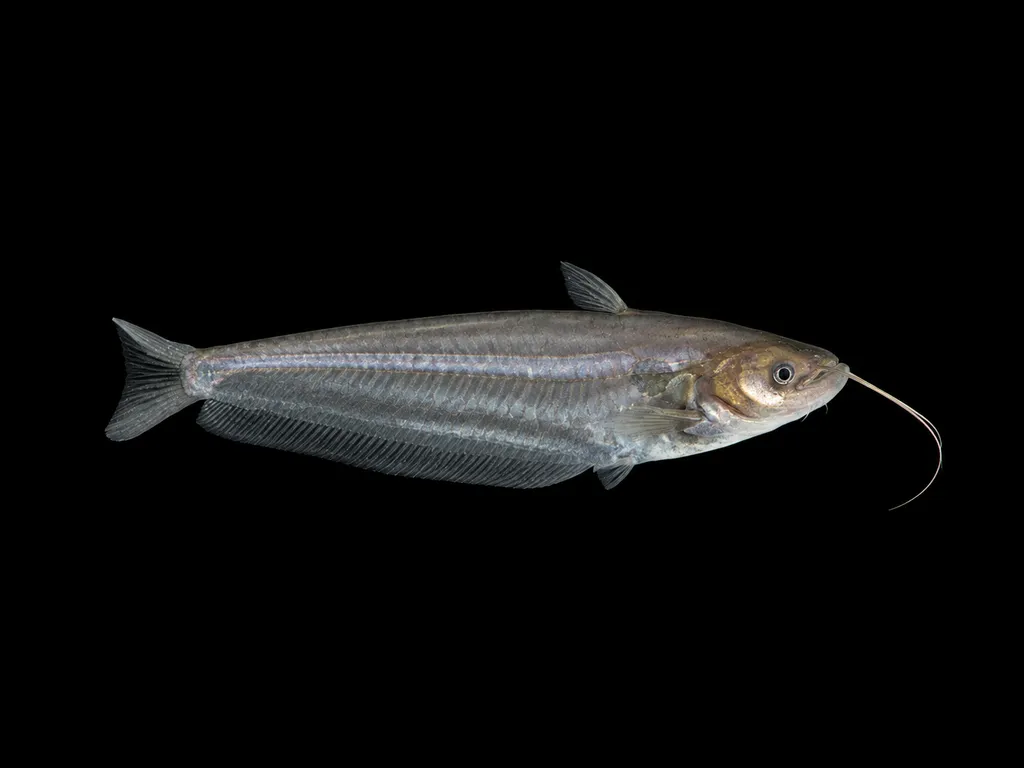
True glass catfish
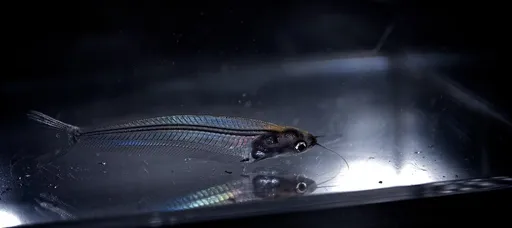
Kryptopterus bicirrhis
Also known as Glass catfish, Ghost catfish, Phantom catfish
FreshwaterFish
Care at a glance
- Temperature
- 70–79°F
- 21–26°C
- pH
- 6.0–7.0
- Adult size
- 5.9 in
- 15 cm
- Minimum tank
- 26 gal
- 100 L
- Temperament
- Peaceful
- Social behavior
- Schooling
- Swim level
- Bottom
- Difficulty
- Medium
- Breeding
- No record
- Rarity
- Rare
- Family
- Siluridae
- Origin
- Native to freshwater rivers of Sundaic Southeast Asia, including Sumatra and Borneo.
Overview
The true glass catfish is a peaceful, transparent midwater fish that must be kept in a group, since single or paired fish become stressed and waste away. It is more demanding than the little vitreolus sold as glass catfish, growing larger and preferring clean flowing water. Feed small meaty foods like frozen bloodworm, daphnia, and brine shrimp, plus fine sinking foods. A shoal of six or more in a well-filtered tank of at least 100 liters does best.
In the wild
The true glass catfish comes from flowing rivers and streams of Southeast Asia, where it hangs in midwater in loose shoals rather than sitting on the bottom. It likes clean, well-oxygenated, gently flowing water with some current and open swimming space among plants and wood. Keep it soft and slightly acidic at 21 to 26 degrees C, with subdued lighting.
Good to know
Kryptopterus bicirrhis is the larger, original glass catfish, reaching about 15 cm, and its body is see-through enough that the spine and internal organs show through the flesh. For decades it was confused with the small species now sold as glass catfish; most fish in shops are actually Kryptopterus vitreolus, which stays around 6 to 8 cm. The true bicirrhis was only ever exported in small numbers.
Did you know
Almost every fish sold as a glass catfish is really the smaller Kryptopterus vitreolus, and the genuine bicirrhis of the name is a bigger, rarer fish that few keepers have actually owned.
Weekly picks
Tank mates
True glass catfish is a peaceful, schooling species that keeps to the bottom. These picks share a community profile with it, are safe together in both directions, and overlap on water type, temperature and pH.
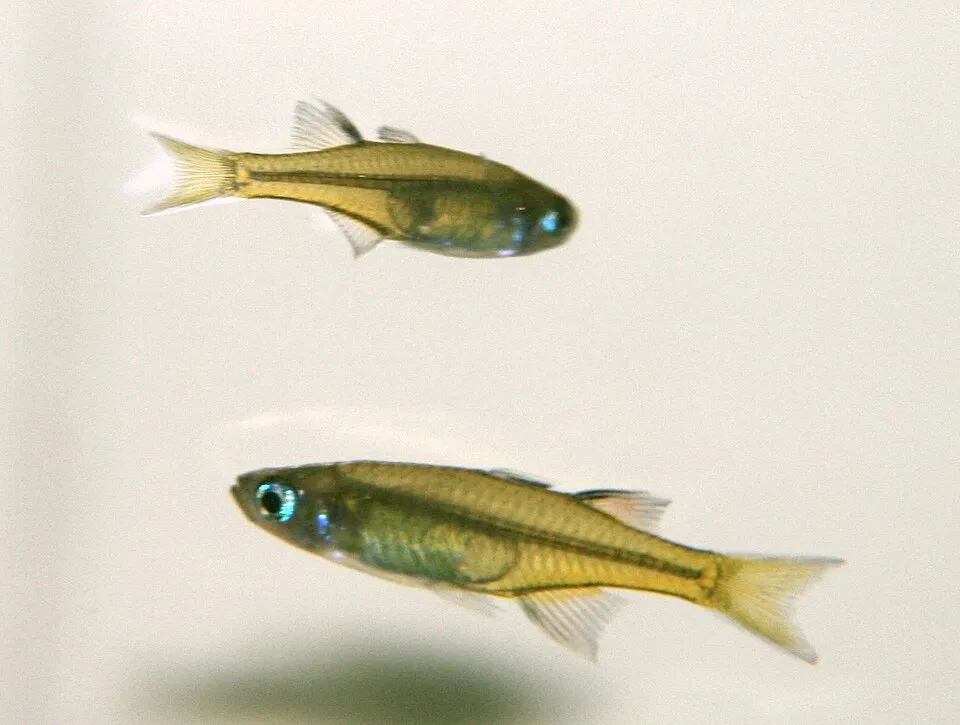
Pacific blue-eye
Pseudomugil signifer
Freshwater2.8 in (7 cm) · 25 gal (95 L)68–79°F (20–26°C)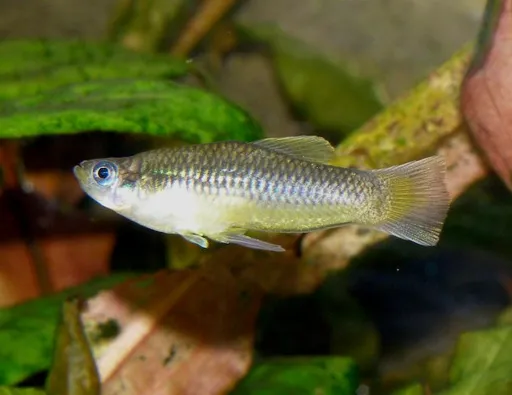
Blue-eyed livebearer
Priapella intermedia
Freshwater2.8 in (7 cm) · 24 gal (90 L)72–82°F (22–28°C)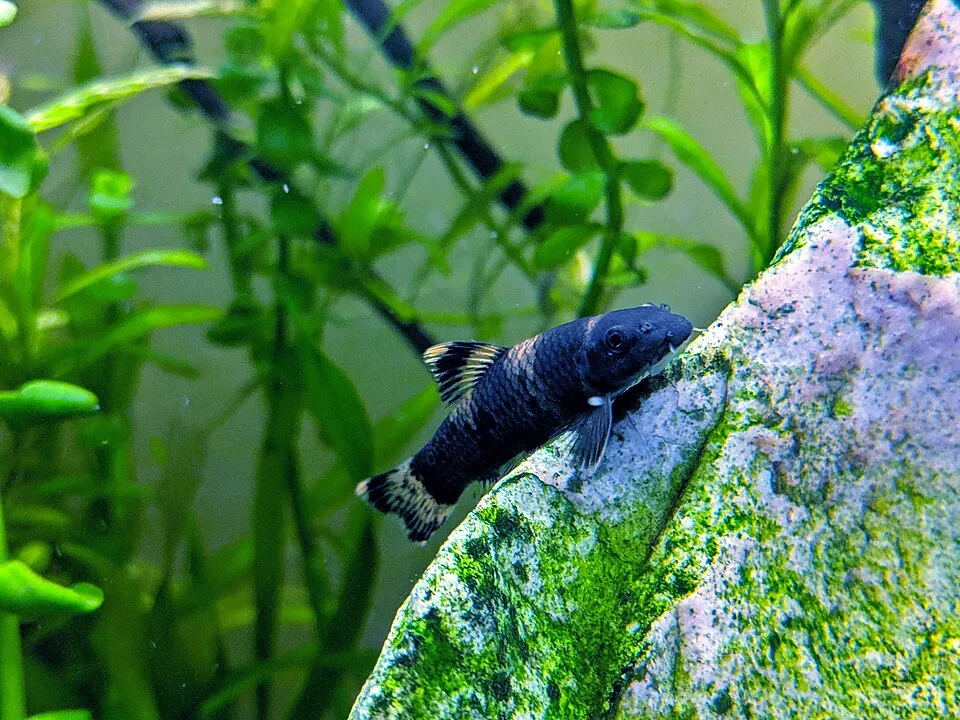
Panda garra
Garra flavatra
Freshwater3.5 in (9 cm) · 26 gal (100 L)72–81°F (22–27°C)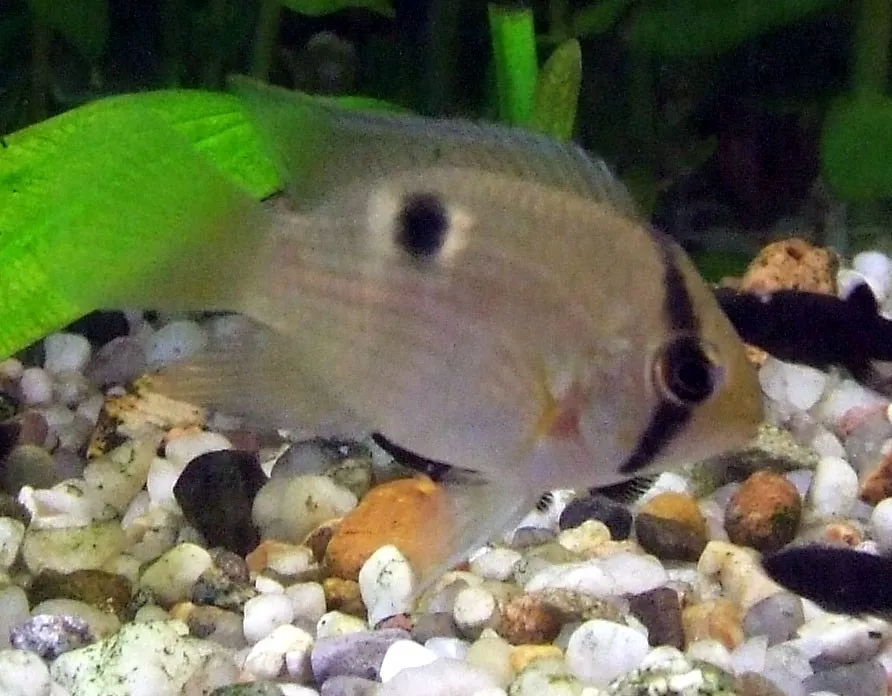
Keyhole cichlid
Cleithracara maronii
Freshwater4.3 in (11 cm) · 25 gal (95 L)70–82°F (21–28°C)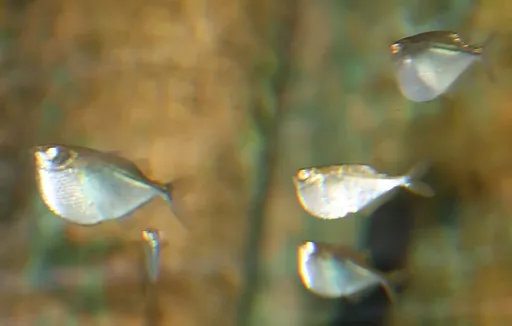
Spotfin hatchetfish
Thoracocharax stellatus
Freshwater3.5 in (9 cm) · 26 gal (100 L)73–82°F (23–28°C)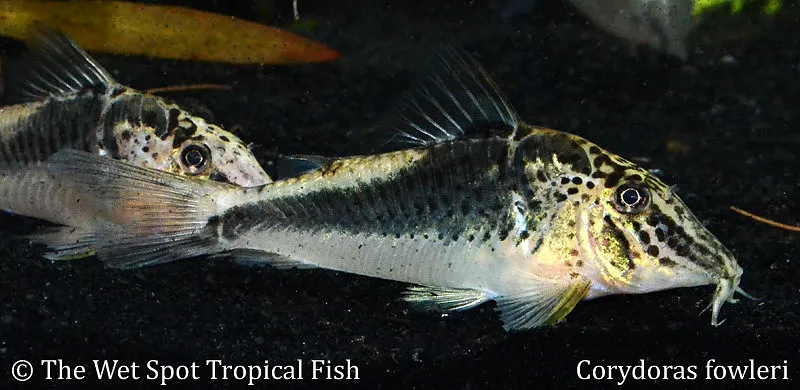
Fowler's cory
Corydoras fowleri
Freshwater2.8 in (7 cm) · 26 gal (100 L)72–79°F (22–26°C)
Common questions
What size tank does a True glass catfish need?
A True glass catfish needs at least 26 gal (100 L). It spends most of its time in the bottom.
What temperature and pH does a True glass catfish need?
A True glass catfish is comfortable at 70–79°F (21–26°C) with a pH of 6.0–7.0.
How big does a True glass catfish get?
An adult True glass catfish reaches about 5.9 in (15 cm).
Does a True glass catfish need a group?
Yes. A True glass catfish is a schooling species and should be kept in a group, not singly.
Related species
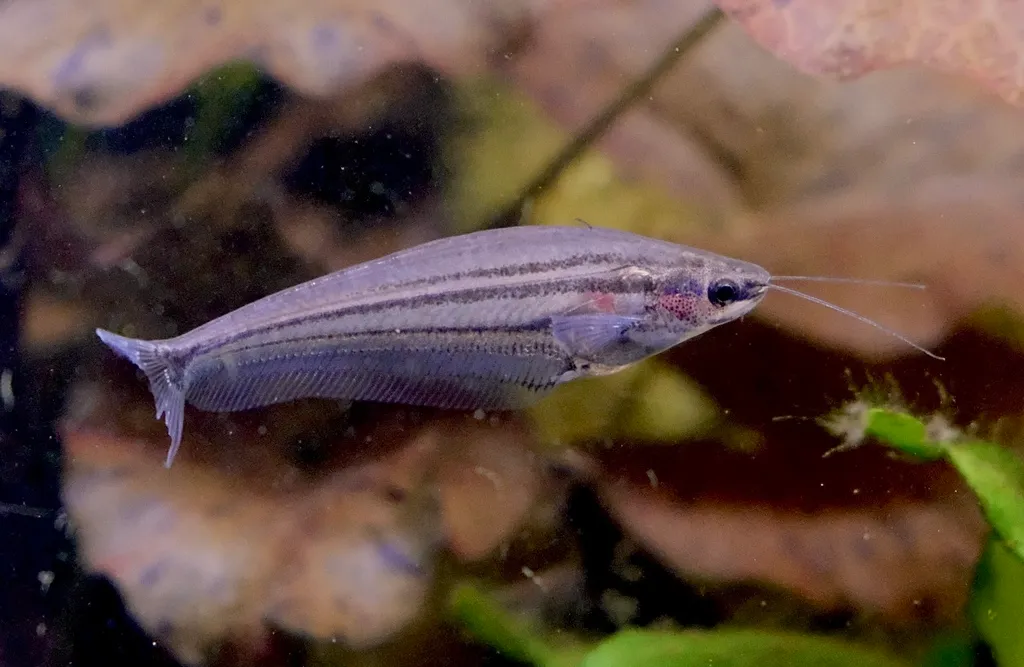 3.5 in (9 cm)36 gal (135 L)70–79°F (21–26°C)
Striped glass catfish
Kryptopterus macrocephalus
3.5 in (9 cm) · 36 gal (135 L)
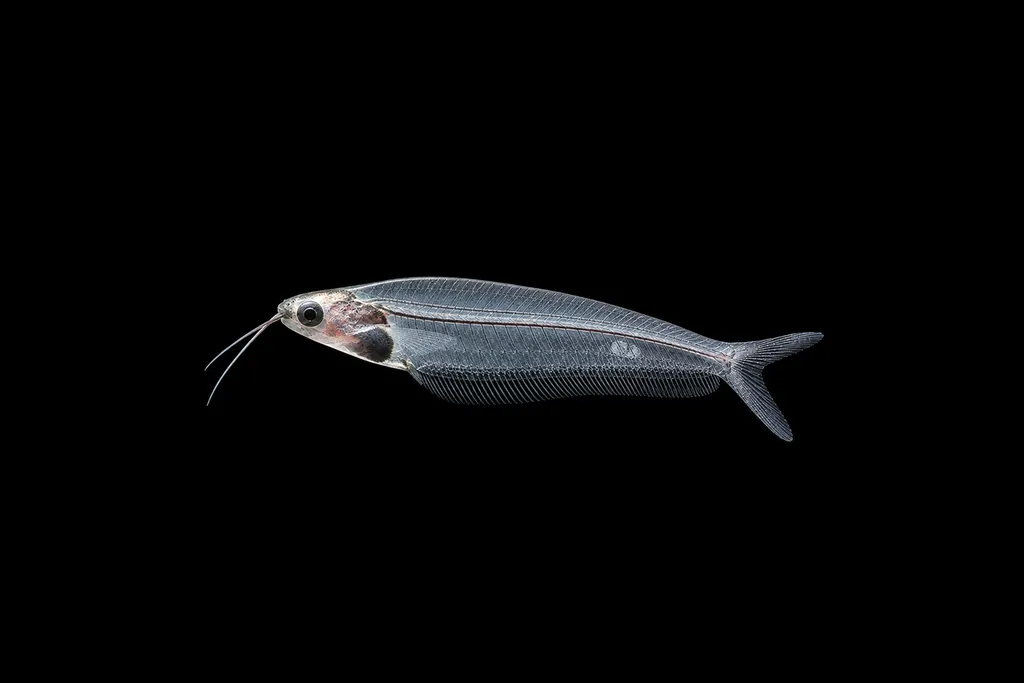
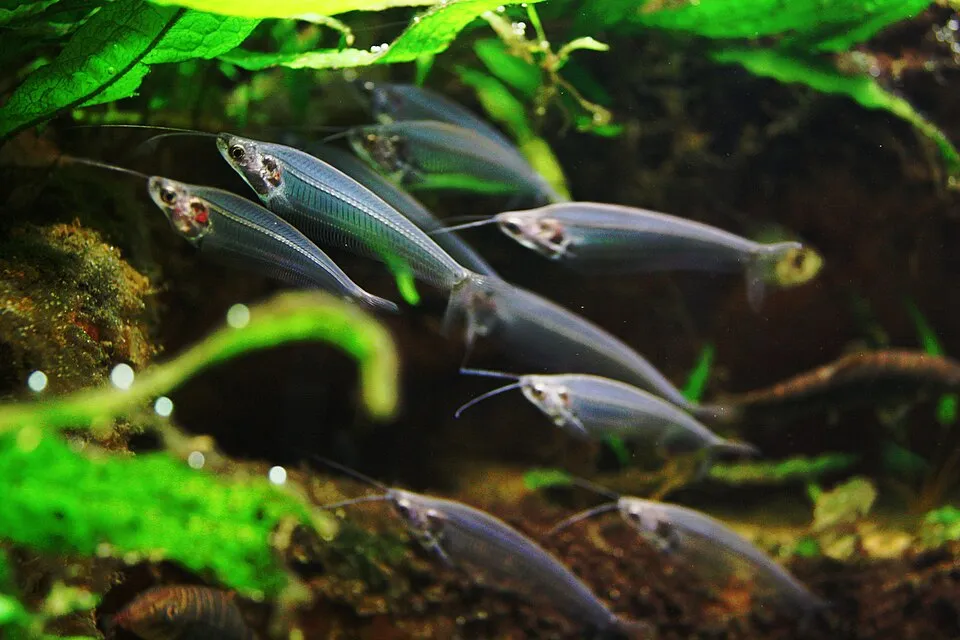 2.8 in (7 cm)30 gal (115 L)70–79°F (21–26°C)
Glass catfish
Kryptopterus vitreolus
2.8 in (7 cm) · 30 gal (115 L)
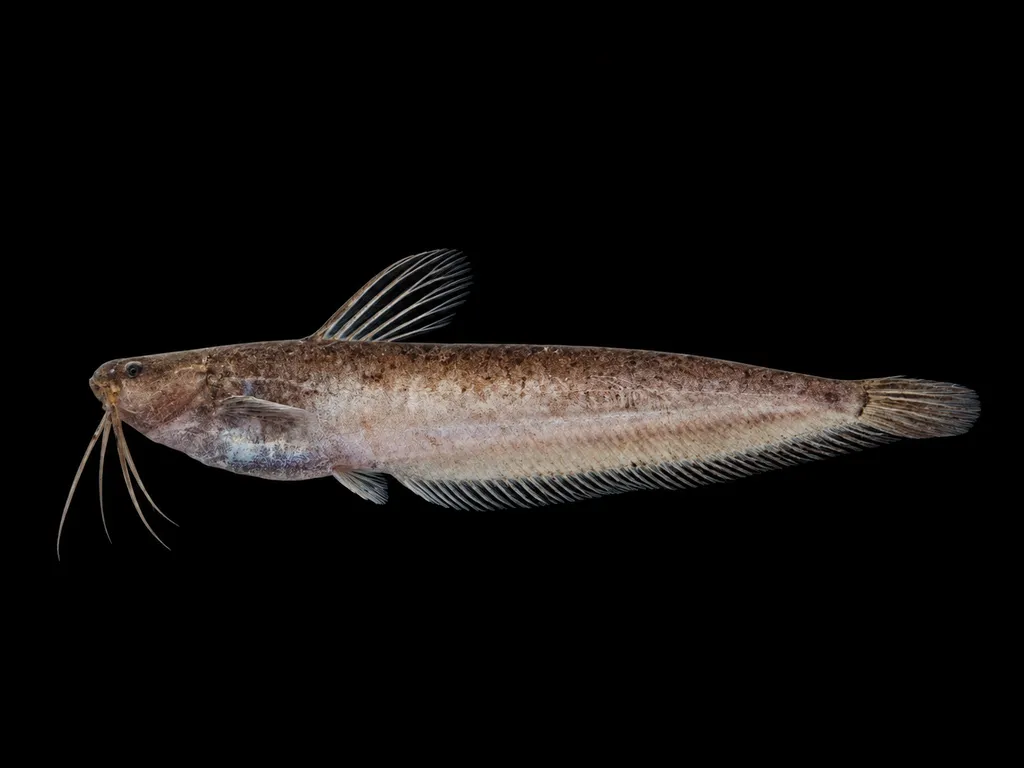
 11.8 in (30 cm)119 gal (450 L)73–81°F (23–27°C)
Mekong glass sheatfish
Kryptopterus limpok
11.8 in (30 cm) · 119 gal (450 L)
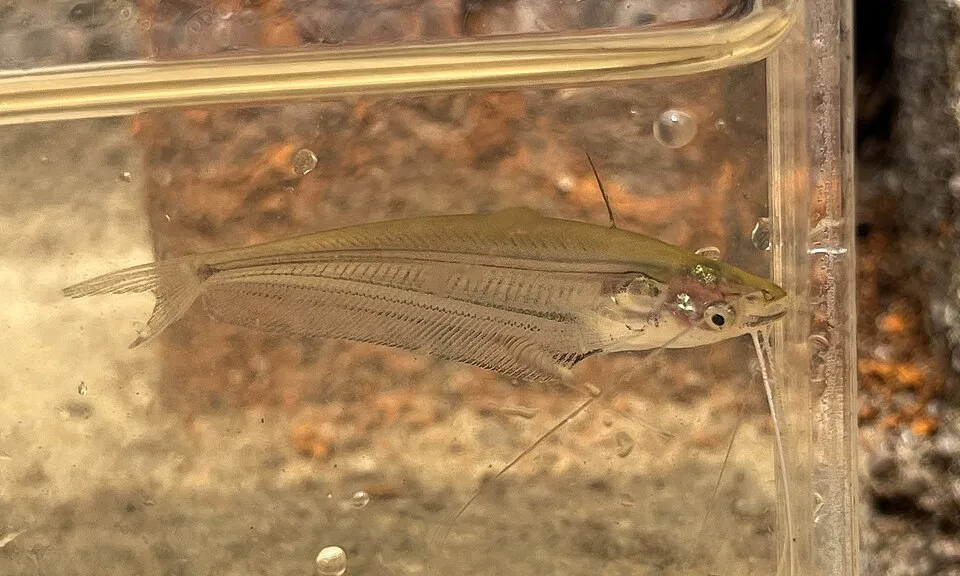
 5.9 in (15 cm)29 gal (110 L)73–81°F (23–27°C)
Borneo featherfin catfish
Silurichthys phaiosoma
5.9 in (15 cm) · 29 gal (110 L)
 6.5 in (16.5 cm)45 gal (170 L)70–82°F (21–28°C)
Borneo glass catfish
Ompok eugeneiatus
6.5 in (16.5 cm) · 45 gal (170 L)
 17.7 in (45 cm)53 gal (200 L)68–82°F (20–28°C)
Butter catfish
Ompok bimaculatus
17.7 in (45 cm) · 53 gal (200 L)