Wrestling halfbeak
Dermogenys pusilla
Also known as Dermogenys pusillus
FreshwaterBrackishFish
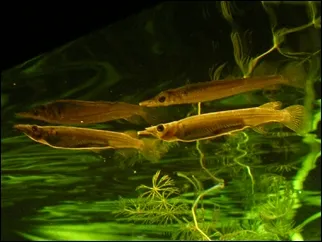
Care at a glance
- Temperature
- 75–82°F
- 24–28°C
- pH
- 6.5–7.5
- Adult size
- 2.8 in
- 7 cm
- Minimum tank
- 25 gal
- 95 L
- Temperament
- Mostly peaceful
- Social behavior
- Social
- Swim level
- Top
- Difficulty
- Medium
- Breeding
- Livebearer · Hard
- Rarity
- Rare
- Family
- Zenarchopteridae
- Origin
- Southeast Asia
Overview
The wrestling halfbeak is a slender, mostly peaceful surface fish for fresh or brackish water. It is best for a keeper who has kept easier fish first.
Did you know
The wrestling halfbeak takes its name from the way rival males grip each other by the beak and shove in trials of strength. Hobbyists in parts of Southeast Asia have long staged these contests as a form of fish fighting.
Caring for the wrestling halfbeak
Give wrestling halfbeaks a tank of 25 gal (95 L) or larger, with a tight lid. They hug the surface and jump, so the lid is essential. Floating plants, an open surface and gentle flow suit them, and the plants give rival males sight breaks.
Wrestling halfbeaks are used to warm, hard water. Keep it neutral, at 75 to 82°F (24 to 28°C) and a pH of 6.5 to 7.5. You can add a little marine salt, and they do well with it, since their home is part brackish. Calm, clean water helps them settle.
They feed at the top on small insects and larvae. Offer frozen and live foods along with a floating flake.
Keep them in a group, either one male with several females or a larger mix in a longer tank with lots of cover. They are peaceful toward other species. Males lock jaws and wrestle over space, and in a small tank these bouts can cause injury, so give them room.
Males fertilize females internally with an andropodium, a modified anal fin. The female carries the young until they are born free-swimming. Broods are small and the delicate fry are easily lost, so this is one of the harder livebearers to breed reliably.
Good to know
The wrestling halfbeak is a member of the halfbeak family Zenarchopteridae, a group named for its long lower jaw. Its scientific name is also listed as Dermogenys pusillus.
In the wild
Dermogenys pusilla lives across Southeast Asia in fresh and brackish waters. Its habitats range from rice paddies and ditches to slow rivers and coastal creeks.
Weekly picks
Tank mates
The wrestling halfbeak is a mostly peaceful, social species that keeps to the top. These picks share a community profile with it, are safe together in both directions, and overlap on water type, temperature and pH.
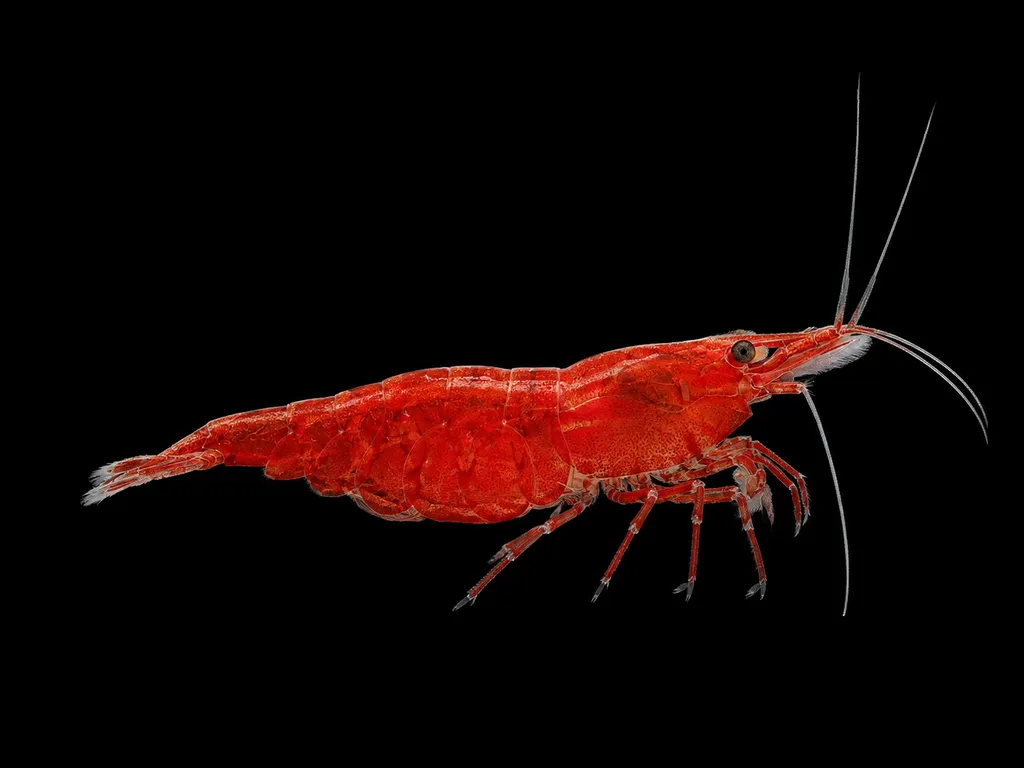
Neocaridina shrimp
Neocaridina davidi
Freshwater1.6 in (4 cm) · 5 gal (19 L)59–84°F (15–29°C)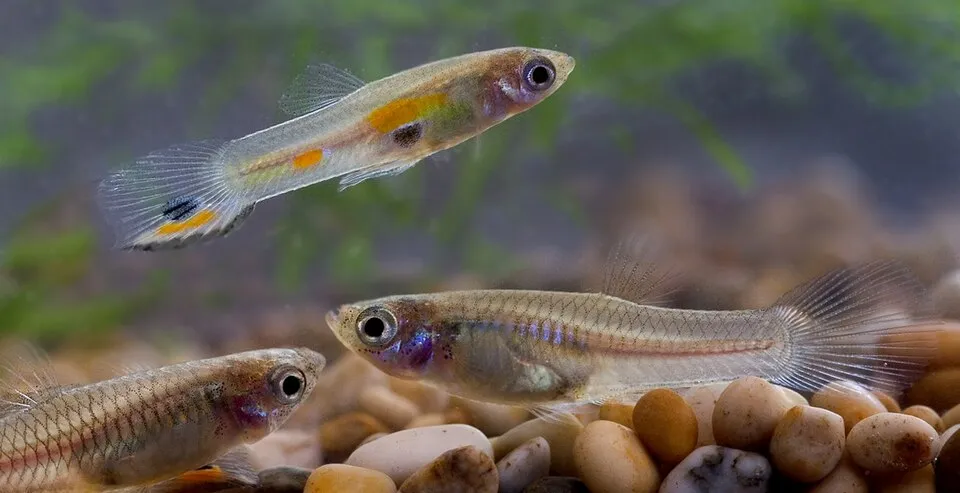
Guppy
Poecilia reticulata
FreshwaterBrackish2.4 in (6 cm) · 10 gal (38 L)64–82°F (18–28°C)
Neon tetra
Paracheirodon innesi
Freshwater1.5 in (3.8 cm) · 11 gal (40 L)70–77°F (21–25°C)Smooth-belly Borneo sucker
Gastromyzon psiloetron
Freshwater3.9 in (10 cm) · 25 gal (95 L)72–79°F (22–26°C)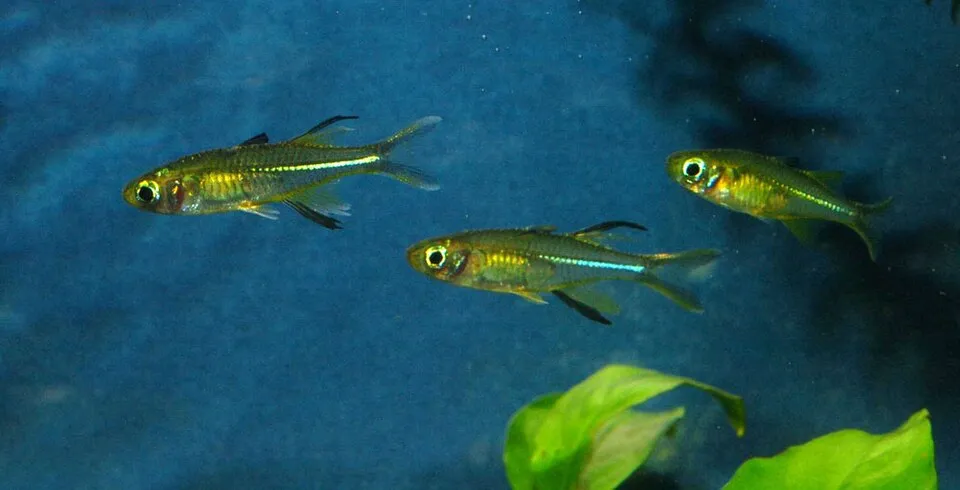
Celebes rainbow
Marosatherina ladigesi
FreshwaterBrackish3.1 in (8 cm) · 25 gal (95 L)72–82°F (22–28°C)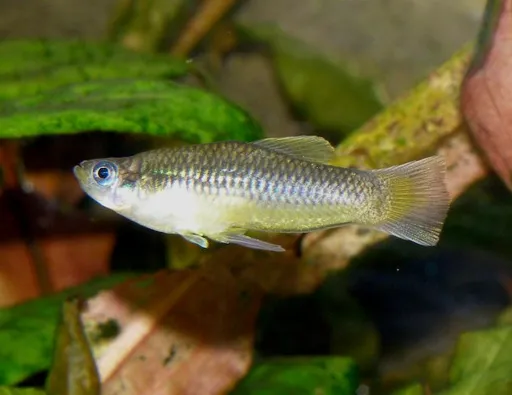
Blue-eyed livebearer
Priapella intermedia
Freshwater2.8 in (7 cm) · 24 gal (90 L)72–82°F (22–28°C)
Common questions
What size tank does a wrestling halfbeak need?
A wrestling halfbeak needs at least 25 gal (95 L). It spends most of its time in the top.
What temperature and pH does a wrestling halfbeak need?
A wrestling halfbeak is comfortable at 75–82°F (24–28°C) with a pH of 6.5–7.5.
What does a wrestling halfbeak eat?
A wrestling halfbeak feeds at the top on small insects and larvae. Give it frozen and live foods along with a floating flake.
How big does a wrestling halfbeak get?
An adult wrestling halfbeak reaches about 2.8 in (7 cm).
How can you tell a male wrestling halfbeak from a female?
Males have an andropodium, a modified anal fin used to fertilize the female internally.
How does a wrestling halfbeak breed?
A wrestling halfbeak is a livebearer, and the female carries her young until they are born free-swimming. Broods are small and the delicate fry are easily lost, so it is hard to breed reliably.
Related species
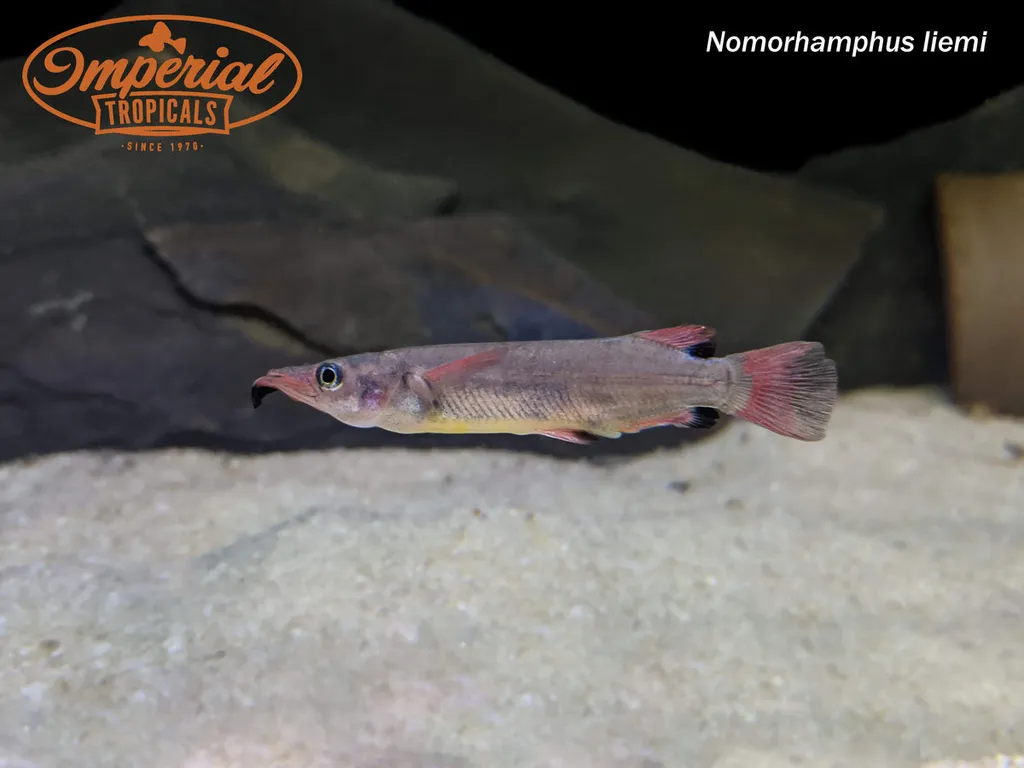 3.5 in (9 cm)40 gal (150 L)68–77°F (20–25°C)
Celebes halfbeak
Nomorhamphus liemi
3.5 in (9 cm) · 40 gal (150 L)
 3.5 in (9 cm)29 gal (110 L)75–81°F (24–27°C)
Redfin halfbeak
Nomorhamphus ebrardtii
3.5 in (9 cm) · 29 gal (110 L)
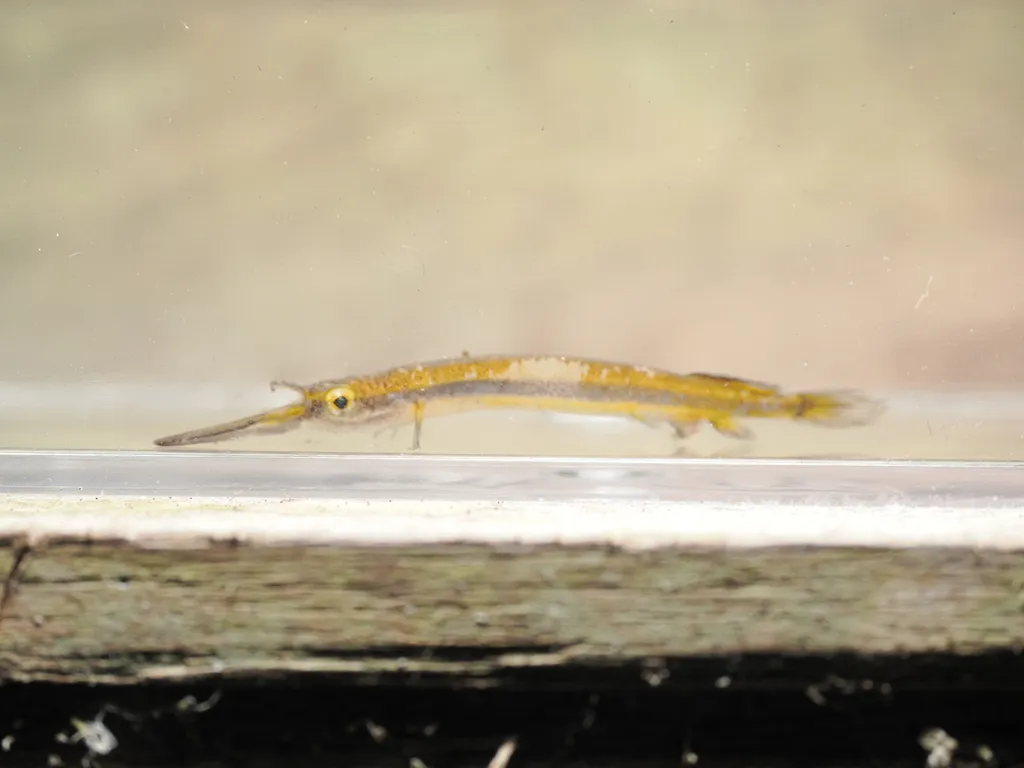 2.6 in (6.5 cm)14 gal (54 L)73–81°F (23–27°C)
Gold-spotted halfbeak
Hemirhamphodon chrysopunctatus
2.6 in (6.5 cm) · 14 gal (54 L)
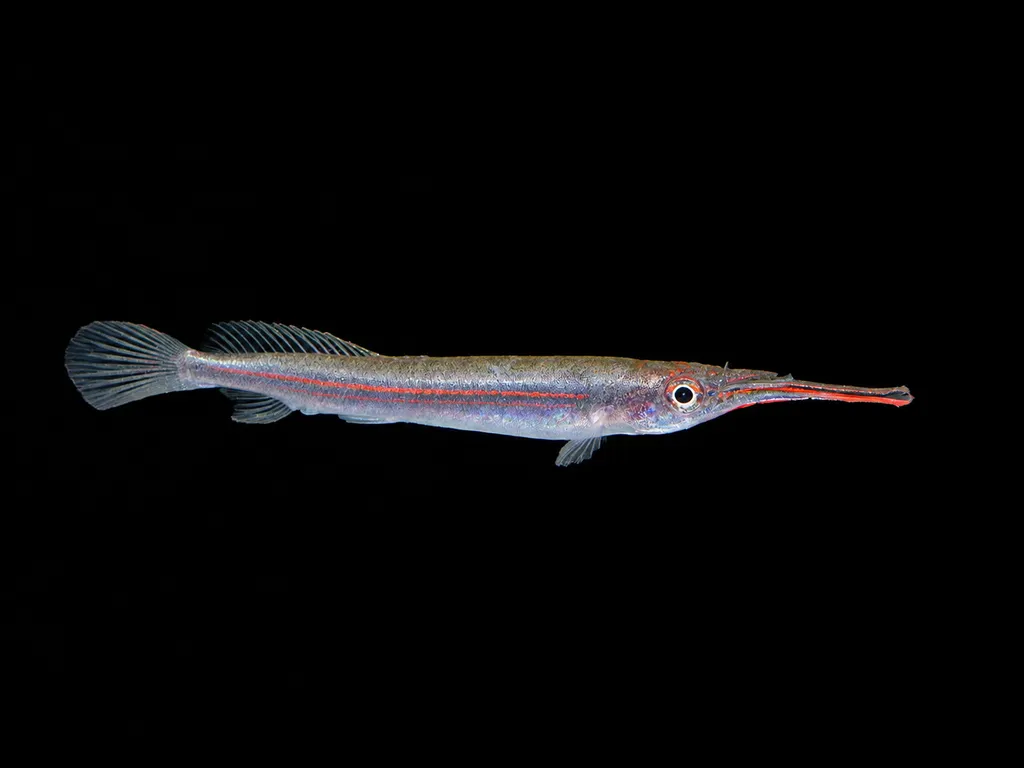 2.6 in (6.5 cm)14 gal (54 L)73–81°F (23–27°C)
Red line halfbeak
Hemirhamphodon phaiosoma
2.6 in (6.5 cm) · 14 gal (54 L)
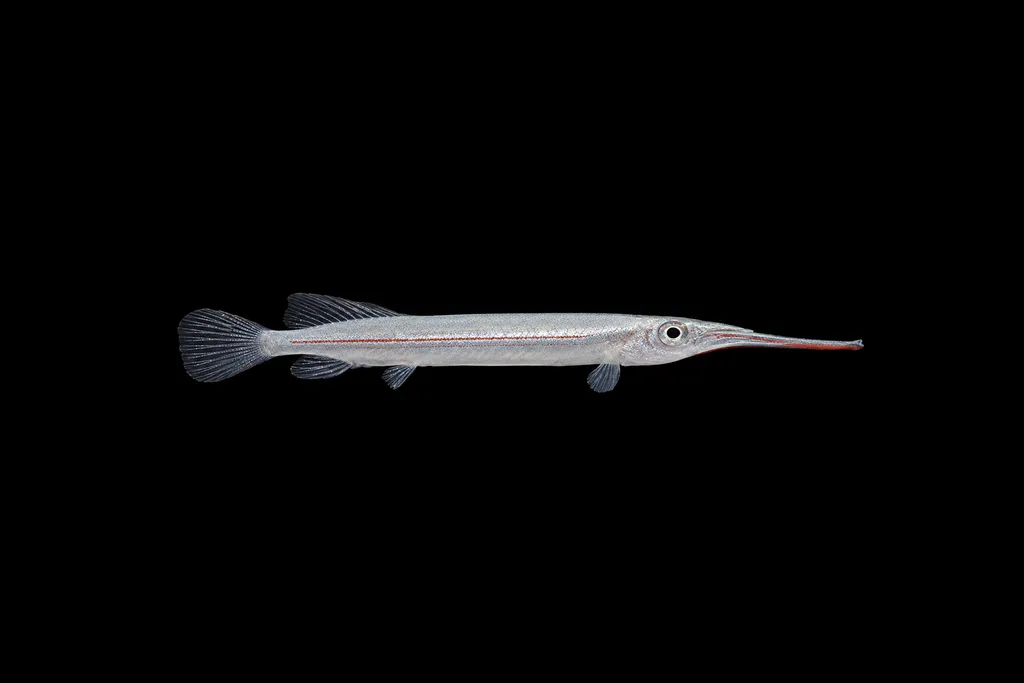 2.4 in (6 cm)14 gal (54 L)73–81°F (23–27°C)
Fire halfbeak
Hemirhamphodon kapuasensis
2.4 in (6 cm) · 14 gal (54 L)
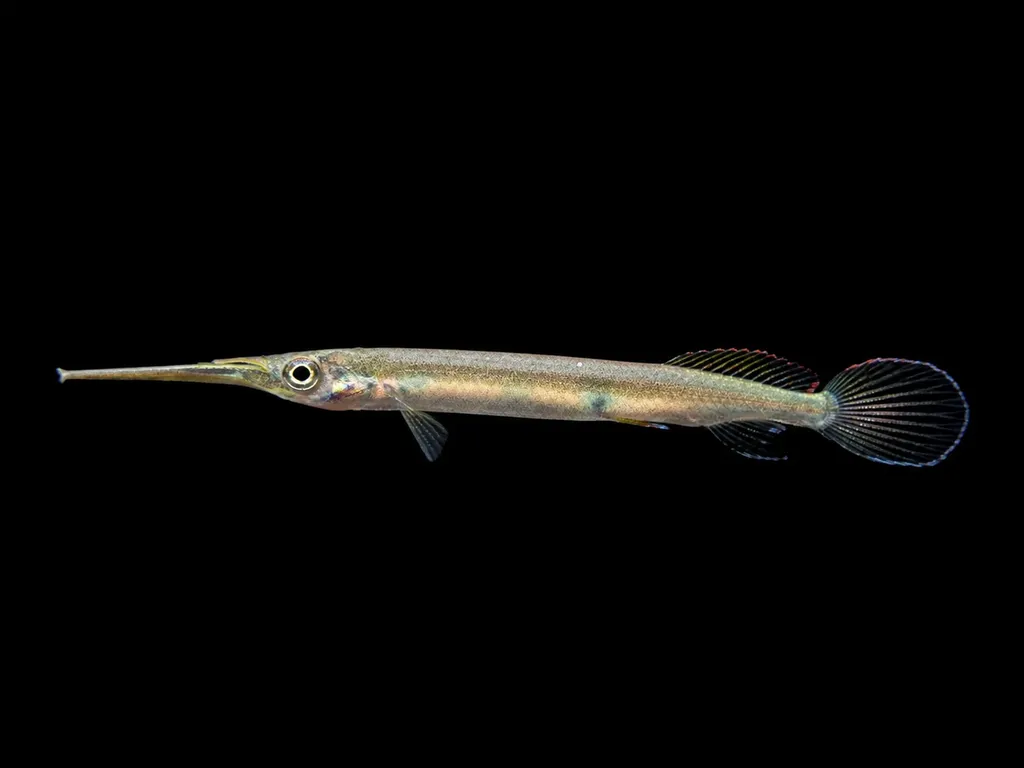 3.3 in (8.5 cm)20 gal (75 L)73–81°F (23–27°C)
Kuekenthal's halfbeak
Hemirhamphodon kuekenthali
3.3 in (8.5 cm) · 20 gal (75 L)