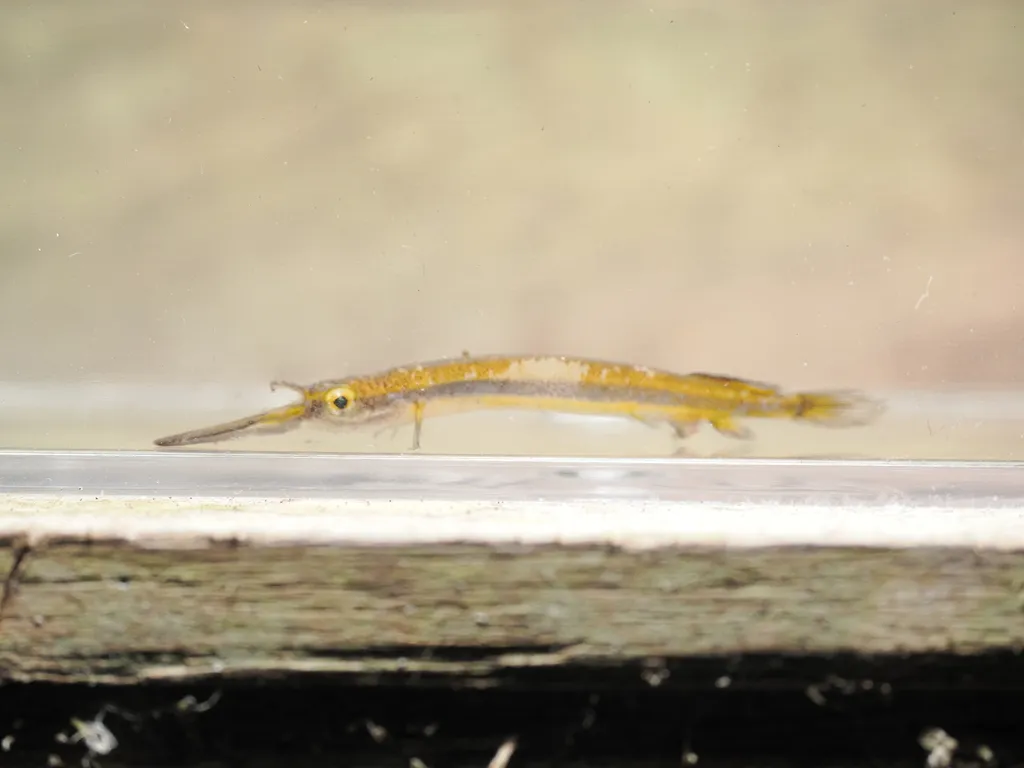
Redfin halfbeak
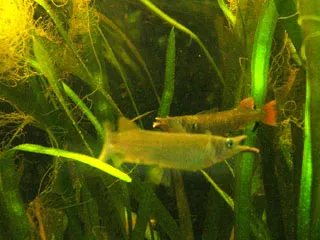
Nomorhamphus ebrardtii
Also known as Celebes halfbeak, Nomorhampus ebrardtii
FreshwaterFish
Care at a glance
- Temperature
- 75–81°F
- 24–27°C
- pH
- 6.7–7.5
- Adult size
- 3.5 in
- 9 cm
- Minimum tank
- 29 gal
- 110 L
- Temperament
- Mostly peaceful
- Social behavior
- Social
- Swim level
- Top
- Difficulty
- Medium
- Breeding
- Medium
- Rarity
- Common
- Family
- Zenarchopteridae
- Origin
- Endemic to Sulawesi (Celebes) and nearby Kabaena island, Indonesia
Overview
Keep them as a group in a tank of 110 liters or larger, either one male with several females or a bigger mixed group with floating plants as visual barriers to spread out the squabbling between males. They are mostly peaceful toward other fish but will eat very small fish, shrimp, and fry, so choose tankmates with that in mind. Water should sit at 24 to 27 C with a pH from 6.7 to 7.5. Feed live or frozen surface foods like mosquito larvae, daphnia, and brine shrimp, since they do poorly on a dry-only diet. Site the tank somewhere calm and low traffic, because the long lower jaw is delicate and easily damaged against the glass when they bolt.
In the wild
Celebes halfbeaks are endemic to Sulawesi and the nearby island of Kabaena in Indonesia, where they hang at the surface of streams and shaded pools. They live their whole lives near the top, so a long tank with plenty of surface area matters far more than depth. Give them at least 110 liters, plain fresh water held at 24 to 27 C, and a pH from 6.7 to 7.5 with soft to medium hardness. Add floating plants like hornwort or frogbit for cover, keep the water clean and well oxygenated with a gentle current, and fit a tight, gap-free lid since these fish are strong jumpers.
Good to know
This is a livebearing halfbeak in the family Zenarchopteridae, with FishBase listing it around 9 cm standard length. Females run a little larger, up to about 10 cm, and males stay smaller. Unlike its relative Nomorhamphus liemi, it does not need brackish water and does fine in plain fresh water, though it tolerates a little salt. Broods are small, and developing embryos are nourished inside the oviduct, a trait called oophagy.
Did you know
The long lower jaw that gives the halfbeak its name only grows out as the fish matures, so juveniles look almost normal up front. The jaw works like a built-in surface scoop, letting the fish pick off insects and larvae sitting right at the waterline, which is exactly where it spends nearly all its time.
Weekly picks
Tank mates
Redfin halfbeak is a mostly peaceful, social species that keeps to the top. These picks share a community profile with it, are safe together in both directions, and overlap on water type, temperature and pH.
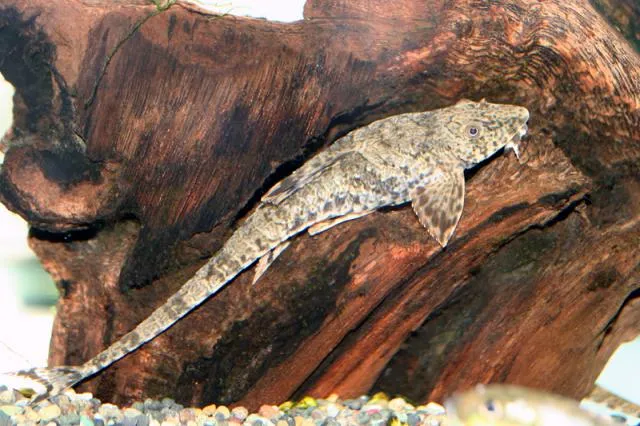
Eigenmann's whiptail
Rineloricaria eigenmanni
Freshwater4.7 in (12 cm) · 29 gal (110 L)75–82°F (24–28°C)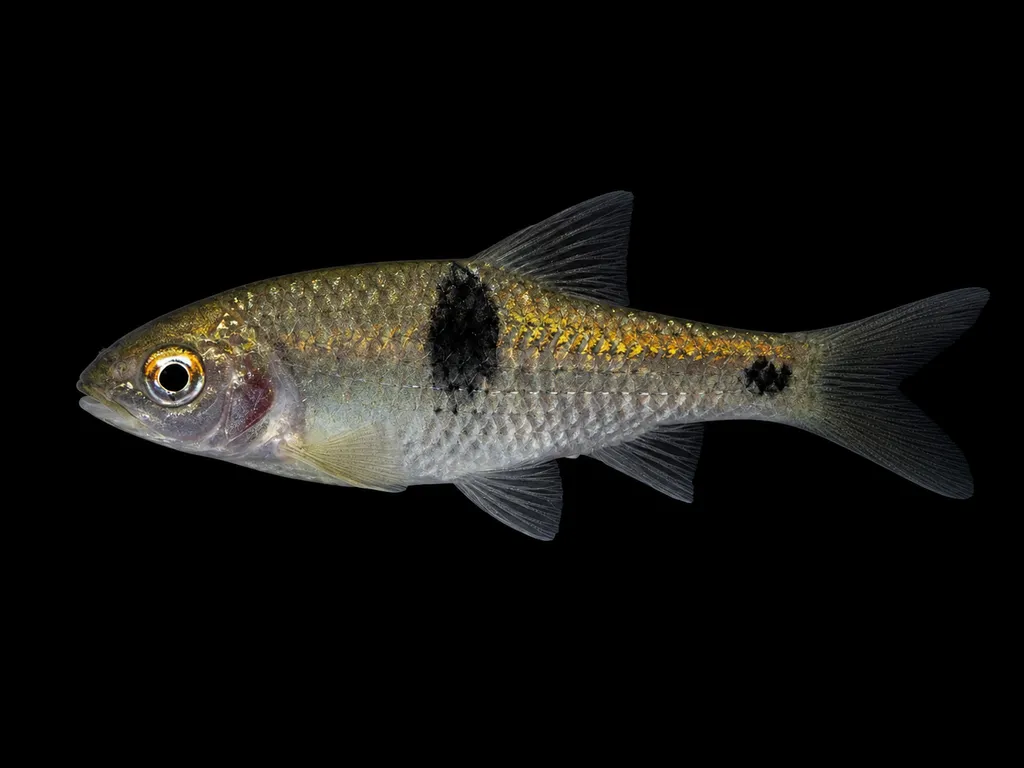
Binduchitra barb
Systomus binduchitra
Freshwater3.9 in (10 cm) · 29 gal (110 L)72–81°F (22–27°C)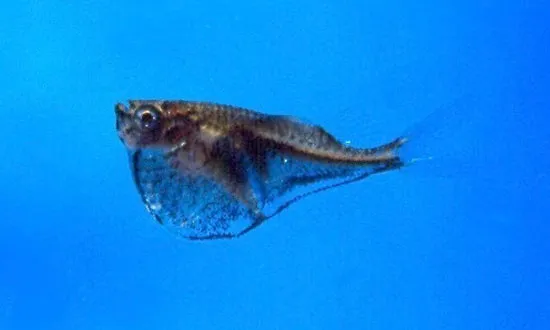
Blackwing hatchetfish
Carnegiella marthae
Freshwater1.4 in (3.5 cm) · 30 gal (115 L)68–82°F (20–28°C)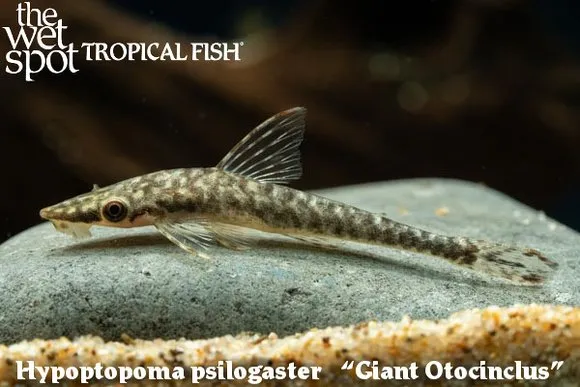
Giant otocinclus
Hypoptopoma psilogaster
Freshwater3.1 in (8 cm) · 29 gal (110 L)75–82°F (24–28°C)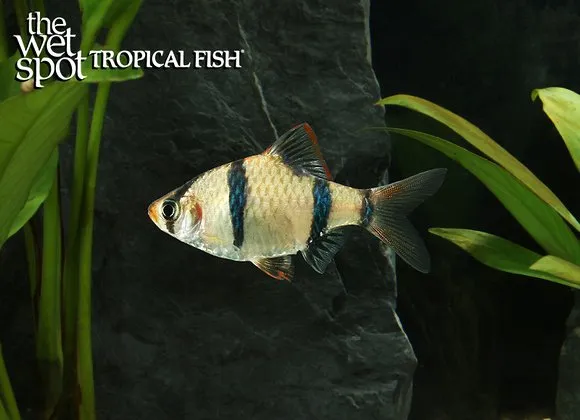
Borneo tiger barb
Puntigrus anchisporus
Freshwater2.8 in (7 cm) · 29 gal (110 L)73–81°F (23–27°C)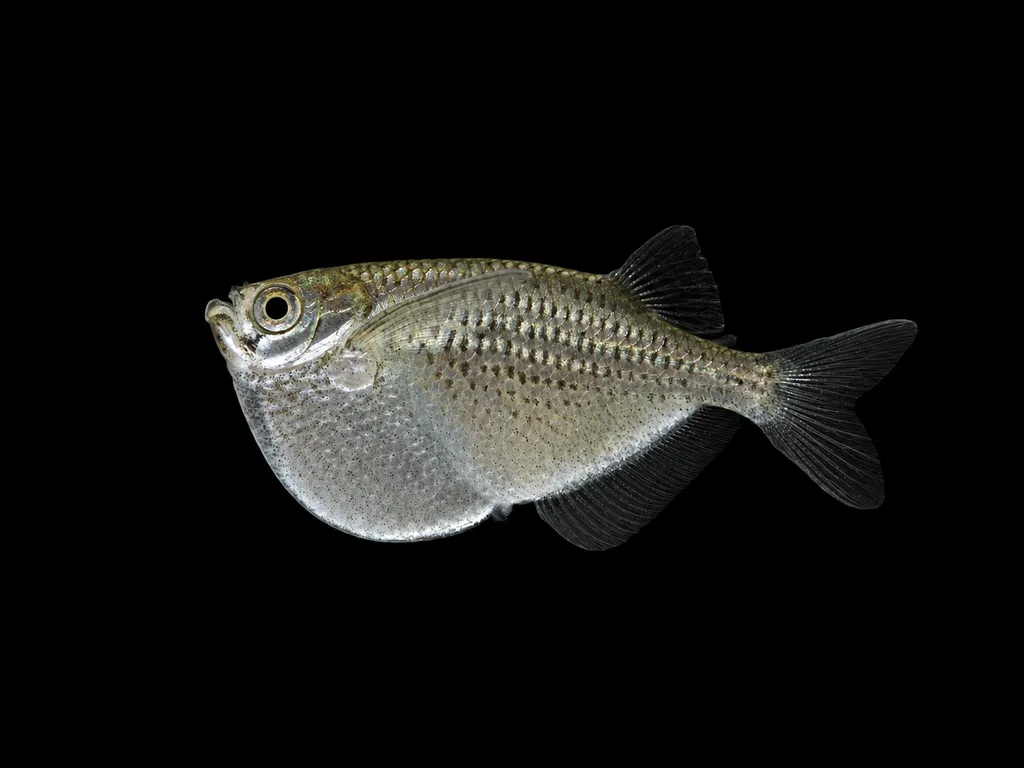
Silver hatchetfish
Gasteropelecus levis
Freshwater1.4 in (3.5 cm) · 30 gal (112 L)73–82°F (23–28°C)
Common questions
What size tank does a Redfin halfbeak need?
A Redfin halfbeak needs at least 29 gal (110 L). It spends most of its time in the top.
What temperature and pH does a Redfin halfbeak need?
A Redfin halfbeak is comfortable at 75–81°F (24–27°C) with a pH of 6.7–7.5.
How big does a Redfin halfbeak get?
An adult Redfin halfbeak reaches about 3.5 in (9 cm).
Related species
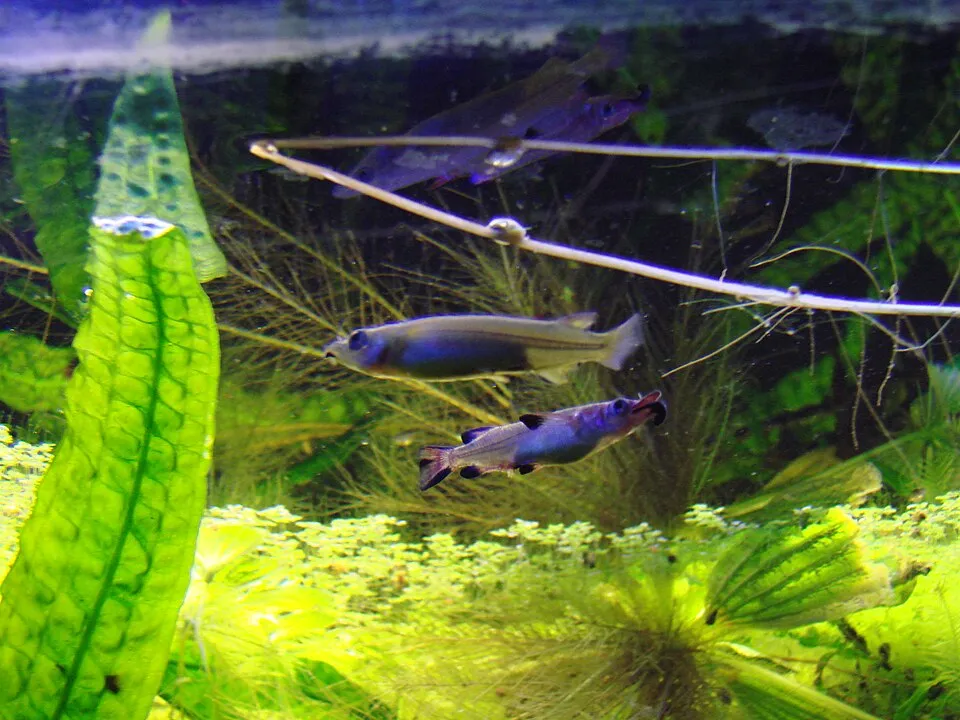 3.5 in (9 cm)40 gal (150 L)68–77°F (20–25°C)
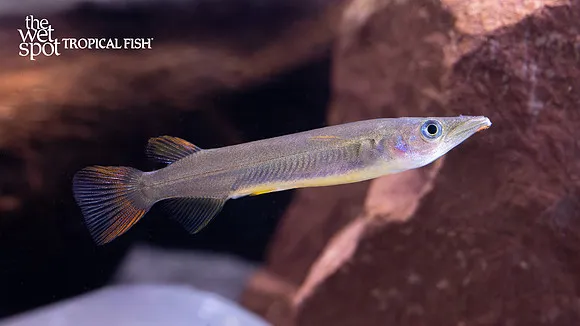
Celebes halfbeak
Nomorhamphus liemi
3.5 in (9 cm) · 40 gal (150 L)
 2.2 in (5.5 cm)20 gal (75 L)72–79°F (22–26°C)
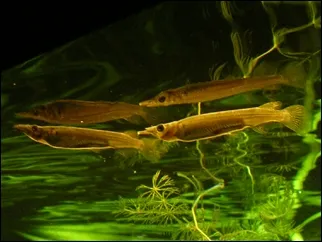
Rex halfbeak
Nomorhamphus rex
2.2 in (5.5 cm) · 20 gal (75 L)
 2.8 in (7 cm)25 gal (95 L)75–82°F (24–28°C)
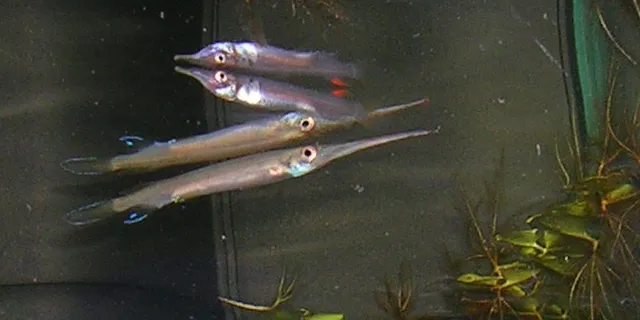
Wrestling halfbeak
Dermogenys pusilla
2.8 in (7 cm) · 25 gal (95 L)
 3.5 in (9 cm)34 gal (130 L)75–82°F (24–28°C)
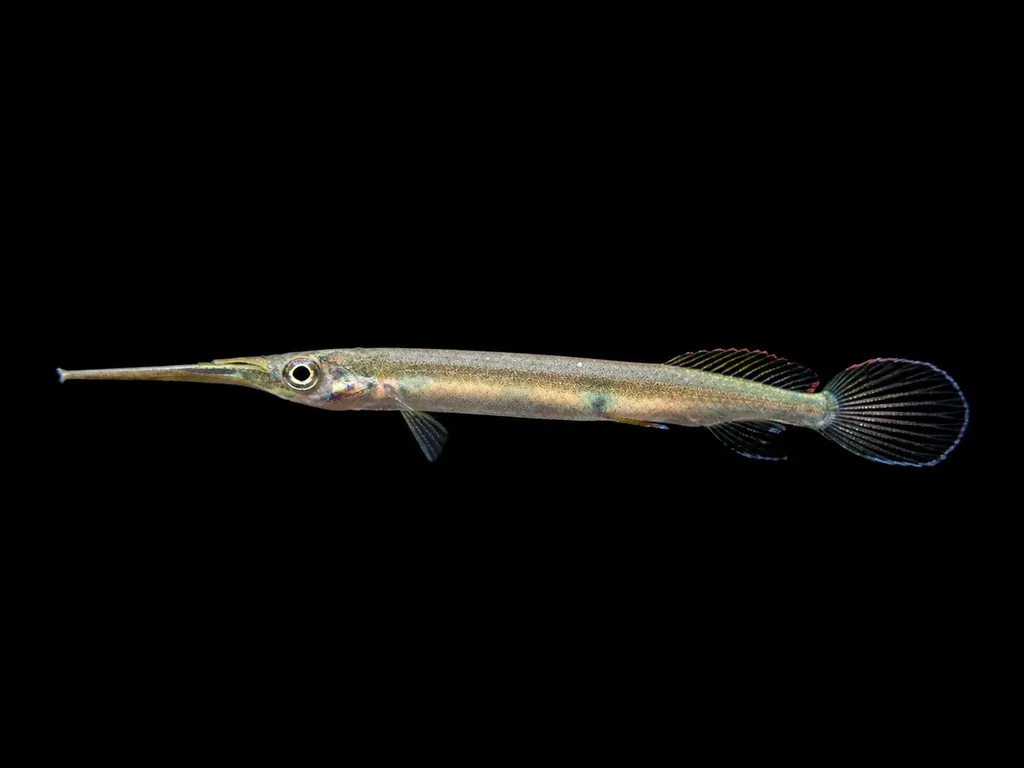
Forest halfbeak
Hemirhamphodon pogonognathus
3.5 in (9 cm) · 34 gal (130 L)
 3.3 in (8.5 cm)20 gal (75 L)73–81°F (23–27°C)
Kuekenthal's halfbeak
Hemirhamphodon kuekenthali
3.3 in (8.5 cm) · 20 gal (75 L)
 2.6 in (6.5 cm)14 gal (54 L)73–81°F (23–27°C)
Gold-spotted halfbeak
Hemirhamphodon chrysopunctatus
2.6 in (6.5 cm) · 14 gal (54 L)