Rex halfbeak
Nomorhamphus rex
Also known as Celebes halfbeak rex
FreshwaterFish
Care at a glance
- Temperature
- 72–79°F
- 22–26°C
- pH
- 6.8–7.8
- Adult size
- 2.2 in
- 5.5 cm
- Minimum tank
- 20 gal
- 75 L
- Temperament
- Peaceful
- Social behavior
- Social
- Swim level
- Top
- Difficulty
- Medium
- Breeding
- Livebearer · Medium
- Rarity
- Rare
- Family
- Zenarchopteridae
- Origin
- Southern Sulawesi streams
Overview
The Rex halfbeak is a small, peaceful stream halfbeak for the surface of a cool, planted tank. It is best with a little experience.
Did you know
The Rex halfbeak's name, rex or king, was not chosen for its bearing. The describers named it for its teeth, which reminded them of the teeth of Tyrannosaurus rex.
Caring for the Rex halfbeak
Give a small group of Rex halfbeaks a planted, well-covered tank of at least 20 gal (75 L). Leave an open surface and add a gentle current. Fit a firm lid, since like all halfbeaks they will jump.
Keep the water on the cool side, at 72 to 79°F (22 to 26°C). This fish likes harder, neutral to slightly alkaline water with a pH of 6.8 to 7.8, moderate flow and good oxygen.
The Rex halfbeak patrols the surface, taking small prey with its beaked jaws. Feed floating and surface foods, such as small live and frozen insects, mosquito larvae, daphnia and fine floating dried foods. It will mostly ignore food that sinks.
Keep more females than males, since rival males display and squabble at the top of the tank. A harem spreads that pressure out. It is peaceful toward other fish and suits calm mid and lower tank mates that leave the surface to it. Avoid anything large, nippy or boisterous.
Males stay a little smaller than females. The Rex halfbeak is a livebearer, and the male fertilizes the female internally with a modified anal fin. She gives birth to live young, and breeding it is of moderate difficulty.
Good to know
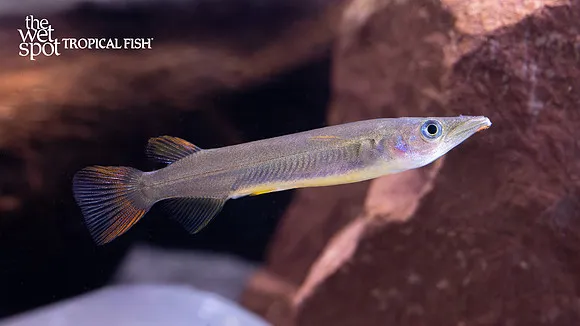
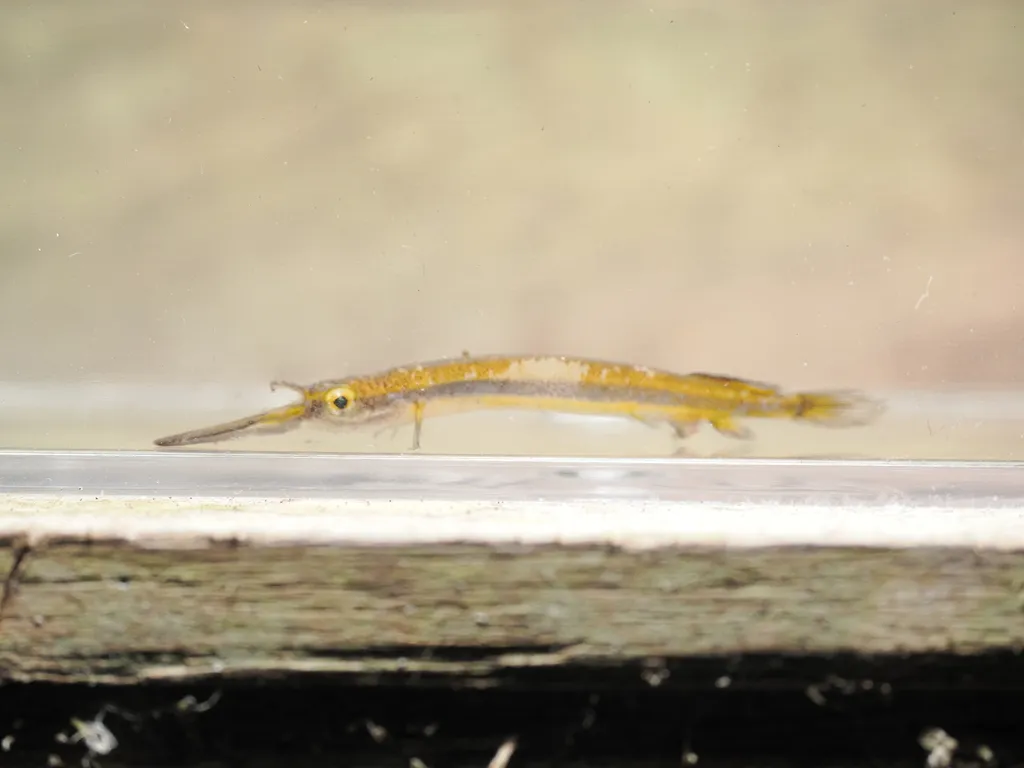
Nomorhamphus rex is a halfbeak of the family Zenarchopteridae, described in 2012. It has yellow ventral fins, a red lower beak and black-edged fins.
In the wild
The Rex halfbeak comes from clear hill streams of southern Sulawesi. That flowing water runs cooler and harder than a typical blackwater tank.
Weekly picks
Tank mates
The Rex halfbeak is a peaceful, social species that keeps to the top. These picks share a community profile with it, are safe together in both directions, and overlap on water type, temperature and pH.
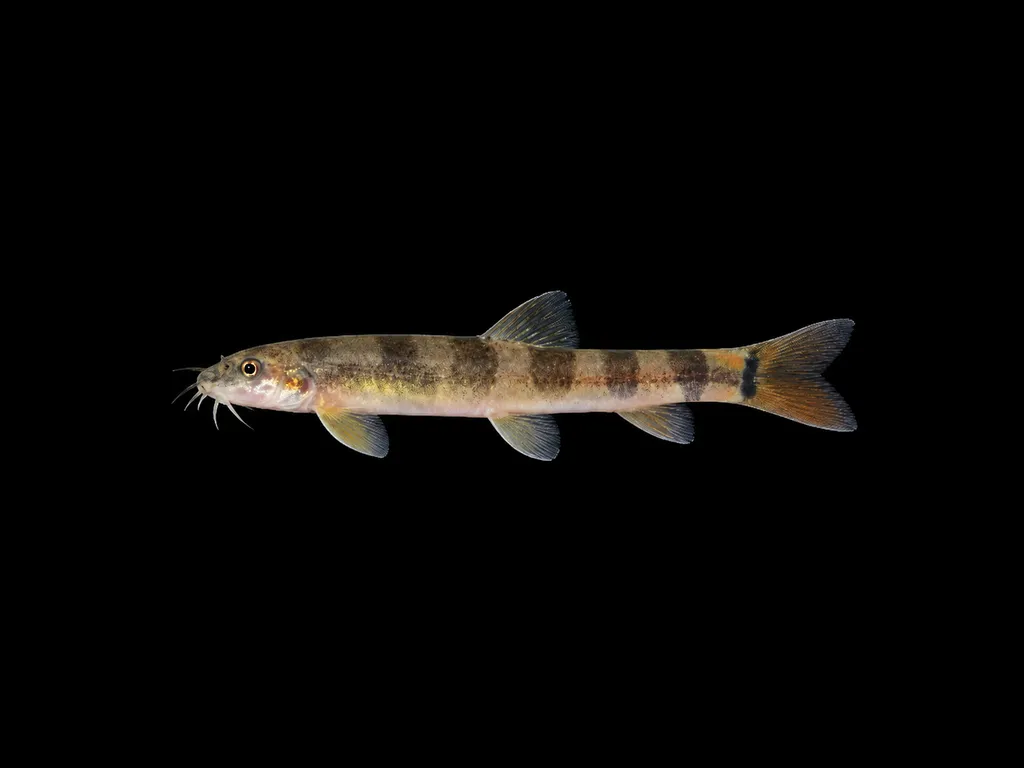
Aizawl loach
Schistura aizawlensis
Freshwater2.4 in (6 cm) · 20 gal (75 L)68–79°F (20–26°C)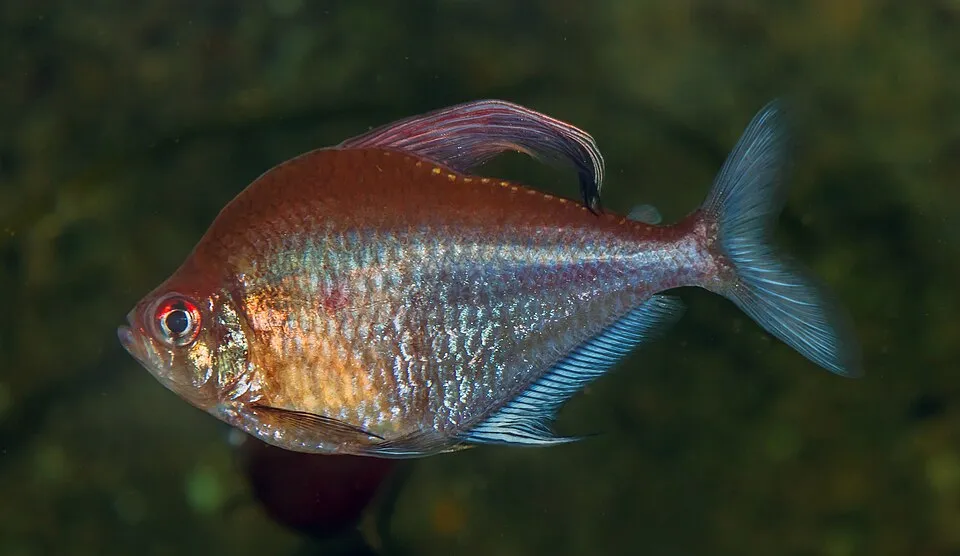
Bleeding heart tetra
Hyphessobrycon erythrostigma
Freshwater2.4 in (6 cm) · 20 gal (75 L)70–81°F (21–27°C)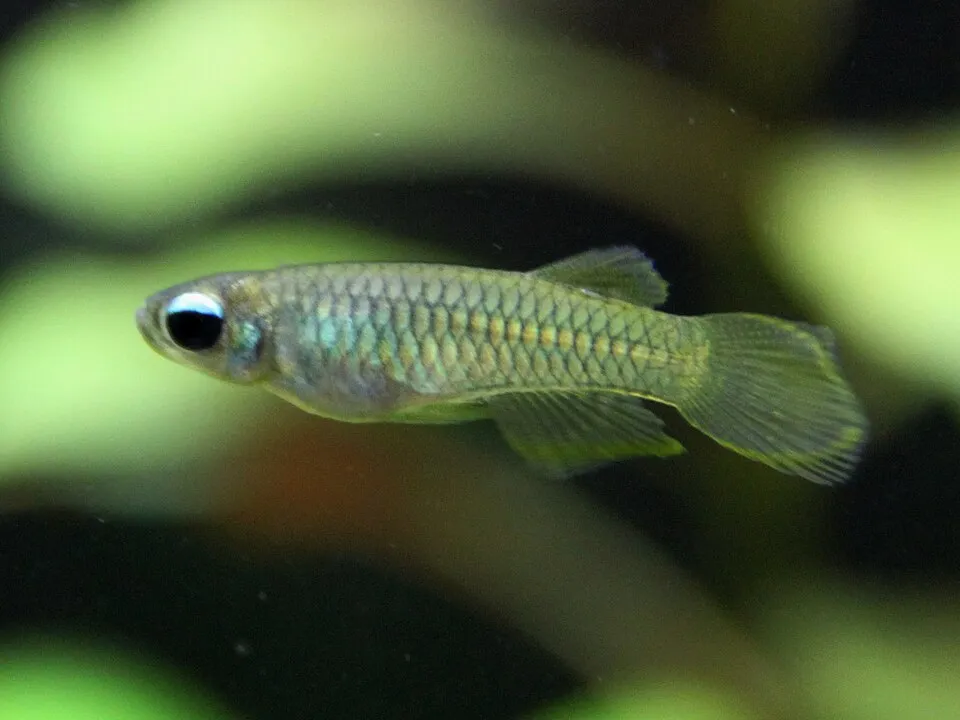
Norman's lampeye
Poropanchax normani
Freshwater1.6 in (4 cm) · 20 gal (75 L)72–79°F (22–26°C)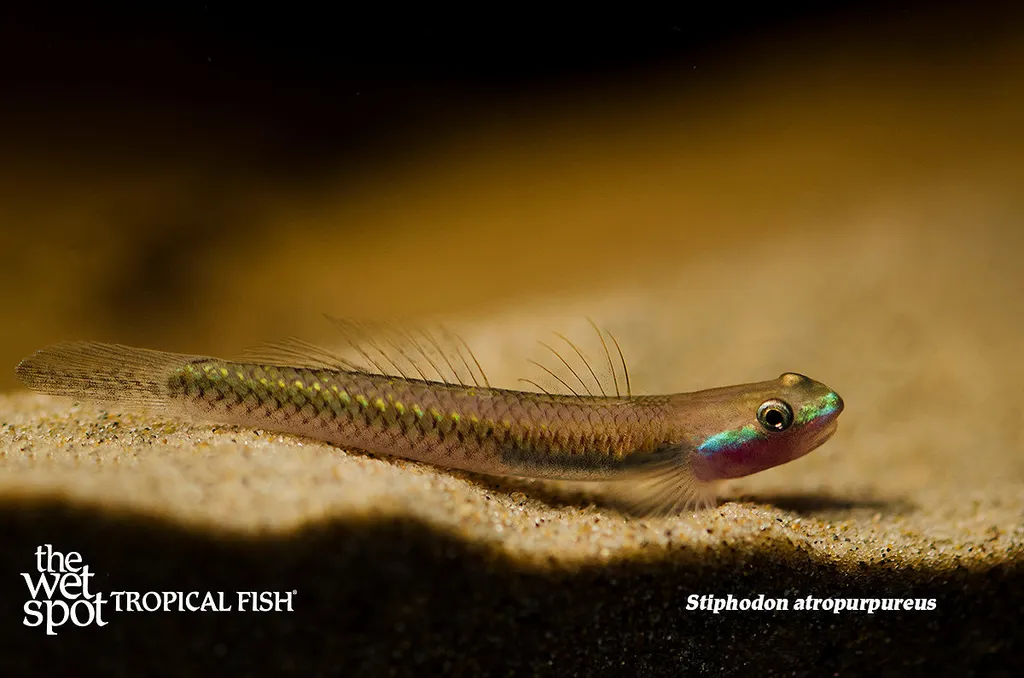
Blue neon dwarf goby
Stiphodon atropurpureus
Freshwater2 in (5 cm) · 20 gal (75 L)72–81°F (22–27°C)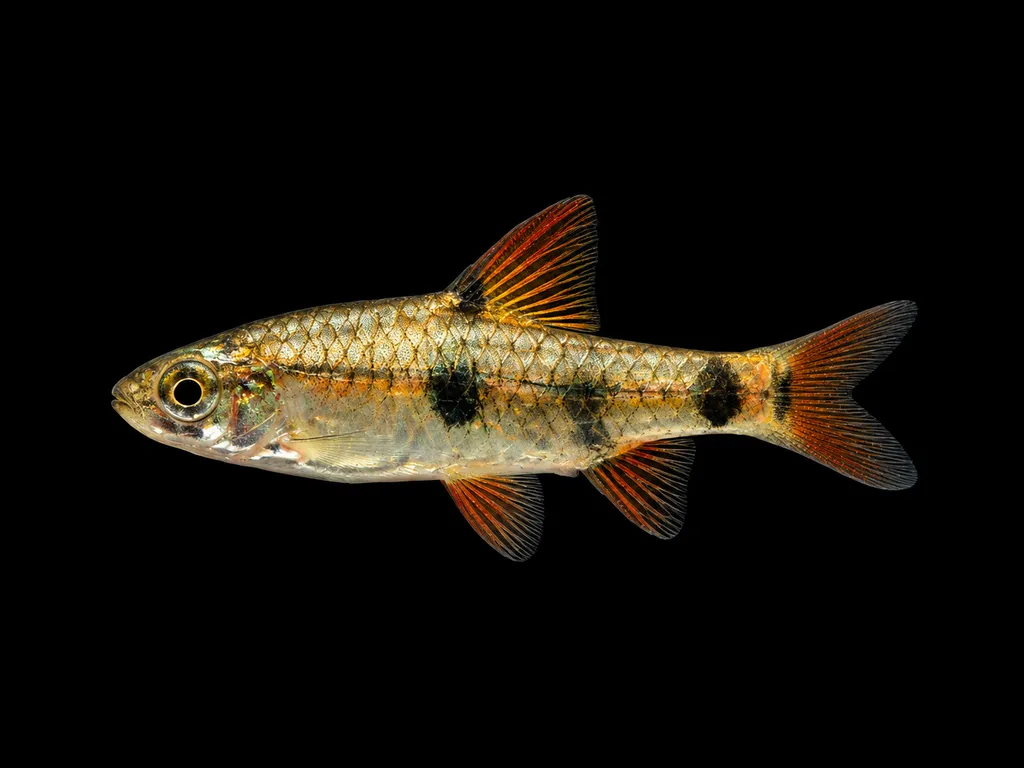
Canius barb
Pethia canius
Freshwater1.6 in (4 cm) · 20 gal (75 L)68–79°F (20–26°C)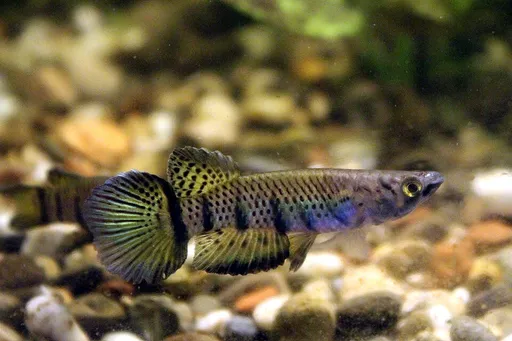
Six-barred panchax
Epiplatys sexfasciatus
Freshwater3.9 in (10 cm) · 20 gal (75 L)72–81°F (22–27°C)
Common questions
What size tank does a Rex halfbeak need?
A Rex halfbeak needs at least 20 gal (75 L). It spends most of its time in the top.
What temperature and pH does a Rex halfbeak need?
A Rex halfbeak is comfortable at 72–79°F (22–26°C) with a pH of 6.8–7.8.
What does a Rex halfbeak eat?
A Rex halfbeak takes floating and surface foods, such as small live and frozen insects, mosquito larvae, daphnia and fine floating dried foods. It will mostly ignore food that sinks.
How big does a Rex halfbeak get?
An adult Rex halfbeak reaches about 2.2 in (5.5 cm).
How can you tell a male Rex halfbeak from a female?
Males stay a little smaller than females.
How does a Rex halfbeak breed?
The Rex halfbeak is a livebearer. The male fertilizes the female internally with a modified anal fin, and she gives birth to live young. Breeding it is of moderate difficulty.
Related species
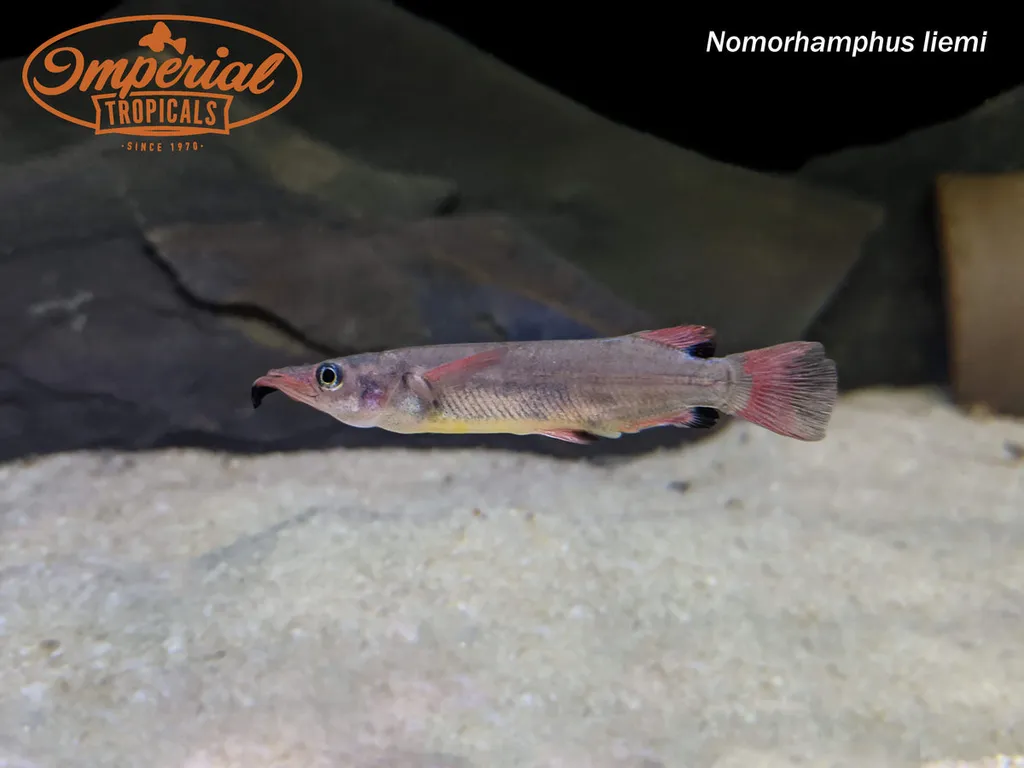 3.5 in (9 cm)40 gal (150 L)68–77°F (20–25°C)
Celebes halfbeak
Nomorhamphus liemi
3.5 in (9 cm) · 40 gal (150 L)
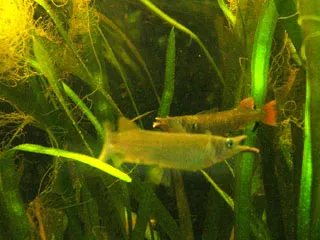 3.5 in (9 cm)29 gal (110 L)75–81°F (24–27°C)
Redfin halfbeak
Nomorhamphus ebrardtii
3.5 in (9 cm) · 29 gal (110 L)
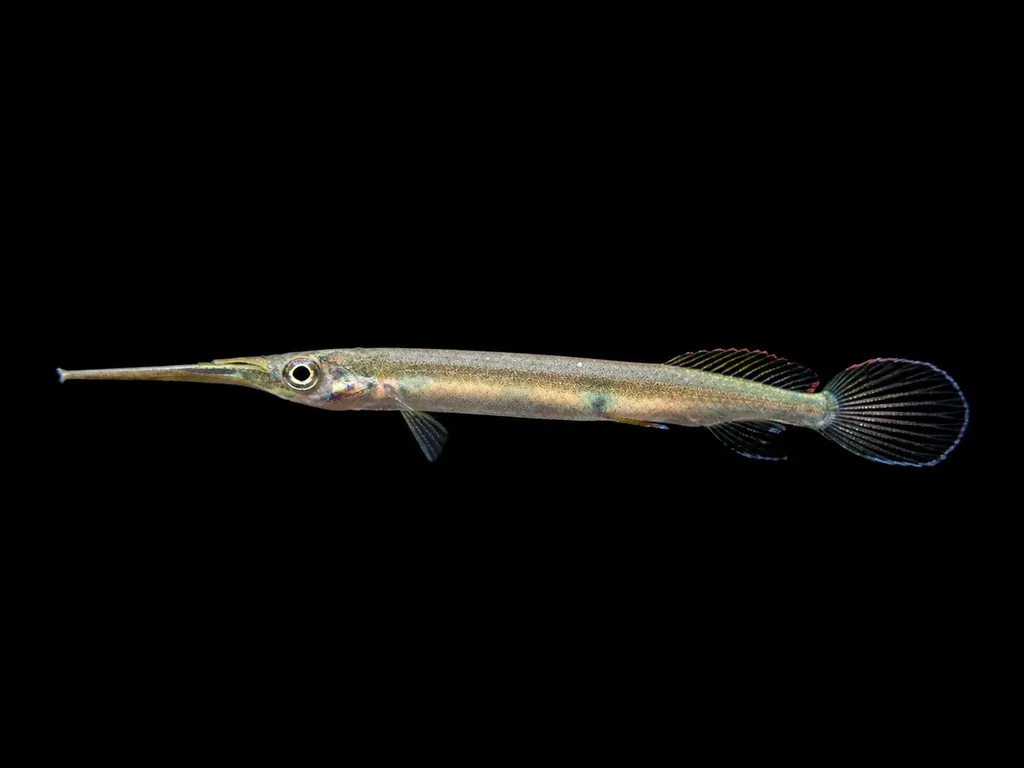 3.3 in (8.5 cm)20 gal (75 L)73–81°F (23–27°C)
Kuekenthal's halfbeak
Hemirhamphodon kuekenthali
3.3 in (8.5 cm) · 20 gal (75 L)
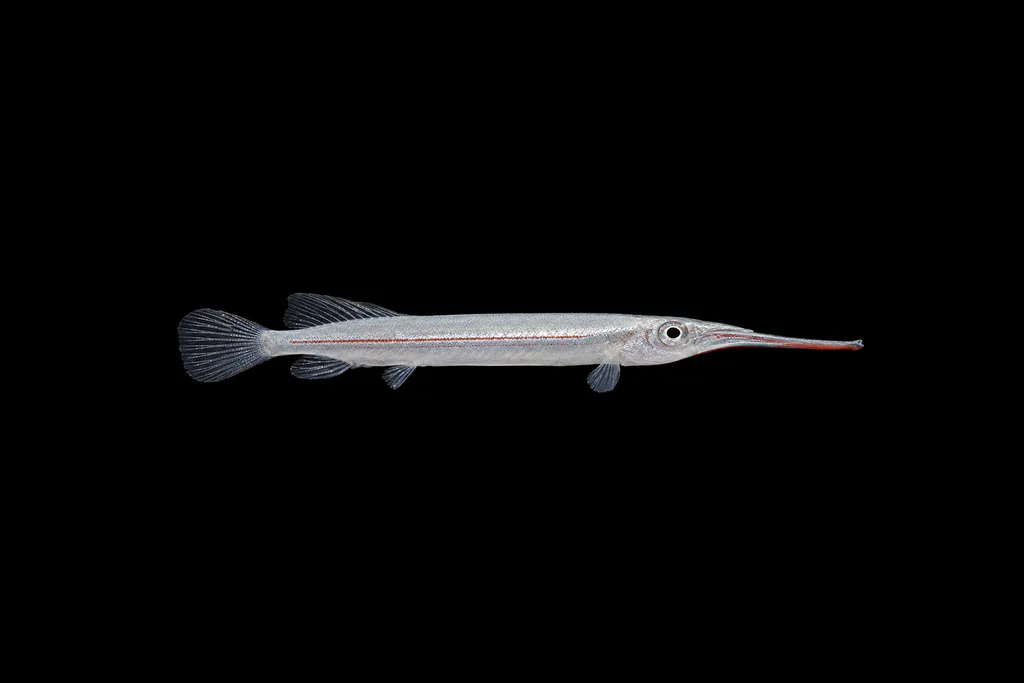 2.4 in (6 cm)14 gal (54 L)73–81°F (23–27°C)
Fire halfbeak
Hemirhamphodon kapuasensis
2.4 in (6 cm) · 14 gal (54 L)
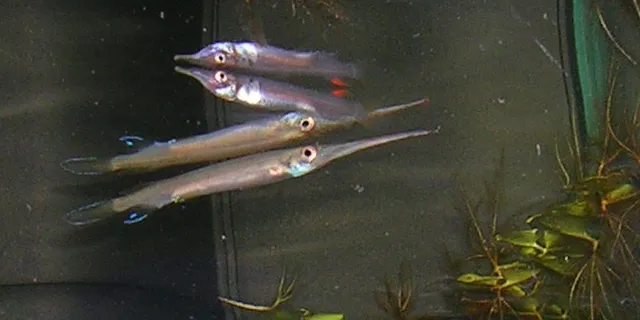 3.5 in (9 cm)34 gal (130 L)75–82°F (24–28°C)
Forest halfbeak
Hemirhamphodon pogonognathus
3.5 in (9 cm) · 34 gal (130 L)
 2.6 in (6.5 cm)14 gal (54 L)73–81°F (23–27°C)
Gold-spotted halfbeak
Hemirhamphodon chrysopunctatus
2.6 in (6.5 cm) · 14 gal (54 L)