Blue neon dwarf goby
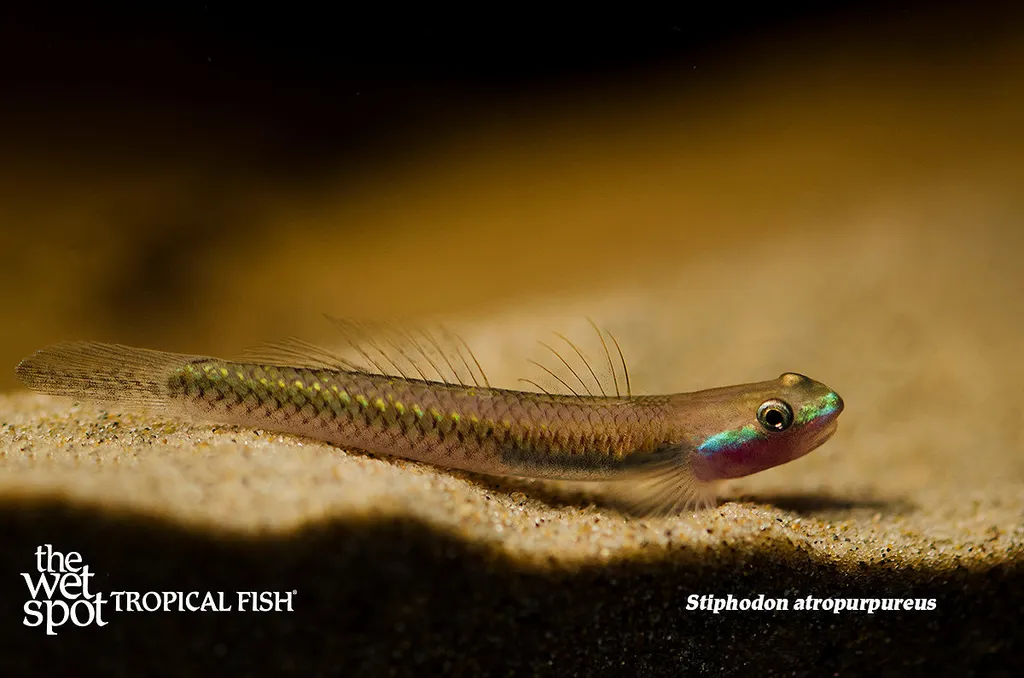
Stiphodon atropurpureus
Also known as Blue neon goby, Cobalt goby, Sumatran cling goby
FreshwaterFish
Care at a glance
- Temperature
- 72–81°F
- 22–27°C
- pH
- 5.5–7.5
- Adult size
- 2 in
- 5 cm
- Minimum tank
- 20 gal
- 75 L
- Temperament
- Mostly peaceful
- Social behavior
- Social
- Swim level
- Bottom
- Difficulty
- Difficult
- Breeding
- Hard
- Rarity
- Common
- Family
- Gobiidae
- Origin
- Found across parts of East and Southeast Asia including southern China, Taiwan, Japan and the Philippines, in clear, fast-flowing coastal streams over rock and gravel.
Overview
Keep it at 22 to 27 C with a pH of 5.5 to 7.5 in an established tank of 75 litres or more with high turnover and lots of oxygen. It is peaceful, though males squabble over grazing spots, so keep it with more females and only very calm tankmates. The main challenge is food, because it eats algae film and biofilm and can slowly starve in a spotless tank. Supplement natural grazing with algae wafers, blanched vegetables and occasional frozen foods.
In the wild
Blue neon dwarf gobies graze the film of algae and micro life that coats sunlit rocks in fast, clear coastal streams. They cling to and hop across stones using a fused pelvic sucker. Give them a mature tank with strong flow, bright light to grow algae, smooth rocks and sand, and a tight lid since they can climb. The tank must already have a good film of green algae and biofilm before they go in.
Good to know
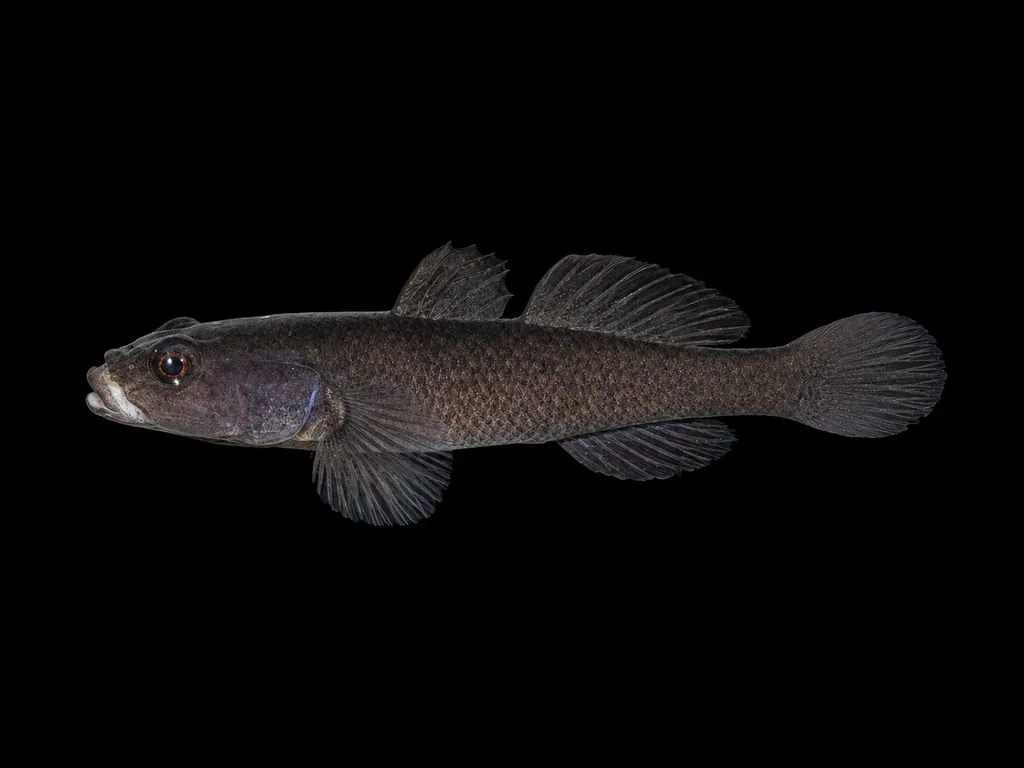
Stiphodon atropurpureus is an amphidromous goby, meaning adults live and breed in fresh water while the hatched larvae drift to the sea and later return upstream as juveniles. Males show an electric blue stripe over a dark body, while females are plainer with a pale striped pattern. Its subterminal mouth is built for scraping aufwuchs off rock surfaces.
Did you know
Because the larvae need to wash out to sea to develop, the species is essentially not bred in home aquariums, so almost all fish in the hobby are wild collected.
Weekly picks
Tank mates
Blue neon dwarf goby is a mostly peaceful, social species that keeps to the bottom. These picks share a community profile with it, are safe together in both directions, and overlap on water type, temperature and pH.
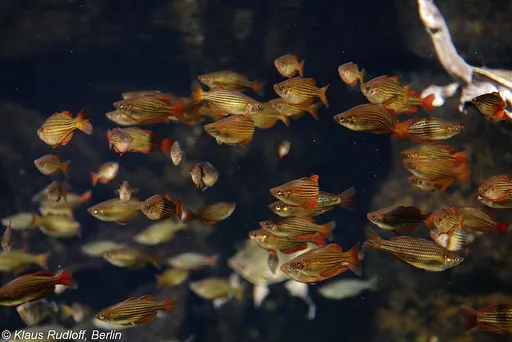
Dwarf rainbowfish
Melanotaenia maccullochi
Freshwater2.8 in (7 cm) · 20 gal (75 L)72–82°F (22–28°C)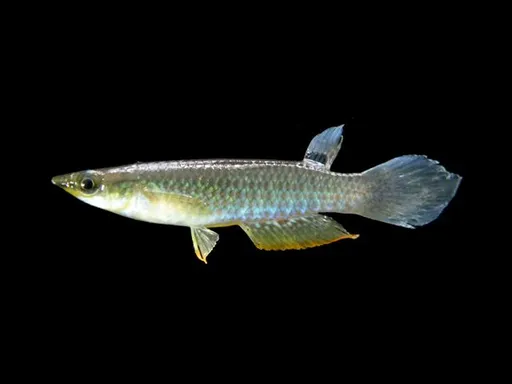
Blue panchax
Aplocheilus panchax
Freshwater3.5 in (9 cm) · 20 gal (75 L)72–82°F (22–28°C)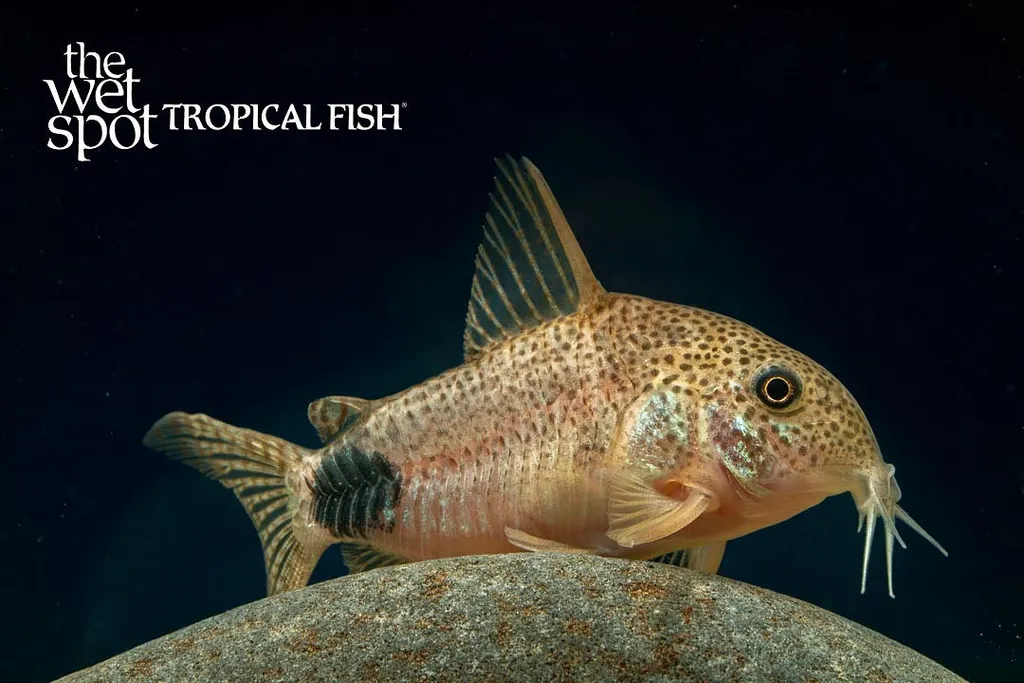
Tailspot cory
Hoplisoma caudimaculatum
Freshwater2 in (5 cm) · 20 gal (75 L)68–81°F (20–27°C)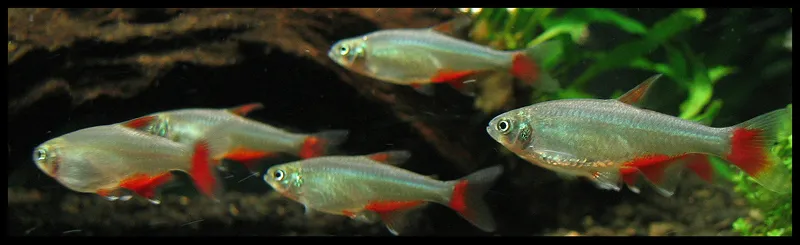
Bloodfin tetra
Aphyocharax anisitsi
Freshwater2.2 in (5.5 cm) · 20 gal (75 L)72–82°F (22–28°C)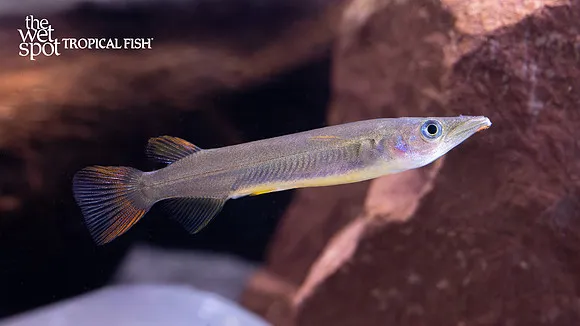
Rex halfbeak
Nomorhamphus rex
Freshwater2.2 in (5.5 cm) · 20 gal (75 L)72–79°F (22–26°C)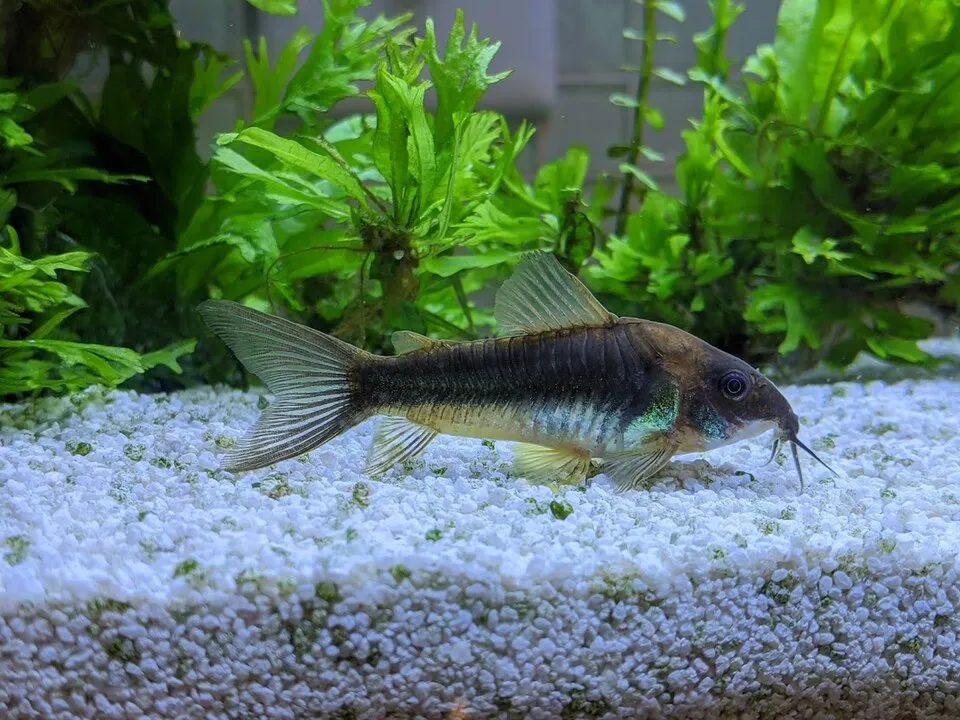
Bronze cory
Osteogaster aenea
Freshwater3 in (7.5 cm) · 20 gal (75 L)70–81°F (21–27°C)
Common questions
What size tank does a Blue neon dwarf goby need?
A Blue neon dwarf goby needs at least 20 gal (75 L). It spends most of its time in the bottom.
What temperature and pH does a Blue neon dwarf goby need?
A Blue neon dwarf goby is comfortable at 72–81°F (22–27°C) with a pH of 5.5–7.5.
How big does a Blue neon dwarf goby get?
An adult Blue neon dwarf goby reaches about 2 in (5 cm).
Related species
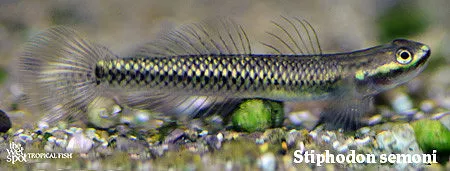 1.8 in (4.5 cm)13 gal (50 L)68–79°F (20–26°C)
Cobalt blue goby
Stiphodon semoni
1.8 in (4.5 cm) · 13 gal (50 L)
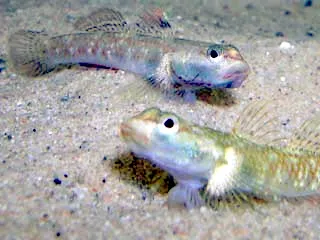 2 in (5 cm)16 gal (60 L)61–75°F (16–24°C)
White-cheek goby
Rhinogobius duospilus
2 in (5 cm) · 16 gal (60 L)
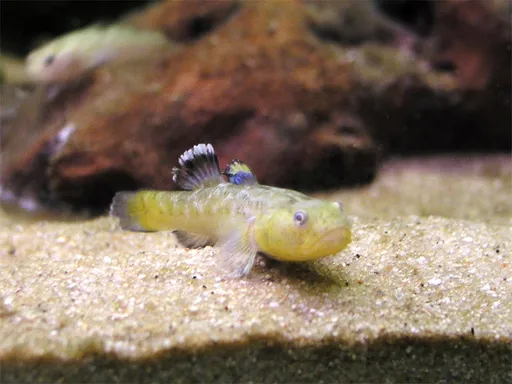 2.4 in (6 cm)16 gal (60 L)64–82°F (18–28°C)
Desert goby
Chlamydogobius eremius
2.4 in (6 cm) · 16 gal (60 L)
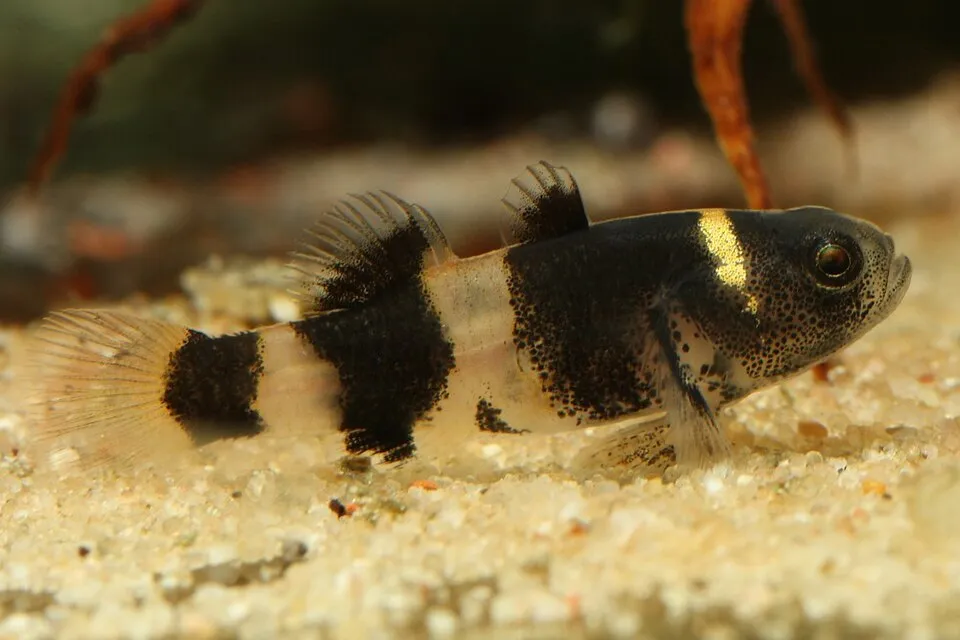 1.6 in (4 cm)12 gal (45 L)72–82°F (22–28°C)
Bumblebee goby
Brachygobius doriae
1.6 in (4 cm) · 12 gal (45 L)
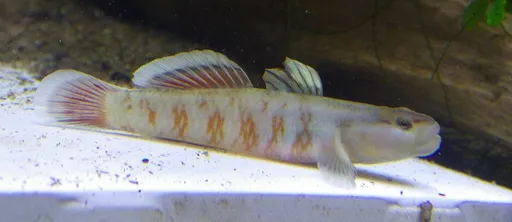 1.6 in (4 cm)12 gal (45 L)61–75°F (16–24°C)
Scarlet goby
Rhinogobius zhoui
1.6 in (4 cm) · 12 gal (45 L)
 3.1 in (8 cm)21 gal (80 L)79–82°F (26–28°C)
Black toraja goby
Mugilogobius sarasinorum
3.1 in (8 cm) · 21 gal (80 L)