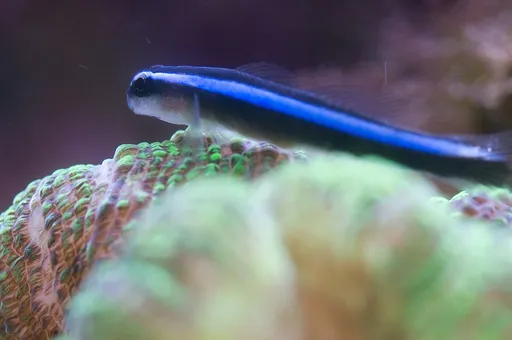
Neon goby
Elacatinus oceanops
Also known as Cleaner Goby, Blue Neon Goby
SaltwaterFish
Care at a glance
- Temperature
- 72–79°F
- 22–26°C
- pH
- 8.1–8.4
- Adult size
- 2 in
- 5 cm
- Minimum tank
- 11 gal
- 40 L
- Temperament
- Peaceful
- Social behavior
- Social
- Swim level
- Bottom
- Difficulty
- Easy
- Breeding
- Medium
- Rarity
- Common
- Reef safe
- Reef safe
- Family
- Gobiidae
- Origin
- Western Atlantic (Florida and the Caribbean)
Overview
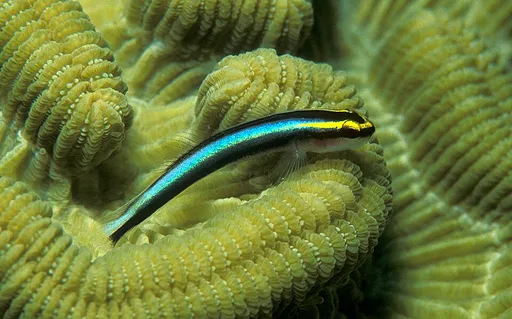
Neon gobies are fully reef safe and will not bother corals or invertebrates. They are peaceful and small enough for almost any community, and they can even help larger tankmates by cleaning parasites, though they should not be relied on as a cure for disease. They may be picked on by very aggressive fish, so choose calm tankmates. They are among the easier marine fish to breed at home, and a bonded pair will spawn in a crevice or shell, though rearing the fry takes tiny live foods.
In the wild
Neon gobies come from Florida and the Caribbean, where they set up cleaning stations on coral heads and rock and pick parasites off larger passing fish. They are small, hardy, and stick close to a perch or crevice, so a nano tank of around 40 liters with rockwork gives them everything they need. A mated pair will share a cleaning station and get along peacefully in the same tank.
Good to know
This is one of the classic cleaner fish of the Atlantic. Its bright blue lateral stripe is a signal that advertises its cleaning service, telling larger fish not to eat it but to line up for a parasite pick instead. It is a Caribbean counterpart to the Indo-Pacific cleaner wrasses and was one of the first marine fish to be reliably captive bred, which is why tank raised neon gobies are widely available.
Did you know
A neon goby will happily set up shop as a cleaner and pick tiny parasites and dead skin off fish many times its size, with the bigger fish holding still and even opening its gills and mouth to let the little goby work.
Symbiotic relationships
Cleaner shrimp, cleaner gobies and their clients
A cleaner holds a station on the reef and advertises it: cleaner shrimp wave their long white antennae and rock from side to side, cleaner wrasses swim a bobbing dance. Fish arrive and pose, head up or head down with fins spread, and hold still while the cleaner picks off parasitic isopods, dead skin and loose scales, working into the mouth and under the gill covers of fish that could swallow it in one bite. The client leaves with fewer parasites and the cleaner eats a meal it never had to hunt. Reef fish queue for it, and a busy station is visited hundreds of times a day.
The skunk cleaner shrimp is the one that does this reliably in an aquarium: it sets up on a rock ledge, and tank fish, tangs and wrasses especially, learn to stop by within days. The fire shrimp cleans too but hides more and works at dusk. Pederson's cleaner shrimp does the same job from the tentacles of its anemone. The neon goby and its relatives are small, hardy cleaners for tanks that cannot take a shrimp. The cleaner wrasses are the difficult ones: many never take prepared food, and both are marked difficult here. None of them will cure an outbreak of ich; they pick off some parasites and keep a healthy fish tidier, and that is the honest claim. Keep every cleaner away from predators such as large hawkfish, triggers, lionfish and big wrasses.
Weekly picks
Tank mates
Neon goby is a peaceful, social species that keeps to the bottom. These picks share a community profile with it, are safe together in both directions, and overlap on water type, temperature and pH.
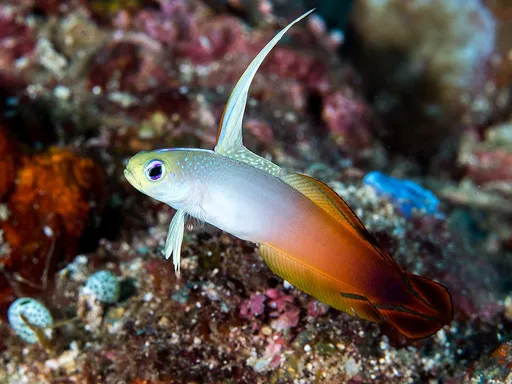
Firefish
Nemateleotris magnifica
Saltwater3.5 in (9 cm) · 20 gal (75 L)72–81°F (22–27°C)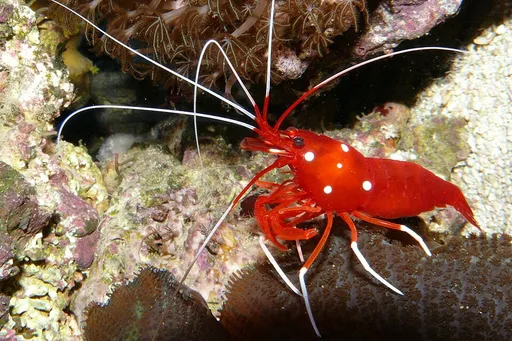
Fire shrimp
Lysmata debelius
Saltwater2.4 in (6 cm) · 20 gal (75 L)72–79°F (22–26°C)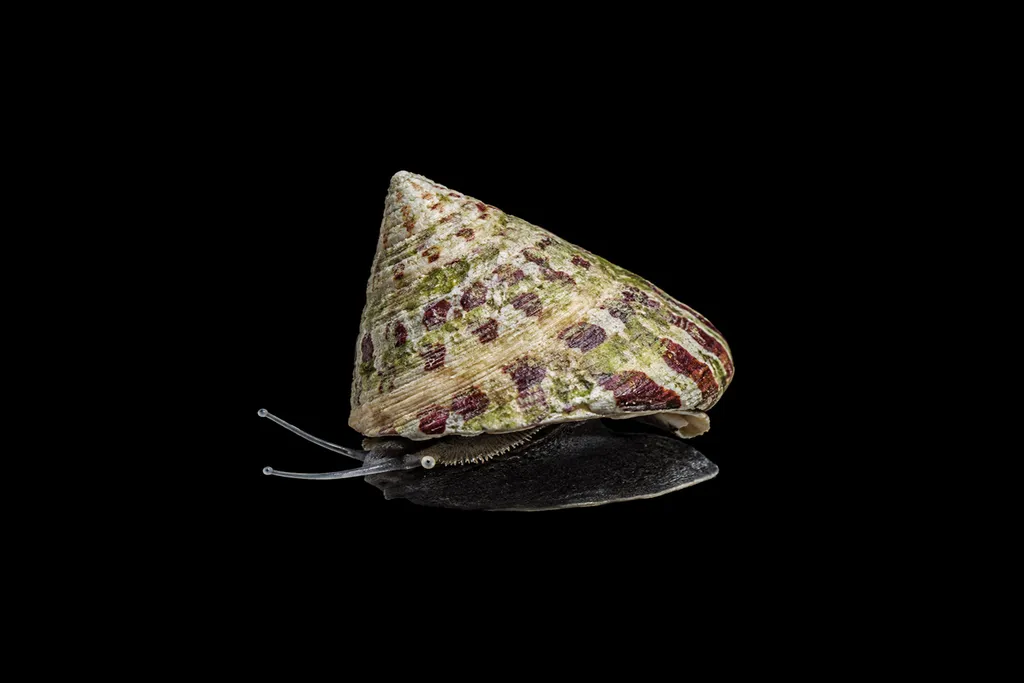
Trochus snail
Trochus sp.
Saltwater1.2 in (3 cm) · 11 gal (40 L)72–79°F (22–26°C)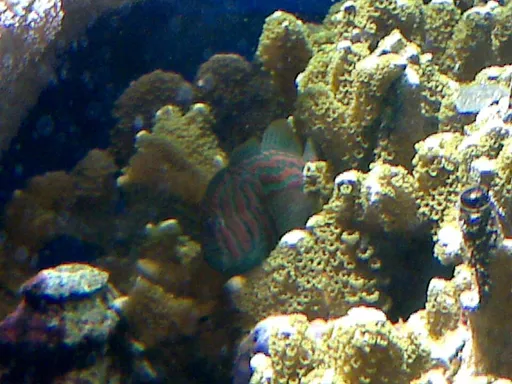
Green clown goby
Gobiodon histrio
Saltwater1.8 in (4.5 cm) · 11 gal (40 L)72–79°F (22–26°C)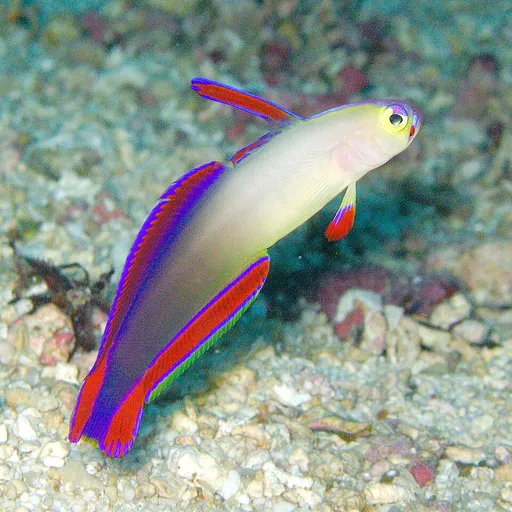
Purple firefish
Nemateleotris decora
Saltwater3.5 in (9 cm) · 20 gal (75 L)72–79°F (22–26°C)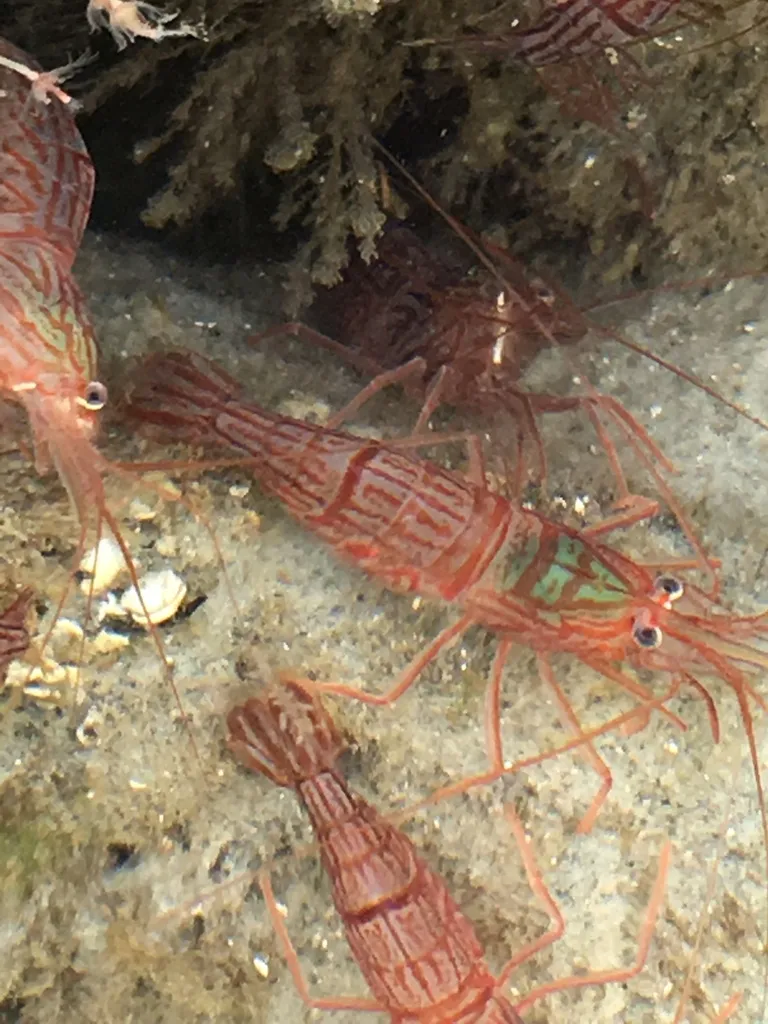
Peppermint shrimp
Lysmata wurdemanni
Saltwater2 in (5 cm) · 11 gal (40 L)72–81°F (22–27°C)
Common questions
What size tank does a Neon goby need?
A Neon goby needs at least 11 gal (40 L). It spends most of its time in the bottom.
What temperature and pH does a Neon goby need?
A Neon goby is comfortable at 72–79°F (22–26°C) with a pH of 8.1–8.4.
How big does a Neon goby get?
An adult Neon goby reaches about 2 in (5 cm).
Related species
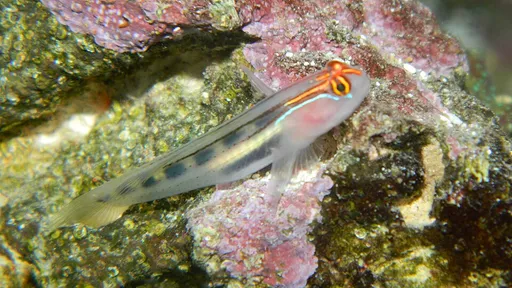 2 in (5 cm)11 gal (40 L)72–79°F (22–26°C)
Red head goby
Elacatinus puncticulatus
2 in (5 cm) · 11 gal (40 L)
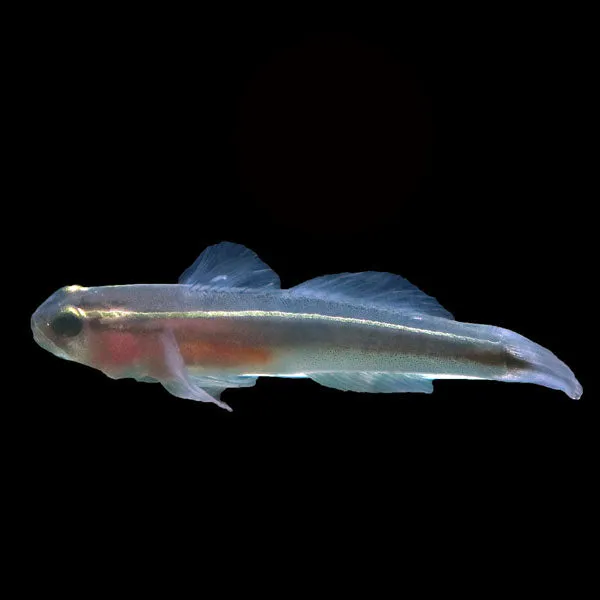 2 in (5 cm)11 gal (40 L)72–79°F (22–26°C)
Yellowline sponge goby
Elacatinus horsti
2 in (5 cm) · 11 gal (40 L)
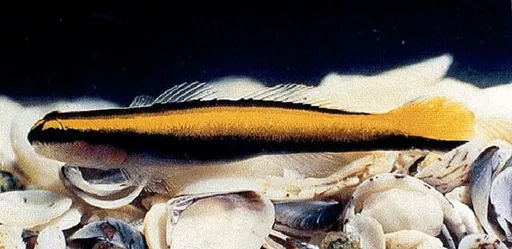 1.6 in (4 cm)11 gal (40 L)72–79°F (22–26°C)
Barber goby
Elacatinus figaro
1.6 in (4 cm) · 11 gal (40 L)
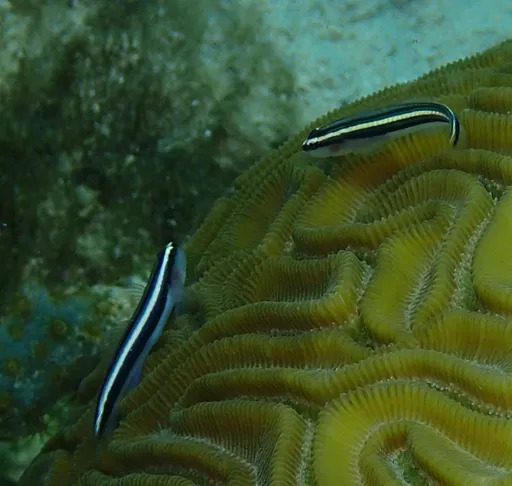 1.6 in (4 cm)11 gal (40 L)72–79°F (22–26°C)
Barsnout cleaner goby
Elacatinus illecebrosus
1.6 in (4 cm) · 11 gal (40 L)
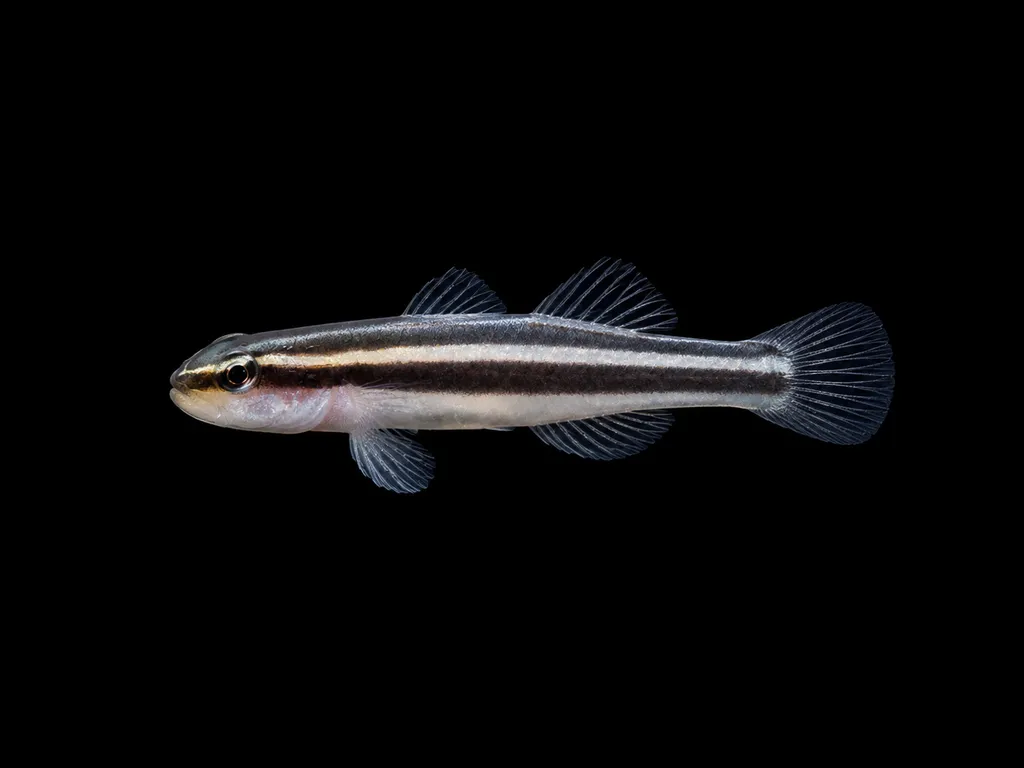 1.6 in (4 cm)11 gal (40 L)72–79°F (22–26°C)
Broadstripe cleaner goby
Elacatinus prochilos
1.6 in (4 cm) · 11 gal (40 L)
 1.6 in (4 cm)13 gal (50 L)75–79°F (24–26°C)
Sharknose goby
Elacatinus evelynae
1.6 in (4 cm) · 13 gal (50 L)