Harlequin shrimp
Hymenocera picta
Also known as Clown Shrimp, Painted Shrimp, Painted Dancing Shrimp
SaltwaterShrimp
Care at a glance
- Temperature
- 75–81°F
- 24–27°C
- pH
- 8.1–8.4
- Adult size
- 2 in
- 5 cm
- Minimum tank
- 11 gal
- 40 L
- Temperament
- Peaceful
- Social behavior
- Social
- Swim level
- Bottom
- Difficulty
- Medium
- Breeding
- Hard
- Rarity
- Rare
- Reef safe
- Reef safe with caution
- Family
- Gnathophyllidae
- Origin
- Indo-Pacific reefs (Hawaii to the Red Sea)
Overview
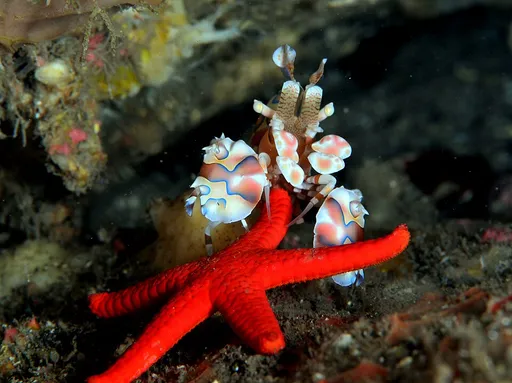
Reef safe with corals and fish, since it has no interest in either. The catch is echinoderms: this shrimp eats live starfish almost exclusively, including small Asterina pest stars, chocolate chip stars, and linckia stars, so keeping one means committing to a steady supply of feeder starfish for its lifetime. Best bought as an already bonded pair. A single shrimp does fine on its own but won't breed. Not a cleanup crew animal, and not compatible with a tank that has a prized starfish in it.
In the wild
Found on coral rubble and reef flats throughout the Indo-Pacific, from Hawaii and French Polynesia through the Red Sea, usually at depths of about 1–30 m. Pairs stay close to a den in the reef structure near a steady supply of starfish, their only food source. The aquarium setup needs to match that: rockwork with caves, plus a keeper willing to source live starfish long term.
Good to know
One of only two species in the genus Hymenocera, easily recognized by its flattened, paddle shaped claws and mottled purple and cream body. Harlequin shrimp feed almost exclusively on sea stars. A bonded pair works together to flip a star onto its back and feeds on the tube feet first, which keeps the star alive and the meal fresh for days while they work through it. Males run noticeably smaller than females.
Did you know
A well fed pair can work through two or three medium starfish a week, and many keepers end up culturing Asterina stars in a separate tank just to keep the pantry stocked.
Weekly picks
Tank mates
Harlequin shrimp is a peaceful, social species that keeps to the bottom. These picks share a community profile with it, are safe together in both directions, and overlap on water type, temperature and pH.
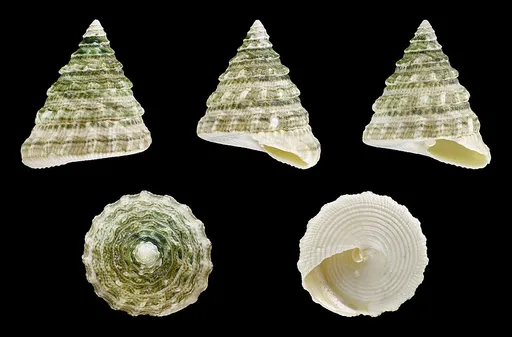
Pyramid top snail
Tectus fenestratus
Saltwater2 in (5 cm) · 11 gal (40 L)75–81°F (24–27°C)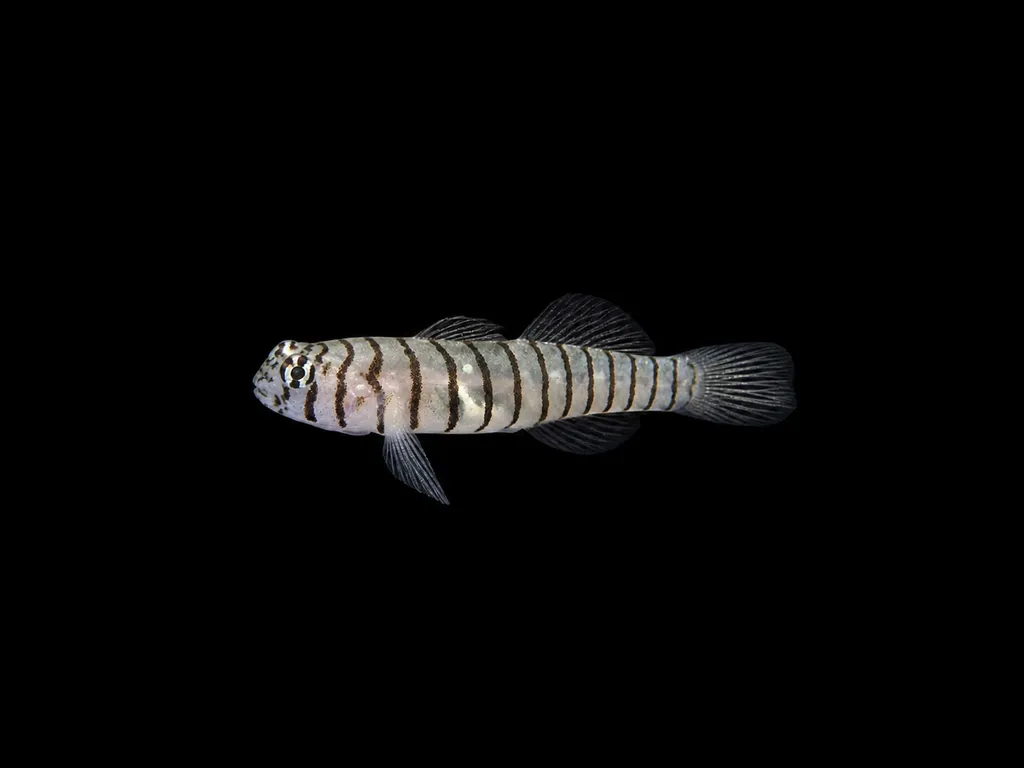
Tiger goby
Tigrigobius macrodon
Saltwater2 in (5 cm) · 11 gal (40 L)72–81°F (22–27°C)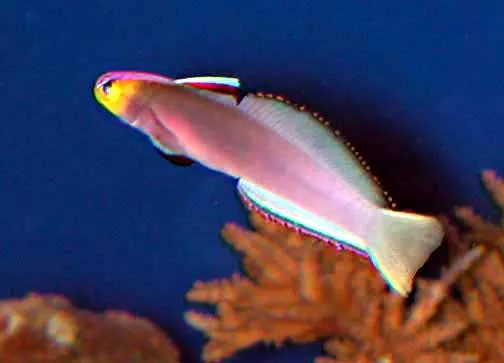
Helfrich's firefish
Nemateleotris helfrichi
Saltwater2.4 in (6 cm) · 20 gal (75 L)73–81°F (23–27°C)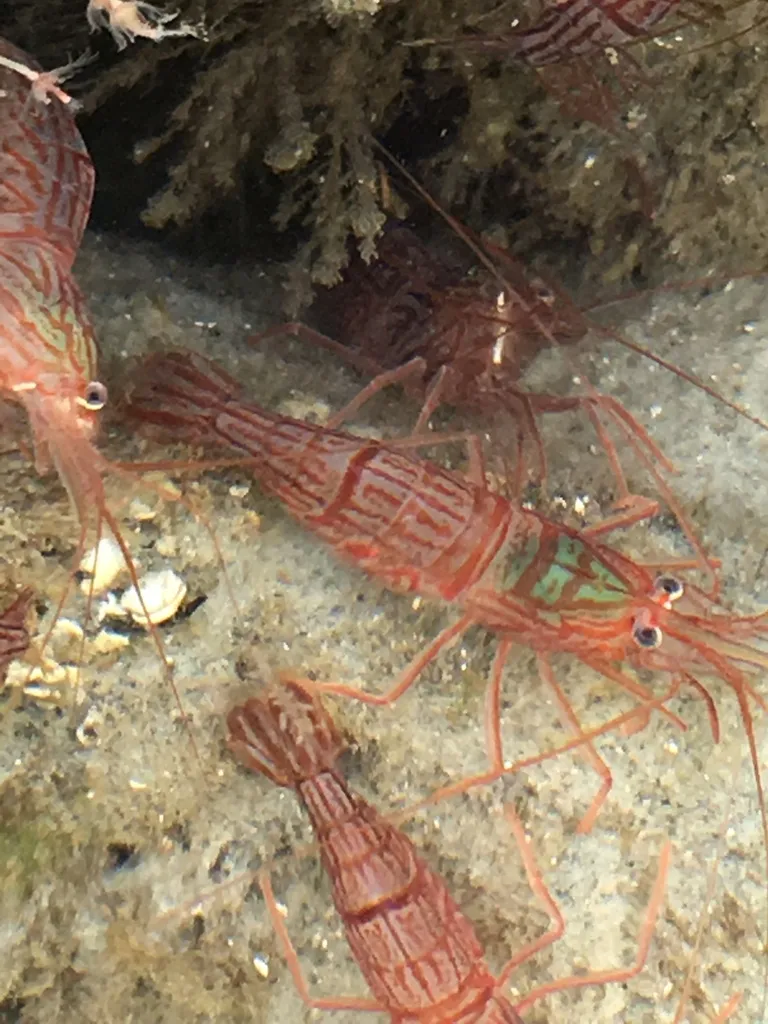
Peppermint shrimp
Lysmata wurdemanni
Saltwater2 in (5 cm) · 11 gal (40 L)72–81°F (22–27°C)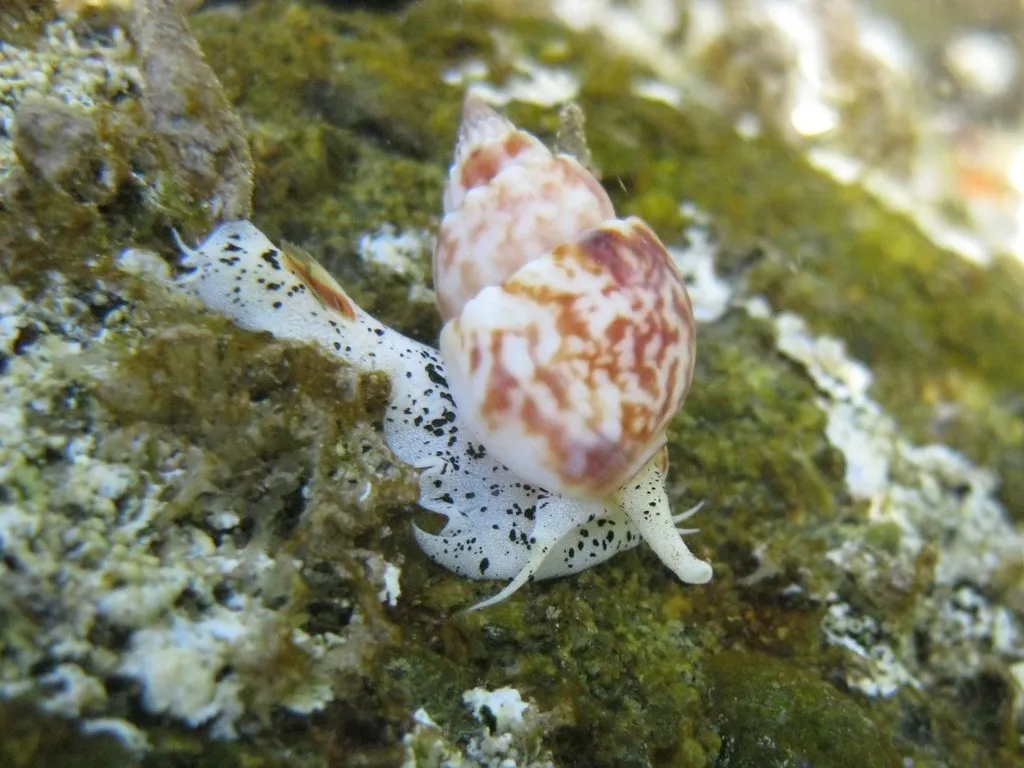
Nassarius snail
Nassarius sp.
Saltwater1 in (2.5 cm) · 11 gal (40 L)72–79°F (22–26°C)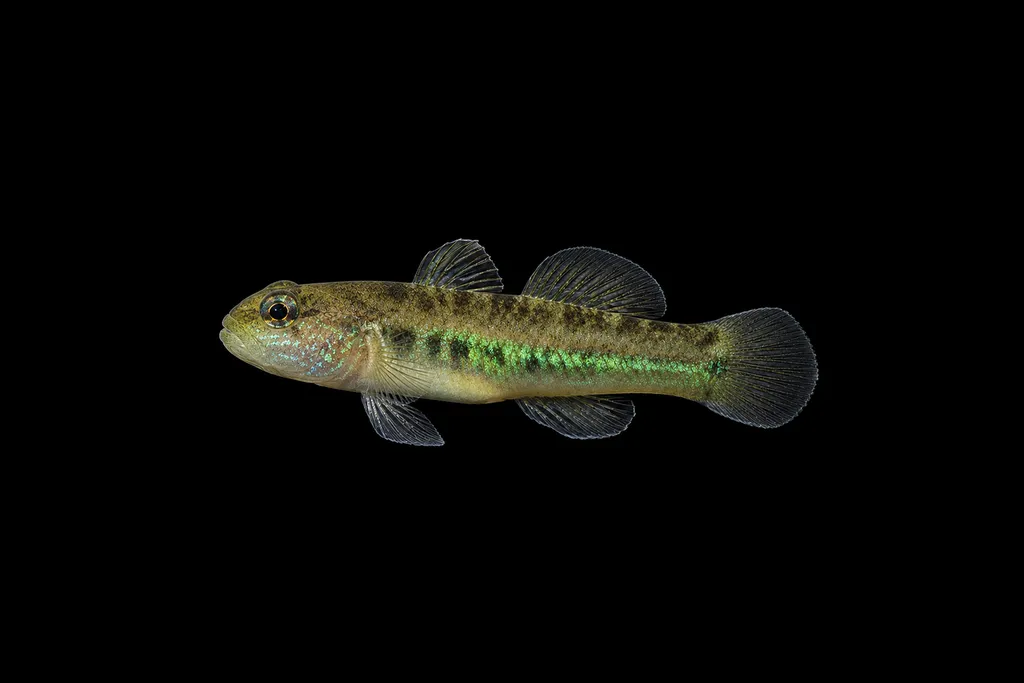
Panamanian greenbanded goby
Tigrigobius panamensis
Saltwater1.2 in (3 cm) · 11 gal (40 L)75–81°F (24–27°C)
Common questions
What size tank does a Harlequin shrimp need?
A Harlequin shrimp needs at least 11 gal (40 L). It spends most of its time in the bottom.
What temperature and pH does a Harlequin shrimp need?
A Harlequin shrimp is comfortable at 75–81°F (24–27°C) with a pH of 8.1–8.4.
How big does a Harlequin shrimp get?
An adult Harlequin shrimp reaches about 2 in (5 cm).
Related species
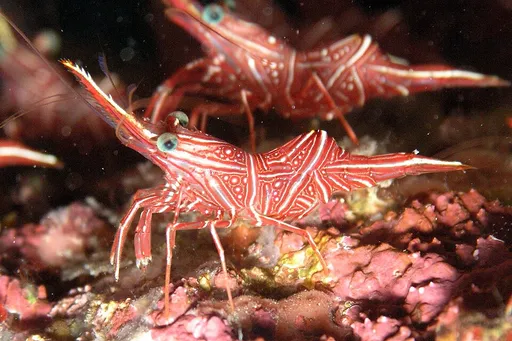 2 in (5 cm)16 gal (60 L)75–81°F (24–27°C)
Camel / dancing shrimp
Rhynchocinetes durbanensis
2 in (5 cm) · 16 gal (60 L)
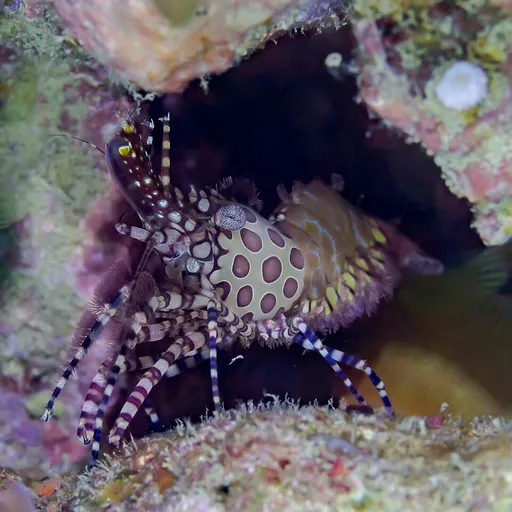 2 in (5 cm)11 gal (40 L)75–81°F (24–27°C)
Marble shrimp
Saron marmoratus
2 in (5 cm) · 11 gal (40 L)
- 2 in (5 cm)11 gal (40 L)72–81°F (22–27°C)
Peppermint shrimp
Lysmata wurdemanni
2 in (5 cm) · 11 gal (40 L)
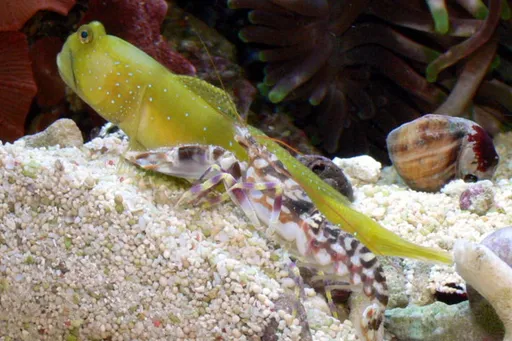 2 in (5 cm)11 gal (40 L)75–81°F (24–27°C)
Tiger pistol shrimp
Alpheus bellulus
2 in (5 cm) · 11 gal (40 L)
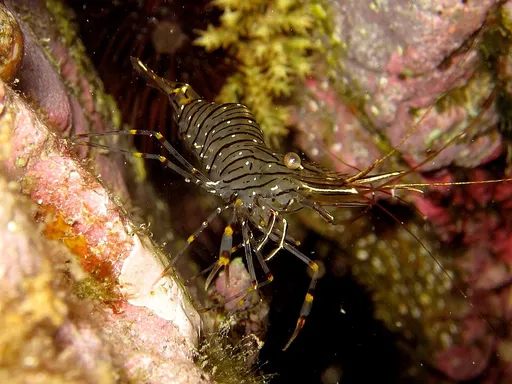 2.4 in (6 cm)11 gal (40 L)61–79°F (16–26°C)
Elegant rockpool shrimp
Palaemon elegans
2.4 in (6 cm) · 11 gal (40 L)
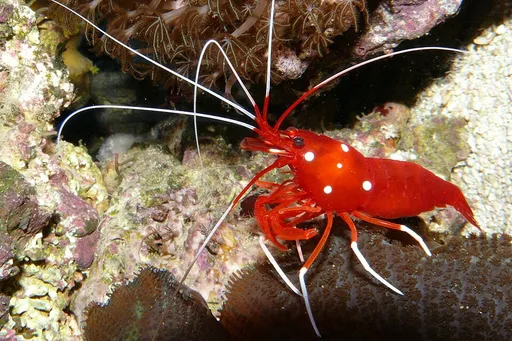 2.4 in (6 cm)20 gal (75 L)72–79°F (22–26°C)
Fire shrimp
Lysmata debelius
2.4 in (6 cm) · 20 gal (75 L)