Royal gramma
Gramma loreto
Also known as Fairy Basslet, Royal Gramma Basslet
SaltwaterFish
Care at a glance
- Temperature
- 72–81°F
- 22–27°C
- pH
- 8.1–8.4
- Adult size
- 3.1 in
- 8 cm
- Minimum tank
- 29 gal
- 110 L
- Temperament
- Mostly peaceful
- Social behavior
- Solitary
- Swim level
- Middle
- Diet
- Carnivore
- Difficulty
- Beginner
- Breeding
- Cave spawner · Medium
- Rarity
- Very common
- Reef safe
- Reef safe
- Family
- Grammatidae
- Origin
- Western Atlantic and Caribbean, including the Bahamas, the Antilles, and reefs off northern South America
Overview
The royal gramma is a hardy, easygoing basslet that makes its home in the rockwork of a reef tank. It is a good first saltwater fish.
Did you know
The royal gramma often swims and rests upside down against the roof of a cave or ledge. It orients its body to the rock rather than to gravity, so a fish hanging belly-up is normal, not a sign of trouble.
Caring for the royal gramma
Give the royal gramma a tank of at least 29 gal (110 L) with plenty of live rock full of caves and dark nooks. It spends its time near a chosen cave and darts out to grab bits of food from the water.
Hold the water at 72 to 81°F (22 to 27°C) and a pH of 8.1 to 8.4. The royal gramma is a carnivore, so feed a varied meaty diet of mysis, brine shrimp and quality frozen preparations.
It is peaceful toward unrelated tank mates and fully reef safe. It ignores corals and leaves ornamental shrimp, crabs and snails alone. It is territorial toward its own kind and the similar-looking blackcap basslet, so keep just one per tank unless the system is large.
The male tends the eggs, which are bound into a nest in a rock crevice. Breeding takes some dedication, but the royal gramma is one of the more approachable marine fish to breed.
Good to know
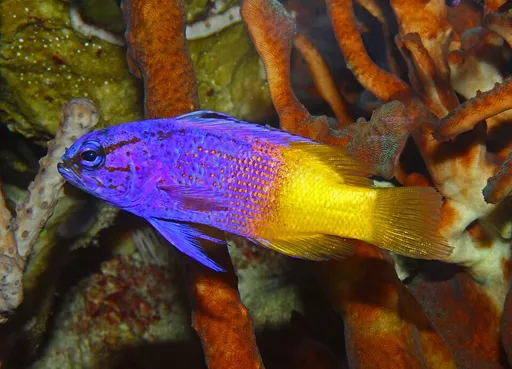
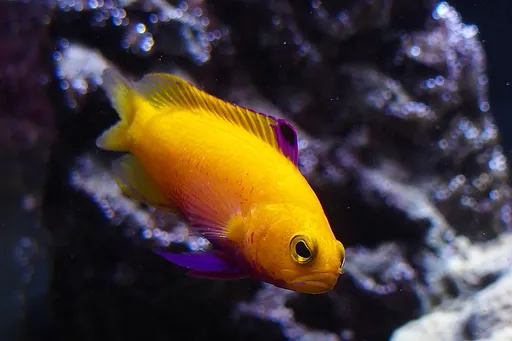
The royal gramma, Gramma loreto, is a small basslet in the family Grammatidae. Its body splits sharply from vivid purple at the front to golden yellow at the rear. A dark spot marks the front of the dorsal fin. It is also sold as the fairy basslet.
In the wild
Royal grammas live on reef walls and in caves across the western Atlantic and the Caribbean. Their range takes in the Bahamas, the Antilles and reefs off northern South America. They favor shaded overhangs and steep faces. Each fish stays close to a home crevice that it defends.
Weekly picks
Tank mates
The royal gramma is a mostly peaceful, solitary species that keeps to the middle. These picks share a community profile with it, are safe together in both directions, and overlap on water type, temperature and pH.
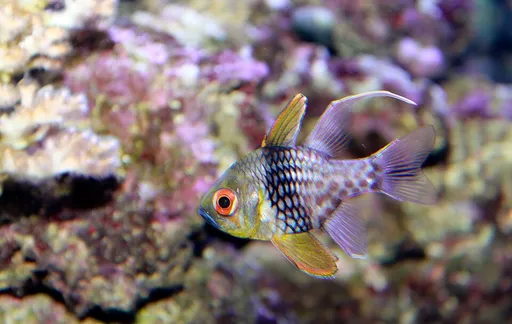
Pajama cardinalfish
Sphaeramia nematoptera
Saltwater3.1 in (8 cm) · 29 gal (110 L)72–81°F (22–27°C)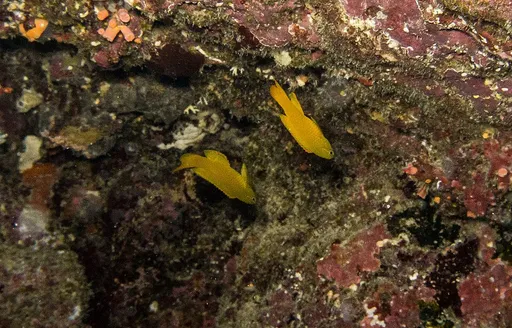
Yellow assessor
Assessor flavissimus
Saltwater2.8 in (7 cm) · 29 gal (110 L)72–79°F (22–26°C)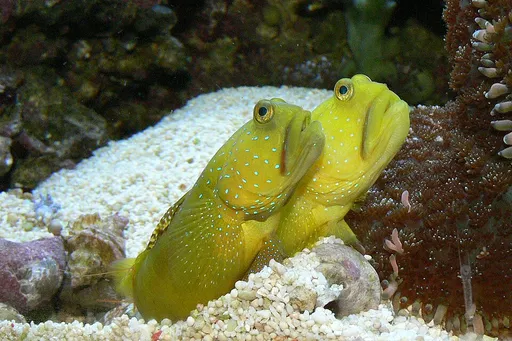
Yellow watchman goby
Cryptocentrus cinctus
Saltwater3.5 in (9 cm) · 20 gal (75 L)72–81°F (22–27°C)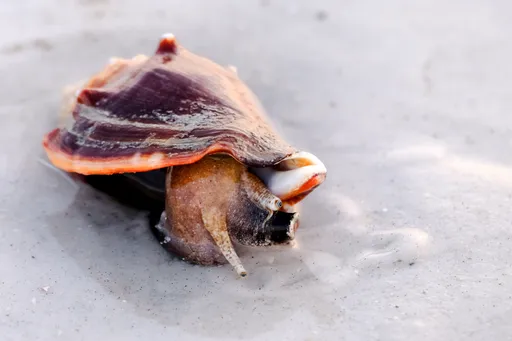
Fighting conch
Strombus alatus
Saltwater3.1 in (8 cm) · 20 gal (75 L)75–81°F (24–27°C)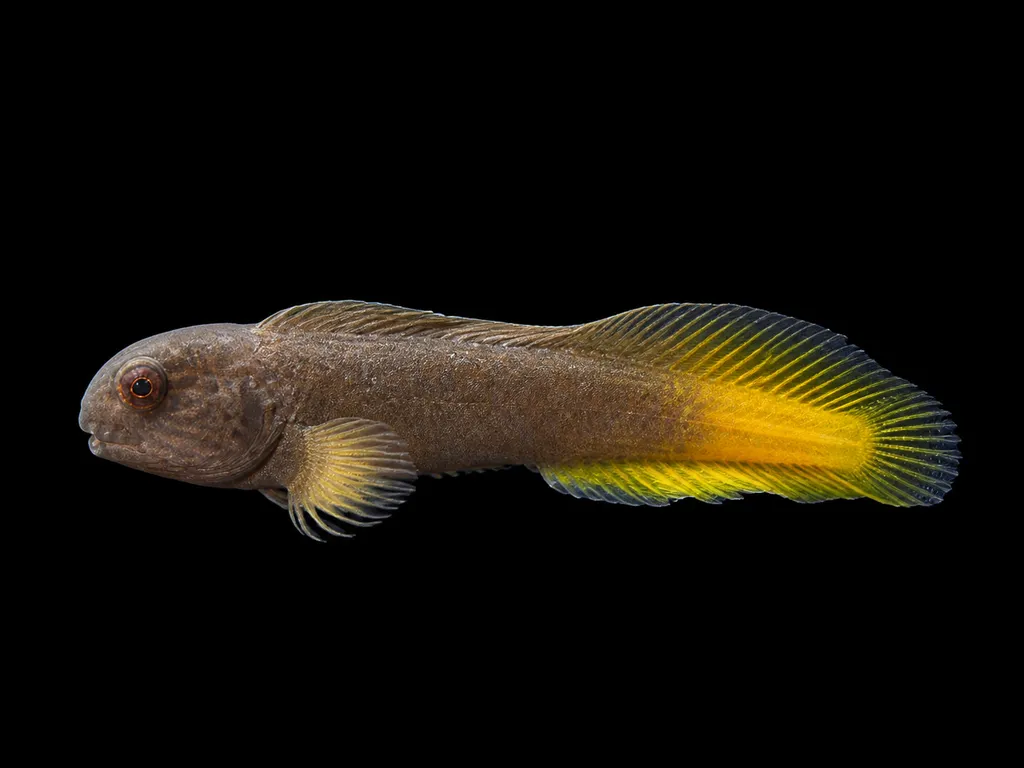
Flametail blenny
Enchelyurus flavipes
Saltwater3 in (7.5 cm) · 29 gal (110 L)72–79°F (22–26°C)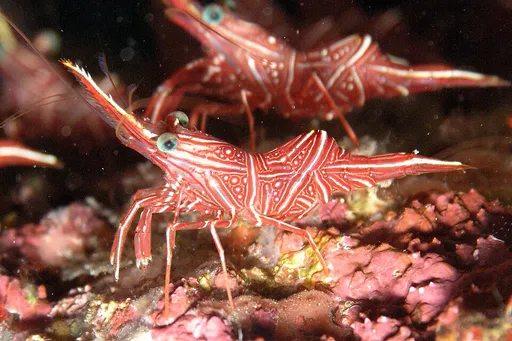
Camel / dancing shrimp
Rhynchocinetes durbanensis
Saltwater2 in (5 cm) · 16 gal (60 L)75–81°F (24–27°C)
Common questions
What size tank does a royal gramma need?
A royal gramma needs at least 29 gal (110 L). It spends most of its time in the middle.
What temperature and pH does a royal gramma need?
A royal gramma is comfortable at 72–81°F (22–27°C) with a pH of 8.1–8.4.
What does a royal gramma eat?
A royal gramma is a carnivore. It eats a varied meaty diet of mysis, brine shrimp and quality frozen preparations, grabbing bits of food from the water near its cave.
How big does a royal gramma get?
An adult royal gramma reaches about 3.1 in (8 cm).
How does a royal gramma breed?
The male royal gramma tends eggs bound into a nest in a rock crevice. It is one of the more approachable marine fish for a dedicated hobbyist to breed.
Related species
 2.8 in (7 cm)29 gal (110 L)75–81°F (24–27°C)
Golden basslet
Gramma dejongi
2.8 in (7 cm) · 29 gal (110 L)
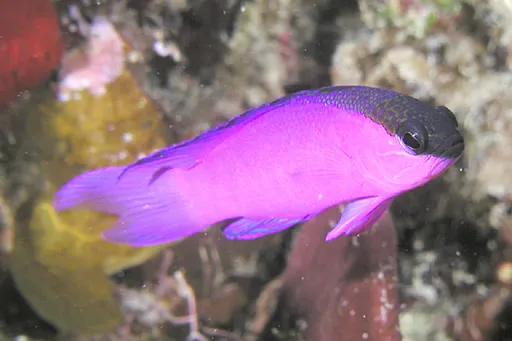 3.9 in (10 cm)29 gal (110 L)72–81°F (22–27°C)
Blackcap basslet
Gramma melacara
3.9 in (10 cm) · 29 gal (110 L)
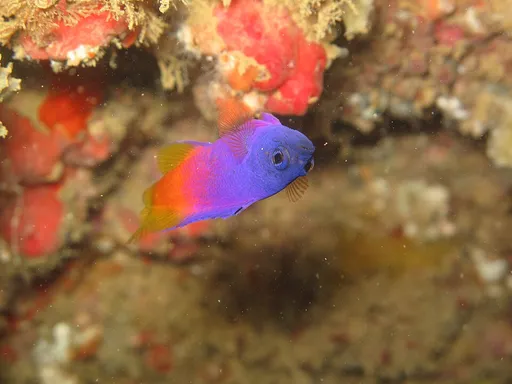 3.5 in (9 cm)40 gal (150 L)73–81°F (23–27°C)
Brazilian gramma
Gramma brasiliensis
3.5 in (9 cm) · 40 gal (150 L)
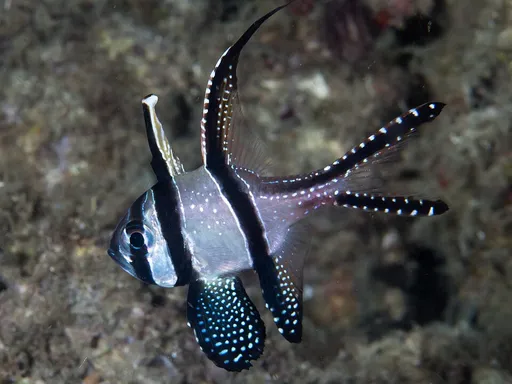 3.1 in (8 cm)29 gal (110 L)73–82°F (23–28°C)
Banggai cardinalfish
Pterapogon kauderni
3.1 in (8 cm) · 29 gal (110 L)
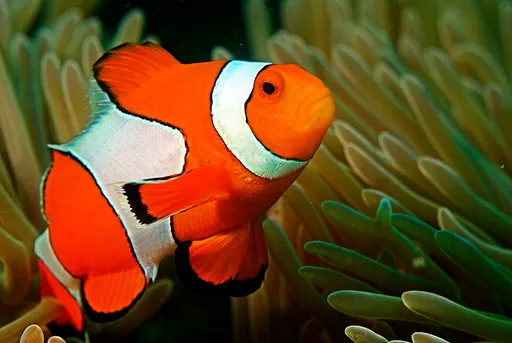 3.1 in (8 cm)20 gal (75 L)75–82°F (24–28°C)
Ocellaris clownfish
Amphiprion ocellaris
3.1 in (8 cm) · 20 gal (75 L)
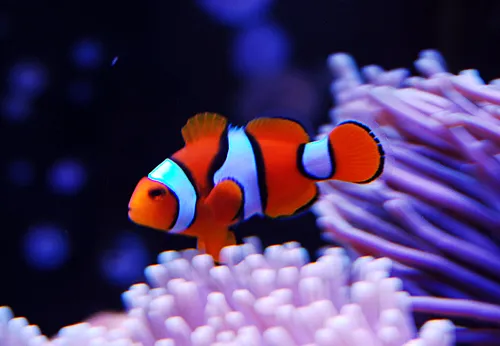 3.1 in (8 cm)20 gal (75 L)75–82°F (24–28°C)
Percula clownfish
Amphiprion percula
3.1 in (8 cm) · 20 gal (75 L)