Pajama cardinalfish
Sphaeramia nematoptera
Also known as Pyjama Cardinalfish, Spotted Cardinalfish, Coral Cardinalfish
SaltwaterFish
Care at a glance
- Temperature
- 72–81°F
- 22–27°C
- pH
- 8.1–8.4
- Adult size
- 3.1 in
- 8 cm
- Minimum tank
- 29 gal
- 110 L
- Temperament
- Peaceful
- Social behavior
- Social
- Swim level
- Middle
- Diet
- Carnivore
- Difficulty
- Easy
- Breeding
- Mouthbrooder · Medium
- Rarity
- Very common
- Reef safe
- Reef safe
- Family
- Apogonidae
- Origin
- Indo-West Pacific (Java to Fiji, north to Ryukyu Islands)
Overview
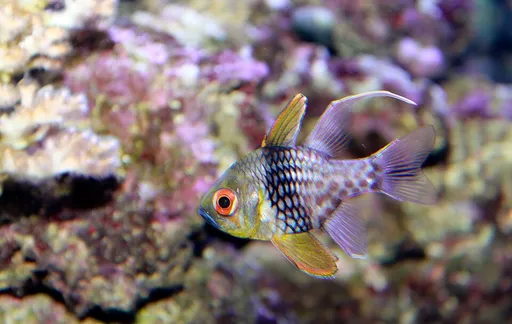
The pajama cardinalfish is a peaceful, reef-safe cardinalfish that hovers in the middle of the tank. It is easy to keep and a good first marine fish.
Did you know
A group of pajama cardinalfish will often stack up almost motionless under the same coral branch during the day. They drift together as if wearing matching pajamas, then spread out to hunt once the lights dim.
Caring for the pajama cardinalfish
Keep pajama cardinalfish in at least 29 gal (110 L), with rockwork or coral branches to hang beneath and open water in front. They feed largely at night in the wild, so they appreciate cover during bright daylight.
Hold the water at 72 to 81°F (22 to 27°C) and a pH of 8.1 to 8.4. Offer frequent small meaty feedings of mysis and enriched brine shrimp.
Pajama cardinalfish are among the more peaceful marine fish and settle quickly into a calm community. They do well as a pair or a small group, though individuals can bicker, pair off and get pushy when breeding. Give a group room to spread out. They leave corals and clams alone but will eat very small ornamental shrimp that fit in their mouths.
The male is a mouthbrooder and incubates the fertilized eggs in his mouth for roughly one to four weeks. He releases well-developed fry that still need tiny live foods such as rotifers and copepods. That makes rearing them harder than spawning them.
Good to know
The pajama cardinalfish, Sphaeramia nematoptera, is a cardinalfish in the family Apogonidae. It has a green face, a bright orange band and red polka dots on a pale rear body. This pattern breaks up the fish's outline against a busy reef backdrop. It is also sold as the spotted or coral cardinalfish.
In the wild
Pajama cardinalfish live over sheltered lagoon reefs and among branching corals in the Indo-West Pacific, from Java to Fiji and north to the Ryukyu Islands. They hover in loose groups by day and become more active at dusk.
Weekly picks
Tank mates
The pajama cardinalfish is a peaceful, social species that keeps to the middle. These picks share a community profile with it, are safe together in both directions, and overlap on water type, temperature and pH.
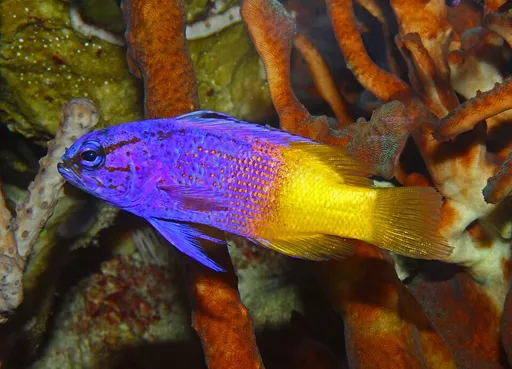
Royal gramma
Gramma loreto
Saltwater3.1 in (8 cm) · 29 gal (110 L)72–81°F (22–27°C)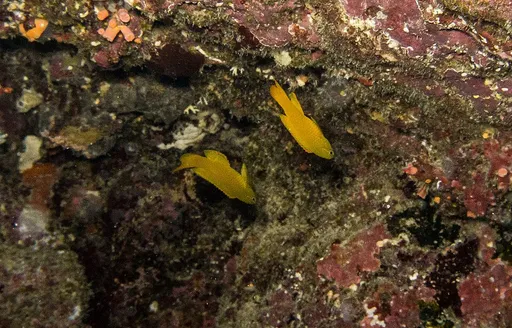
Yellow assessor
Assessor flavissimus
Saltwater2.8 in (7 cm) · 29 gal (110 L)72–79°F (22–26°C)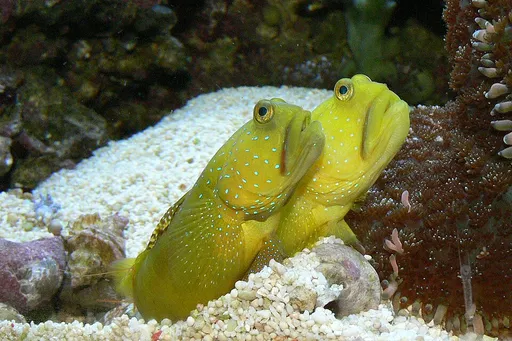
Yellow watchman goby
Cryptocentrus cinctus
Saltwater3.5 in (9 cm) · 20 gal (75 L)72–81°F (22–27°C)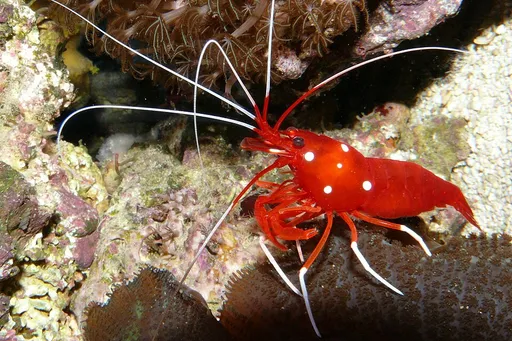
Fire shrimp
Lysmata debelius
Saltwater2.4 in (6 cm) · 20 gal (75 L)72–79°F (22–26°C)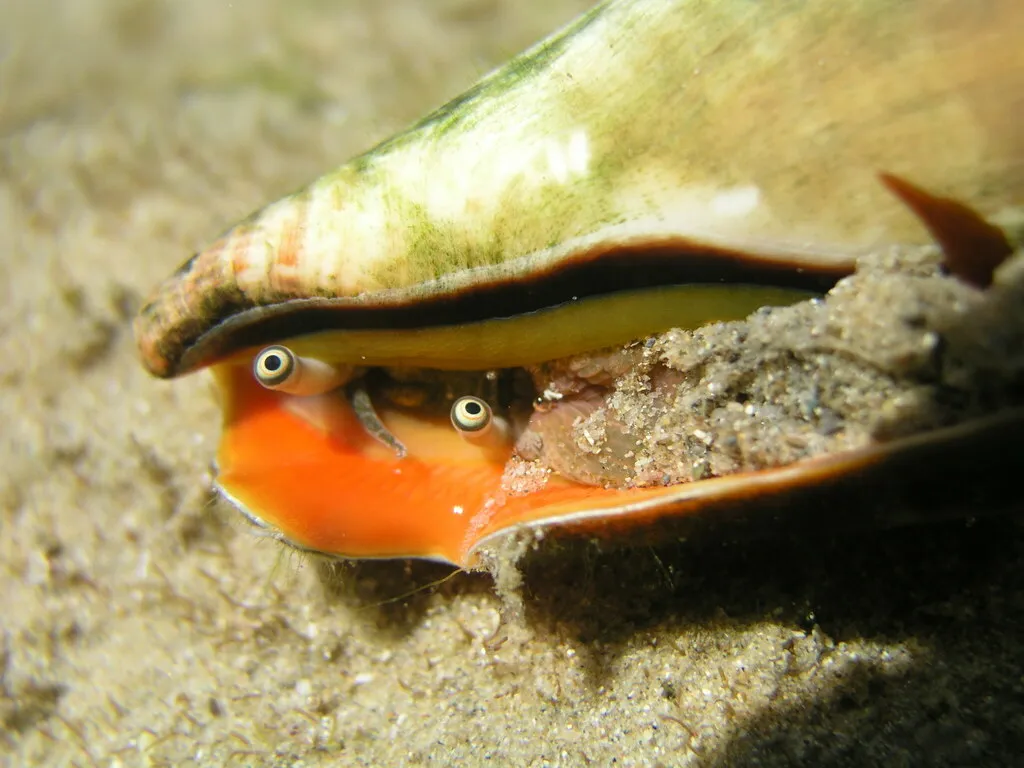
Tiger / strawberry conch
Conomurex luhuanus
Saltwater2.8 in (7 cm) · 20 gal (75 L)75–81°F (24–27°C)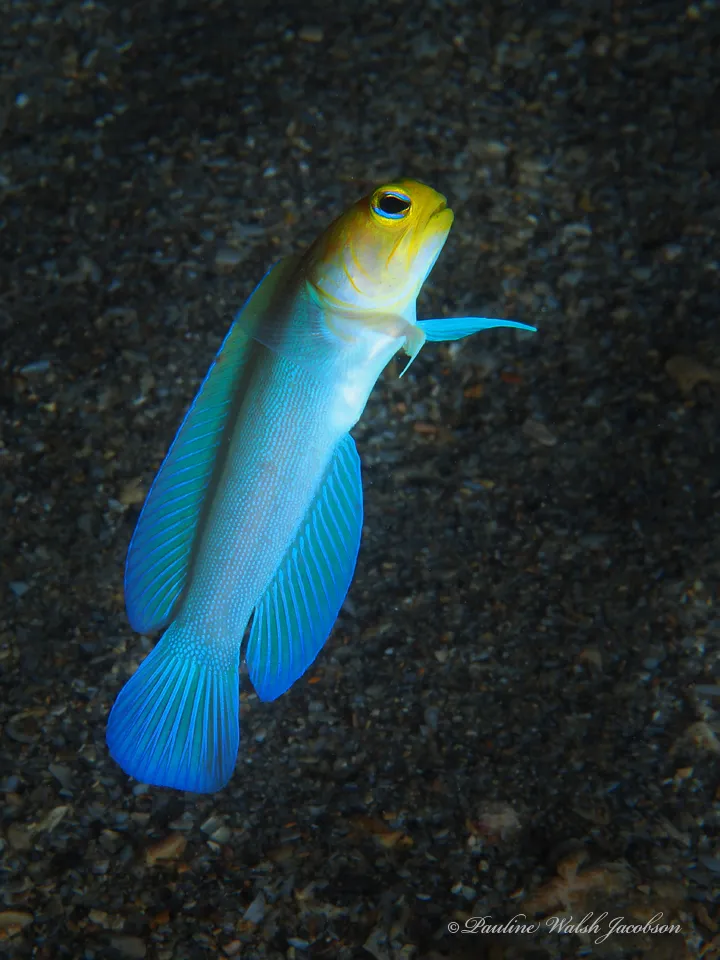
Pearly jawfish
Opistognathus aurifrons
Saltwater3.9 in (10 cm) · 29 gal (110 L)73–81°F (23–27°C)
Common questions
What size tank does a pajama cardinalfish need?
A pajama cardinalfish needs at least 29 gal (110 L). It spends most of its time in the middle.
What temperature and pH does a pajama cardinalfish need?
A pajama cardinalfish is comfortable at 72–81°F (22–27°C) with a pH of 8.1–8.4.
What does a pajama cardinalfish eat?
A pajama cardinalfish eats frequent small meaty feedings of mysis and enriched brine shrimp. It will also eat very small ornamental shrimp that fit in its mouth.
How big does a pajama cardinalfish get?
An adult pajama cardinalfish reaches about 3.1 in (8 cm).
How does a pajama cardinalfish breed?
Pajama cardinalfish are mouthbrooders, and the male holds the eggs in his mouth for roughly one to four weeks. The fry need tiny live foods such as rotifers and copepods, so rearing them is harder than spawning them.
Related species
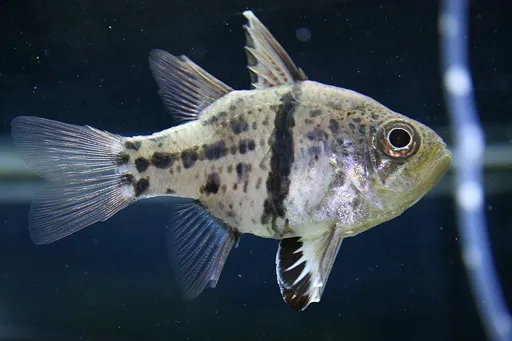 3.9 in (10 cm)30 gal (115 L)75–82°F (24–28°C)
Orbiculate cardinalfish
Sphaeramia orbicularis
3.9 in (10 cm) · 30 gal (115 L)
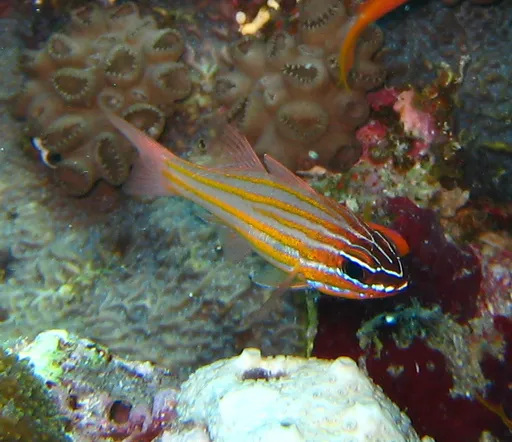 3.1 in (8 cm)30 gal (114 L)72–79°F (22–26°C)
Yellowstriped cardinalfish
Ostorhinchus cyanosoma
3.1 in (8 cm) · 30 gal (114 L)
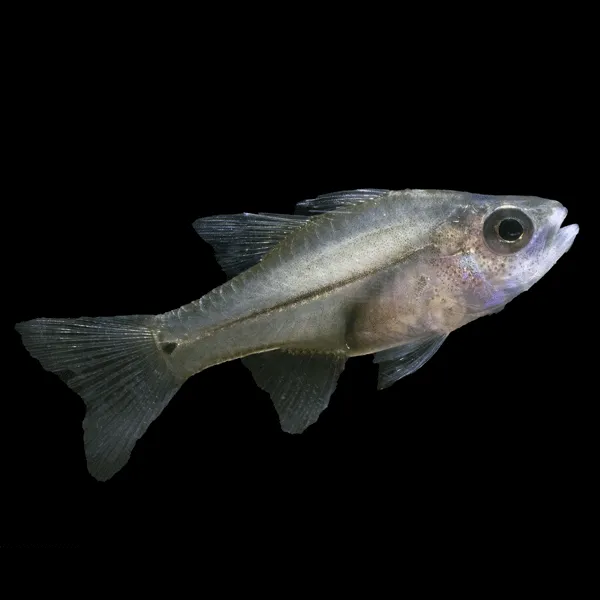 3.5 in (9 cm)50 gal (190 L)72–79°F (22–26°C)
Amboina cardinalfish
Fibramia amboinensis
3.5 in (9 cm) · 50 gal (190 L)
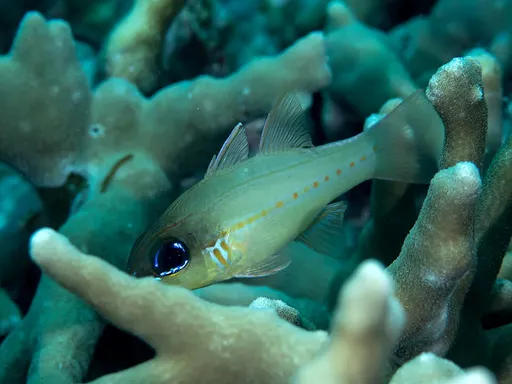 3.9 in (10 cm)29 gal (110 L)72–79°F (22–26°C)
Seale's cardinalfish
Ostorhinchus sealei
3.9 in (10 cm) · 29 gal (110 L)
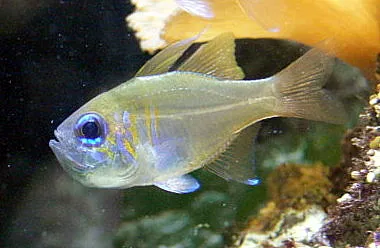 2.4 in (6 cm)30 gal (114 L)72–79°F (22–26°C)
Threadfin cardinalfish
Zoramia leptacantha
2.4 in (6 cm) · 30 gal (114 L)
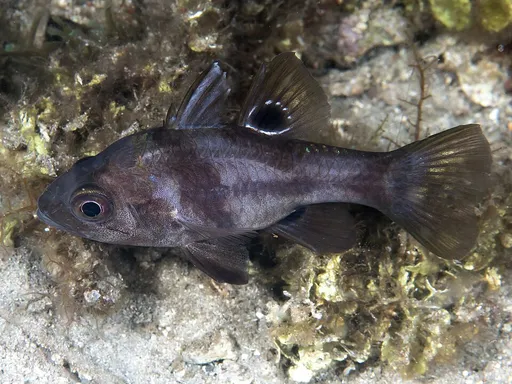 4.3 in (11 cm)29 gal (110 L)72–79°F (22–26°C)
Black cardinalfish
Apogonichthyoides melas
4.3 in (11 cm) · 29 gal (110 L)