Aquarium plants without CO2
Not every planted tank needs a CO2 system. These plants grow well without injected CO2, so you can keep a green tank with less equipment. Each profile lists the light and placement a plant prefers.
At a glance
- Height
- 0–59.1 in
- 0 in (0.1 cm) to 59.1 in (150 cm); half the list stays at 9.8 in (25 cm) or under
- Temperature
- 68–82°F
- 20–28°C, most of the list
- Light
- 66 low light
- 36 medium light · 8 high light
- Growth
- 55 slow growing
- 15 medium growth · 40 fast growing
- Difficulty
- 104 easy
- 6 medium
77 plants and 33 varieties
Start here
The plants that do not need CO2
The java fern lists CO2 as unnecessary and grows in low light tied to wood, 11.8 inches (30 cm) tall, marked beginner. The anubias nana is the same rating at 4.7 inches (12 cm). The cryptocoryne wendtii is the rooted plant, marked beginner for low light, 9.8 inches (25 cm). The vallisneria spiralis spreads by runners to 19.7 inches (50 cm) with no CO2 and no fuss. The hornwort grows fast in any light and never needs planting. The amazon frogbit floats, marked beginner, with roots that trail 2 inches (5 cm) into the water.
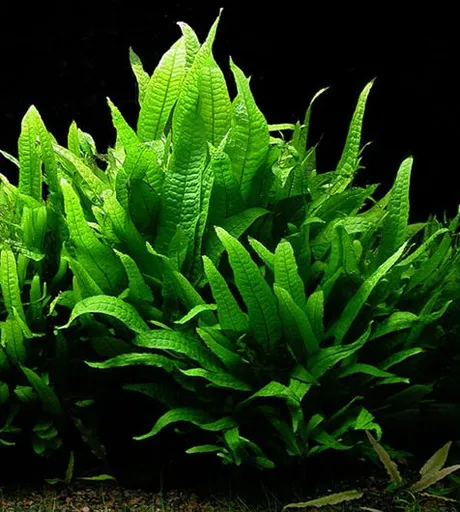
Java fern
Leptochilus pteropus
FreshwaterBrackish- Light
- Low light
- Placement
- Epiphyte
- Height
- 11.8 in (30 cm)
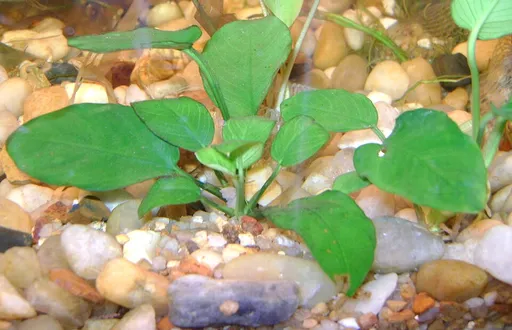
Anubias nana
Anubias barteri var. nana
FreshwaterBrackish- Light
- Low light
- Placement
- Epiphyte
- Height
- 4.7 in (12 cm)
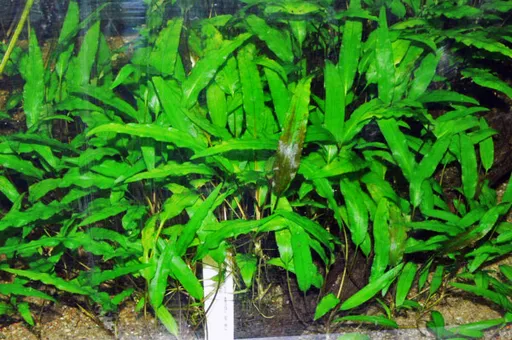
Cryptocoryne wendtii
FreshwaterBrackish- Light
- Low light
- Placement
- Midground
- Height
- 9.8 in (25 cm)
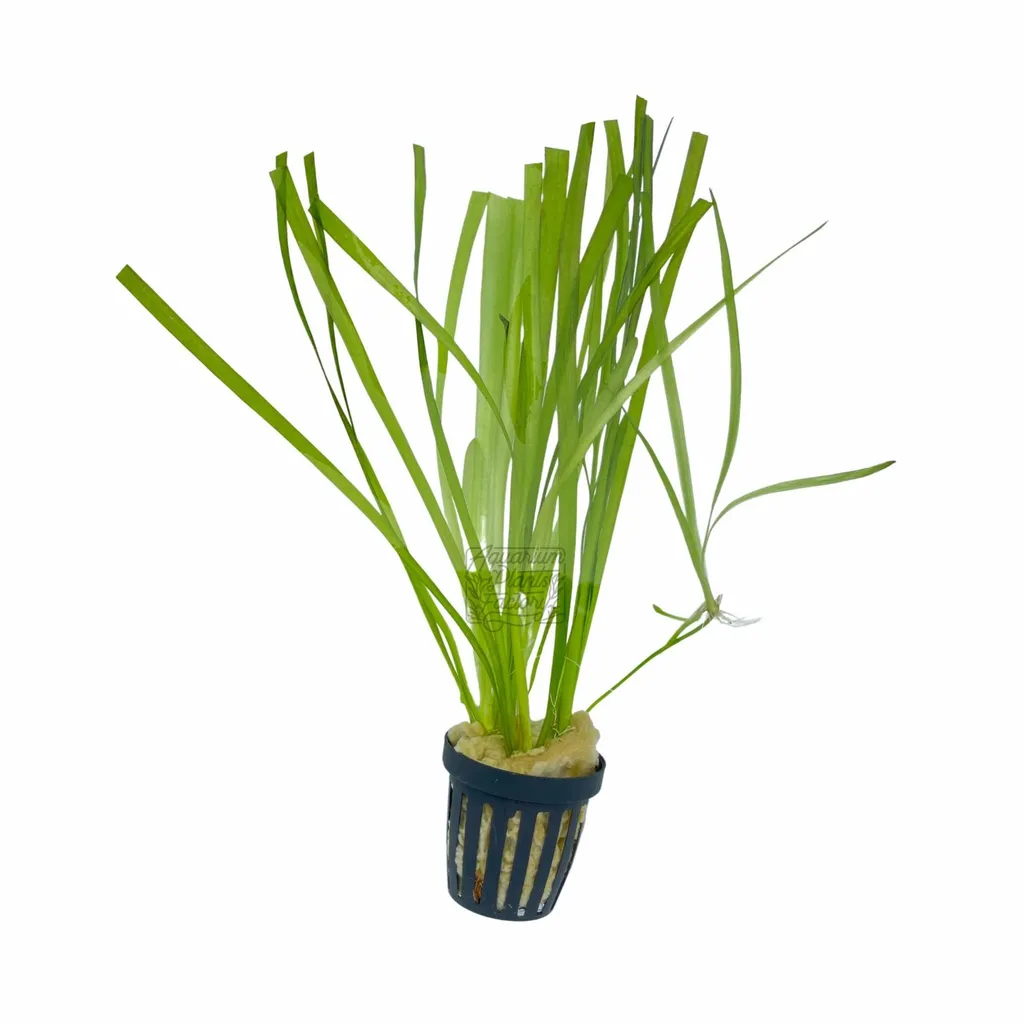
Vallisneria spiralis
FreshwaterBrackish- Light
- Low light
- Placement
- Background
- Height
- 19.7 in (50 cm)
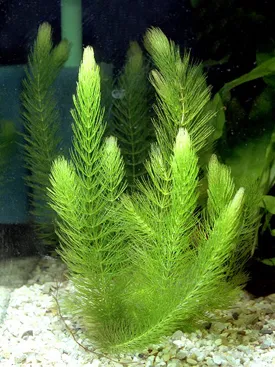
Hornwort
Ceratophyllum demersum
FreshwaterBrackish- Light
- Low light
- Placement
- Floating
- Height
- 39.4 in (100 cm)
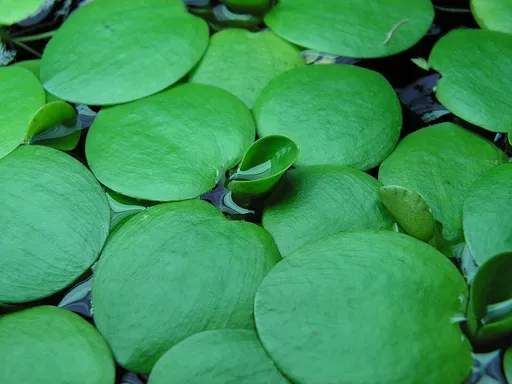
Amazon frogbit
Limnobium laevigatum
Freshwater- Light
- Medium light
- Placement
- Floating
- Height
- 2 in (5 cm)
The rule
What this list filters on
Every plant here lists CO2 as not needed, which is a stronger claim than beneficial: the plant grows at full health on the carbon a stocked tank makes on its own. That works because the light stays low or medium, since strong light without carbon grows algae instead. Liquid carbon is optional, and two plants on this page dislike it: the vallisneria and the hornwort often melt under a liquid carbon dose. Fish and food supply the rest, and a root tab under the crypts and vals covers what they take from the substrate.
- 01
None means none
Not merely beneficial: full growth without it
- 02
Low or medium light
Strong light without carbon grows algae
- 03
The tank makes the carbon
Fish, food and mulm supply enough
- 04
Liquid carbon is optional
Vallisneria and hornwort melt under it
Stems
Stems that grow without CO2
The Canadian waterweed is marked beginner for low light, a stem that grows to 23.6 inches (60 cm) and roots wherever it lands. The hygrophila polysperma is the same rating at 17.7 inches (45 cm). The Brazilian pennywort grows fast to 19.7 inches (50 cm) with round leaves on a creeping stem. The creeping Charlie is 15.7 inches (40 cm) of the same habit. The moneywort is a slow, upright stem with round leaves at 11.8 inches (30 cm), marked beginner. The ambulia is a feathery stem marked easy for low light at 15.7 inches (40 cm).
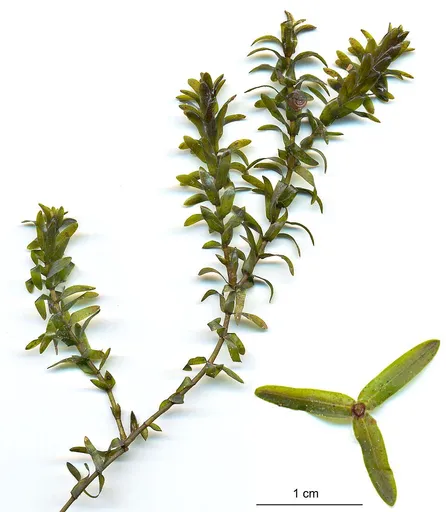
Canadian waterweed
Elodea canadensis
FreshwaterLow light · Background23.6 in (60 cm)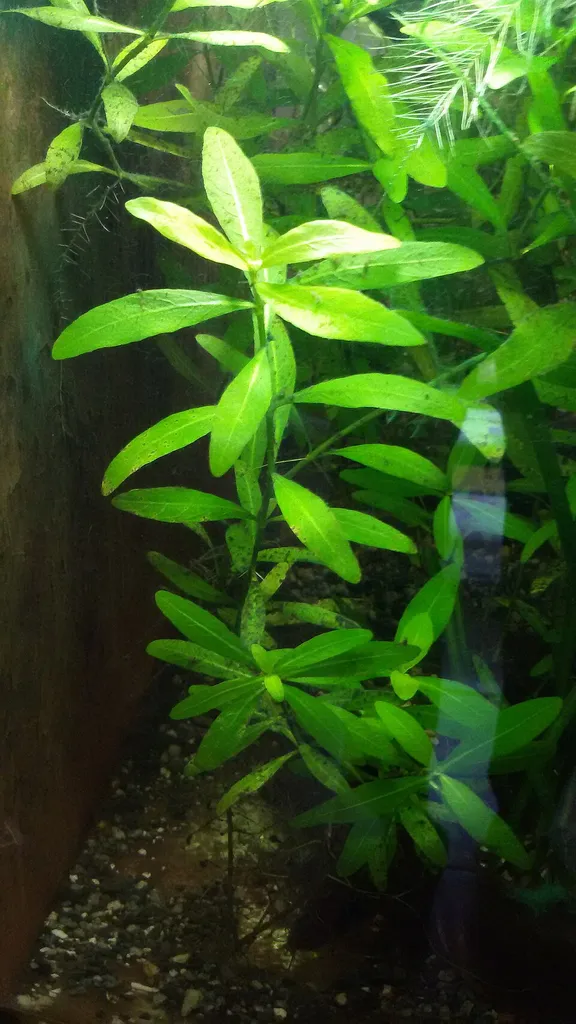
Hygrophila polysperma
FreshwaterLow light · Background17.7 in (45 cm)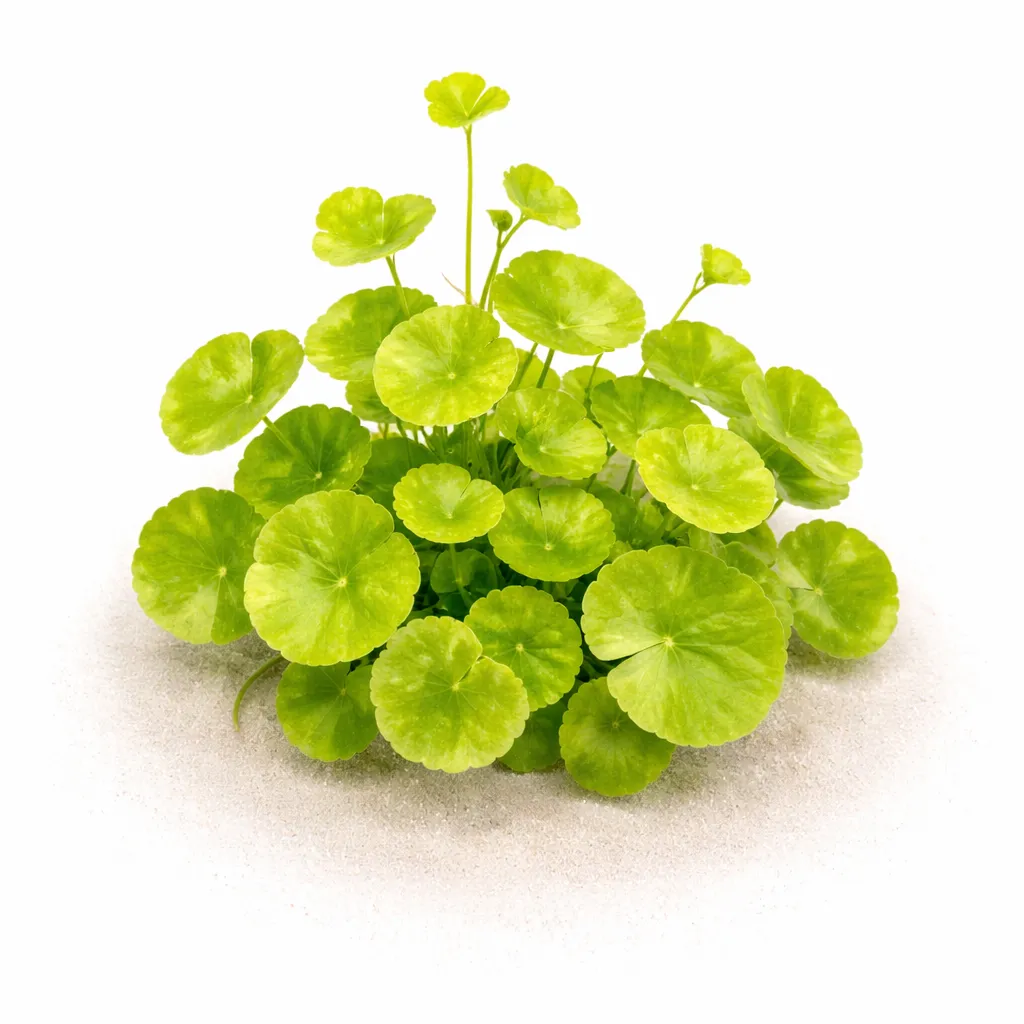
Brazilian pennywort
Hydrocotyle leucocephala
FreshwaterMedium light · Midground19.7 in (50 cm)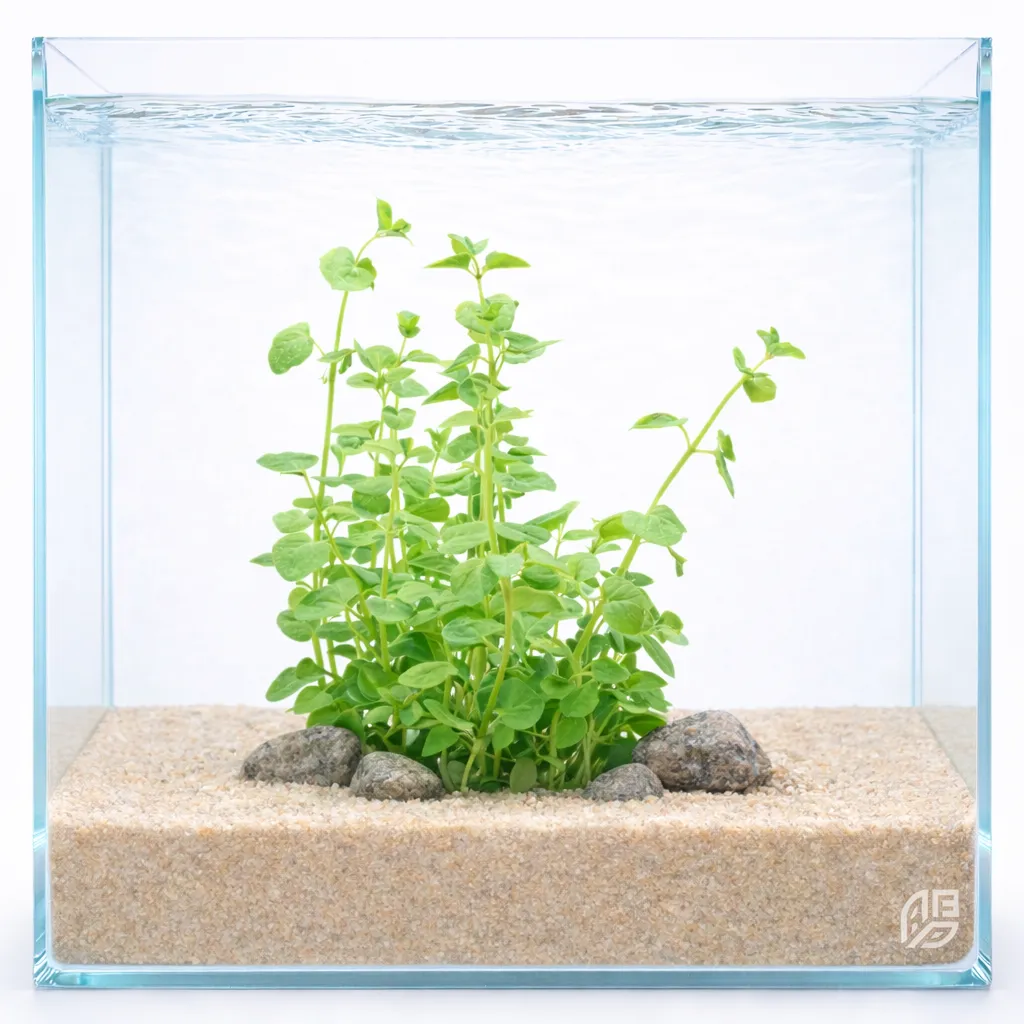
Creeping Charlie
Clinopodium brownei
FreshwaterMedium light · Midground15.7 in (40 cm)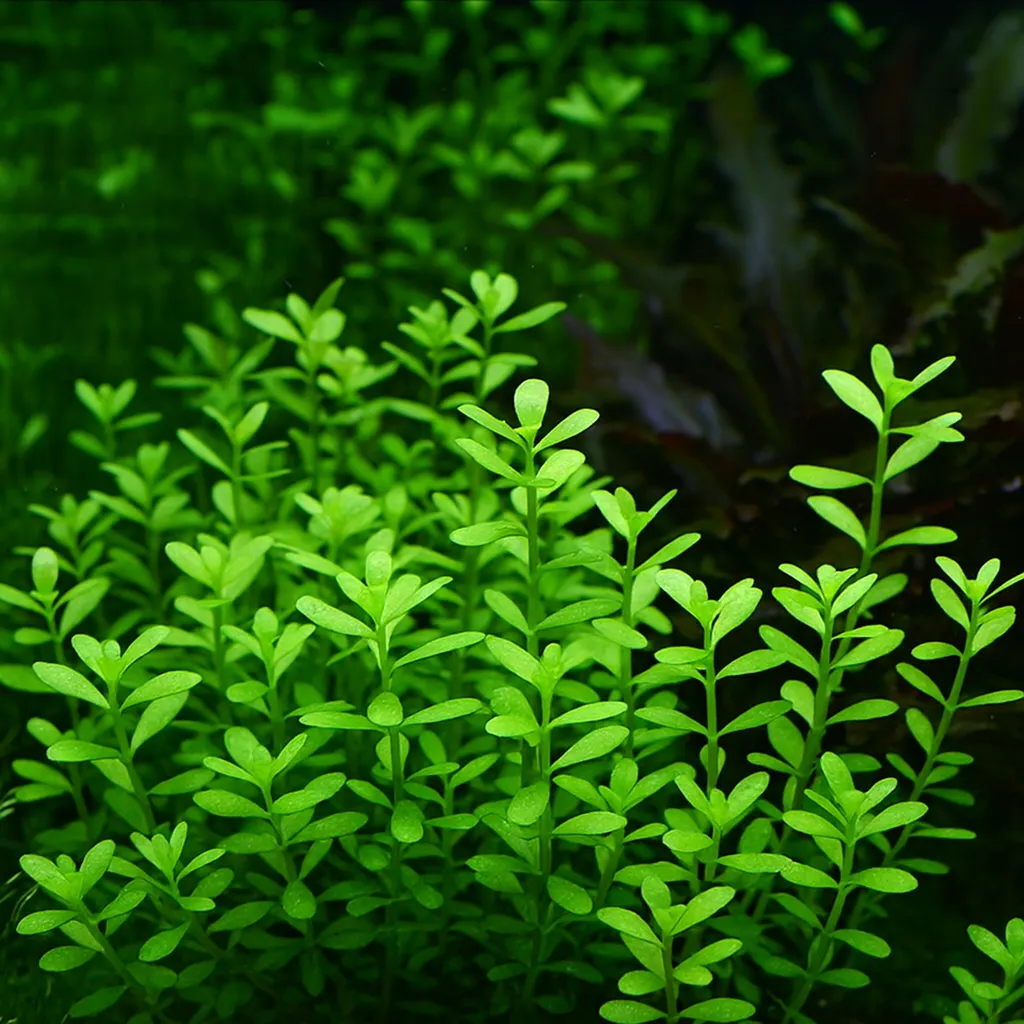
Moneywort
Bacopa monnieri
FreshwaterBrackishMedium light · Background11.8 in (30 cm)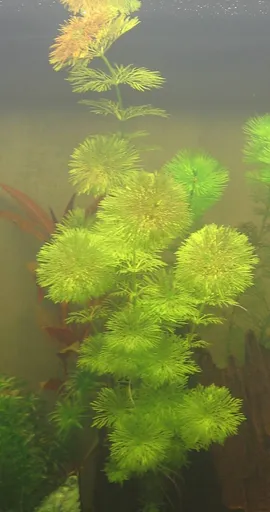
Ambulia
Limnophila sessiliflora
FreshwaterLow light · Background15.7 in (40 cm)
Rhizomes
Rhizomes and mosses
The anubias barteri is the big anubias at 13.8 inches (35 cm), marked beginner, and the anubias petite the small one at 2 inches (5 cm), marked easy. The Windelov java fern has lace-cut leaf tips, the trident java fern forked ones, and both are marked beginner with the plain fern's care. The java moss is marked beginner and grows on anything. The willow moss is the cool-water moss, marked easy at 4.7 inches (12 cm). All of them are tied to wood or rock with the rhizome in the water, never buried.
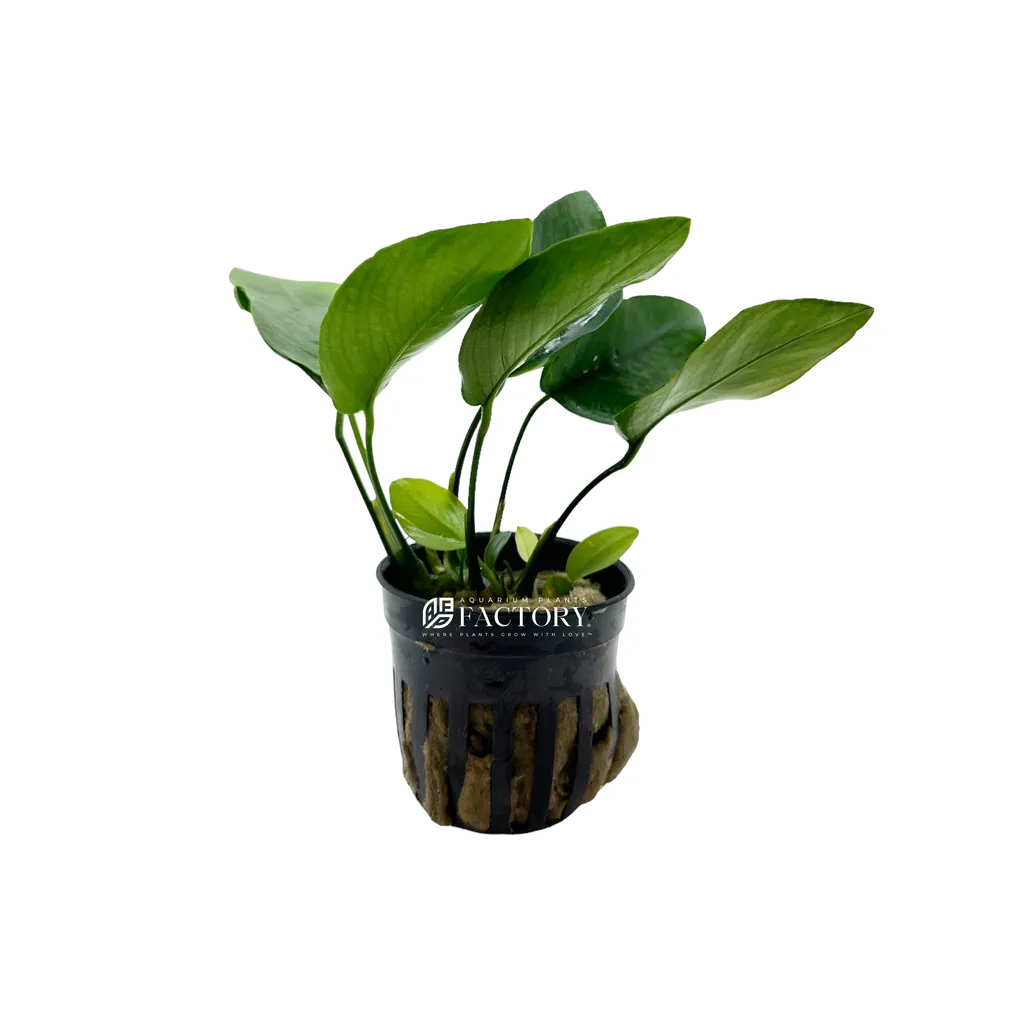
Anubias barteri
FreshwaterBrackishLow light · Epiphyte13.8 in (35 cm)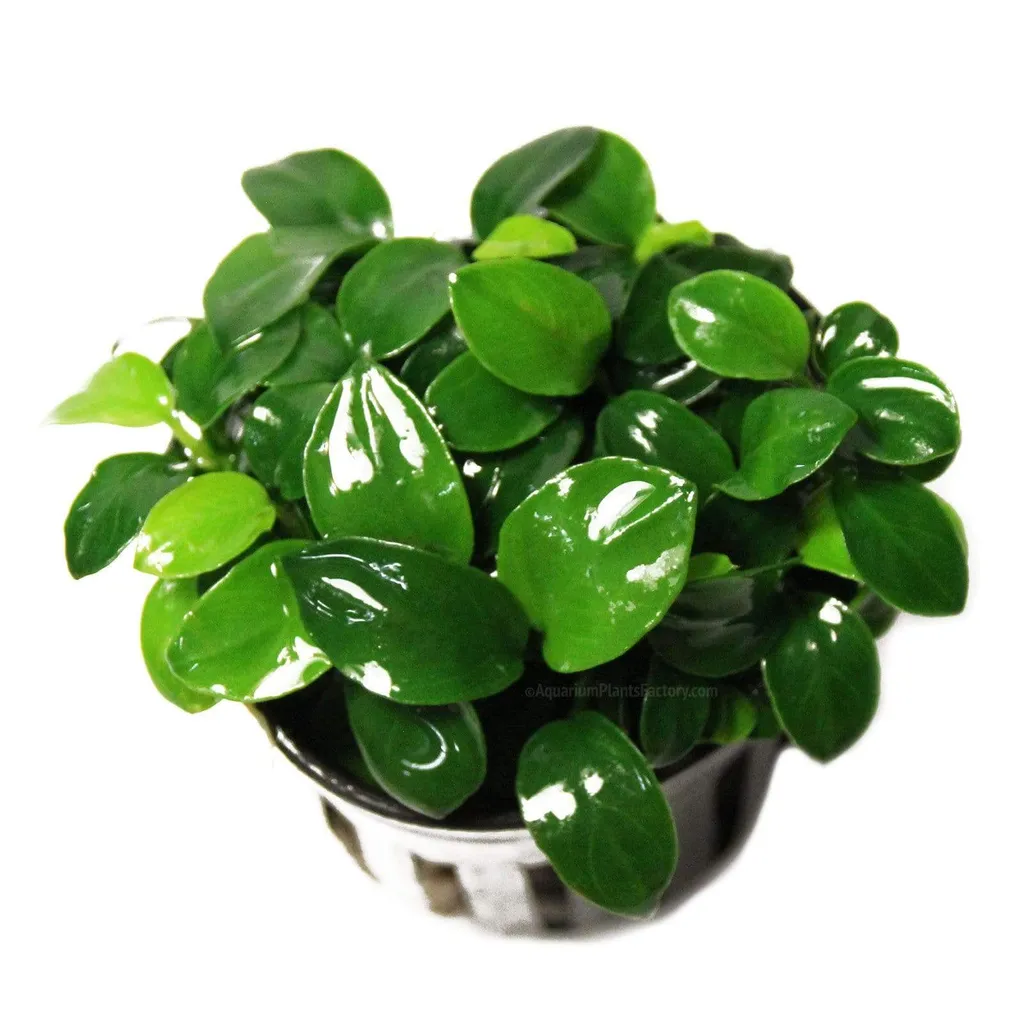
Anubias petite
Anubias barteri var. nana 'Petite'
FreshwaterBrackishLow light · Epiphyte2 in (5 cm)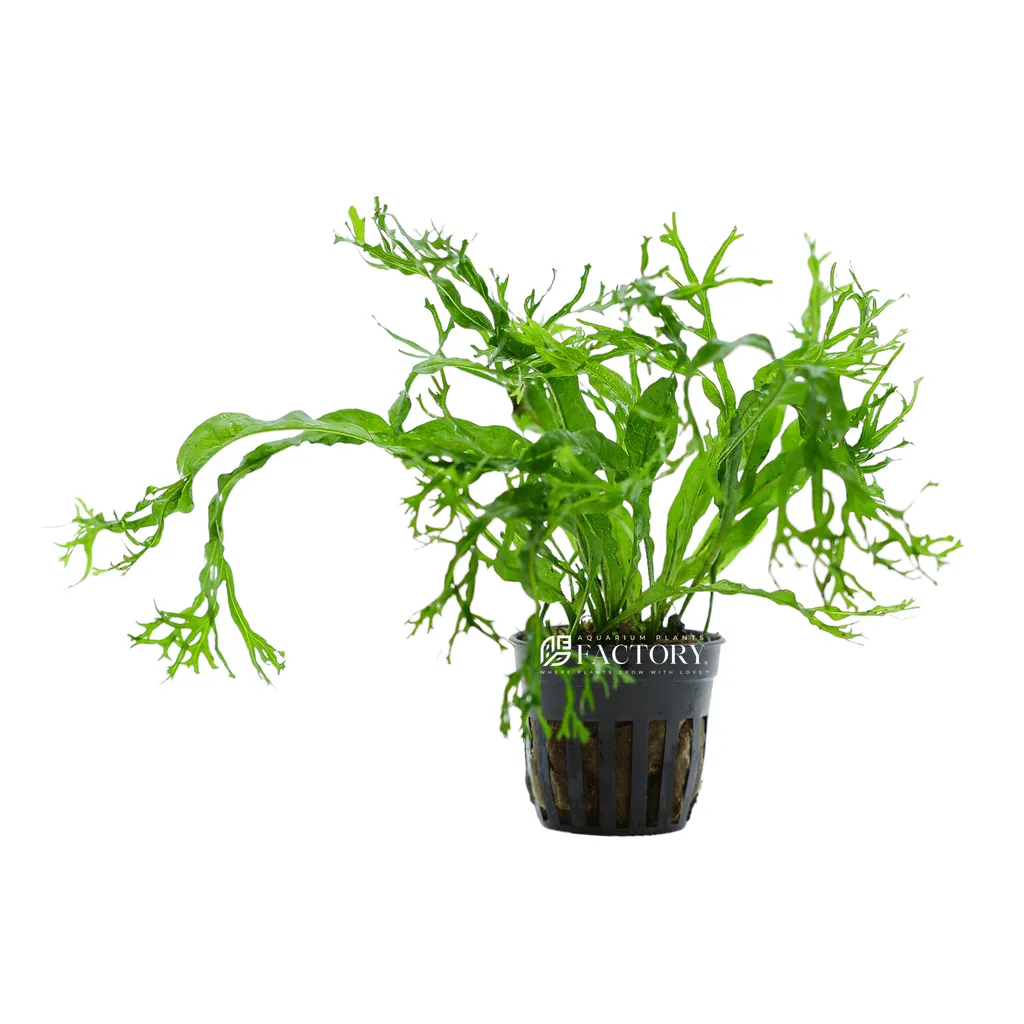
Windelov java fern
Leptochilus pteropus 'Windelov'
FreshwaterBrackishLow light · Epiphyte7.9 in (20 cm)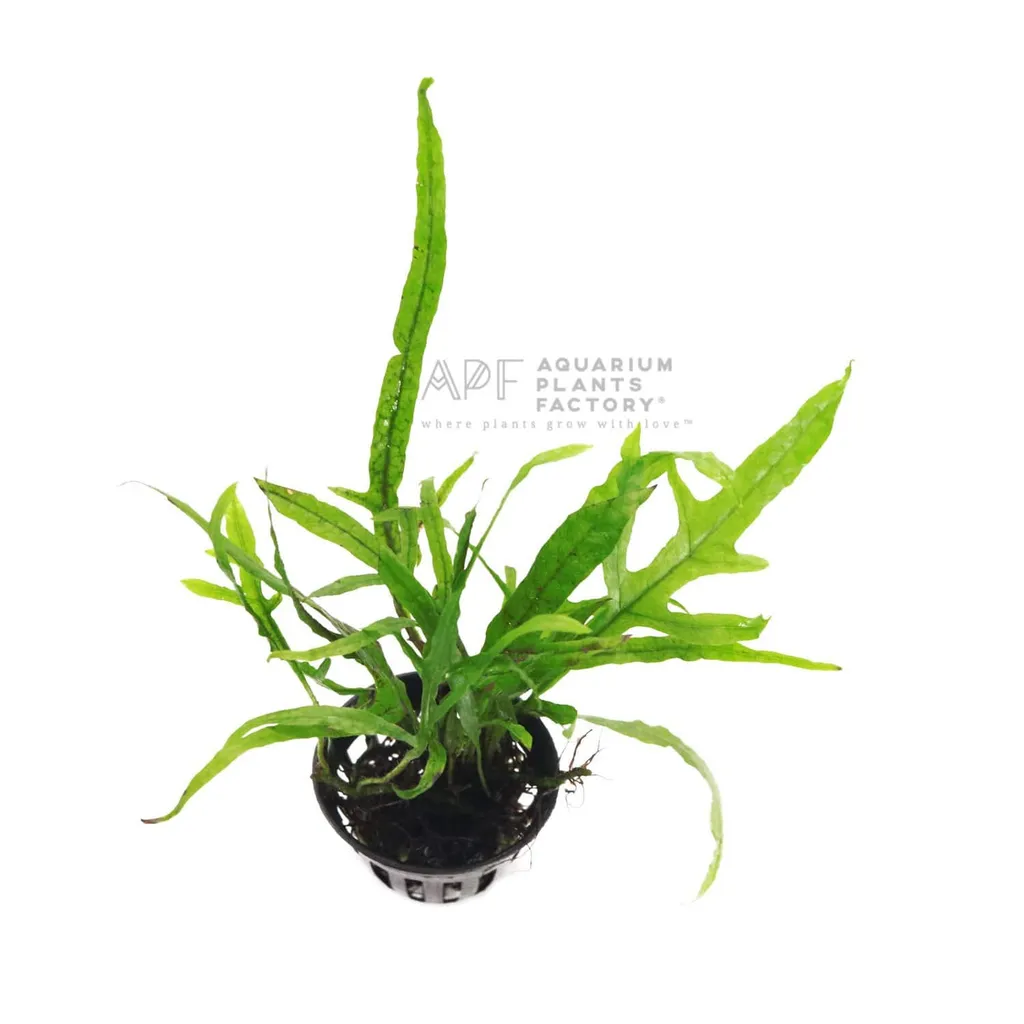
Trident java fern
Leptochilus pteropus 'Trident'
FreshwaterBrackishLow light · Epiphyte9.8 in (25 cm)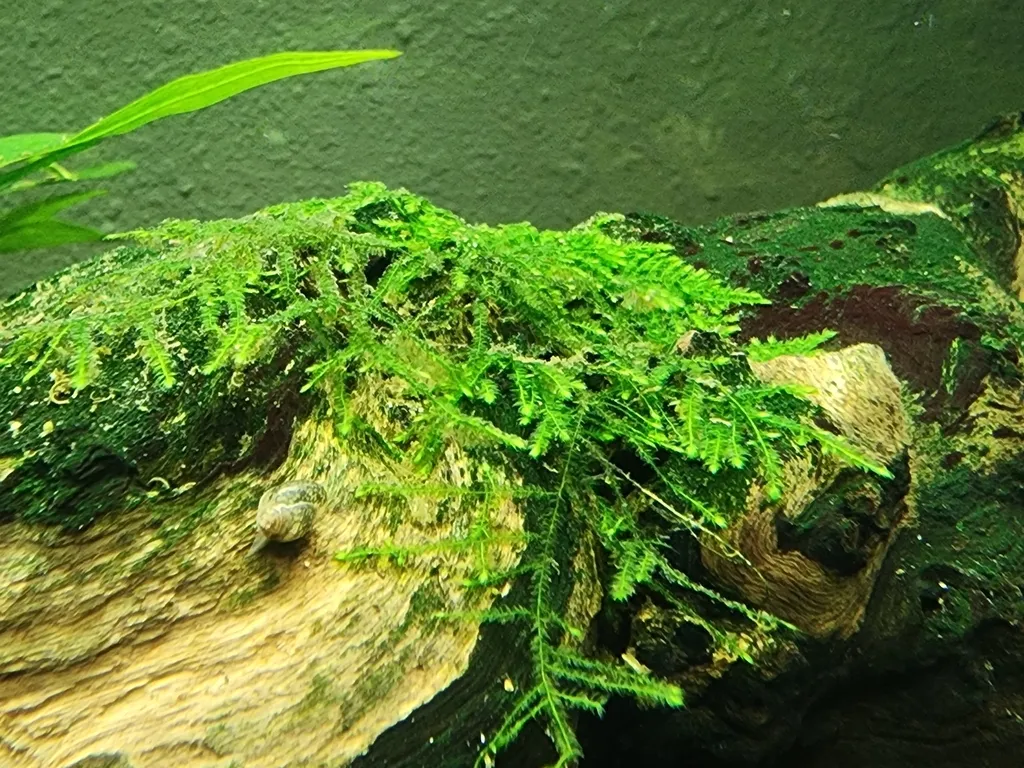
Java moss
Taxiphyllum barbieri
FreshwaterBrackishLow light · Epiphyte3.9 in (10 cm)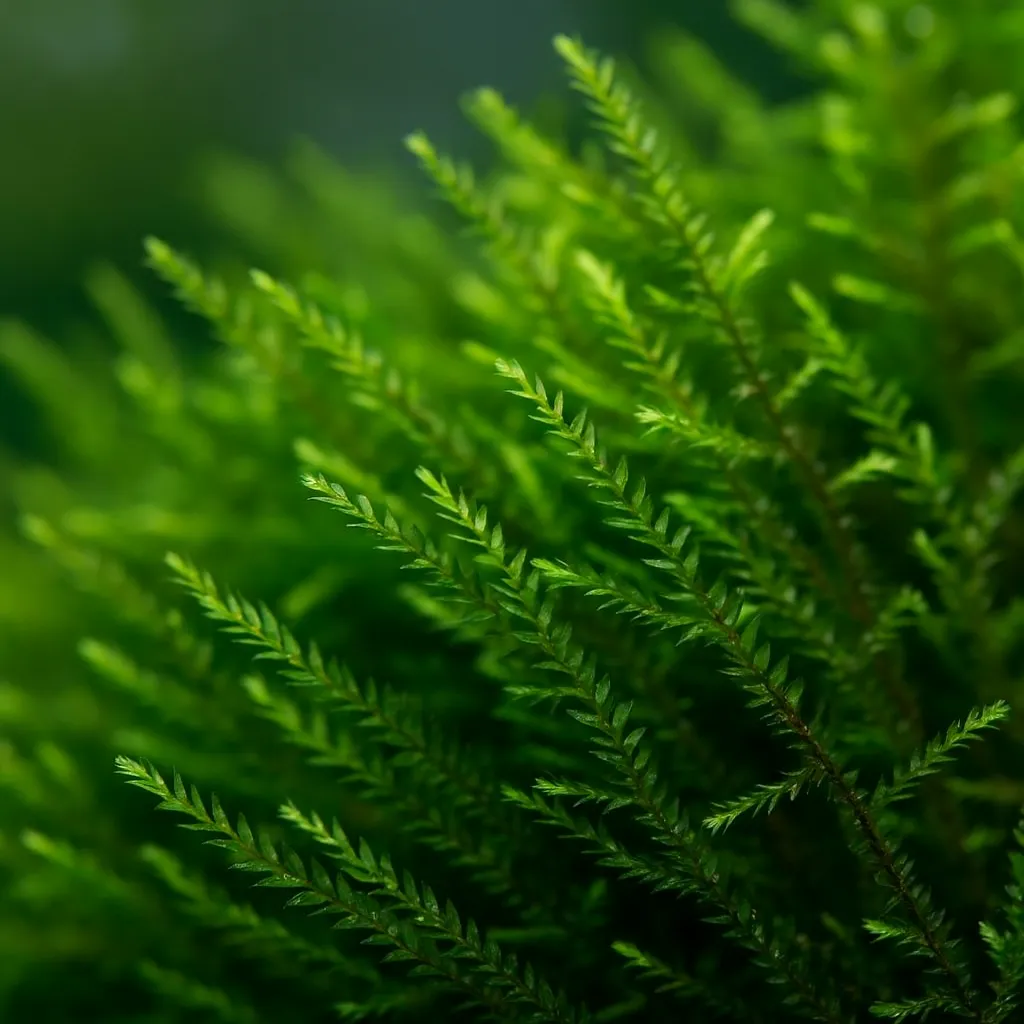
Willow moss
Fontinalis antipyretica
FreshwaterLow light · Epiphyte4.7 in (12 cm)
Rooted
Rooted plants without CO2
The cryptocoryne wendtii red is marked beginner for low light, the red plant for a tank without CO2 at 5.9 inches (15 cm). The cryptocoryne spiralis is the tall crypt at 13.8 inches (35 cm). The giant vallisneria reaches 59.1 inches (150 cm) and lies along the surface in a normal tank; the dwarf vallisneria stays at 15.7 inches (40 cm). The Echinodorus palifolius is a sword marked easy with no CO2 that reaches 39.4 inches (100 cm). The Crinum calamistratum is a bulb with crinkled leaves to 23.6 inches (60 cm), marked easy for low light. All of them want a root tab.
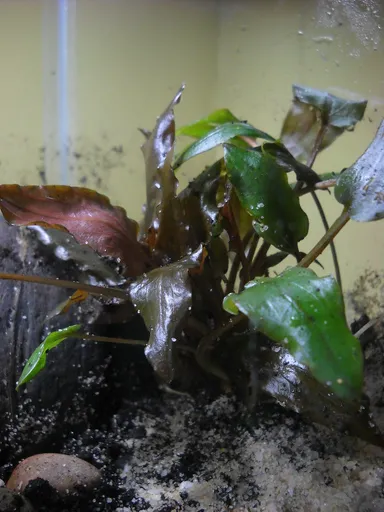
Cryptocoryne wendtii red
Cryptocoryne wendtii 'Red'
FreshwaterBrackishLow light · Midground5.9 in (15 cm)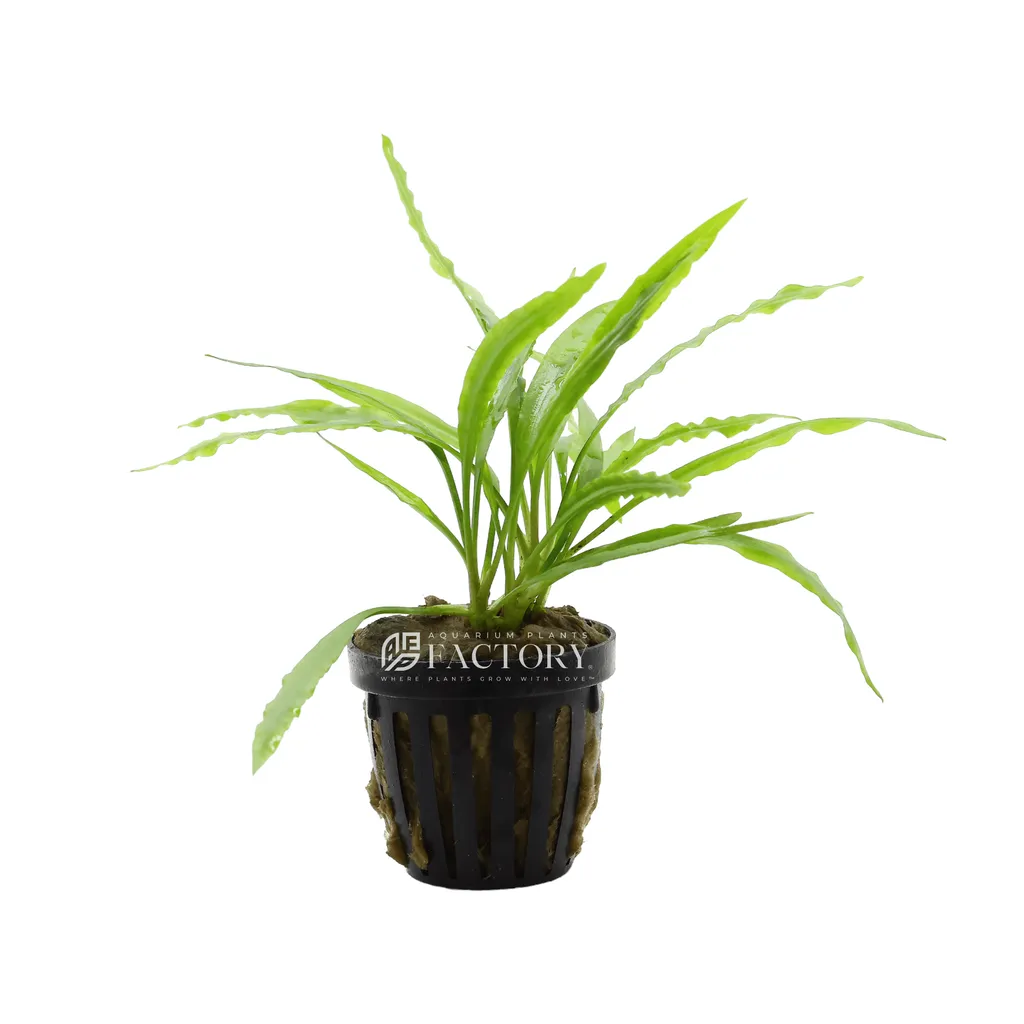
Cryptocoryne spiralis
FreshwaterLow light · Background13.8 in (35 cm)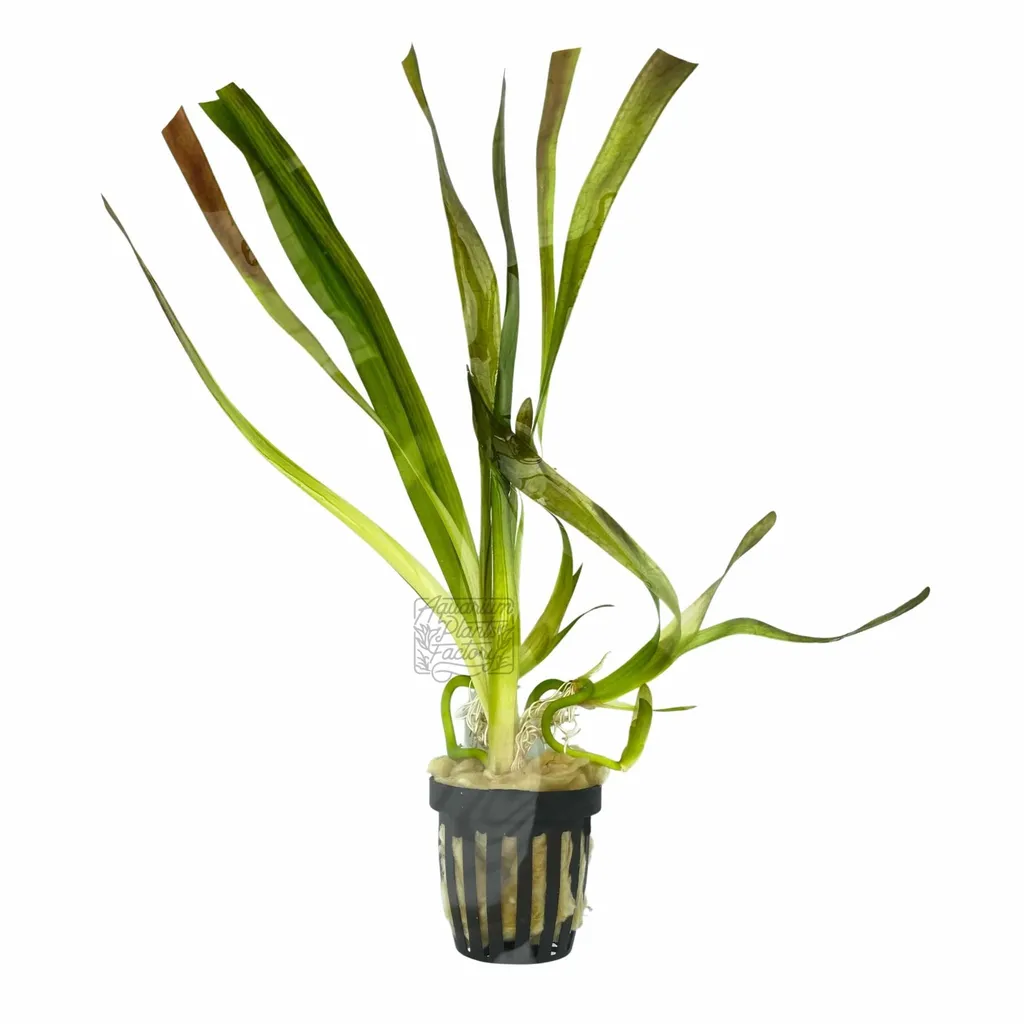
Giant vallisneria
Vallisneria australis
FreshwaterBrackishLow light · Background59.1 in (150 cm)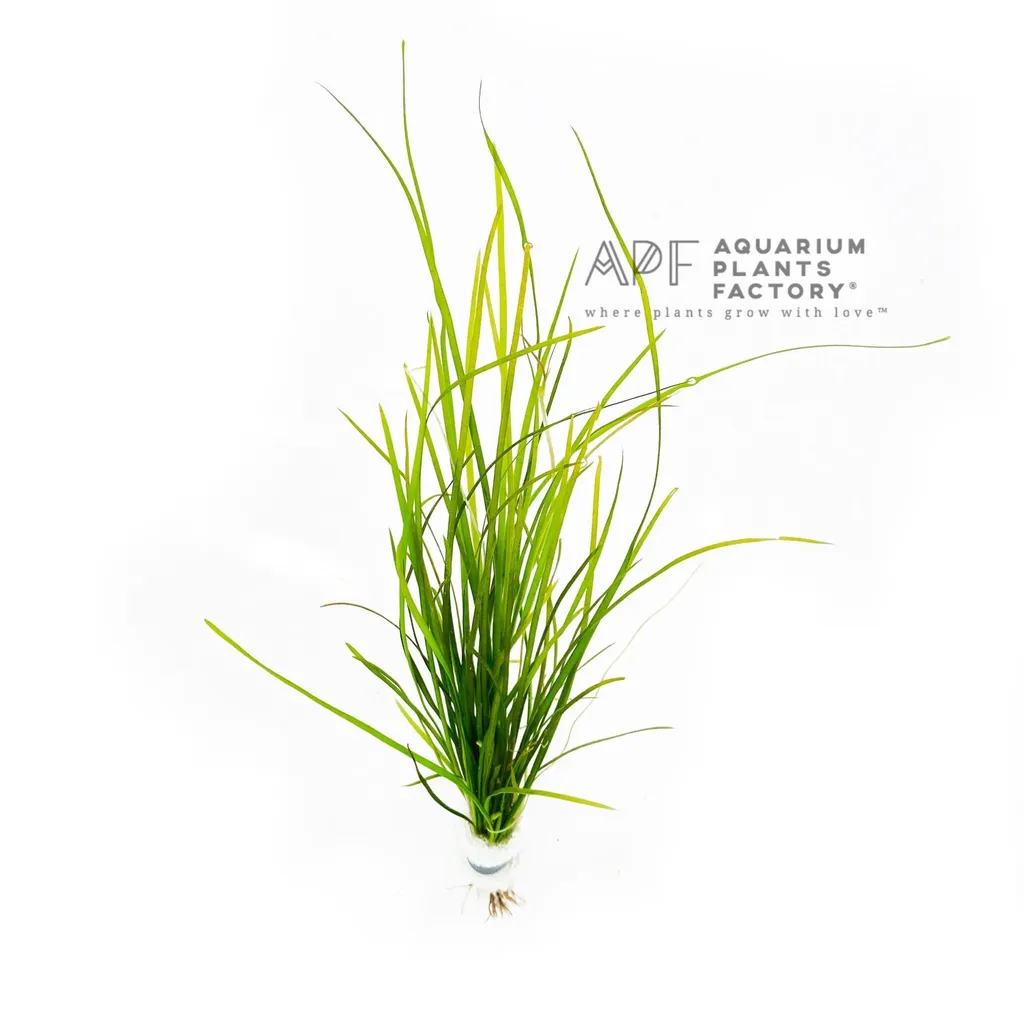
Dwarf vallisneria
Vallisneria nana
FreshwaterMedium light · Background15.7 in (40 cm)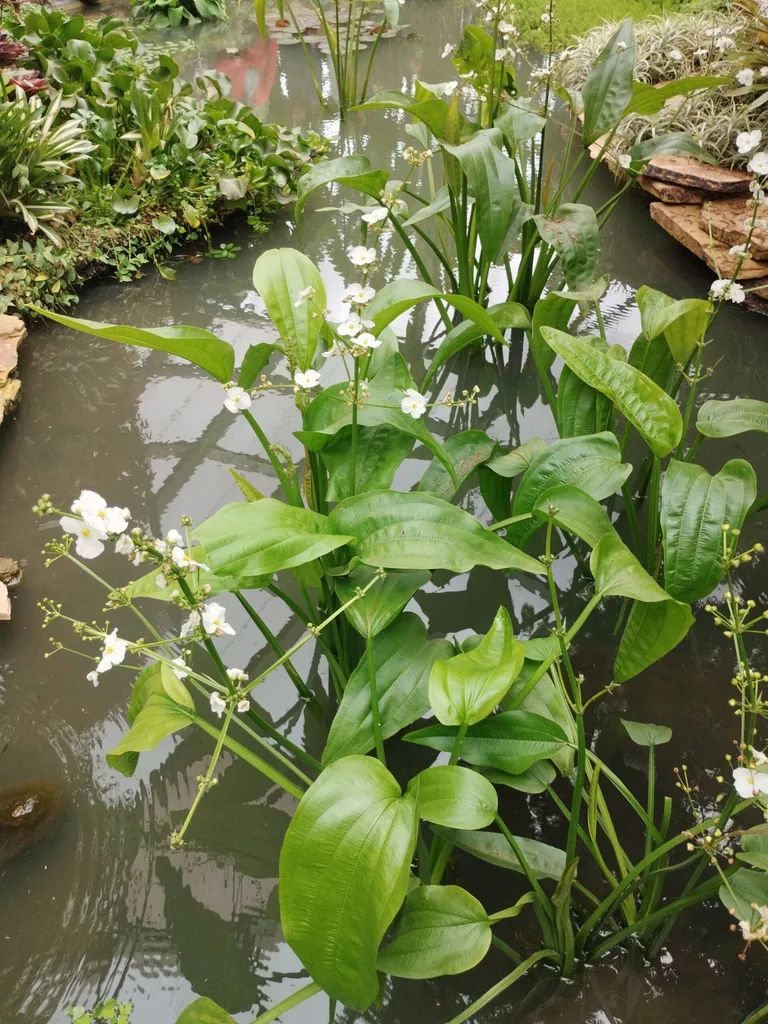
Echinodorus palifolius
Aquarius palifolius
FreshwaterMedium light · Background39.4 in (100 cm)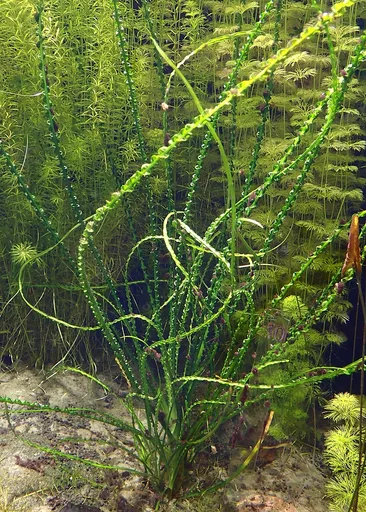
Crinum calamistratum
FreshwaterLow light · Background23.6 in (60 cm)
Floating
Floating plants
Floating plants take their carbon from the air, so none of them needs CO2. The dwarf water lettuce is marked beginner, a rosette at 3.9 inches (10 cm) with hanging roots. The salvinia natans is a floating fern marked beginner that doubles every couple of weeks. The red root floater turns red under strong light at the surface. The water spangles is a larger salvinia, marked easy. The duckweed is marked beginner and impossible to remove once it is in. The floating water sprite grows as a loose fern at the surface, marked easy, 15.7 inches (40 cm) across.
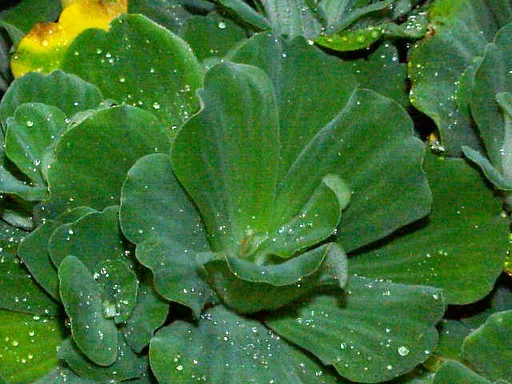
Dwarf water lettuce
Pistia stratiotes
FreshwaterMedium light · Floating3.9 in (10 cm)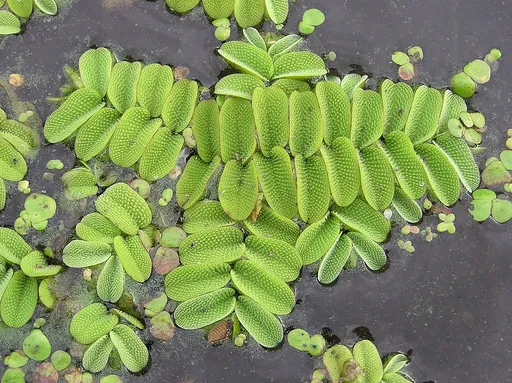
Salvinia natans
FreshwaterMedium light · Floating1.2 in (3 cm)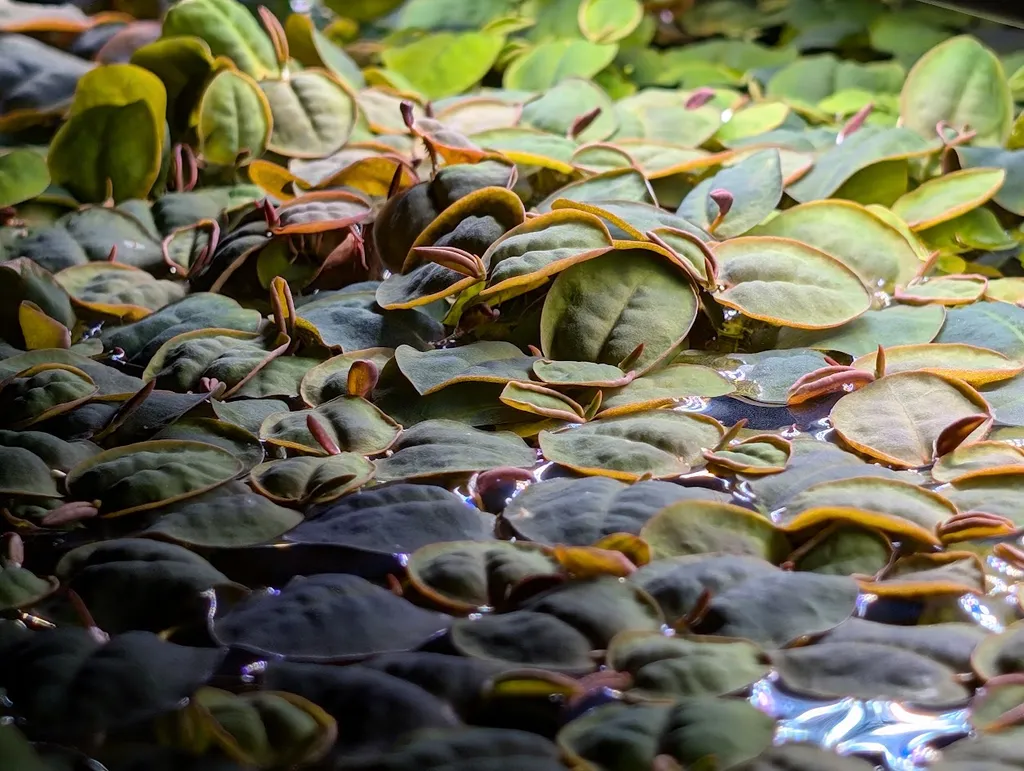
Red root floater
Phyllanthus fluitans
FreshwaterHigh light · Floating1.2 in (3 cm)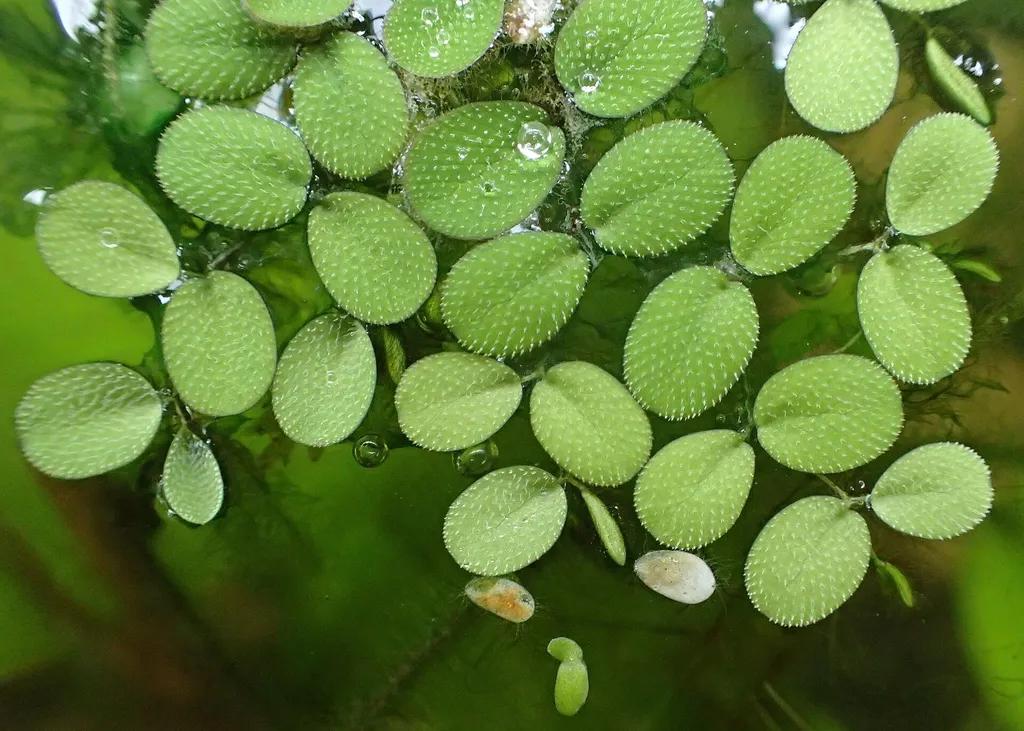
Water spangles
Salvinia minima
FreshwaterMedium light · Floating1.2 in (3 cm)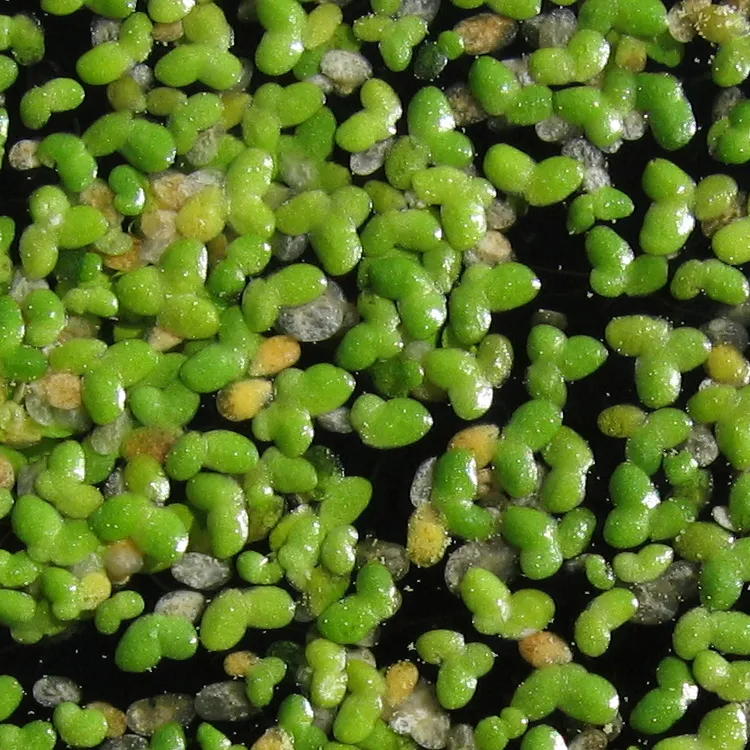
Duckweed
Lemna minor
FreshwaterLow light · Floating0.4 in (1 cm)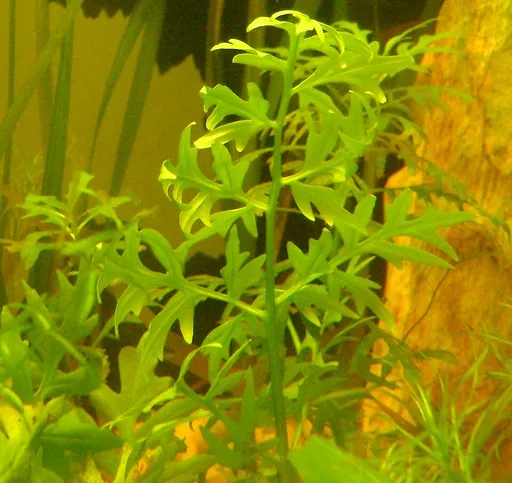
Floating water sprite
Ceratopteris cornuta
FreshwaterMedium light · Floating15.7 in (40 cm)
By the numbers
Smallest
Tallest
Low light
FAQ
Common questions
Which aquarium plants grow without CO2?
The java fern, anubias, java moss, cryptocoryne wendtii, vallisneria, hornwort and every floating plant list CO2 as not needed. Every plant on this page does.
What is the difference between no CO2 and CO2 beneficial?
A plant marked none grows at full health without it. A plant marked beneficial grows without it but grows faster, fuller or redder with it. The plants on this page are the first kind.
Do I need liquid carbon?
No. It is optional for every plant here, and the vallisneria and hornwort often melt under it.
How much light for a tank without CO2?
Low or medium. Strong light without carbon grows algae, so keep the fixture at the lower end of its range and the photoperiod at six to eight hours.
Do plants without CO2 still need fertilizer?
Yes, in small amounts. A root tab under the crypts, swords and vals, and a liquid fertilizer at half dose for the stems and floaters.
Which no-CO2 plants grow fastest?
The hornwort, Canadian waterweed, hygrophila polysperma, Brazilian pennywort and the floating plants. They are what keeps a tank without CO2 free of algae.
Index
All no-co2 plants
Amazon frogbit
Limnobium laevigatum
FreshwaterMedium light · Floating2 in (5 cm)Ambulia
Limnophila sessiliflora
FreshwaterLow light · Background15.7 in (40 cm)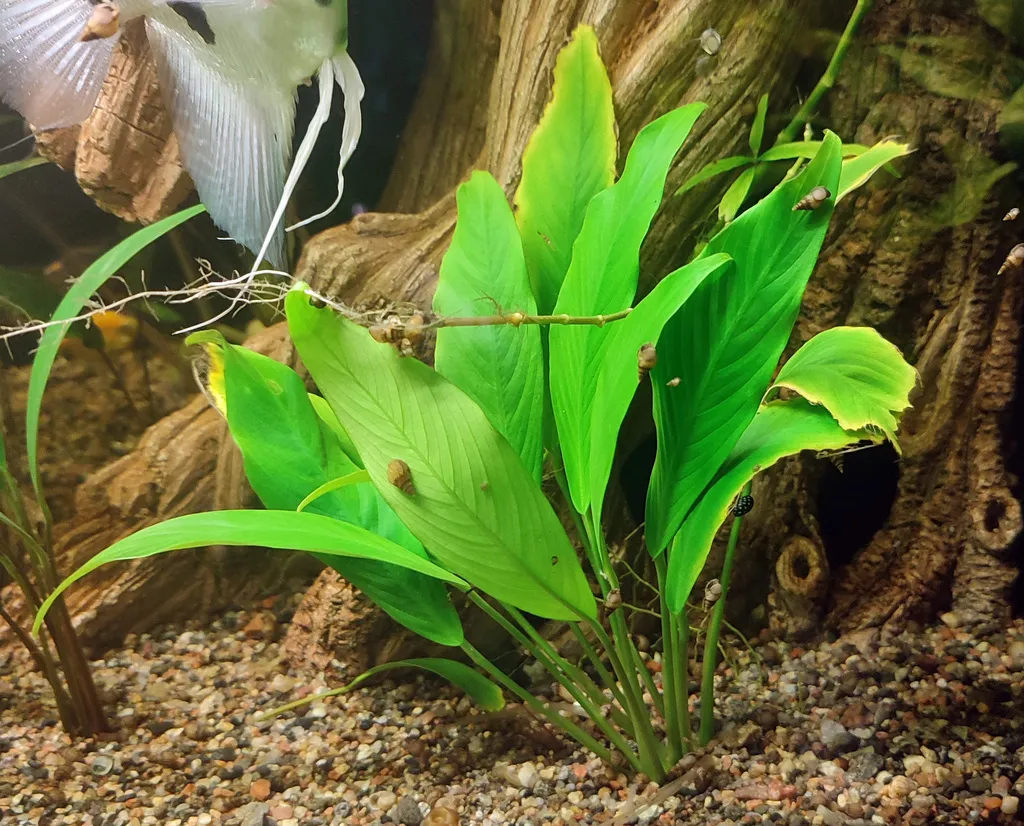
Anubias afzelii
FreshwaterMedium light · Background15.7 in (40 cm)Anubias barteri
FreshwaterBrackishLow light · Epiphyte13.8 in (35 cm)18 forms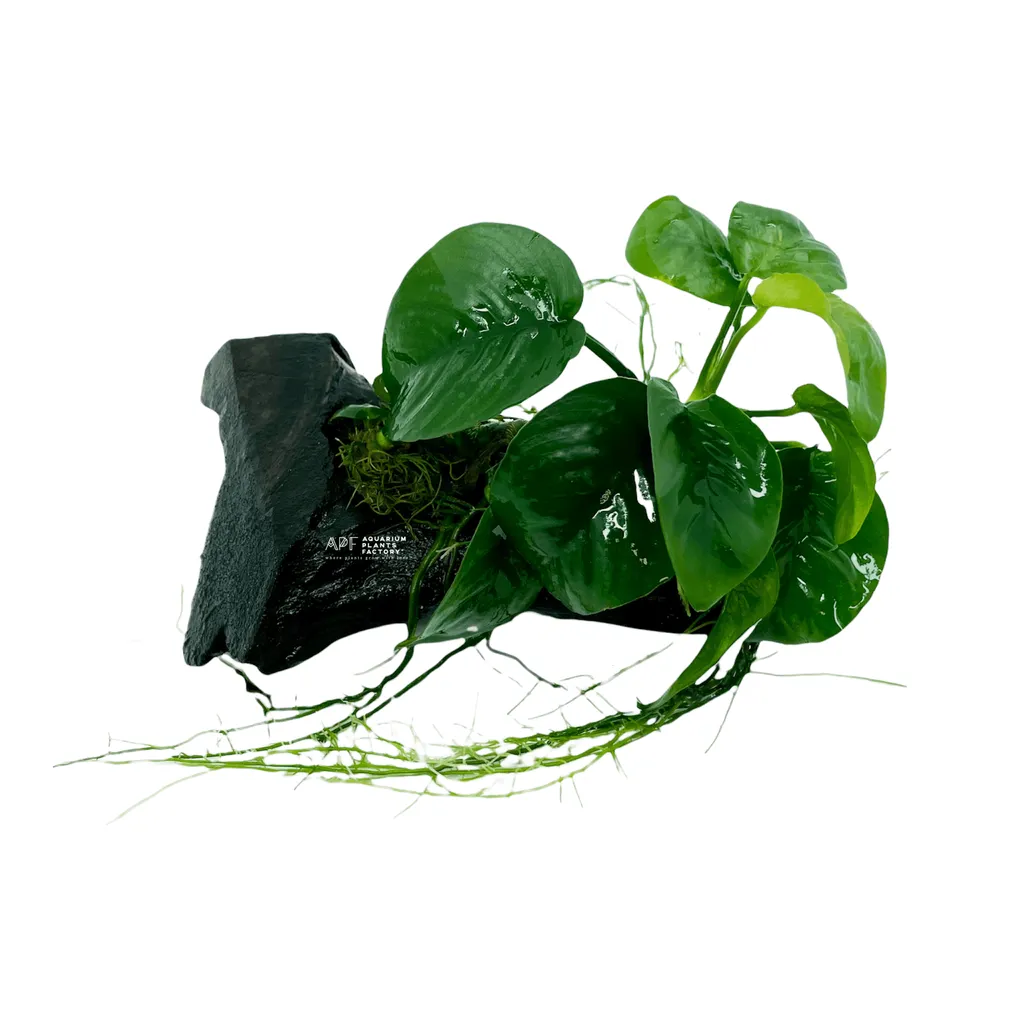
Anubias Butterfly
Anubias 'Butterfly'
FreshwaterLow light · Epiphyte5.9 in (15 cm)Anubias Chili Jalapeno
Anubias 'Chili Jalapeno'
FreshwaterLow light · Epiphyte3.9 in (10 cm)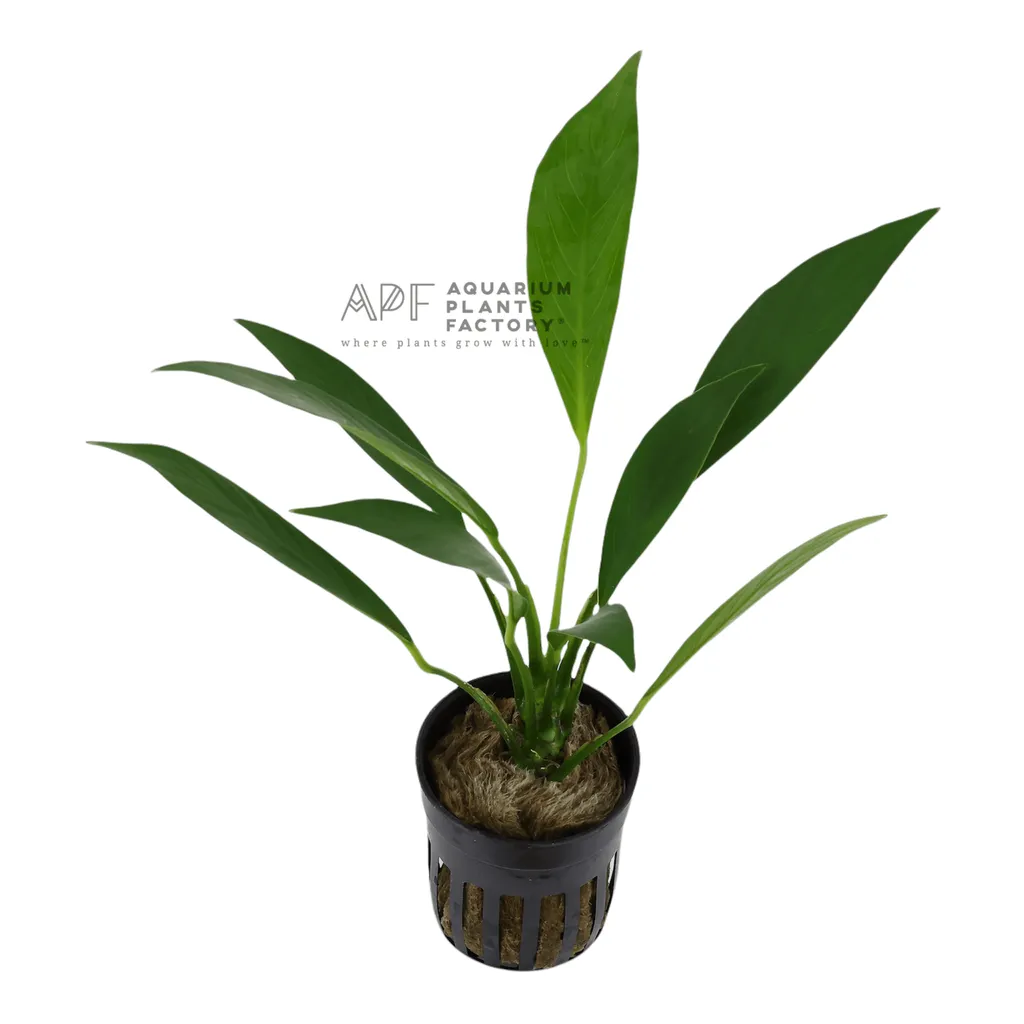
Anubias congensis
Anubias heterophylla
FreshwaterLow light · Background15.7 in (40 cm)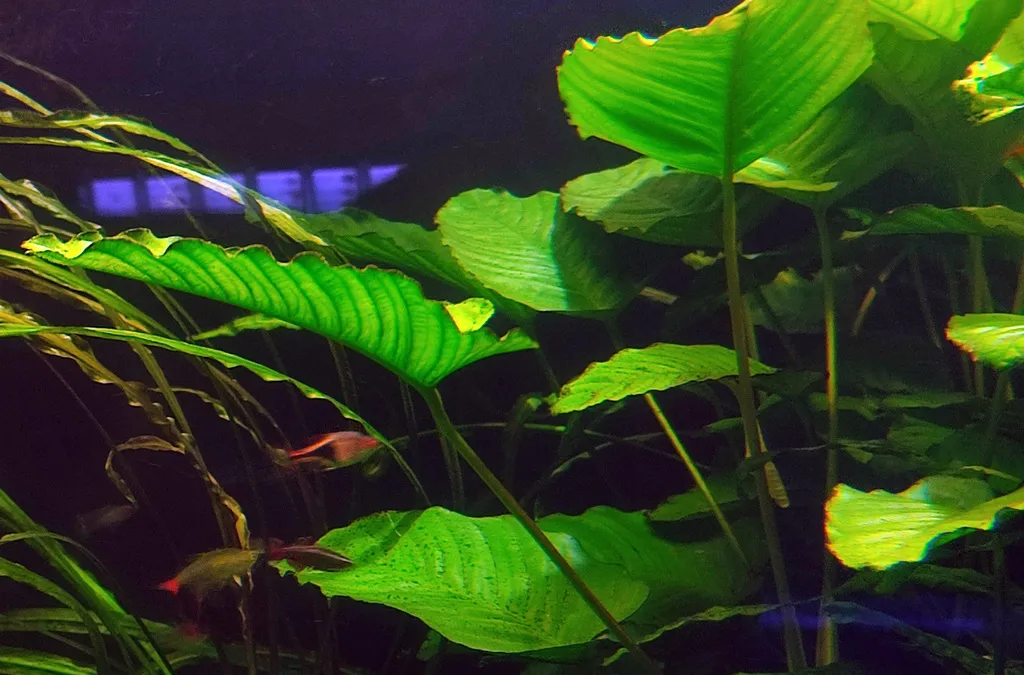
Anubias gigantea
FreshwaterLow light · Background19.7 in (50 cm)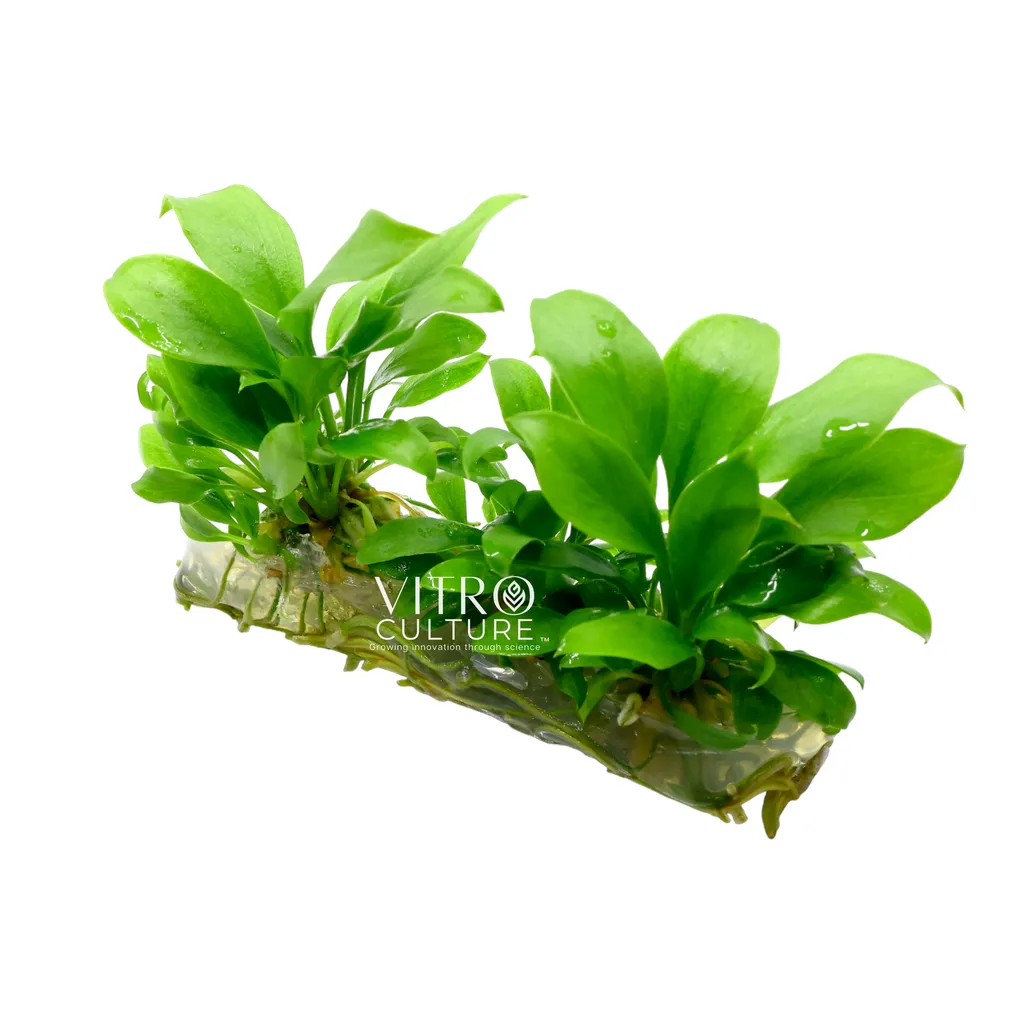
Anubias gilletii
FreshwaterLow light · Epiphyte11.8 in (30 cm)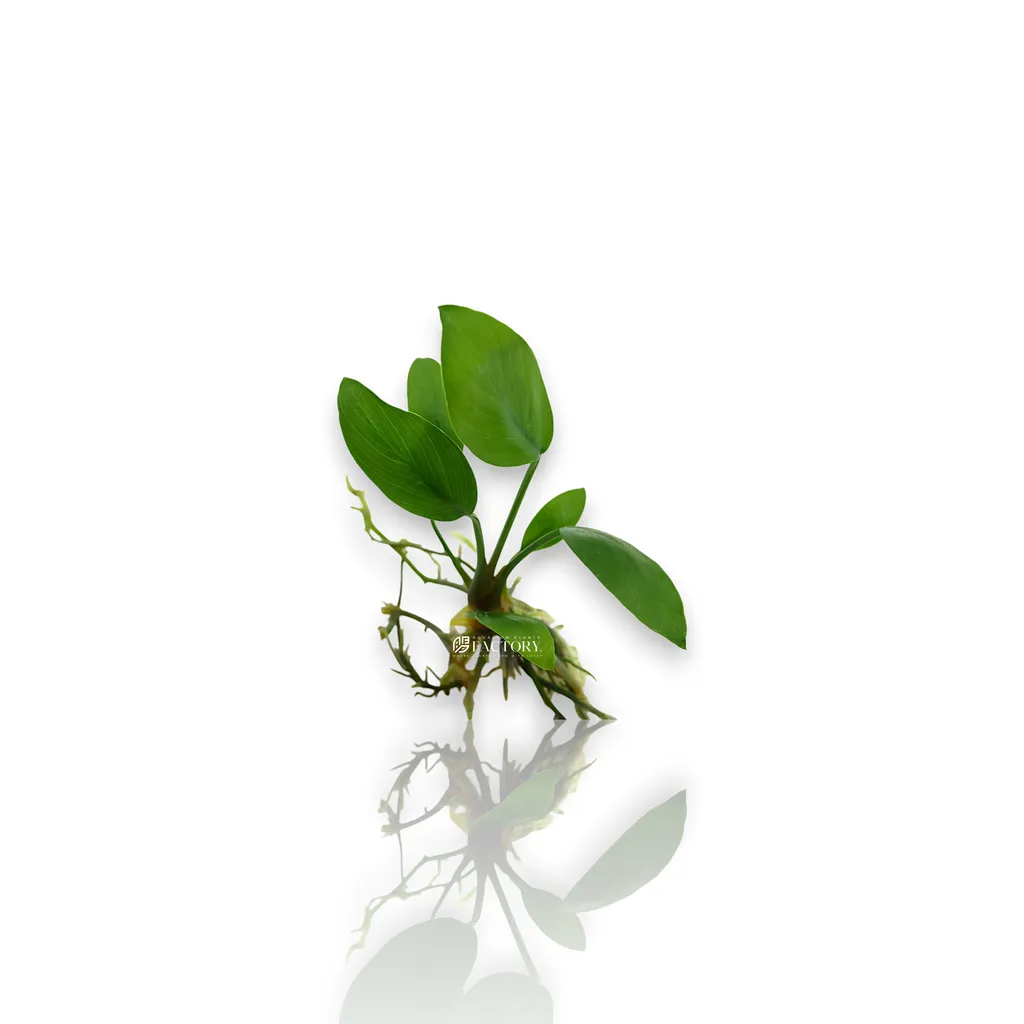
Anubias hastifolia
FreshwaterLow light · Background15.7 in (40 cm)Anubias Nangi
Anubias 'Nangi'
FreshwaterLow light · Epiphyte7.9 in (20 cm)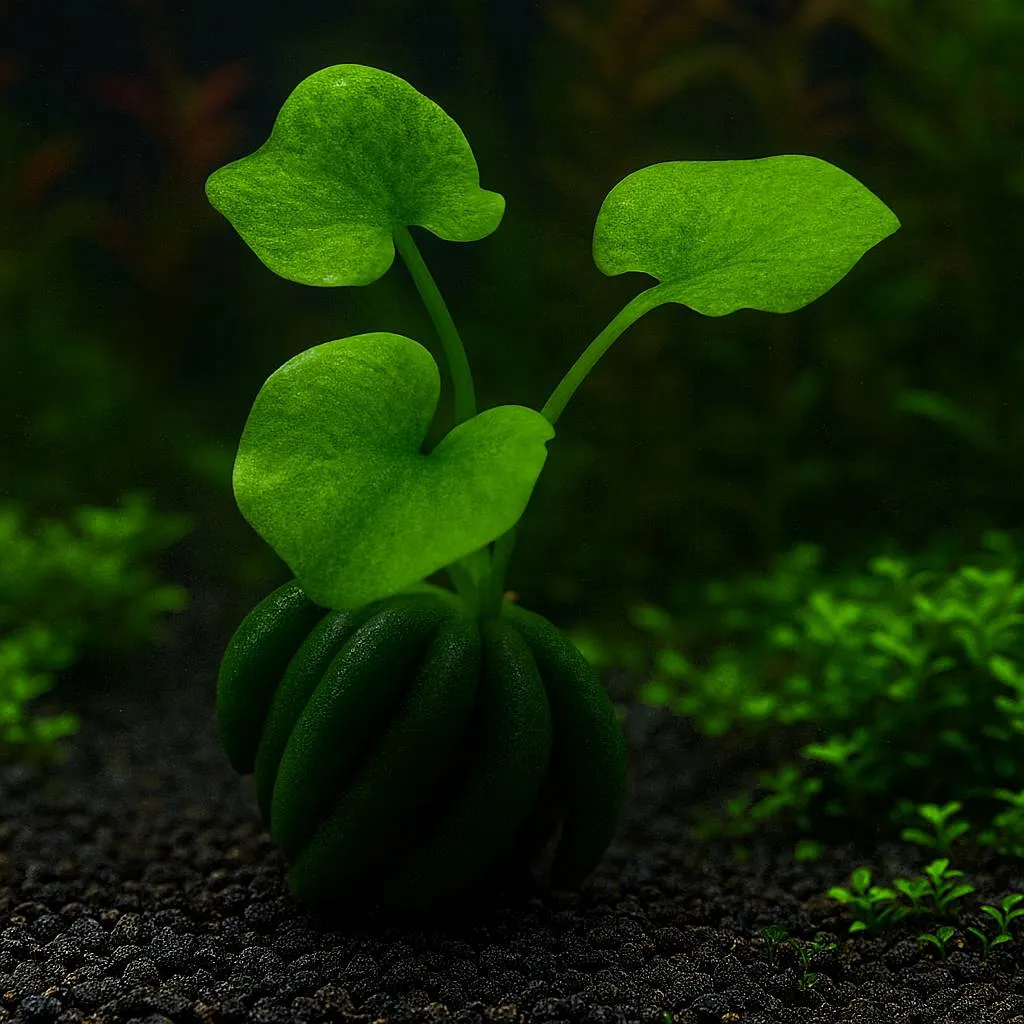
Banana plant
Nymphoides aquatica
FreshwaterMedium light · Foreground5.9 in (15 cm)Brazilian pennywort
Hydrocotyle leucocephala
FreshwaterMedium light · Midground19.7 in (50 cm)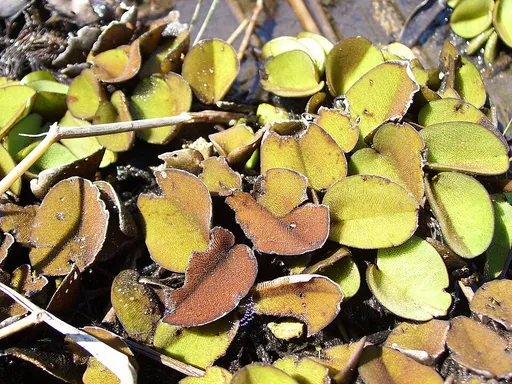
Butterfly fern
Salvinia auriculata
FreshwaterMedium light · Floating1.6 in (4 cm)Canadian waterweed
Elodea canadensis
FreshwaterLow light · Background23.6 in (60 cm)Corkscrew val
Vallisneria natans
FreshwaterMedium light · Background23.6 in (60 cm)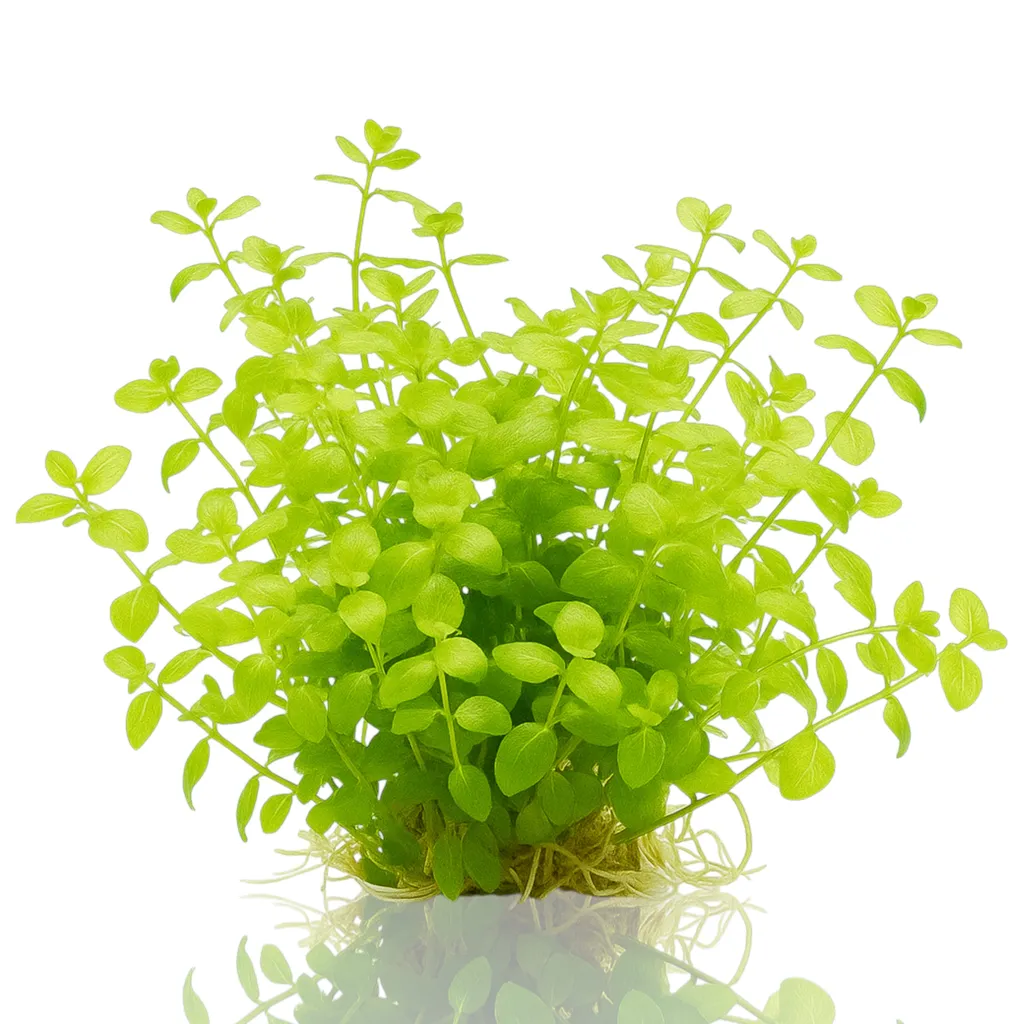
Creeping bacopa
Bacopa australis
FreshwaterMedium light · Midground7.9 in (20 cm)Creeping Charlie
Clinopodium brownei
FreshwaterMedium light · Midground15.7 in (40 cm)Crinum calamistratum
FreshwaterLow light · Background23.6 in (60 cm)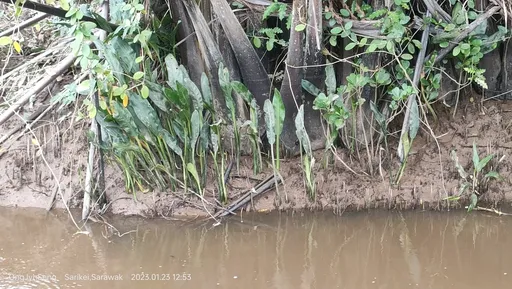
Cryptocoryne ciliata
FreshwaterBrackishMedium light · Background23.6 in (60 cm)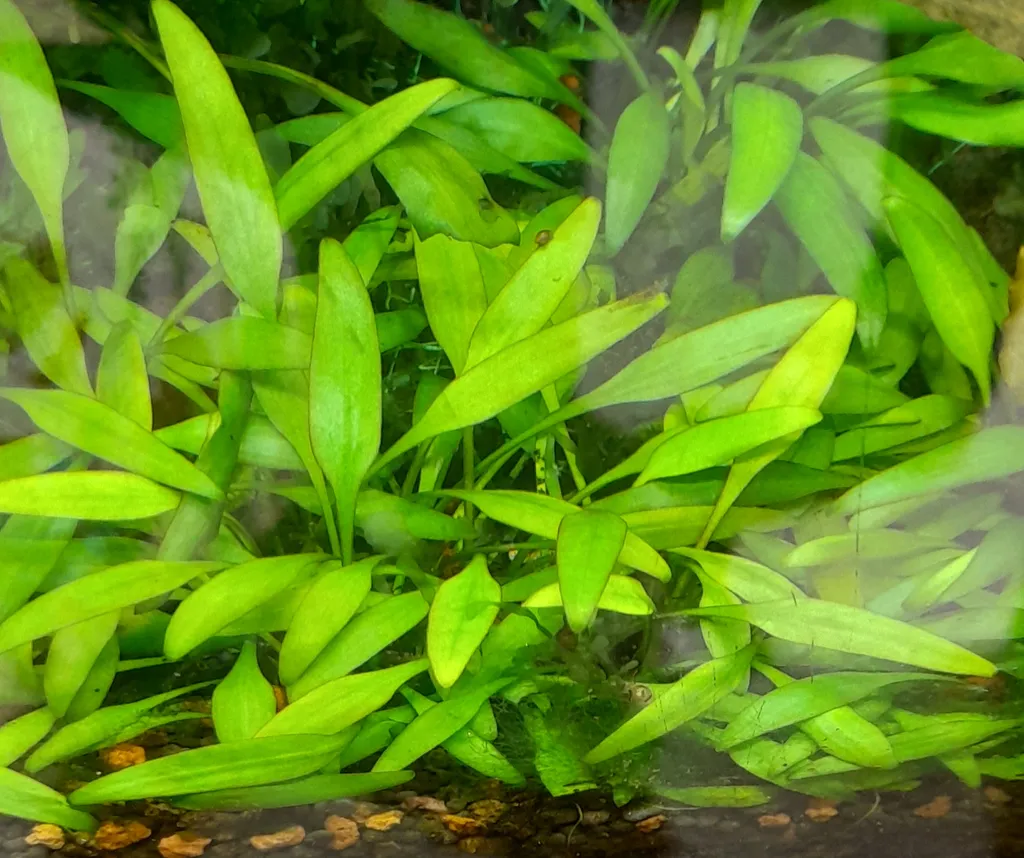
Cryptocoryne lucens
FreshwaterLow light · Midground7.9 in (20 cm)Cryptocoryne petchii
Cryptocoryne beckettii 'Petchii'
FreshwaterMedium light · Midground5.9 in (15 cm)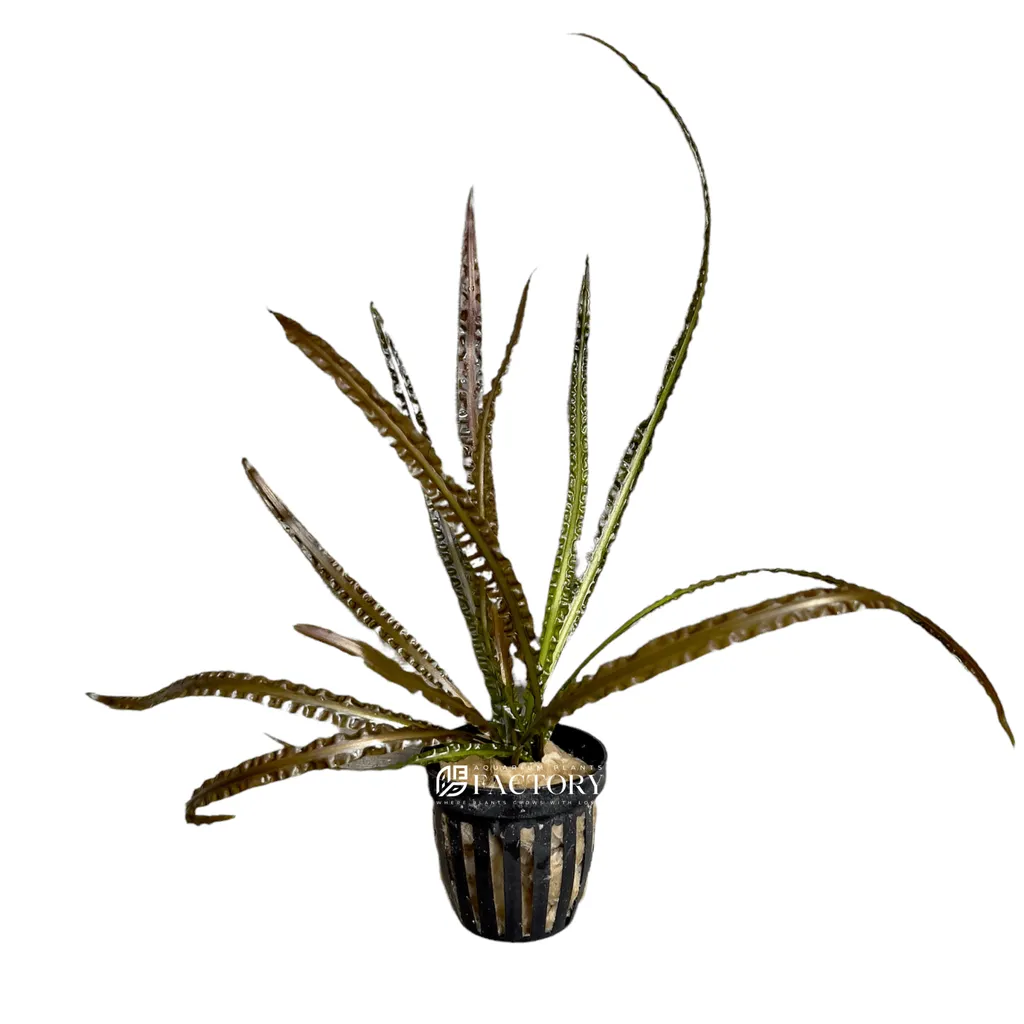
Cryptocoryne retrospiralis
FreshwaterLow light · Background19.7 in (50 cm)Cryptocoryne spiralis
FreshwaterLow light · Background13.8 in (35 cm)3 formsCryptocoryne wendtii
FreshwaterBrackishLow light · Midground9.8 in (25 cm)6 formsDuckweed
Lemna minor
FreshwaterLow light · Floating0.4 in (1 cm)Dwarf vallisneria
Vallisneria nana
FreshwaterMedium light · Background15.7 in (40 cm)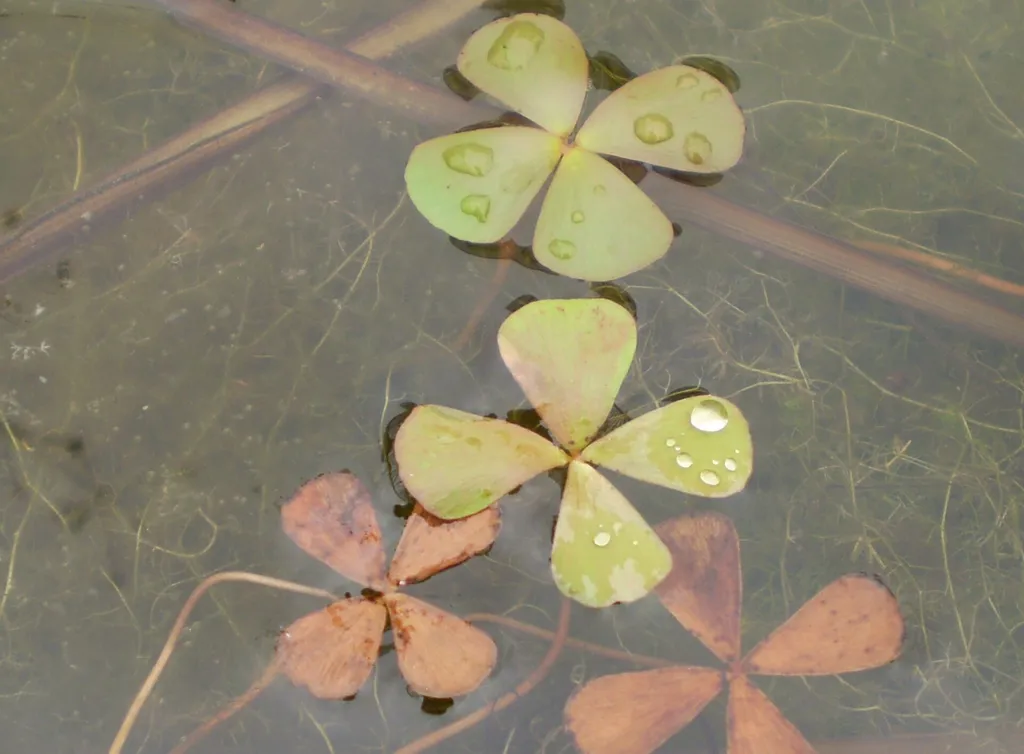
Dwarf water clover
Marsilea crenata
FreshwaterLow light · Foreground3.1 in (8 cm)Dwarf water lettuce
Pistia stratiotes
FreshwaterMedium light · Floating3.9 in (10 cm)Echinodorus palifolius
Aquarius palifolius
FreshwaterMedium light · Background39.4 in (100 cm)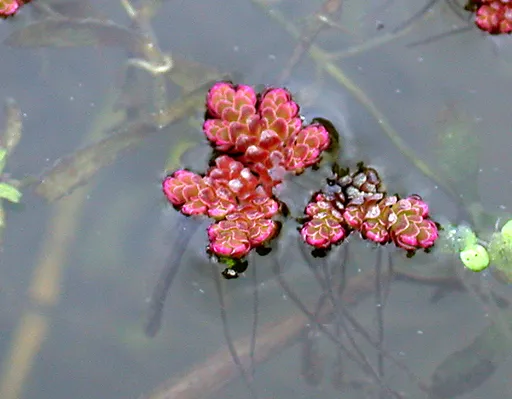
Fairy moss
Azolla filiculoides
FreshwaterMedium light · Floating0.8 in (2 cm)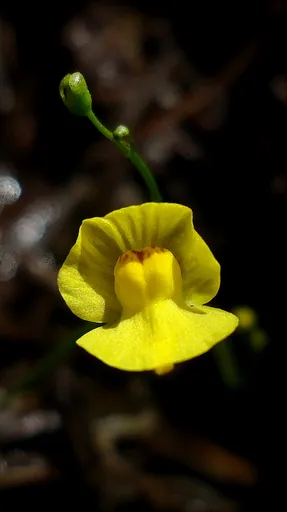
Floating bladderwort
Utricularia gibba
FreshwaterMedium light · Floating0.8 in (2 cm)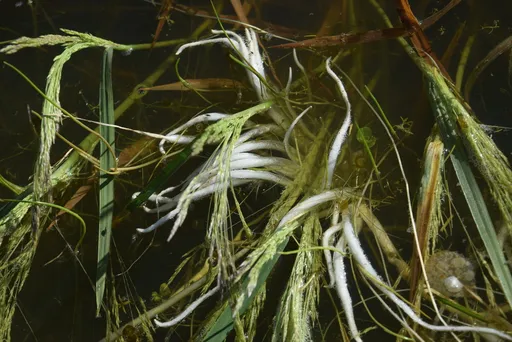
Floating ludwigia
Ludwigia helminthorrhiza
FreshwaterHigh light · Floating2 in (5 cm)Floating water sprite
Ceratopteris cornuta
FreshwaterMedium light · Floating15.7 in (40 cm)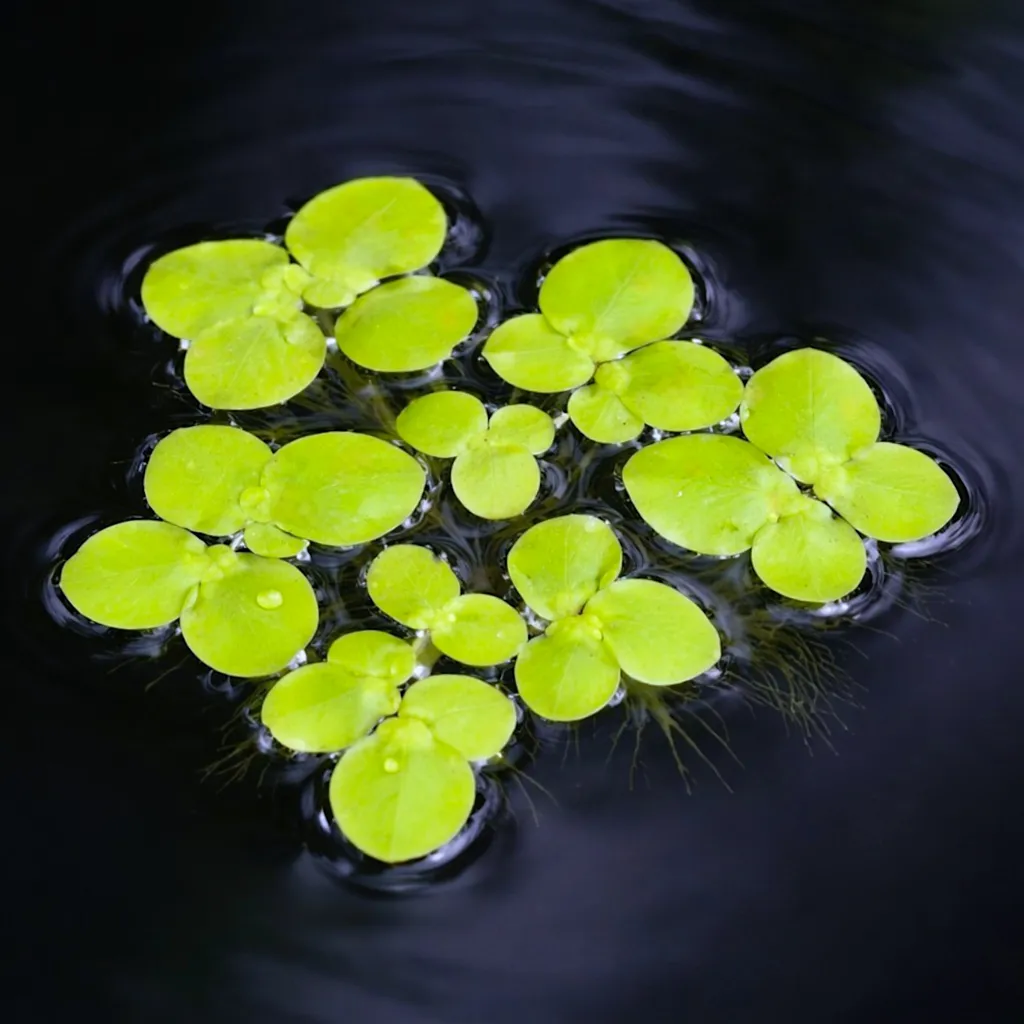
Giant duckweed
Spirodela polyrhiza
FreshwaterLow light · Floating0.4 in (1 cm)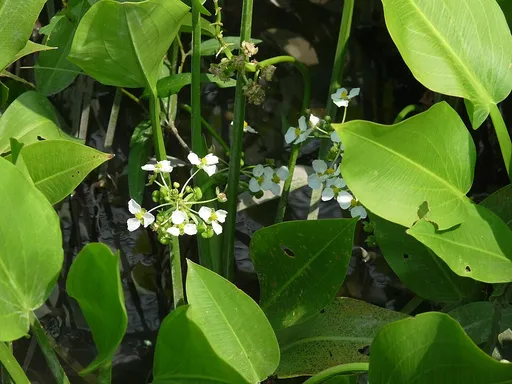
Giant sagittaria
Sagittaria platyphylla
FreshwaterMedium light · Midground15.7 in (40 cm)Giant vallisneria
Vallisneria australis
FreshwaterBrackishLow light · Background59.1 in (150 cm)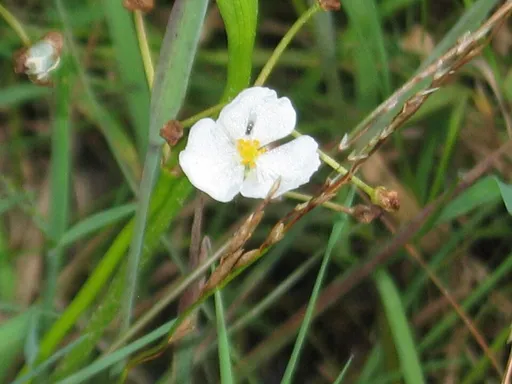
Grassy arrowhead
Sagittaria graminea
FreshwaterMedium light · Background23.6 in (60 cm)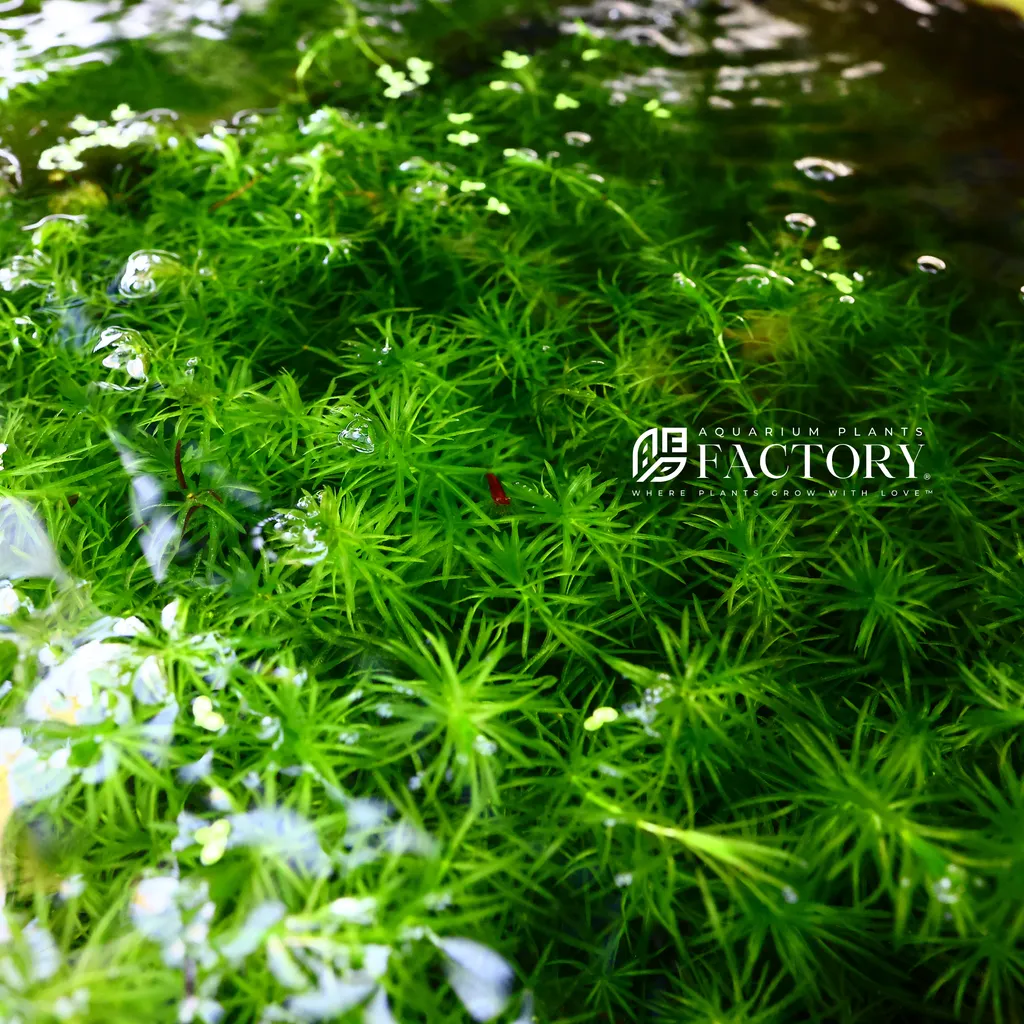
Guppy grass
Najas guadalupensis
FreshwaterBrackishLow light · Floating35.4 in (90 cm)Hornwort
Ceratophyllum demersum
FreshwaterBrackishLow light · Floating39.4 in (100 cm)Hygrophila polysperma
FreshwaterLow light · Background17.7 in (45 cm)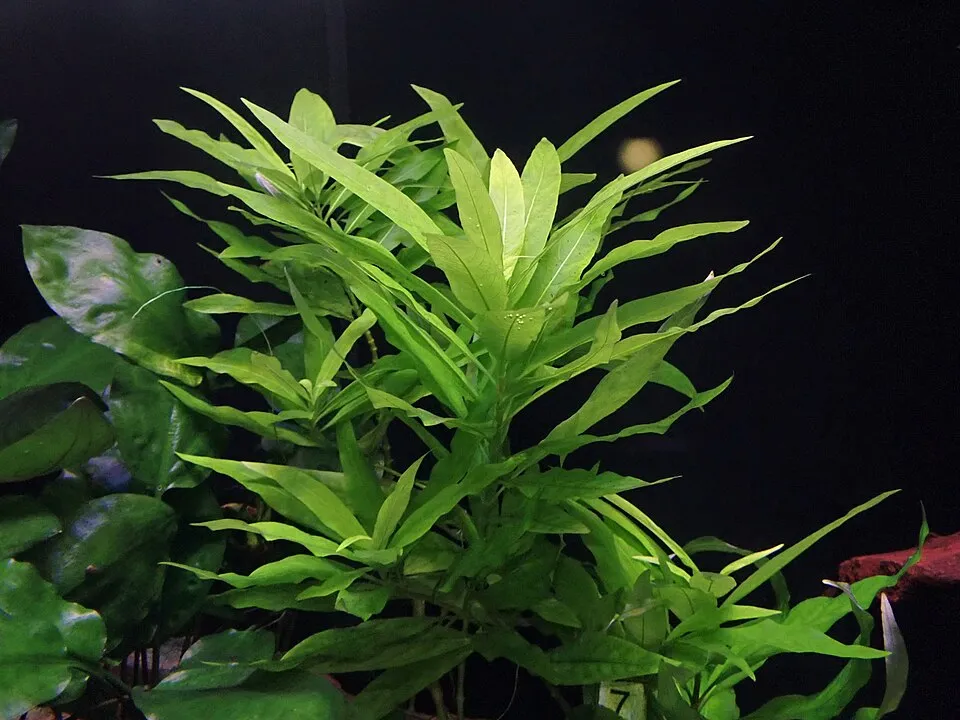
Hygrophila Siamensis
Hygrophila corymbosa 'Siamensis'
FreshwaterMedium light · Background15.7 in (40 cm)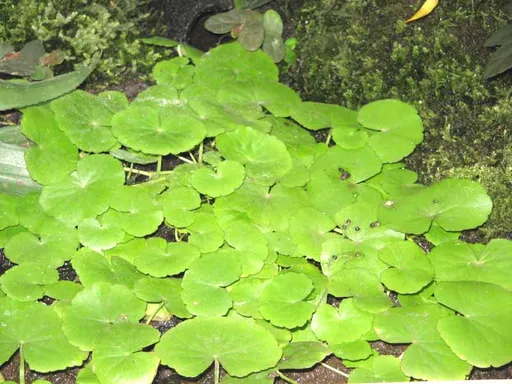
Japanese cress
Cardamine lyrata
FreshwaterMedium light · Midground17.7 in (45 cm)Java fern
Leptochilus pteropus
FreshwaterBrackishLow light · Epiphyte11.8 in (30 cm)5 varietiesJava moss
Taxiphyllum barbieri
FreshwaterBrackishLow light · Epiphyte3.9 in (10 cm)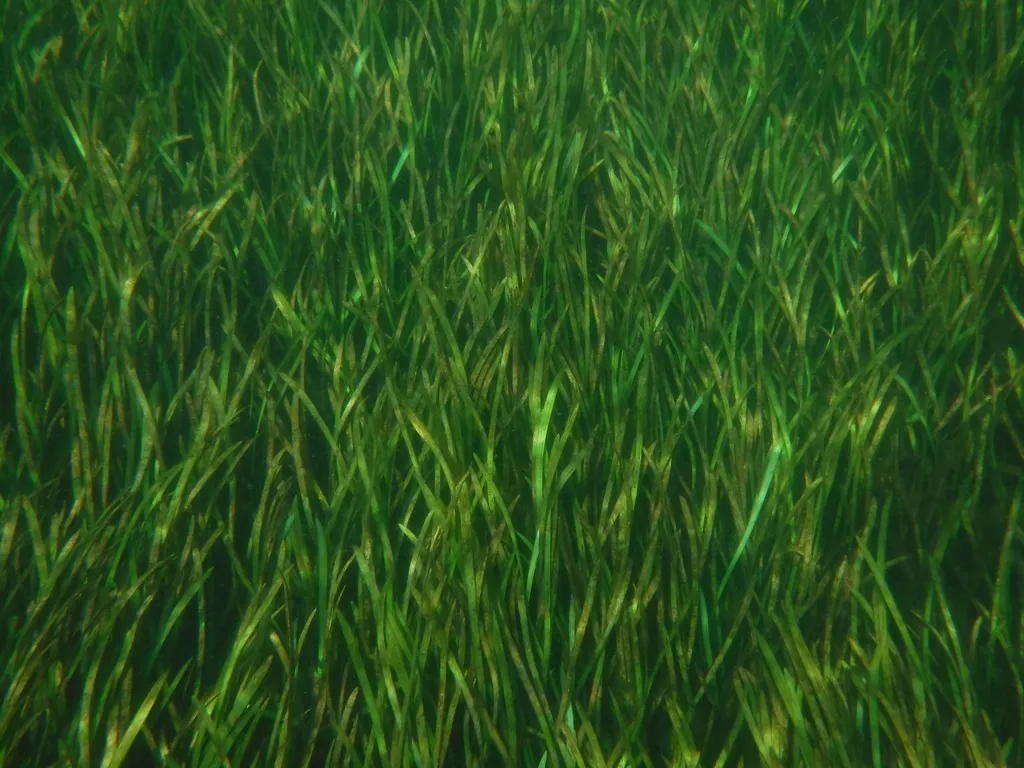
Jungle val
Vallisneria americana
FreshwaterBrackishLow light · Background39.4 in (100 cm)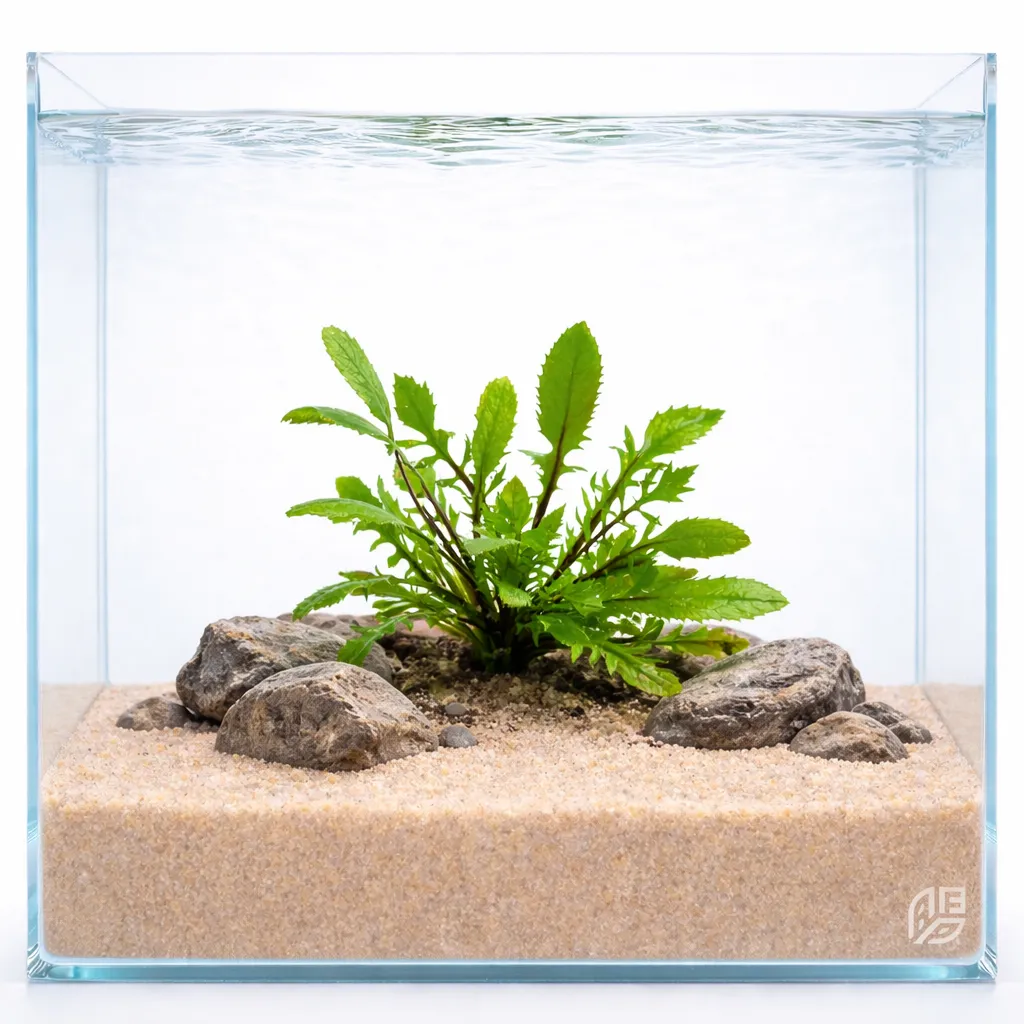
Lake cress
Rorippa aquatica
FreshwaterMedium light · Midground11.8 in (30 cm)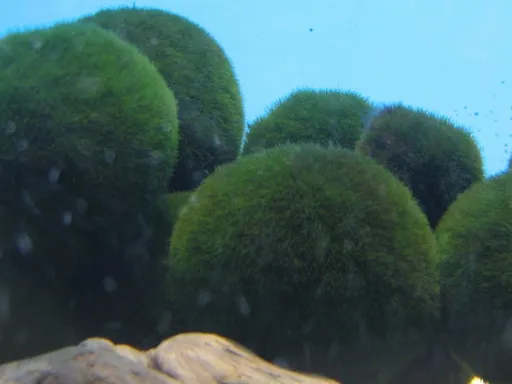
Marimo moss ball
Aegagropila linnaei
FreshwaterBrackishLow light · Foreground3.9 in (10 cm)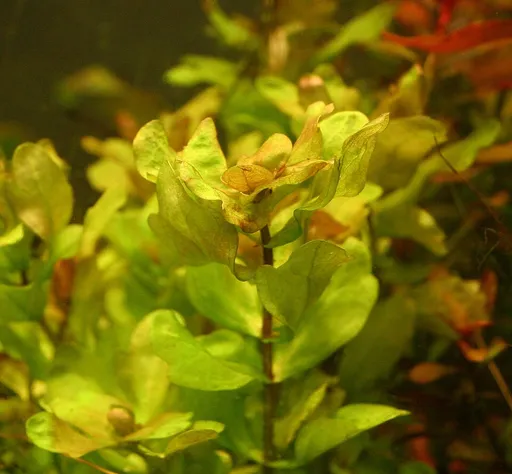
Mexican oak leaf
Shinnersia rivularis
FreshwaterMedium light · Background19.7 in (50 cm)Moneywort
Bacopa monnieri
FreshwaterBrackishMedium light · Background11.8 in (30 cm)Najas indica
FreshwaterMedium light · Floating23.6 in (60 cm)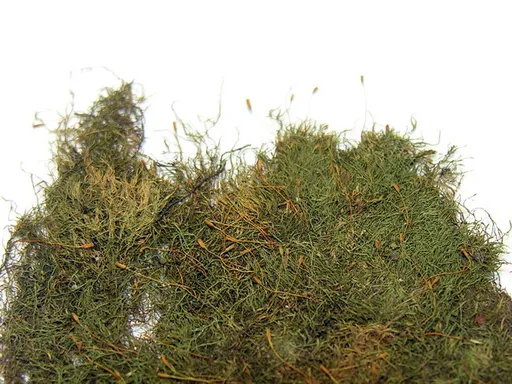
Nano moss
Amblystegium serpens
FreshwaterLow light · Epiphyte1.2 in (3 cm)Narrow leaf anacharis
Elodea najas
FreshwaterMedium light · Background15.7 in (40 cm)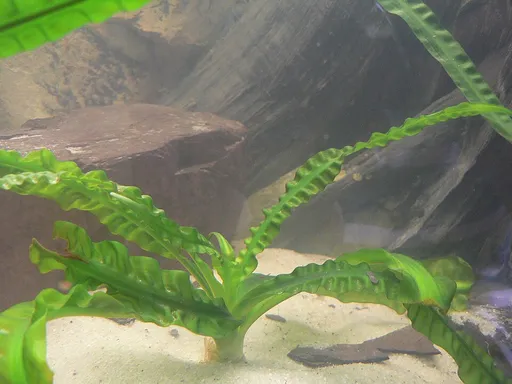
Onion plant natans
Crinum natans
FreshwaterMedium light · Background39.4 in (100 cm)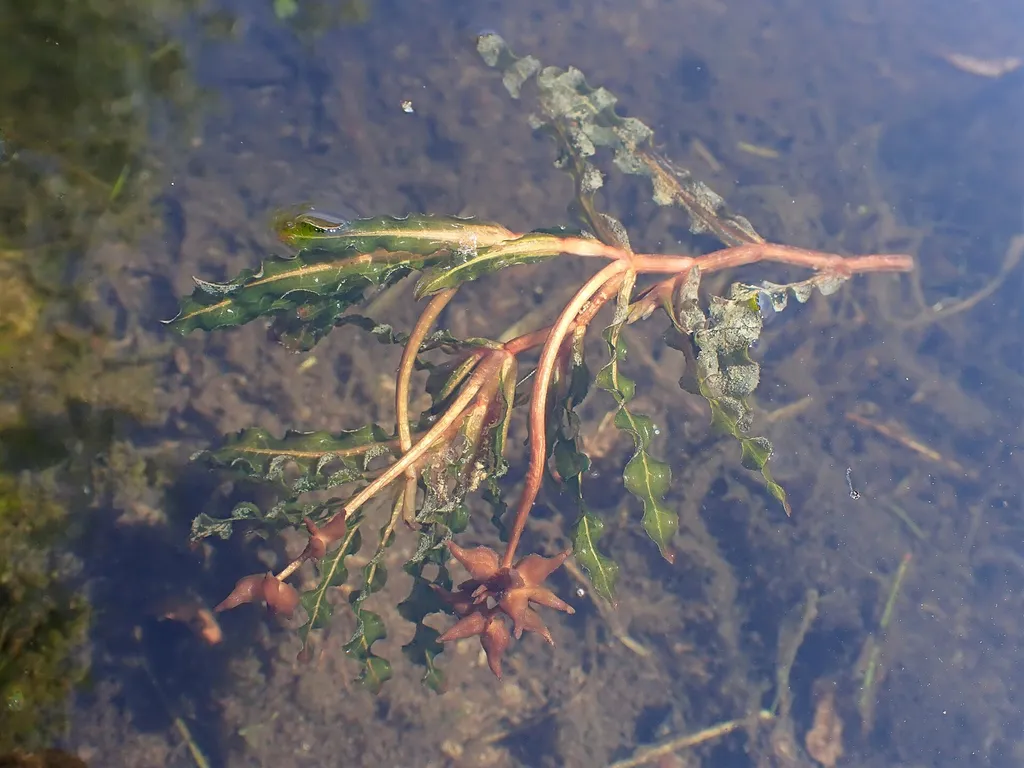
Potamogeton crispus
FreshwaterBrackishLow light · Background31.5 in (80 cm)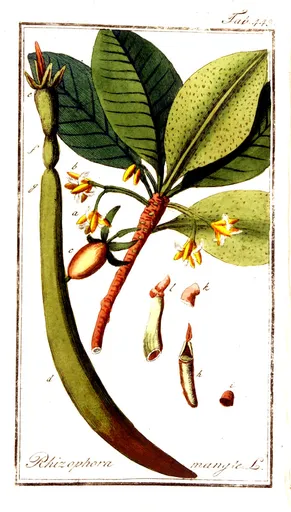
Red mangrove
Rhizophora mangle
BrackishSaltwaterHigh light · Background23.6 in (60 cm)Red root floater
Phyllanthus fluitans
FreshwaterHigh light · Floating1.2 in (3 cm)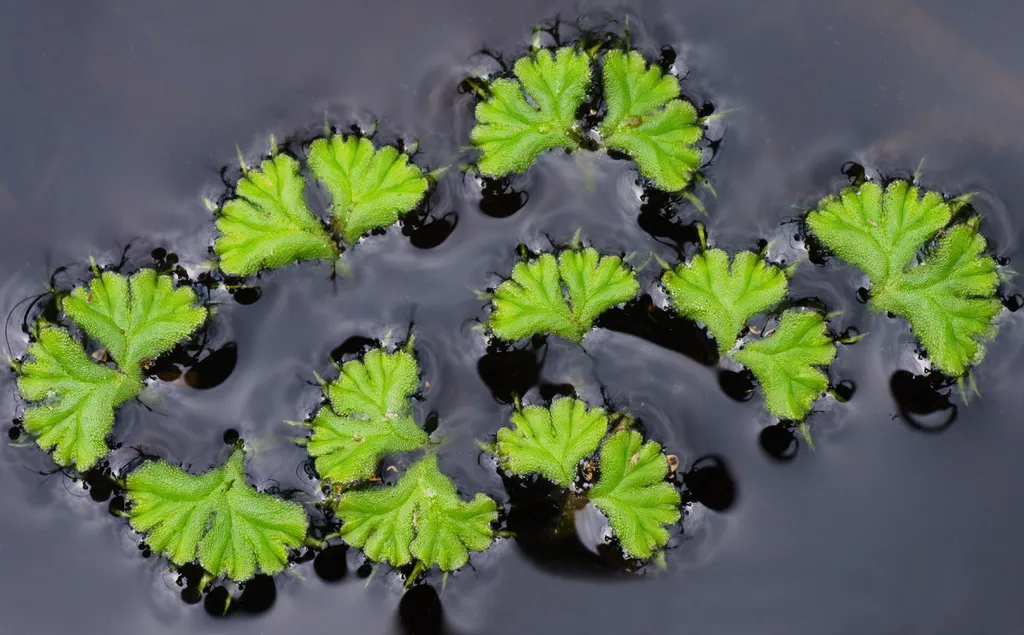
Ricciocarpos natans
FreshwaterMedium light · Floating0.8 in (2 cm)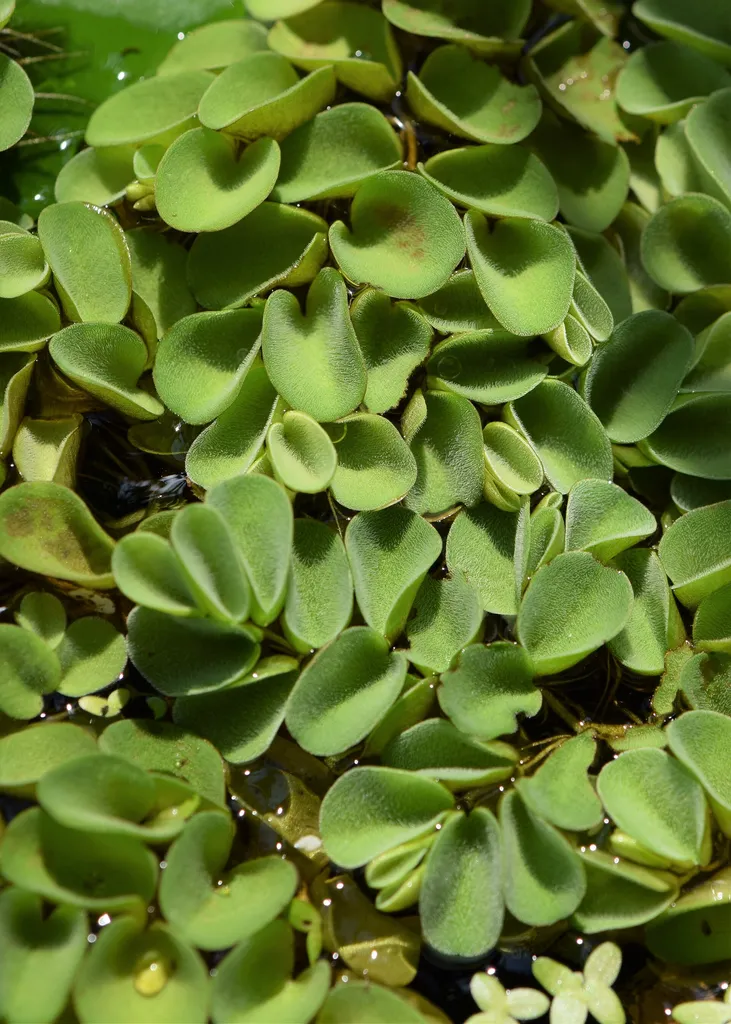
Salvinia cucullata
FreshwaterMedium light · Floating1.2 in (3 cm)Salvinia natans
FreshwaterMedium light · Floating1.2 in (3 cm)Schismatoglottis roseospatha
FreshwaterLow light · Epiphyte3.1 in (8 cm)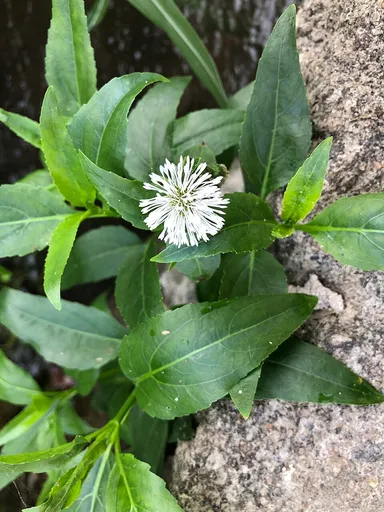
Senegal tea plant
Gymnocoronis spilanthoides
FreshwaterHigh light · Background23.6 in (60 cm)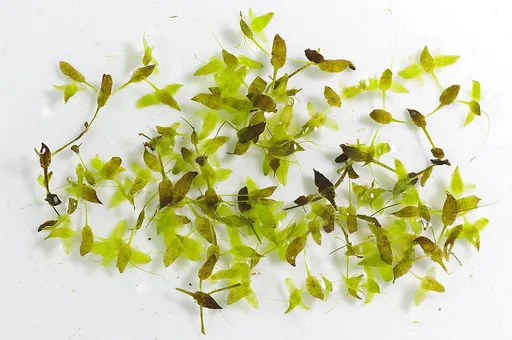
Star duckweed
Lemna trisulca
FreshwaterLow light · Floating0.4 in (1 cm)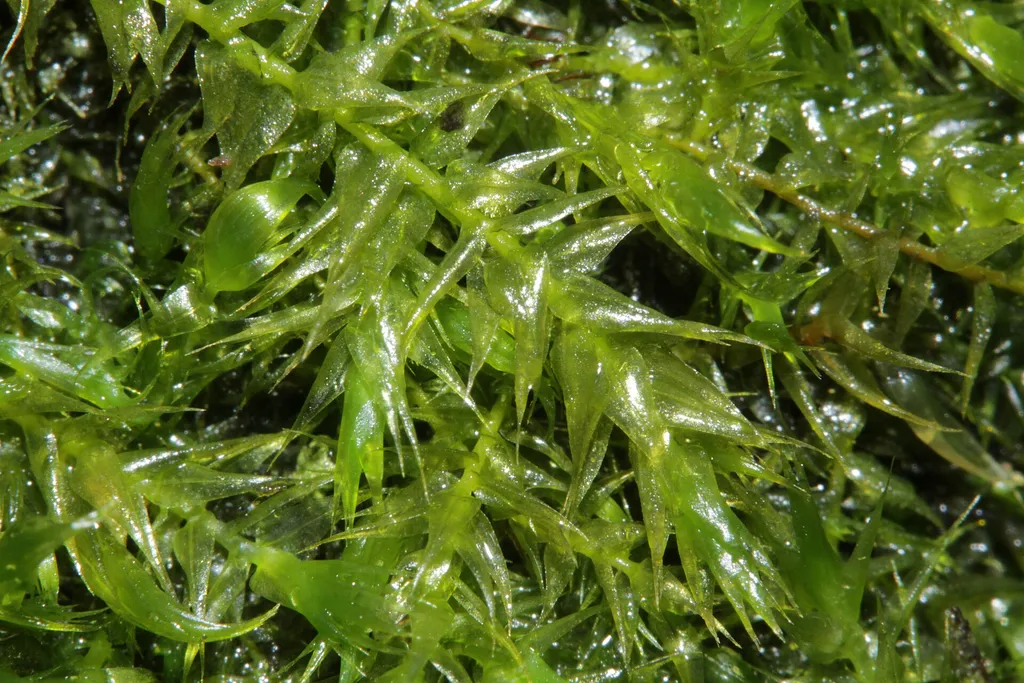
Stringy moss
Leptodictyum riparium
FreshwaterLow light · Epiphyte3.9 in (10 cm)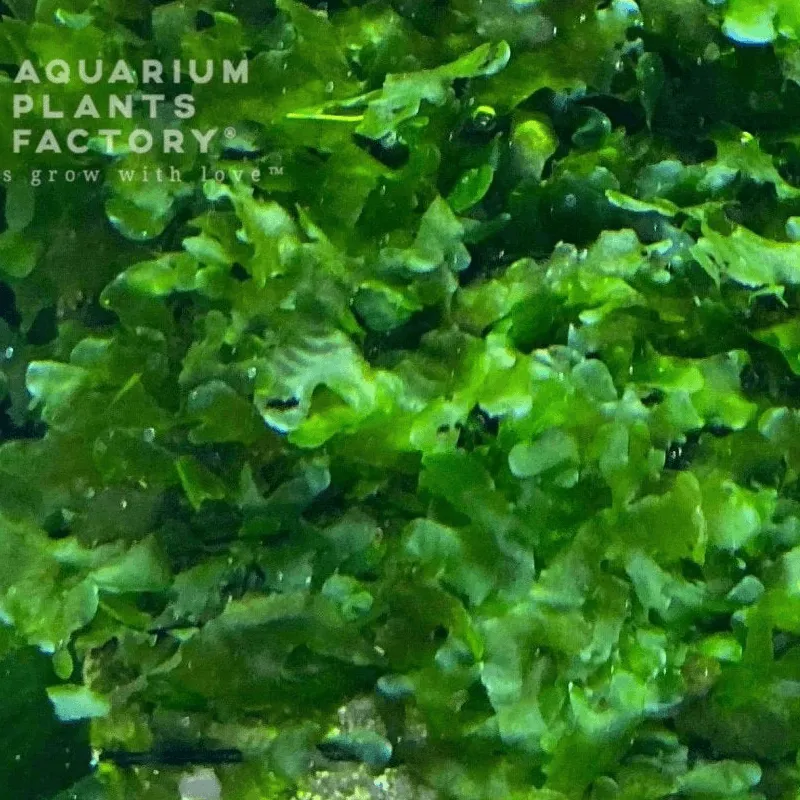
Süsswassertang
Lomariopsis cf. lineata
FreshwaterLow light · Epiphyte2 in (5 cm)Vallisneria nana Tiger
Vallisneria nana 'Tiger'
FreshwaterMedium light · Background23.6 in (60 cm)Vallisneria Rubra
Vallisneria australis 'Rubra'
FreshwaterBrackishMedium light · Background23.6 in (60 cm)Vallisneria spiralis
FreshwaterBrackishLow light · Background19.7 in (50 cm)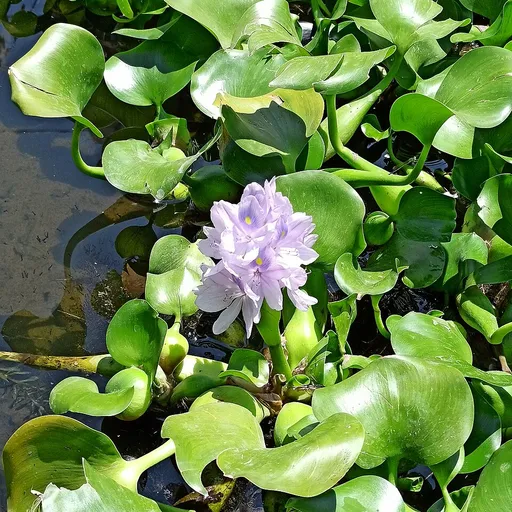
Water hyacinth
Pontederia crassipes
FreshwaterHigh light · Floating15.7 in (40 cm)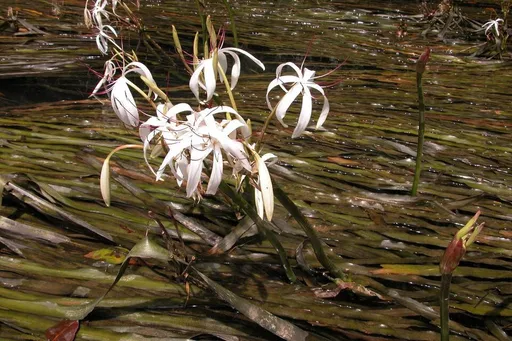
Water onion
Crinum thaianum
FreshwaterLow light · Background39.4 in (100 cm)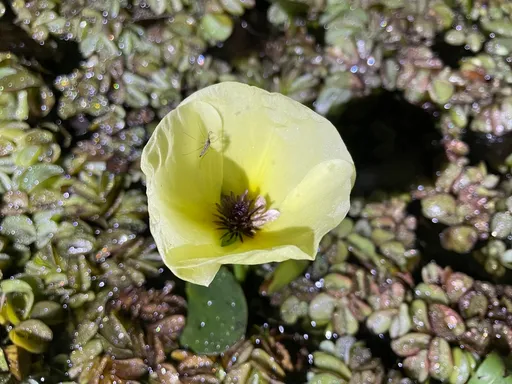
Water poppy
Hydrocleys nymphoides
FreshwaterHigh light · Floating11.8 in (30 cm)Water spangles
Salvinia minima
FreshwaterMedium light · Floating1.2 in (3 cm)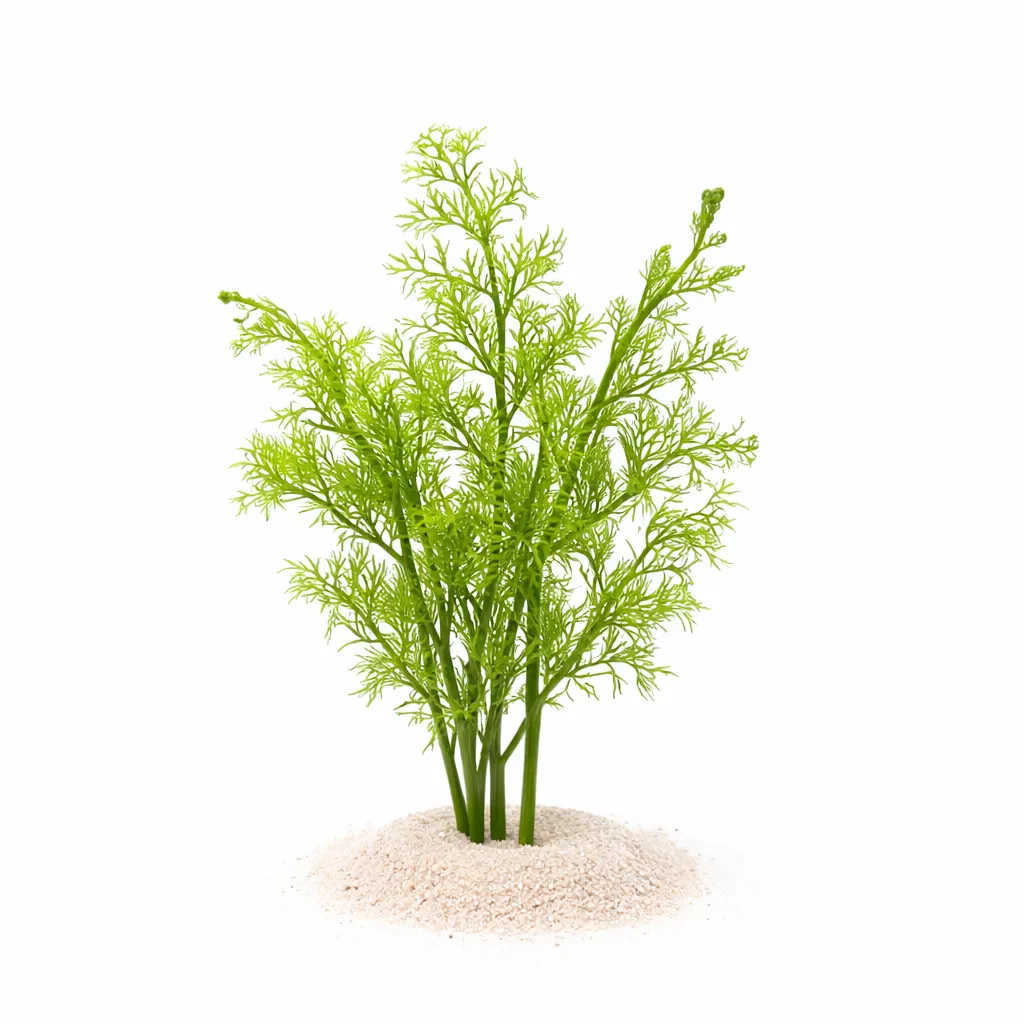
Water sprite
Ceratopteris thalictroides
FreshwaterBrackishMedium light · Background15 in (38 cm)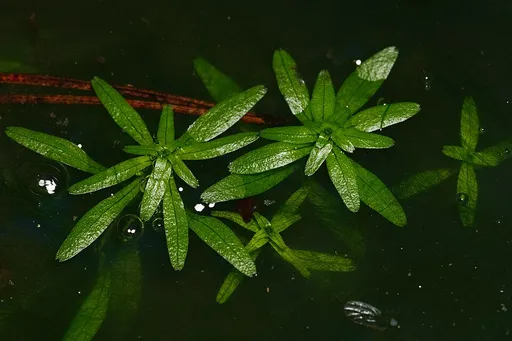
Water starwort
Callitriche palustris
FreshwaterHigh light · Midground11.8 in (30 cm)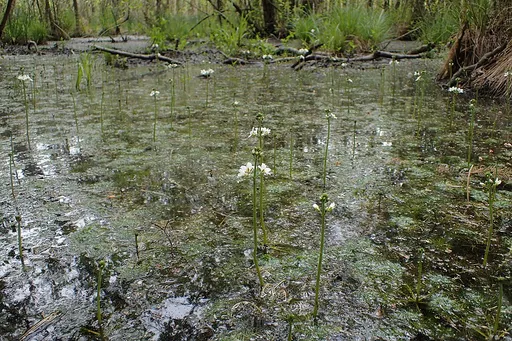
Water violet
Hottonia palustris
FreshwaterHigh light · Midground15.7 in (40 cm)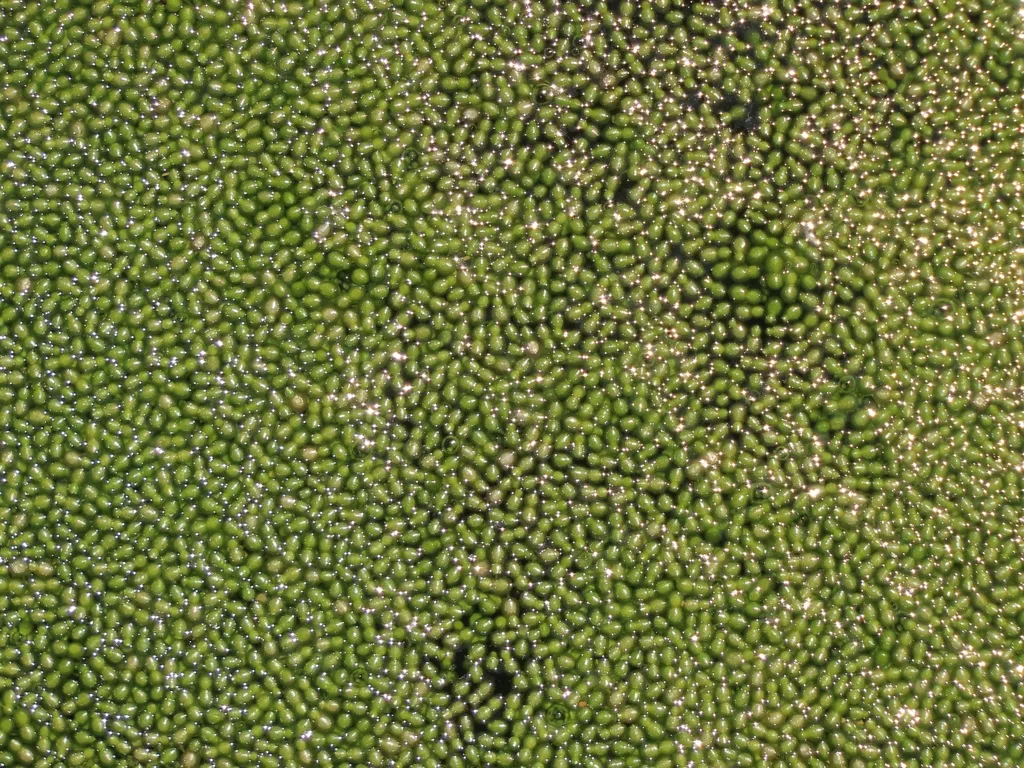
Watermeal
Wolffia globosa
FreshwaterMedium light · Floating0 in (0.1 cm)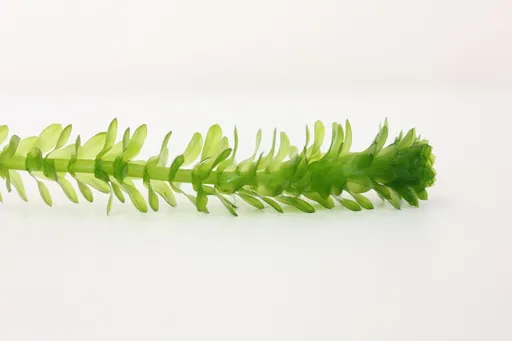
Waterweed
Egeria densa
FreshwaterBrackishMedium light · Background39.4 in (100 cm)Willow moss
Fontinalis antipyretica
FreshwaterLow light · Epiphyte4.7 in (12 cm)
Planning a tank?
TankBud checks stocking and water fit as you build a tank, then tracks water tests, reminders and photos once it is running.
Track your tanksMaintain tanks for clients? See TankBud Pro