Amazon frogbit
Limnobium laevigatum
Also known as Frogbit, South American spongeplant, Smooth frogbit, Hydrocharis laevigata
FreshwaterFloatingRunnersPlantletsSide shoots
Invasive. Can be invasive in warm climates and is regulated in some areas. Never release into the wild; dispose of in the trash.
Care at a glance
- Light
- Medium light
- CO2
- No CO₂ needed
- Temperature
- 68–82°F
- 20–28°C
- Max height
- 2 in
- 5 cm
- Growth rate
- Fast
- Placement
- Floating
- Type
- Floating
- pH
- 6.0–7.5
- Hardness
- 2–15 dGH
- Spread
- 5.9 in (15 cm)
- Nutrient uptake
- Water column
- Growth region
- Submersed or emersed
- Difficulty
- Beginner
- Family
- Hydrocharitaceae
- Origin
- Central and South America
Overview
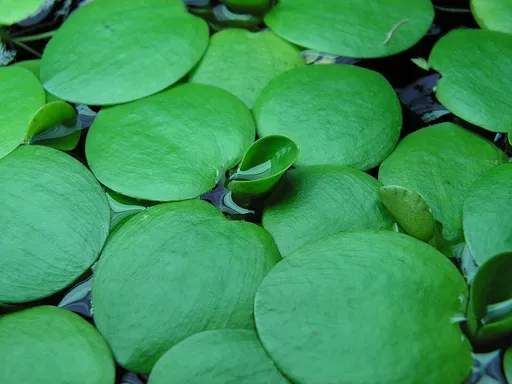
Set it on the surface and it grows quickly under ordinary aquarium light with no CO2 or substrate, its long roots acting as a strong nitrate filter and a refuge for shrimp and fry. It multiplies fast and will blanket the surface if left alone, so thin it regularly to keep light reaching plants below. The usual complaints are melting or yellowing leaves from condensation and hard surface spray hitting the crown, and stunted pale growth from a lid trapping heat or from a nutrient deficiency, so leave an air gap, keep surface flow gentle and dose a complete liquid fertilizer.
In the wild
Amazon frogbit is a free-floating plant native to Central and South America, including the Amazon basin, where it drifts across still and slow-moving ponds, lakes, marshes and river backwaters. It floats with rounded glossy leaves on the surface and a thick mass of long roots trailing below into the water. In bright open conditions older plants can lift their leaves up off the surface into a low emersed rosette.
Good to know
Limnobium laevigatum belongs to the family Hydrocharitaceae, the same family as Vallisneria and Egeria. The undersides of its floating leaves carry a spongy, air-filled aerenchyma tissue that gives it buoyancy, which is the origin of the alternate name spongeplant. It spreads aggressively by stolons that bud off daughter plants, forming dense connected colonies, and can also flower and set seed.
Did you know
Frogbit is so productive at sucking up nutrients that it is used in wastewater treatment and as a green manure, and that same vigor has made it an invasive nuisance in warm regions, so it should never be released outdoors.
Related plants
- Medium lightFloating23.6 in (60 cm)
Najas indica
Medium light · Floating
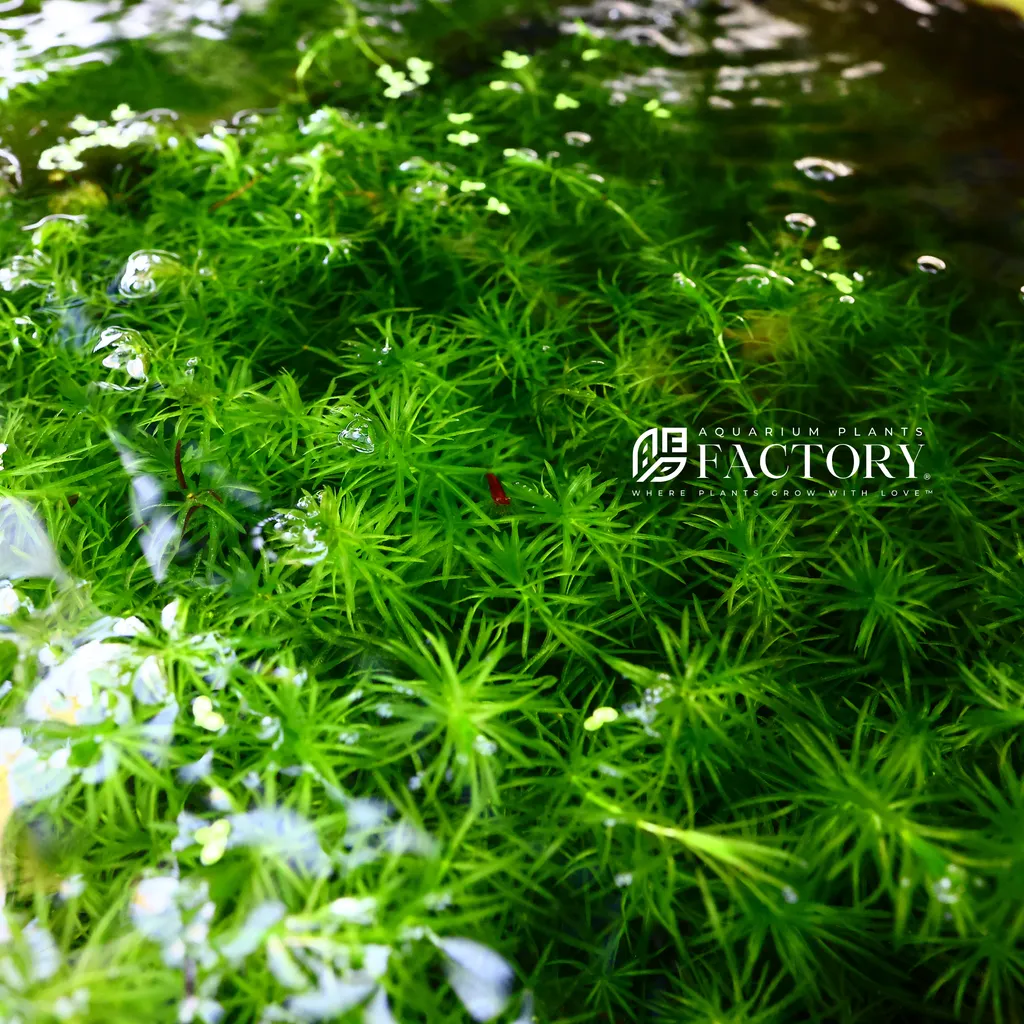 Low lightFloating35.4 in (90 cm)
Guppy grass
Najas guadalupensis
Low light · Floating
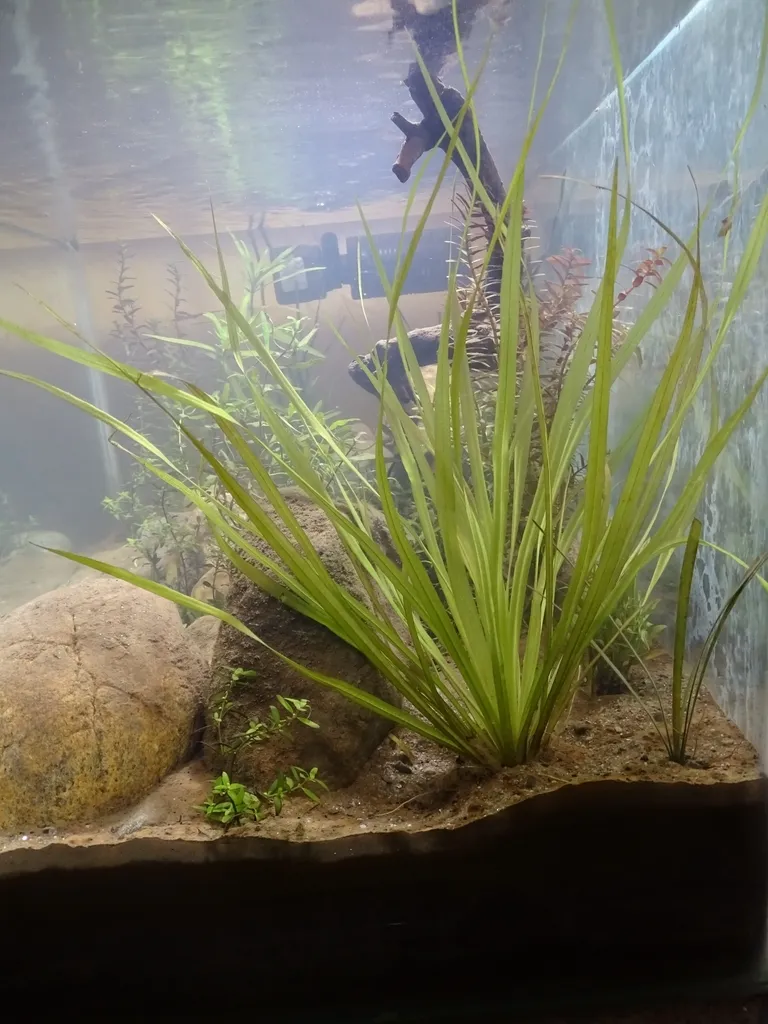 High lightMidground7.9 in (20 cm)
Blyxa japonica
High light · Midground
- Medium lightMidground11.8 in (30 cm)
Blyxa novoguineensis
Medium light · Midground
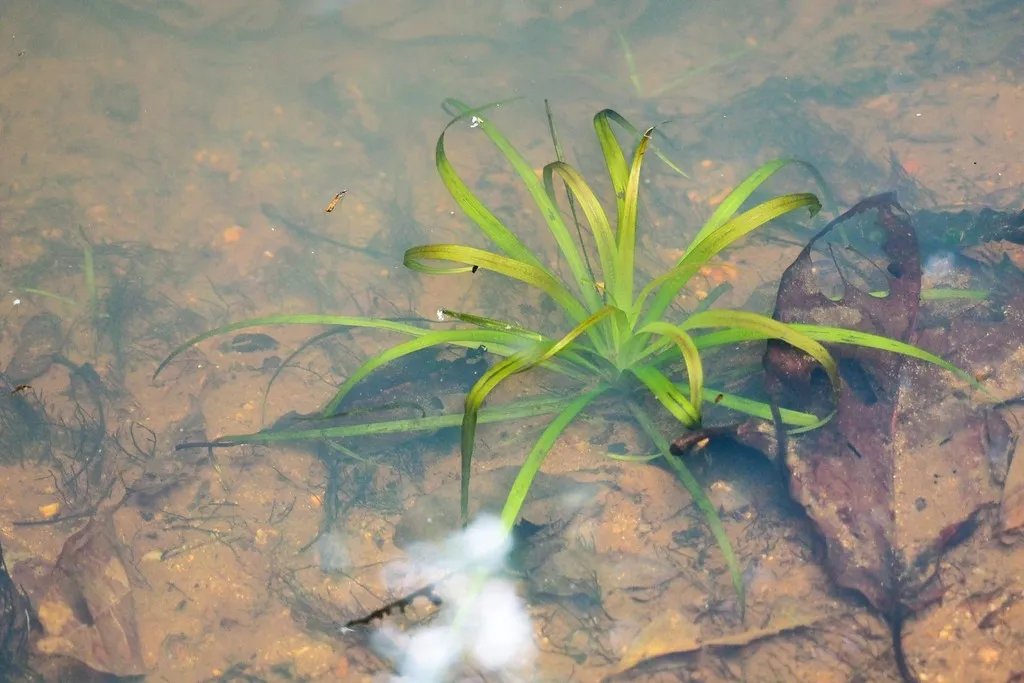 High lightMidground15.7 in (40 cm)
Blyxa aubertii
High light · Midground
 Medium lightBackground15.7 in (40 cm)
Dwarf vallisneria
Vallisneria nana
Medium light · Background