American frogbit
Hydrocharis spongia
Also known as Limnobium spongia, American spongeplant, American frog's-bit
FreshwaterFloatingRunners
Invasive. California lists American frogbit as a noxious weed (California Code of Regulations, title 3, section 4500), and it should never be released into the wild.
Care at a glance
- Light
- Medium light
- CO2
- No CO₂ needed
- Temperature
- 64–82°F
- 18–28°C
- Max height
- 5.9 in
- 15 cm
- Growth rate
- Fast
- Placement
- Floating
- Type
- Floating
- pH
- 5.0–8.0
- Spread
- 5.9 in (15 cm)
- Nutrient uptake
- Water column
- Growth region
- Submersed or emersed
- Difficulty
- Easy
- Family
- Hydrocharitaceae
- Origin
- Eastern and southern United States, New Jersey to Florida and west to Texas
Overview
American frogbit floats on calm water and needs no substrate or CO2. Its hanging roots feed from the water, so a liquid fertilizer helps in lean tanks. Flowgrow puts its best growth at 18 to 24 C, cooler than Amazon frogbit, with limits of 4 to 27 C. Give it medium light and an air gap under the lid, since leaves can stand on stalks up to 15 cm. Keep condensation and filter spray off the leaves, which can rot when they stay wet. Thin the runners often so light reaches plants below.
In the wild
American frogbit is native to the eastern and southern United States, from New Jersey south to Florida and west to Texas. It grows in swamps, ponds, bayous and deep ditches where the water is still or barely moving. Plants float free or root in mud along the shore. Northern plants survive winter as starchy buds that sink, while southern plants grow all year.
Good to know
American frogbit belongs to the Hydrocharitaceae. POWO, GBIF and WFO now place Limnobium inside Hydrocharis, which makes Limnobium spongia into Hydrocharis spongia. Its leaf blades are heart-shaped and 2.5 to 7.5 cm long, with spongy air pockets under the floating leaves. Amazon frogbit has smaller leaves, 2 to 5 cm long and rounded at tip and base. Amazon frogbit's male flowers carry about 6 stamens, against 9 to 12 in American frogbit. Some nurseries sell European frogbit under this name, and its floating leaves lack the spongy pad.
Did you know
Bosc named American frogbit Hydrocharis spongia in 1807. Steudel moved it to Limnobium in 1841, and the merger of the two genera has returned it to its first name.
Related plants
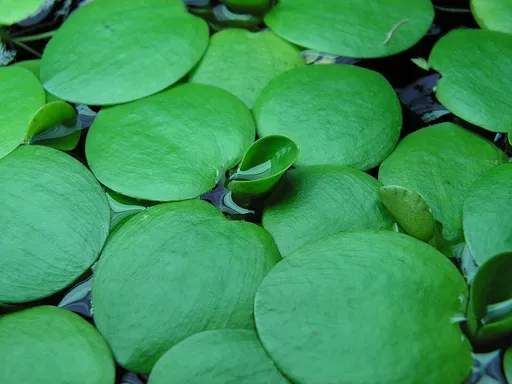 Medium lightFloating2 in (5 cm)
Amazon frogbit
Limnobium laevigatum
Medium light · Floating
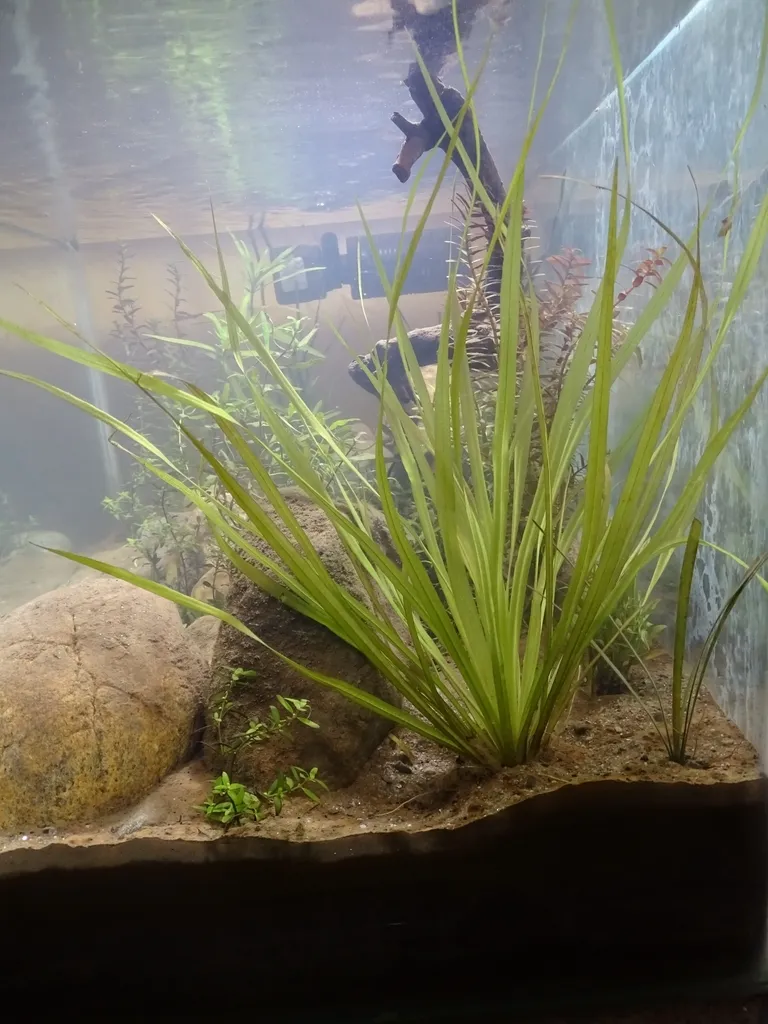 High lightMidground7.9 in (20 cm)
Blyxa japonica
High light · Midground
- Medium lightFloating23.6 in (60 cm)
Najas indica
Medium light · Floating
 Low lightFloating35.4 in (90 cm)
Guppy grass
Najas guadalupensis
Low light · Floating
- Medium lightMidground11.8 in (30 cm)
Blyxa novoguineensis
Medium light · Midground
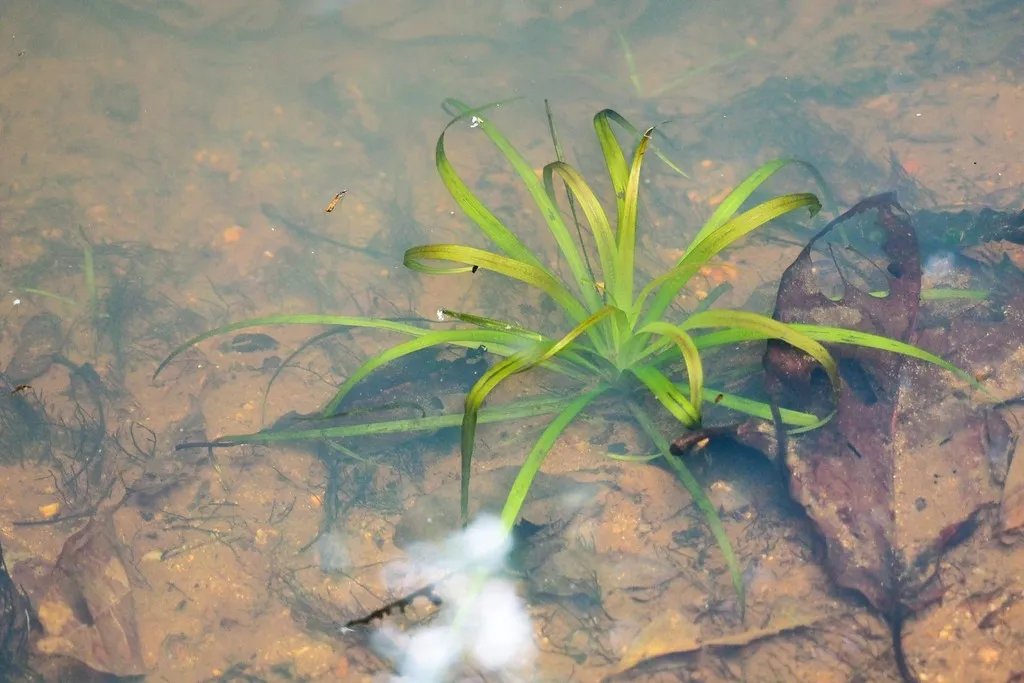 High lightMidground15.7 in (40 cm)
Blyxa aubertii
High light · Midground