FOWLR aquarium fish
FOWLR stands for fish-only with live rock: a saltwater tank built around fish rather than corals. These species eat or nip corals and inverts, so they belong in a fish-only setup rather than a reef. Expect bigger, bolder fish like large angels, triggers, lionfish and puffers. Each profile lists tank size, temperament and diet.
At a glance
- Tank size
- 32–300 gal
- 32 gal (120 L) to 300 gal (1,135 L); half the list needs 151 gal (570 L) or more
- Temperature
- 73–81°F
- 23–27°C, most of the list
- pH
- 8.1–8.4
- Most of the list
- Difficulty
- 1 easy
- 24 medium · 26 difficult
- Temperament
- 5 peaceful
- 32 mostly peaceful · 14 aggressive
51 species
Start here
The classic FOWLR stocking
A fish-only tank with live rock is built around fish that would wreck a reef. The Picasso triggerfish reaches 11.8 inches (30 cm), lists 180 gallons (680 liters) and rearranges the rockwork. The dogface puffer is a 13 inch (33 cm) fish for 151 gallons (570 liters) that learns to beg at the glass, and the porcupine puffer is its spiny cousin at 11.8 inches (30 cm). The volitans lionfish reaches 15 inches (38 cm) and eats any fish it can swallow. The bluehead wrasse is the easy, active fish of the group at 7.1 inches (18 cm) for 74 gallons (280 liters). The raccoon butterflyfish reaches 7.9 inches (20 cm) and picks at polyps, which is the whole reason it is here.
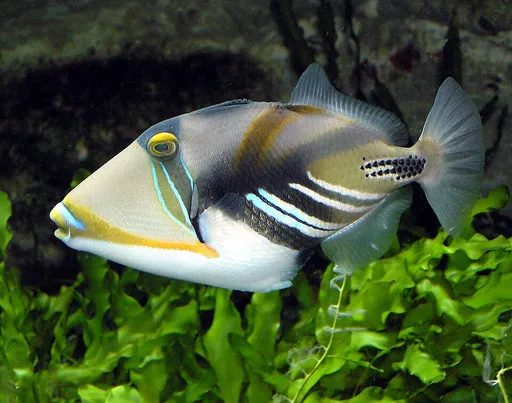
Picasso triggerfish
Rhinecanthus aculeatus
Saltwater- Size
- 11.8 in (30 cm)
- Tank
- 180 gal (680 L)
- Water
- 72–79°F (22–26°C)
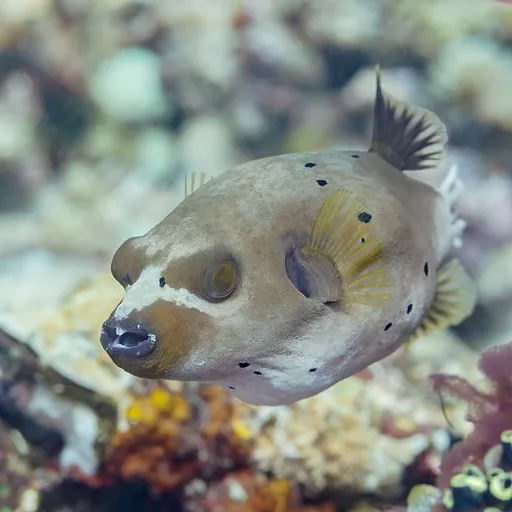
Dogface puffer
Arothron nigropunctatus
Saltwater- Size
- 13 in (33 cm)
- Tank
- 151 gal (570 L)
- Water
- 75–81°F (24–27°C)
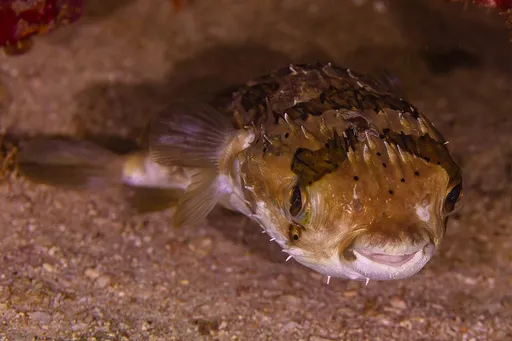
Porcupine puffer
Diodon holocanthus
Saltwater- Size
- 11.8 in (30 cm)
- Tank
- 180 gal (680 L)
- Water
- 75–81°F (24–27°C)
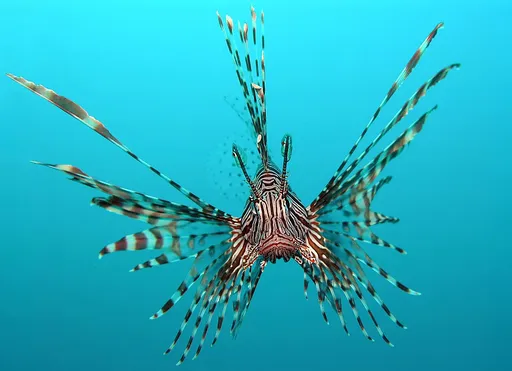
Volitans lionfish
Pterois volitans
Saltwater- Size
- 15 in (38 cm)
- Tank
- 119 gal (450 L)
- Water
- 72–79°F (22–26°C)
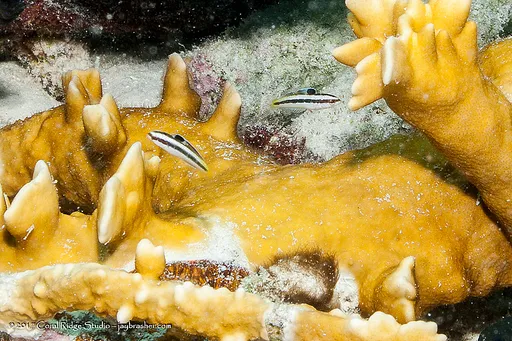
Bluehead wrasse
Thalassoma bifasciatum
Saltwater- Size
- 7.1 in (18 cm)
- Tank
- 74 gal (280 L)
- Water
- 73–81°F (23–27°C)
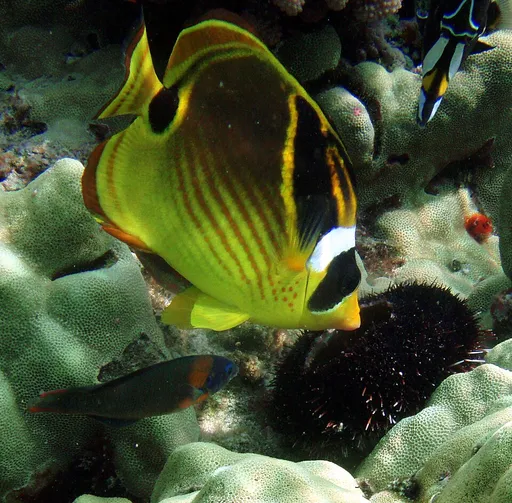
Raccoon butterflyfish
Chaetodon lunula
Saltwater- Size
- 7.9 in (20 cm)
- Tank
- 106 gal (400 L)
- Water
- 75–81°F (24–27°C)
The rule
Why these fish are not reef safe
Every fish on this page is marked not reef safe. The triggers, puffers, boxfish and the big wrasses eat invertebrates: snails, hermit crabs, shrimp and clams are food to them. The butterflyfish and the large angelfish nip coral polyps and clam mantles. Neither habit trains out, so the tank is fish and rock, with no clean-up crew that can be eaten, and the filtration is sized for big, messy eaters, since a lionfish or a grouper produces waste on a scale a reef never sees.
- 01
They eat inverts
Triggers and puffers crush snails, crabs and shrimp
- 02
They nip coral
Butterflyfish and angels pick at polyps
- 03
They need room
Most profiles list 100 gallons (380 liters) or more
- 04
They foul water
Big eaters need big filtration and a lid
Triggers and puffers
Triggers, puffers and the teeth that never stop growing
A puffer's beak keeps growing, so it needs hard food, clams in the shell and whole shrimp, or the teeth overgrow. The stars-and-stripes puffer reaches 19.7 inches (50 cm) and lists 180 gallons (680 liters), the map puffer 23.6 inches (60 cm) in 238 gallons (900 liters). The triggers are marked aggressive across the board. The wedgetail triggerfish is the manageable one at 11.8 inches (30 cm) for 106 gallons (400 liters), the bursa triggerfish lists 9.8 inches (25 cm), and the clown triggerfish is the expert's fish, marked difficult and aggressive at 19.7 inches (50 cm) with a 300 gallon (1,135 liter) minimum.
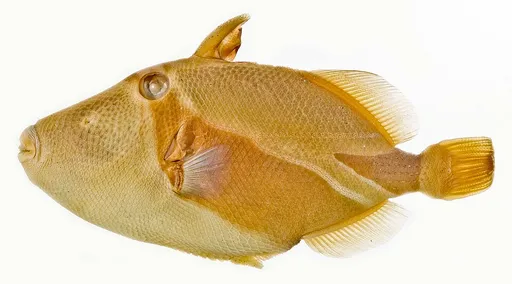
Wedgetail triggerfish
Rhinecanthus rectangulus
Saltwater11.8 in (30 cm) · 106 gal (400 L)75–81°F (24–27°C)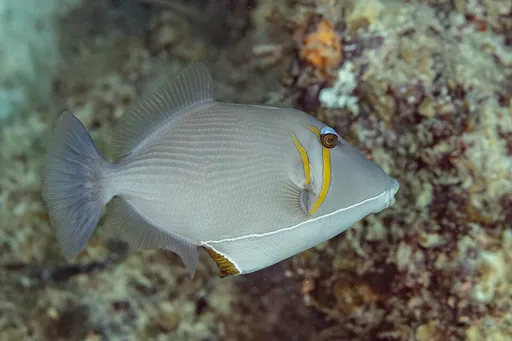
Bursa triggerfish
Sufflamen bursa
Saltwater9.8 in (25 cm) · 125 gal (473 L)72–79°F (22–26°C)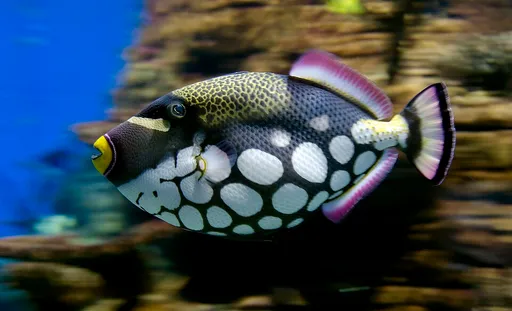
Clown triggerfish
Balistoides conspicillum
Saltwater19.7 in (50 cm) · 300 gal (1,135 L)72–79°F (22–26°C)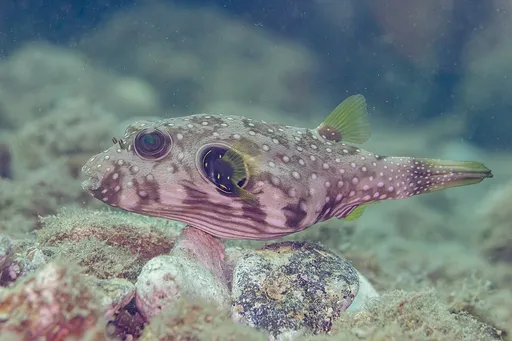
Stars-and-stripes puffer
Arothron hispidus
Saltwater19.7 in (50 cm) · 180 gal (680 L)75–81°F (24–27°C)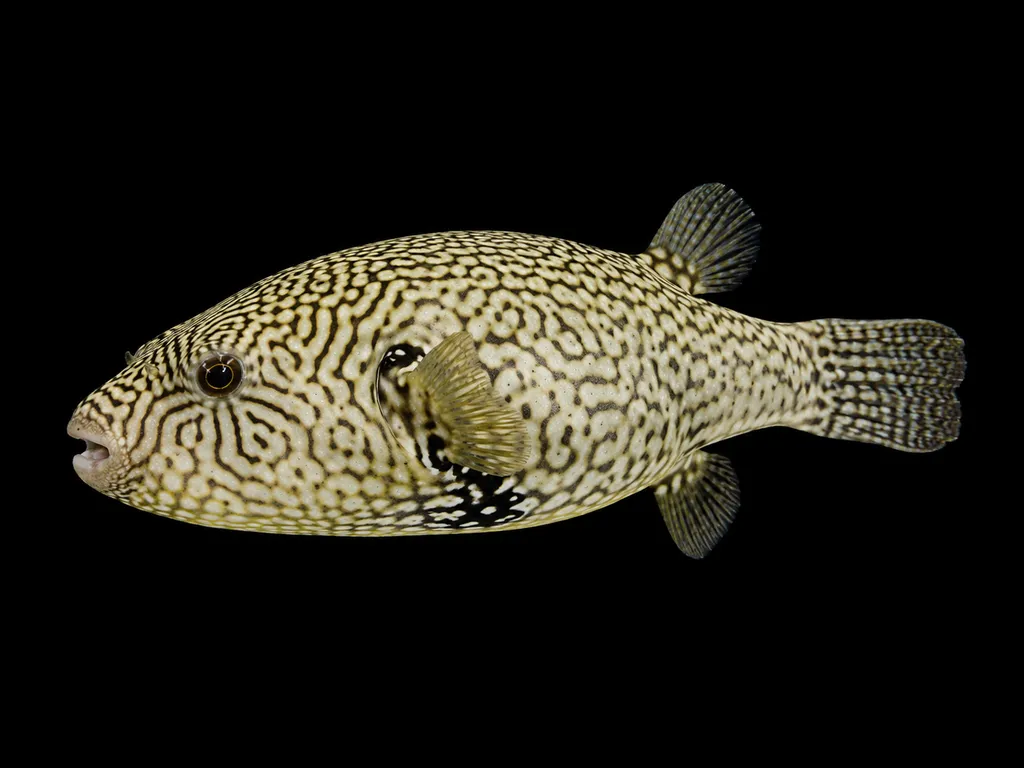
Map puffer
Arothron mappa
Saltwater23.6 in (60 cm) · 238 gal (900 L)75–81°F (24–27°C)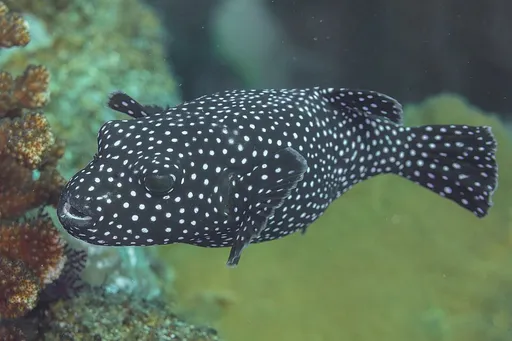
Guineafowl puffer
Arothron meleagris
Saltwater19.7 in (50 cm) · 180 gal (680 L)75–81°F (24–27°C)
Angels and butterflies
Large angelfish and butterflyfish
The big Pomacanthus angels are the showpieces of a FOWLR tank and outgrow most of them. The emperor angelfish reaches 15 inches (38 cm) and lists 185 gallons (700 liters), the koran 15.7 inches (40 cm) in 132 gallons (500 liters). The Red Sea angelfish is the compact choice at 7.9 inches (20 cm) for 125 gallons (475 liters), marked medium. The butterflyfish are calmer. The golden butterflyfish is marked peaceful and social at 9.1 inches (23 cm) for 151 gallons (570 liters), the pearlscale butterflyfish 5.5 inches (14 cm) for 75 gallons (285 liters), and the threadfin butterflyfish 9.1 inches (23 cm) for 79 gallons (300 liters).
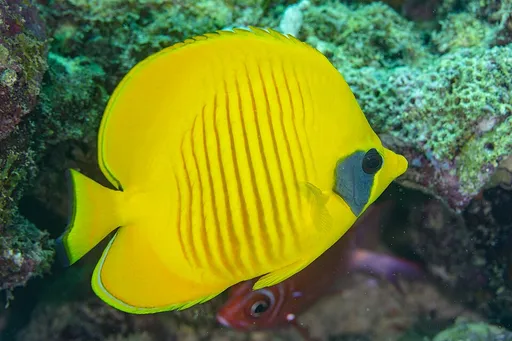
Golden butterflyfish
Chaetodon semilarvatus
Saltwater9.1 in (23 cm) · 151 gal (570 L)75–82°F (24–28°C)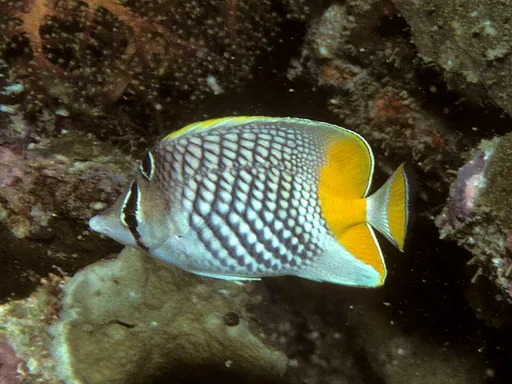
Pearlscale butterflyfish
Chaetodon xanthurus
Saltwater5.5 in (14 cm) · 75 gal (285 L)73–81°F (23–27°C)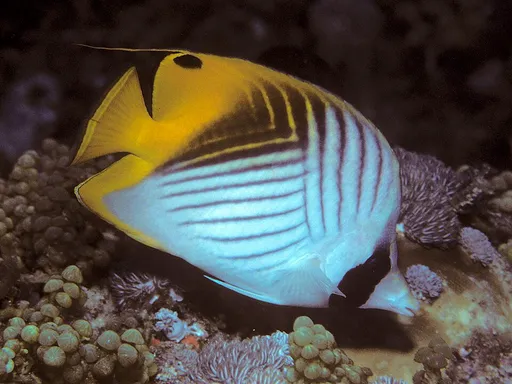
Threadfin butterflyfish
Chaetodon auriga
Saltwater9.1 in (23 cm) · 79 gal (300 L)75–81°F (24–27°C)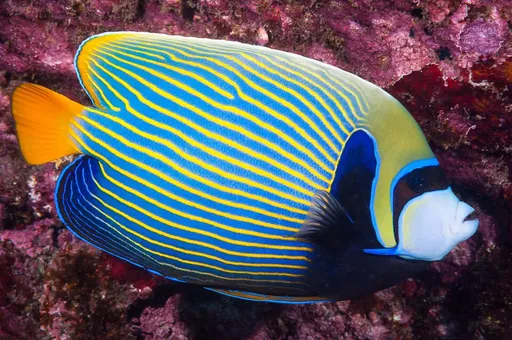
Emperor angelfish
Pomacanthus imperator
Saltwater15 in (38 cm) · 185 gal (700 L)73–81°F (23–27°C)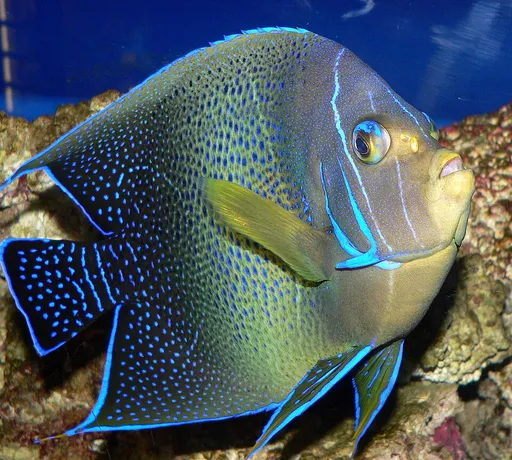
Koran angelfish
Pomacanthus semicirculatus
Saltwater15.7 in (40 cm) · 132 gal (500 L)73–81°F (23–27°C)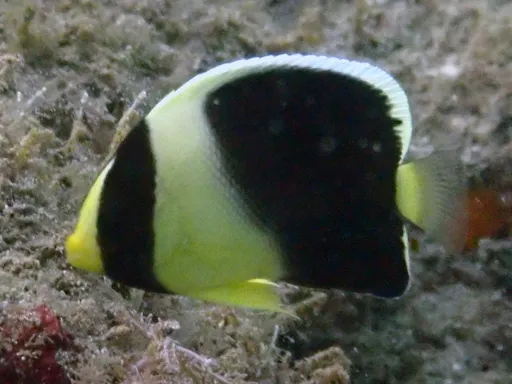
Red Sea angelfish
Apolemichthys xanthotis
Saltwater7.9 in (20 cm) · 125 gal (475 L)72–81°F (22–27°C)
Lionfish and groupers
Lionfish, groupers and the predators
The dwarf lionfish are the ones that fit a normal tank. The fuzzy dwarf lionfish reaches 7.1 inches (18 cm) and lists 50 gallons (190 liters), the dwarf zebra lionfish 9.8 inches (25 cm) in 60 gallons (227 liters), and the radiata lionfish 9.4 inches (24 cm) in 70 gallons (265 liters). Their spines are venomous, so hands stay out of the tank. The groupers are the fish that need a wall: the panther grouper reaches 27.6 inches (70 cm) and lists 300 gallons (1,135 liters), the lyretail grouper 31.5 inches (80 cm) in 291 gallons (1,100 liters). The sailfin snapper is a 23.6 inch (60 cm) fish for the same tank. All of them eat any fish that fits in the mouth.
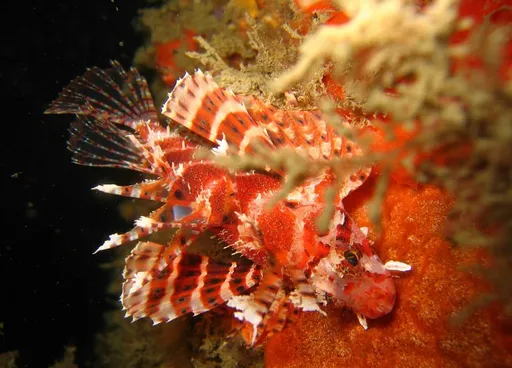
Fuzzy dwarf lionfish
Dendrochirus brachypterus
Saltwater7.1 in (18 cm) · 50 gal (190 L)72–79°F (22–26°C)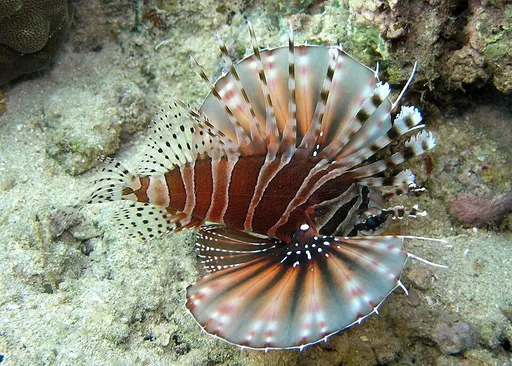
Dwarf zebra lionfish
Dendrochirus zebra
Saltwater9.8 in (25 cm) · 60 gal (227 L)72–79°F (22–26°C)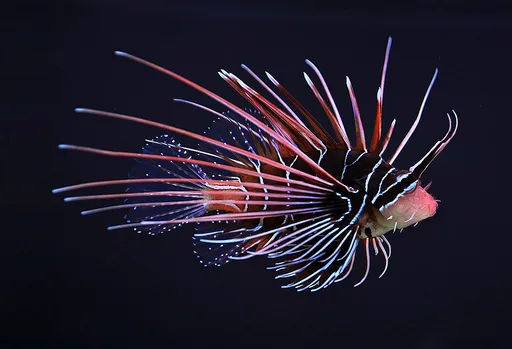
Radiata lionfish
Pterois radiata
Saltwater9.4 in (24 cm) · 70 gal (265 L)72–79°F (22–26°C)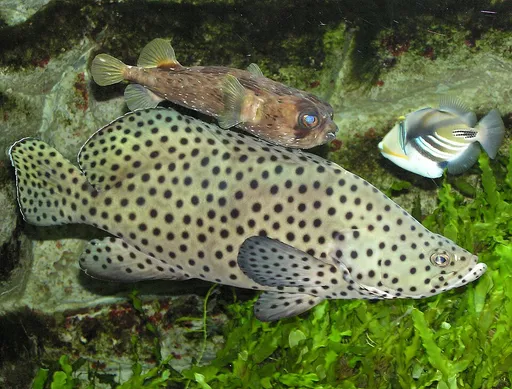
Panther grouper
Cromileptes altivelis
Saltwater27.6 in (70 cm) · 300 gal (1,135 L)72–79°F (22–26°C)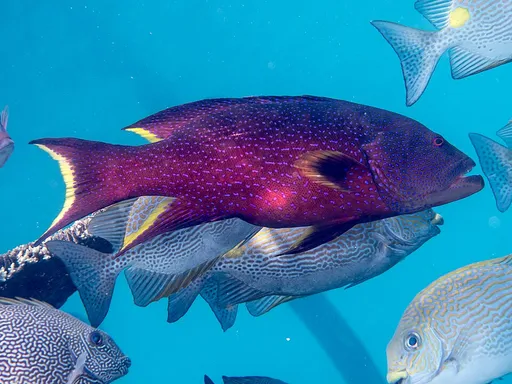
Lyretail grouper
Variola louti
Saltwater31.5 in (80 cm) · 291 gal (1,100 L)75–81°F (24–27°C)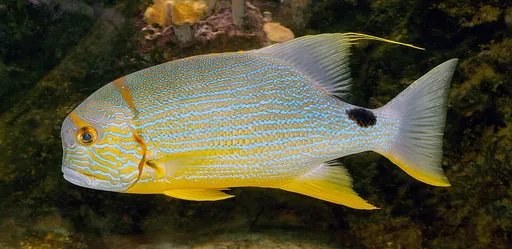
Sailfin snapper
Symphorichthys spilurus
Saltwater23.6 in (60 cm) · 300 gal (1,135 L)73–81°F (23–27°C)
By the numbers
Smallest
Largest
FAQ
Common questions
What does FOWLR mean?
Fish only with live rock: a saltwater tank with rock for filtration and territory but no corals, stocked with fish that would eat or nip a reef.
Can a FOWLR tank have a clean-up crew?
Not a lasting one. Triggers, puffers and the big wrasses eat snails, hermits and shrimp. Algae control falls to the keeper, or to a fish such as a tang that leaves inverts alone.
What size tank does a FOWLR need?
From 50 gallons (190 liters) for a fuzzy dwarf lionfish or 74 gallons (280 liters) for a bluehead wrasse, but most fish here list well over 100 gallons (380 liters), and the groupers and clown triggerfish list 300 gallons (1,135 liters).
Are lionfish dangerous?
Their spines are venomous and a sting is painful. Keep hands clear when working in the tank, and soak a sting in hot water while you seek medical advice.
Can I mix triggers and puffers?
In a large tank, one trigger added last with a puffer that is already established. The triggers are marked aggressive; the dogface, porcupine and stars-and-stripes puffers are marked mostly peaceful. Two triggers is a fight.
Do FOWLR fish need live rock?
Rock gives them territory to claim and carries the bacteria that process the waste of big eaters. It is the LR in the name, and the tank runs better with it than without.
Index
All FOWLR fish
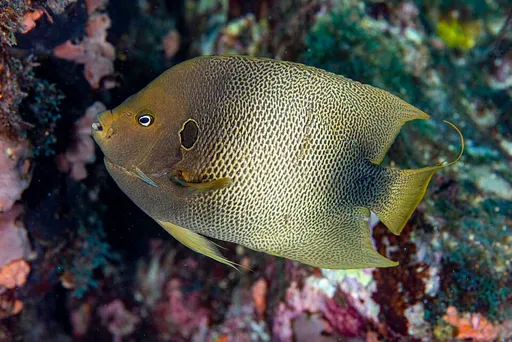
African angelfish
Holacanthus africanus
Saltwater17.7 in (45 cm) · 251 gal (950 L)73–81°F (23–27°C)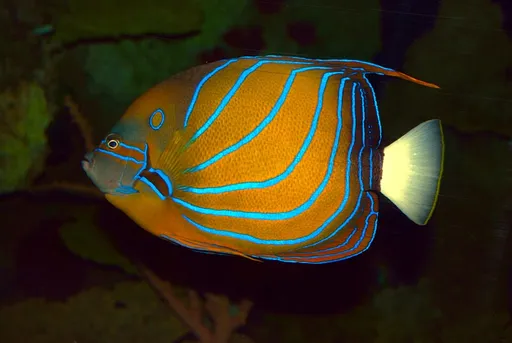
Annularis angelfish
Pomacanthus annularis
Saltwater17.7 in (45 cm) · 219 gal (830 L)73–81°F (23–27°C)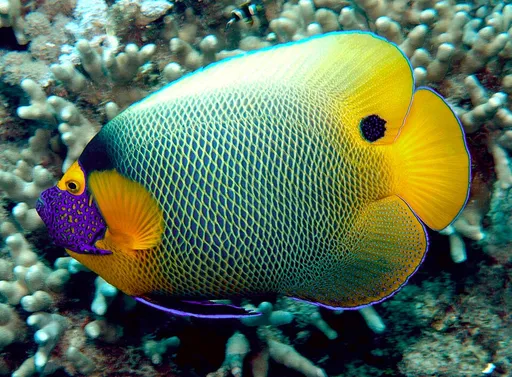
Blueface angelfish
Pomacanthus xanthometopon
Saltwater15 in (38 cm) · 219 gal (830 L)73–81°F (23–27°C)Bluehead wrasse
Thalassoma bifasciatum
Saltwater7.1 in (18 cm) · 74 gal (280 L)73–81°F (23–27°C)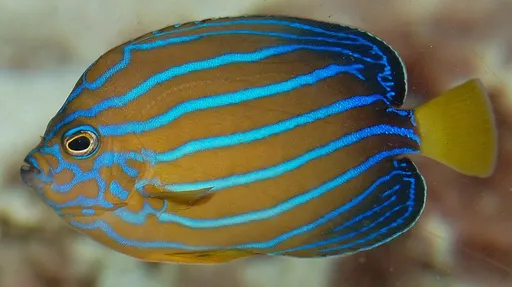
Blueline angelfish
Chaetodontoplus septentrionalis
Saltwater8.7 in (22 cm) · 185 gal (700 L)72–79°F (22–26°C)Bursa triggerfish
Sufflamen bursa
Saltwater9.8 in (25 cm) · 125 gal (473 L)72–79°F (22–26°C)Clown triggerfish
Balistoides conspicillum
Saltwater19.7 in (50 cm) · 300 gal (1,135 L)72–79°F (22–26°C)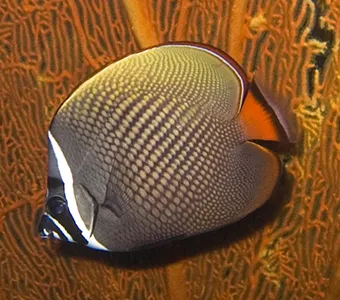
Collare butterflyfish
Chaetodon collare
Saltwater7.1 in (18 cm) · 90 gal (340 L)73–81°F (23–27°C)Dogface puffer
Arothron nigropunctatus
Saltwater13 in (33 cm) · 151 gal (570 L)75–81°F (24–27°C)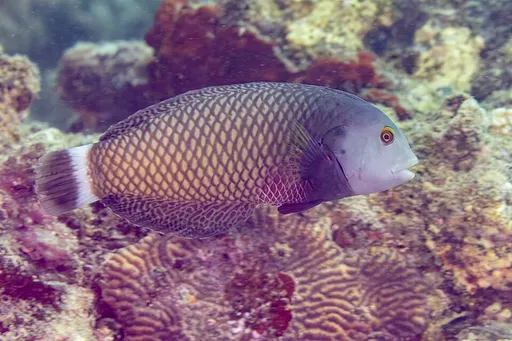
Dragon wrasse
Novaculichthys taeniourus
Saltwater11.8 in (30 cm) · 106 gal (400 L)73–81°F (23–27°C)Dwarf zebra lionfish
Dendrochirus zebra
Saltwater9.8 in (25 cm) · 60 gal (227 L)72–79°F (22–26°C)Emperor angelfish
Pomacanthus imperator
Saltwater15 in (38 cm) · 185 gal (700 L)73–81°F (23–27°C)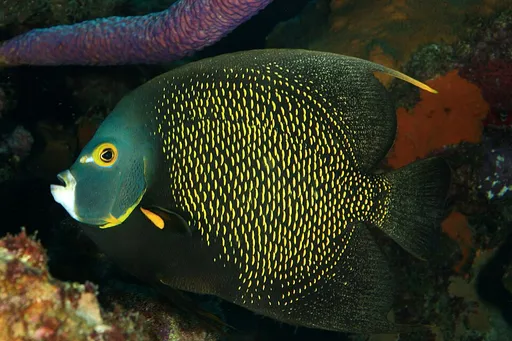
French angelfish
Pomacanthus paru
Saltwater16.1 in (41 cm) · 201 gal (760 L)72–81°F (22–27°C)Fuzzy dwarf lionfish
Dendrochirus brachypterus
Saltwater7.1 in (18 cm) · 50 gal (190 L)72–79°F (22–26°C)Golden butterflyfish
Chaetodon semilarvatus
Saltwater9.1 in (23 cm) · 151 gal (570 L)75–82°F (24–28°C)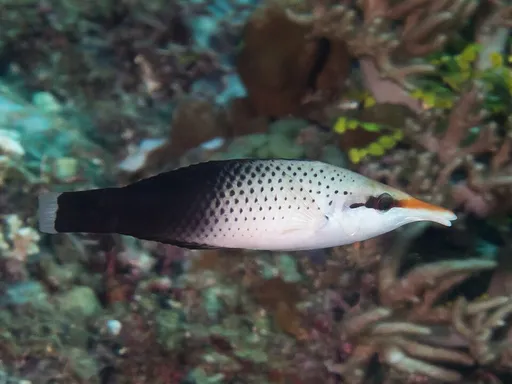
Green bird wrasse
Gomphosus varius
Saltwater11.8 in (30 cm) · 125 gal (473 L)72–79°F (22–26°C)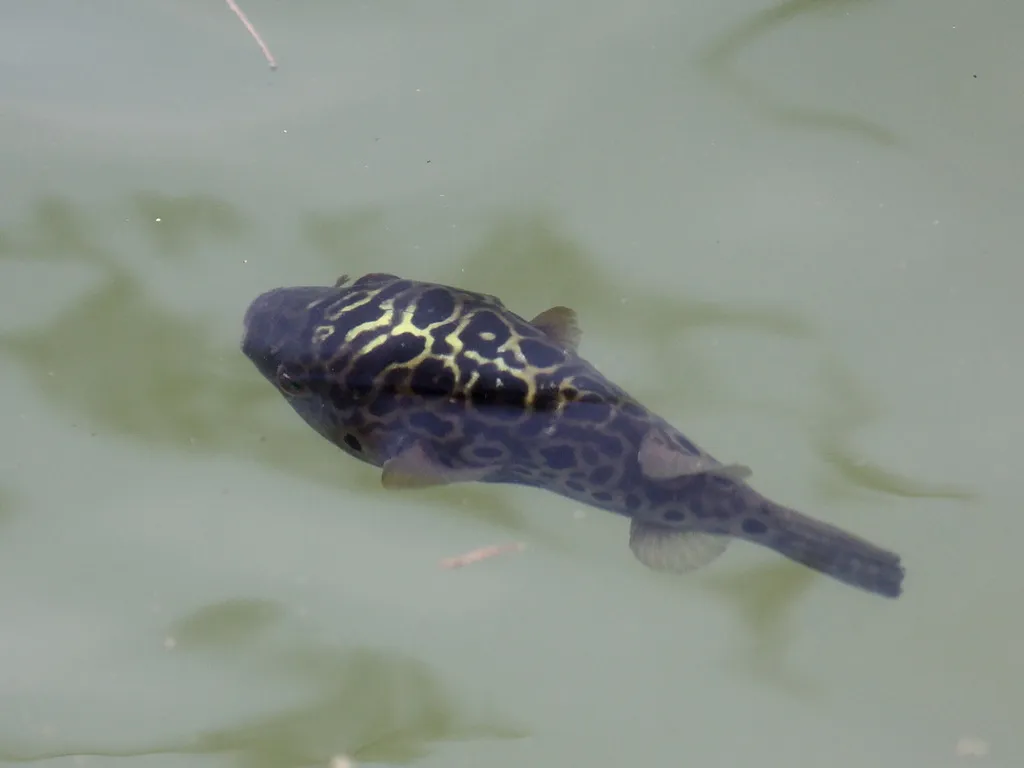
Green spotted puffer
Dichotomyctere nigroviridis
BrackishSaltwater5.9 in (15 cm) · 32 gal (120 L)75–82°F (24–28°C)Guineafowl puffer
Arothron meleagris
Saltwater19.7 in (50 cm) · 180 gal (680 L)75–81°F (24–27°C)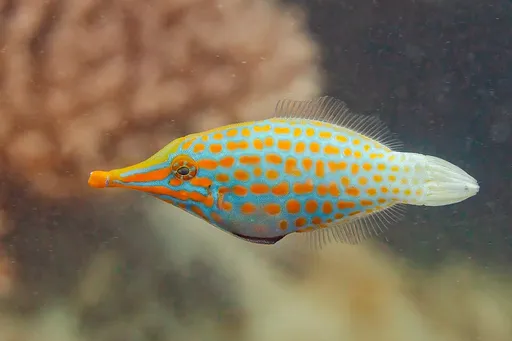
Harlequin filefish
Oxymonacanthus longirostris
Saltwater4.3 in (11 cm) · 53 gal (200 L)75–81°F (24–27°C)Koran angelfish
Pomacanthus semicirculatus
Saltwater15.7 in (40 cm) · 132 gal (500 L)73–81°F (23–27°C)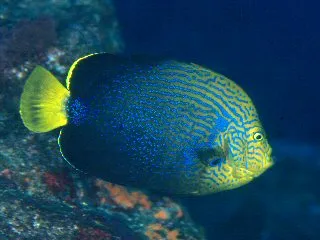
Labyrinth angelfish
Chaetodontoplus chrysocephalus
Saltwater8.7 in (22 cm) · 151 gal (570 L)72–79°F (22–26°C)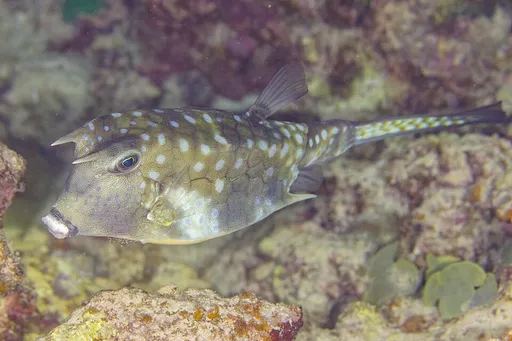
Longhorn cowfish
Lactoria cornuta
Saltwater18.1 in (46 cm) · 250 gal (946 L)75–81°F (24–27°C)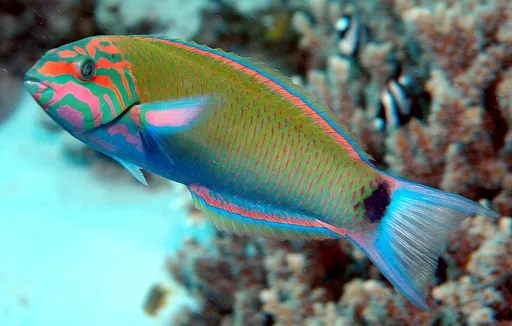
Lunare wrasse
Thalassoma lunare
Saltwater9.8 in (25 cm) · 125 gal (473 L)72–79°F (22–26°C)Lyretail grouper
Variola louti
Saltwater31.5 in (80 cm) · 291 gal (1,100 L)75–81°F (24–27°C)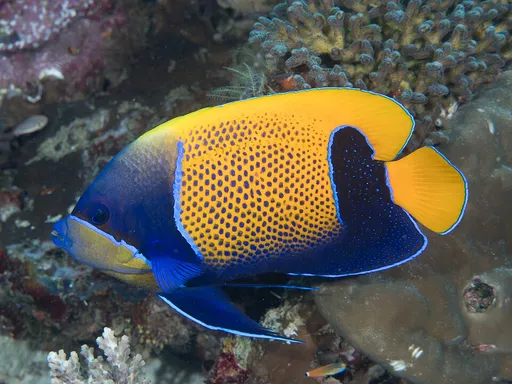
Majestic angelfish
Pomacanthus navarchus
Saltwater11.8 in (30 cm) · 145 gal (550 L)73–81°F (23–27°C)Map puffer
Arothron mappa
Saltwater23.6 in (60 cm) · 238 gal (900 L)75–81°F (24–27°C)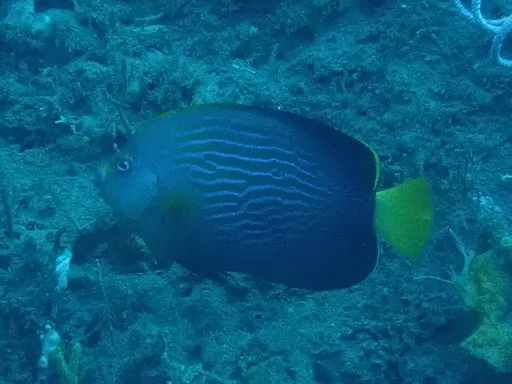
Maze angelfish
Chaetodontoplus cephalareticulatus
Saltwater11 in (28 cm) · 251 gal (950 L)72–79°F (22–26°C)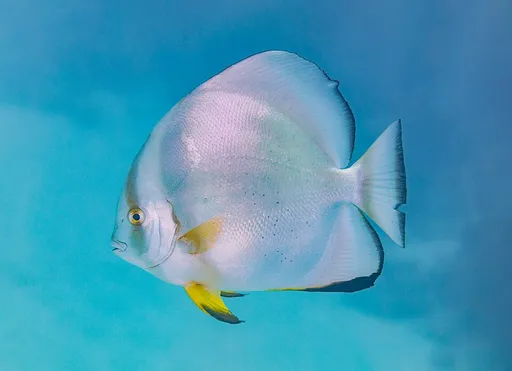
Orbiculate batfish
Platax orbicularis
Saltwater19.7 in (50 cm) · 185 gal (700 L)75–81°F (24–27°C)Panther grouper
Cromileptes altivelis
Saltwater27.6 in (70 cm) · 300 gal (1,135 L)72–79°F (22–26°C)Pearlscale butterflyfish
Chaetodon xanthurus
Saltwater5.5 in (14 cm) · 75 gal (285 L)73–81°F (23–27°C)Picasso triggerfish
Rhinecanthus aculeatus
Saltwater11.8 in (30 cm) · 180 gal (680 L)72–79°F (22–26°C)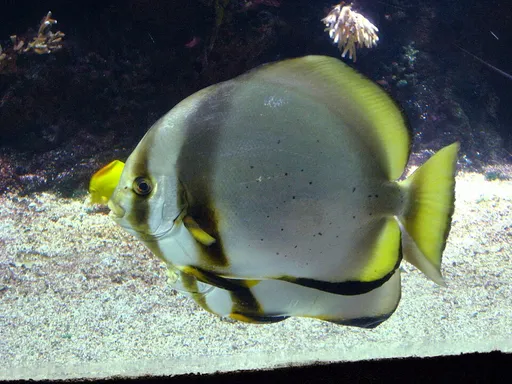
Pinnatus batfish
Platax pinnatus
Saltwater17.7 in (45 cm) · 198 gal (750 L)75–81°F (24–27°C)Porcupine puffer
Diodon holocanthus
Saltwater11.8 in (30 cm) · 180 gal (680 L)75–81°F (24–27°C)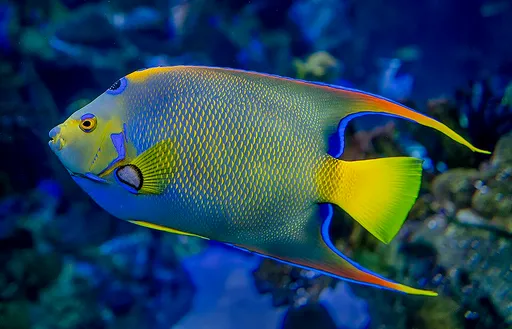
Queen angelfish
Holacanthus ciliaris
Saltwater17.7 in (45 cm) · 251 gal (950 L)75–81°F (24–27°C)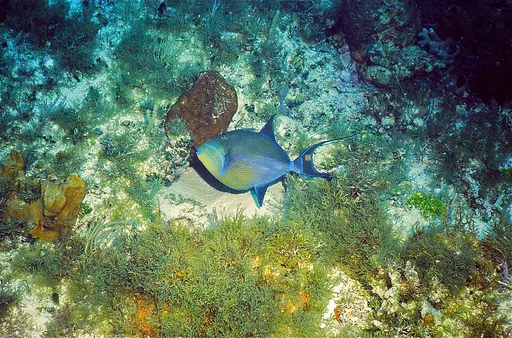
Queen triggerfish
Balistes vetula
Saltwater19.7 in (50 cm) · 238 gal (900 L)72–81°F (22–27°C)Raccoon butterflyfish
Chaetodon lunula
Saltwater7.9 in (20 cm) · 106 gal (400 L)75–81°F (24–27°C)Radiata lionfish
Pterois radiata
Saltwater9.4 in (24 cm) · 70 gal (265 L)72–79°F (22–26°C)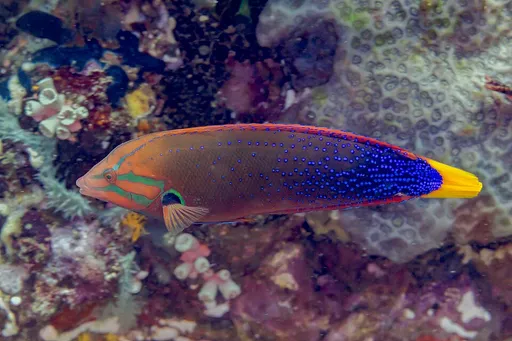
Red coris wrasse
Coris gaimard
Saltwater11.8 in (30 cm) · 150 gal (568 L)72–79°F (22–26°C)Red Sea angelfish
Apolemichthys xanthotis
Saltwater7.9 in (20 cm) · 125 gal (475 L)72–81°F (22–27°C)Sailfin snapper
Symphorichthys spilurus
Saltwater23.6 in (60 cm) · 300 gal (1,135 L)73–81°F (23–27°C)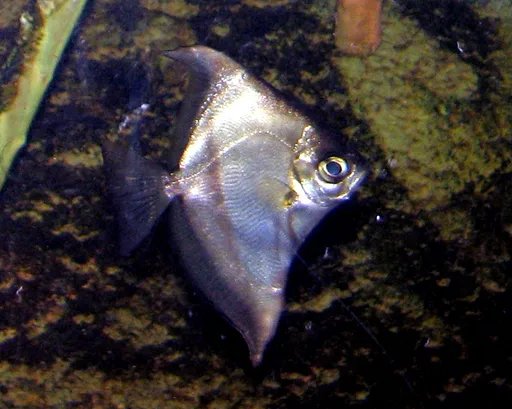
Sebae mono
Monodactylus sebae
BrackishSaltwater7.9 in (20 cm) · 119 gal (450 L)75–82°F (24–28°C)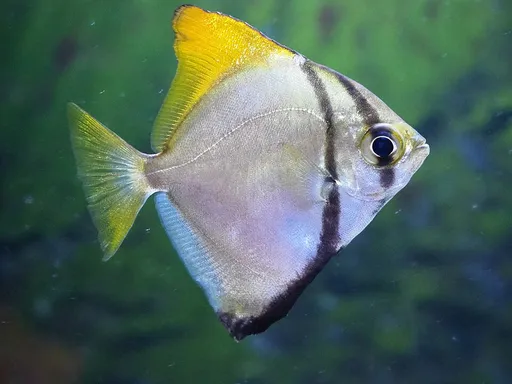
Silver mono
Monodactylus argenteus
BrackishSaltwater9.8 in (25 cm) · 106 gal (400 L)75–82°F (24–28°C)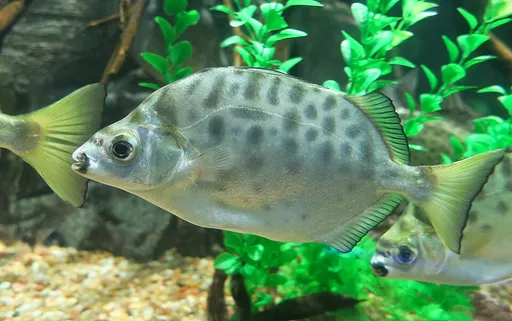
Silver scat
Selenotoca multifasciata
BrackishSaltwater11.8 in (30 cm) · 119 gal (450 L)72–82°F (22–28°C)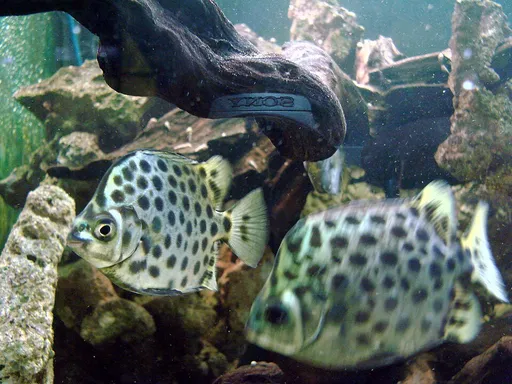
Spotted scat
Scatophagus argus
BrackishSaltwater11.8 in (30 cm) · 119 gal (450 L)72–82°F (22–28°C)Stars-and-stripes puffer
Arothron hispidus
Saltwater19.7 in (50 cm) · 180 gal (680 L)75–81°F (24–27°C)Threadfin butterflyfish
Chaetodon auriga
Saltwater9.1 in (23 cm) · 79 gal (300 L)75–81°F (24–27°C)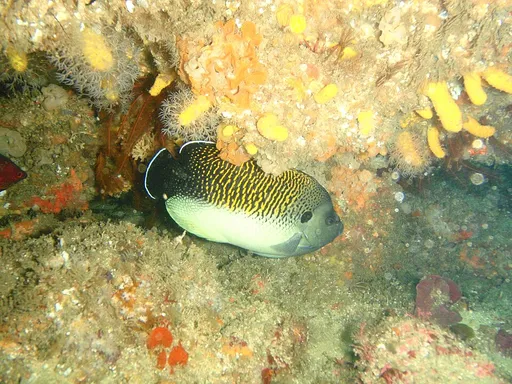
Tiger angelfish
Apolemichthys kingi
Saltwater9.8 in (25 cm) · 151 gal (570 L)72–79°F (22–26°C)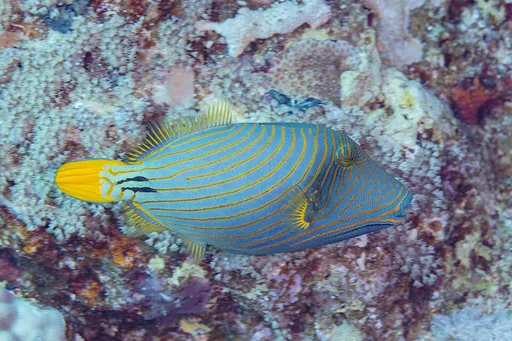
Undulated triggerfish
Balistapus undulatus
Saltwater11.8 in (30 cm) · 180 gal (680 L)75–81°F (24–27°C)Volitans lionfish
Pterois volitans
Saltwater15 in (38 cm) · 119 gal (450 L)72–79°F (22–26°C)Wedgetail triggerfish
Rhinecanthus rectangulus
Saltwater11.8 in (30 cm) · 106 gal (400 L)75–81°F (24–27°C)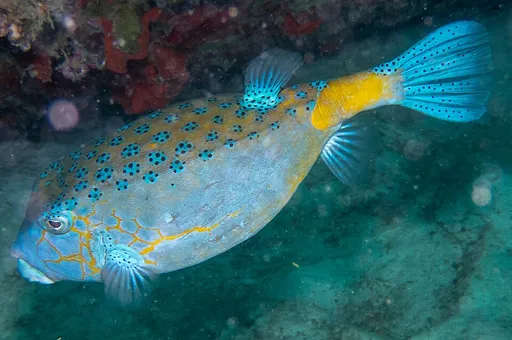
Yellow boxfish
Ostracion cubicus
Saltwater17.7 in (45 cm) · 250 gal (946 L)75–81°F (24–27°C)
Planning a tank?
TankBud checks stocking and water fit as you build a tank, then tracks water tests, reminders and photos once it is running.
Track your tanksMaintain tanks for clients? See TankBud Pro