Volitans lionfish
Pterois volitans
Also known as Red Lionfish, Turkey Fish, Butterfly Cod
SaltwaterFish
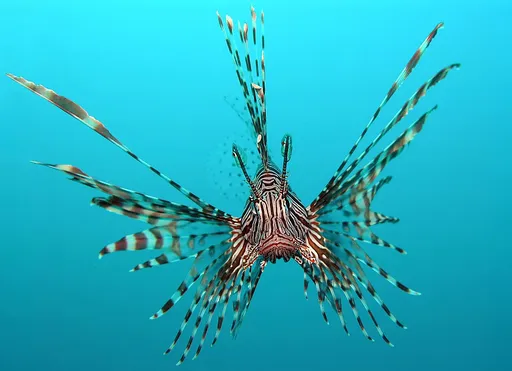
Care at a glance
- Temperature
- 72–79°F
- 22–26°C
- pH
- 8.1–8.4
- Adult size
- 15 in
- 38 cm
- Minimum tank
- 119 gal
- 450 L
- Temperament
- Aggressive
- Social behavior
- Solitary
- Tankmates
- With caution
- Swim level
- Middle
- Difficulty
- Medium
- Breeding
- No record
- Rarity
- Very common
- Reef safe
- Not reef safe
- Family
- Scorpaenidae
- Origin
- Indo-Pacific, from the Cocos-Keeling Islands and Western Australia across to the Marquesas, north to southern Japan and Korea, south to Lord Howe Island and New Zealand
Overview
The volitans lionfish is not a fin-nipper, but it is a genuine predator: any fish or shrimp small enough to fit in its wide mouth is at real risk, including tankmates added long after it has settled in, so stock only size-appropriate, robust fish and skip shrimp altogether. It is kept fish-only for this reason, not because it bothers coral or rock. Freshly wild-caught fish usually need live feeder shrimp or feeder fish to start eating, and most convert over to fresh or frozen silversides, shrimp, and squid within a few weeks of patient target feeding. Handle this fish with real caution: the dorsal, pelvic, and anal spines are venomous and deliver a sting far more painful than a bee sting, so never net or touch one bare-handed, treat any sting with hot water right away, and seek medical care.
In the wild
Lives around coral reefs, rocky drop-offs, and harbor structure across the Indo-Pacific, from about 2 to 55 meters deep. It spends daylight hours hovering almost motionless near ledges and overhangs, then becomes active around dusk, using its huge fan-like pectoral fins to corner small fish and crustaceans against the rock before swallowing them whole. In the tank it wants a large aquarium with open water to patrol and enough rockwork to give it a shaded resting spot during the day.
Good to know
Pterois volitans is a scorpionfish in the family Scorpaenidae and one of the larger lionfish species, reaching about 38 cm in a home aquarium. It hunts by spreading its oversized pectoral fins to corner prey against rock or open sand, then engulfs it in a single fast strike. The venom glands run along grooves in the dorsal, pelvic, and anal spines and exist purely for defense against predators, not for subduing prey.
Did you know
This species is behind one of the fastest marine fish invasions on record: first documented off the Florida coast in 1985 and established in the Bahamas by 2004, it likely began with a handful of aquarium releases and has since spread across the western Atlantic, Caribbean, and Gulf of Mexico, where it has almost no natural predators. It is a stark reminder to never release an aquarium fish into the wild.
Common questions
What size tank does a Volitans lionfish need?
A Volitans lionfish needs at least 119 gal (450 L). It spends most of its time in the middle.
What temperature and pH does a Volitans lionfish need?
A Volitans lionfish is comfortable at 72–79°F (22–26°C) with a pH of 8.1–8.4.
How big does a Volitans lionfish get?
An adult Volitans lionfish reaches about 15 in (38 cm).
Related species
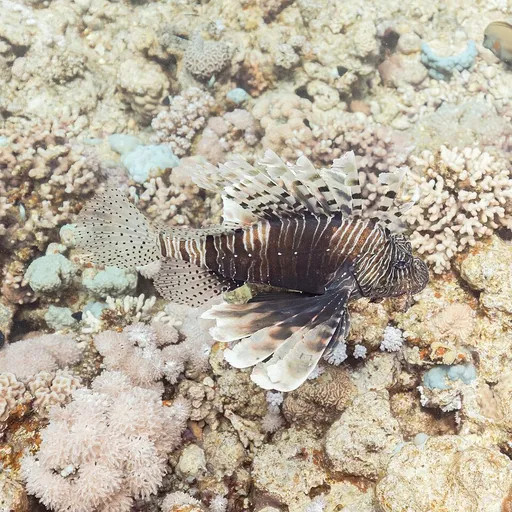 13.8 in (35 cm)106 gal (400 L)73–81°F (23–27°C)
Devil firefish
Pterois miles
13.8 in (35 cm) · 106 gal (400 L)
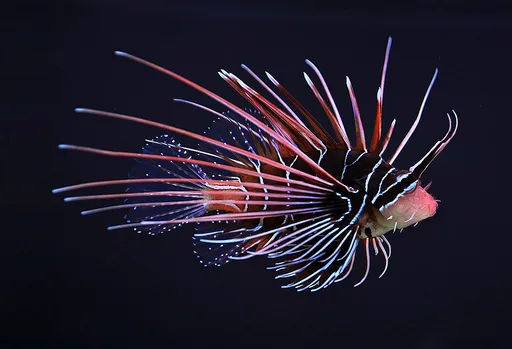 9.4 in (24 cm)70 gal (265 L)72–79°F (22–26°C)
Radiata lionfish
Pterois radiata
9.4 in (24 cm) · 70 gal (265 L)
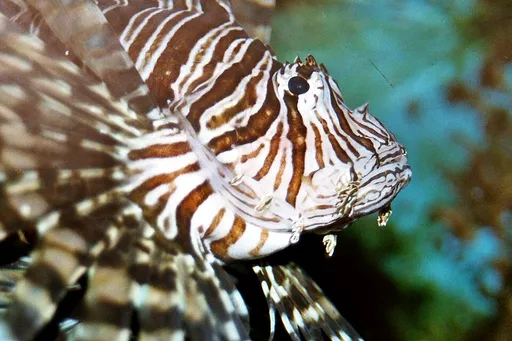 7.9 in (20 cm)79 gal (300 L)75–81°F (24–27°C)
Antennata lionfish
Pterois antennata
7.9 in (20 cm) · 79 gal (300 L)
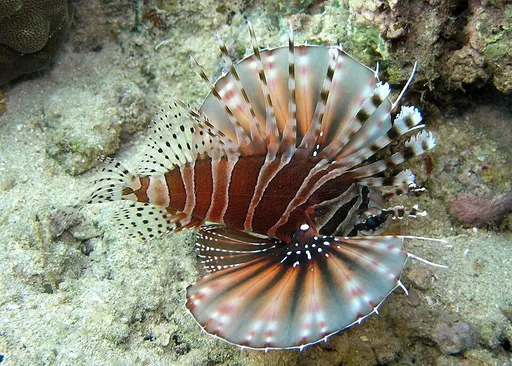 9.8 in (25 cm)60 gal (227 L)72–79°F (22–26°C)
Dwarf zebra lionfish
Dendrochirus zebra
9.8 in (25 cm) · 60 gal (227 L)
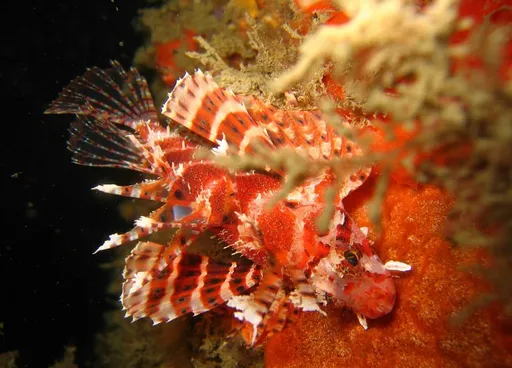 7.1 in (18 cm)50 gal (190 L)72–79°F (22–26°C)
Fuzzy dwarf lionfish
Dendrochirus brachypterus
7.1 in (18 cm) · 50 gal (190 L)
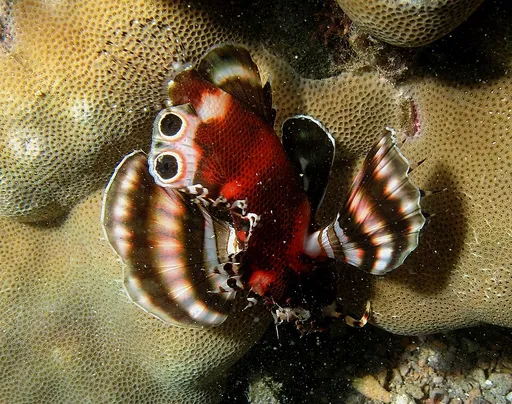 5.1 in (13 cm)29 gal (110 L)75–81°F (24–27°C)
Fu Manchu lionfish
Dendrochirus biocellatus
5.1 in (13 cm) · 29 gal (110 L)