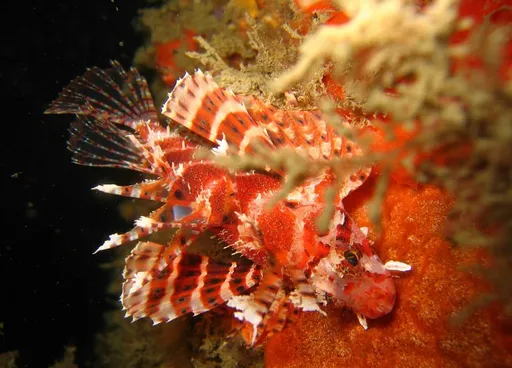
Fuzzy dwarf lionfish
Dendrochirus brachypterus
Also known as Shortfin Lionfish, Shortfin Turkeyfish, Dwarf Lionfish
SaltwaterFish
Care at a glance
- Temperature
- 72–79°F
- 22–26°C
- pH
- 8.1–8.4
- Adult size
- 7.1 in
- 18 cm
- Minimum tank
- 50 gal
- 190 L
- Temperament
- Mostly peaceful
- Social behavior
- Solitary
- Tankmates
- With caution
- Swim level
- Middle
- Difficulty
- Medium
- Breeding
- No record
- Rarity
- Common
- Reef safe
- Not reef safe
- Family
- Scorpaenidae
- Origin
- Indo-West Pacific, from India and Sri Lanka east to Tonga, north to southern Japan
Overview
This is one of the calmer lionfish toward tankmates, an ambush hunter rather than a roaming bully, but it will still eat any fish or shrimp small enough to swallow, including gobies, small wrasses, and ornamental shrimp, so choose robust, appropriately sized tankmates and skip crustaceans entirely. It is not reef safe for the tank's other inhabitants even though it never touches coral. Like other lionfish it is usually shipped feeding on live foods and needs to be weaned onto fresh or frozen silversides, shrimp, and krill with patient target feeding. It carries venomous spines across its dorsal, pelvic, and anal fins that deliver a sting far worse than its small size suggests, so avoid bare-handed contact and treat any sting with hot water plus prompt medical attention.
In the wild
Lives on coral and rubble reefs across the Indo-West Pacific, typically in shallow water among branching coral and rocky ledges. It is mostly nocturnal, tucking into a crevice during the day and hunting small fish and crustaceans after dark. A tank for this species can be modest in footprint but should be rich in live rock, with plenty of overhangs and shaded perches to mimic that sheltered reef structure.
Good to know
Dendrochirus brachypterus is a small scorpionfish in the family Scorpaenidae, distinguished from the true Pterois lionfish by shorter, more rounded pectoral fins and the fleshy, fuzzy-looking flaps of skin above its eyes and along its body that give it the common name. All 13 dorsal spines are linked to venom glands. It reaches only about 18 cm, which along with its slow, deliberate swimming style is why it is sold as a nano predator suited to smaller FOWLR tanks than the larger Pterois species need.
Did you know
Its low, slow metabolism means an adult only needs to be fed every other day or so, and because it hunts almost entirely after dark, keepers often see far more of its personality once the main lights dim and any actinic or moonlight stays on.
Common questions
What size tank does a Fuzzy dwarf lionfish need?
A Fuzzy dwarf lionfish needs at least 50 gal (190 L). It spends most of its time in the middle.
What temperature and pH does a Fuzzy dwarf lionfish need?
A Fuzzy dwarf lionfish is comfortable at 72–79°F (22–26°C) with a pH of 8.1–8.4.
How big does a Fuzzy dwarf lionfish get?
An adult Fuzzy dwarf lionfish reaches about 7.1 in (18 cm).
Related species
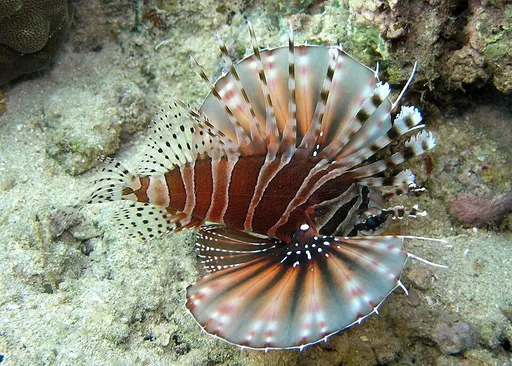 9.8 in (25 cm)60 gal (227 L)72–79°F (22–26°C)
Dwarf zebra lionfish
Dendrochirus zebra
9.8 in (25 cm) · 60 gal (227 L)
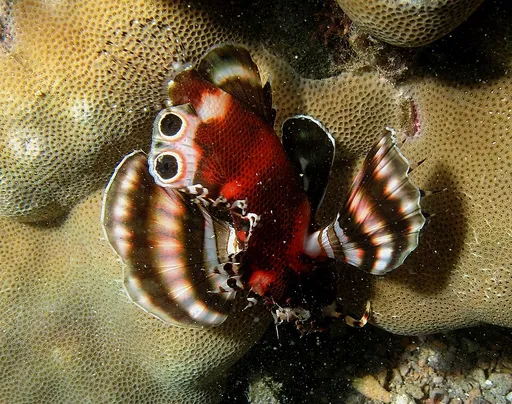 5.1 in (13 cm)29 gal (110 L)75–81°F (24–27°C)
Fu Manchu lionfish
Dendrochirus biocellatus
5.1 in (13 cm) · 29 gal (110 L)
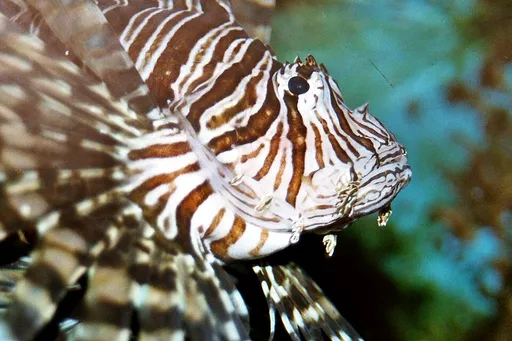 7.9 in (20 cm)79 gal (300 L)75–81°F (24–27°C)
Antennata lionfish
Pterois antennata
7.9 in (20 cm) · 79 gal (300 L)
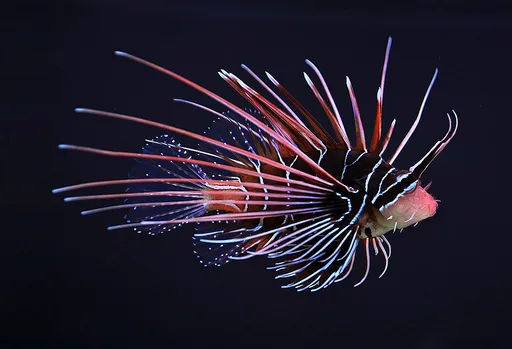 9.4 in (24 cm)70 gal (265 L)72–79°F (22–26°C)
Radiata lionfish
Pterois radiata
9.4 in (24 cm) · 70 gal (265 L)
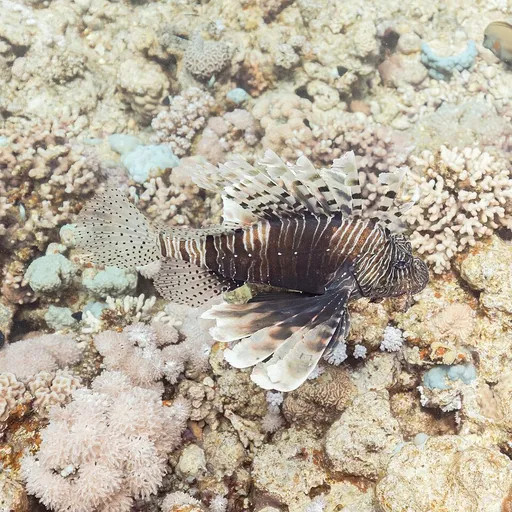 13.8 in (35 cm)106 gal (400 L)73–81°F (23–27°C)
Devil firefish
Pterois miles
13.8 in (35 cm) · 106 gal (400 L)
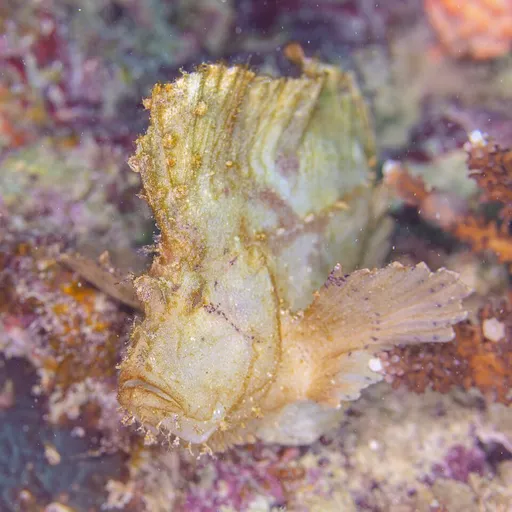 5.1 in (13 cm)29 gal (110 L)72–79°F (22–26°C)
Leaf scorpionfish
Taenianotus triacanthus
5.1 in (13 cm) · 29 gal (110 L)