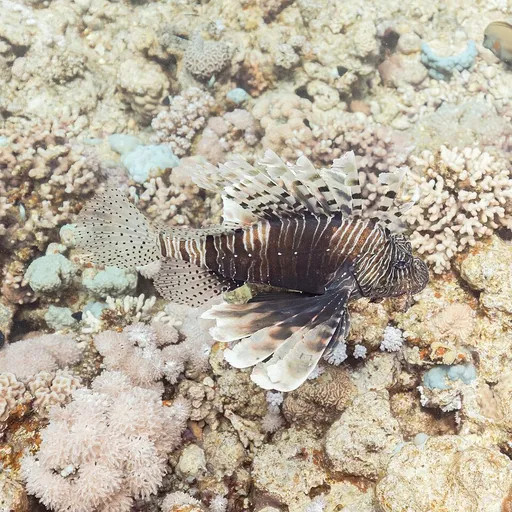
Devil firefish
Pterois miles
Also known as Devil lionfish, Common lionfish, Indian lionfish
SaltwaterFish
Care at a glance
- Temperature
- 73–81°F
- 23–27°C
- pH
- 8.0–8.4
- Adult size
- 13.8 in
- 35 cm
- Minimum tank
- 106 gal
- 400 L
- Temperament
- Mostly peaceful
- Social behavior
- Solitary
- Tankmates
- With caution
- Swim level
- Middle
- Difficulty
- Medium
- Breeding
- No record
- Rarity
- Common
- Reef safe
- Reef safe with caution
- Family
- Scorpaenidae
- Origin
- Native to the Indian Ocean and Red Sea, and an invasive species in the Mediterranean, living on reefs and rocky ledges.
Overview
House a single devil firefish in 400 litres or more with rock caves and open water, at 23 to 27 C and pH 8.0 to 8.4. It leaves corals alone but eats any fish or shrimp that fits in its mouth, so keep only larger tankmates. Feed thawed silversides, marine shrimp and krill from a stick and avoid live freshwater feeders, which lead to liver problems. Handle the tank with care, as the venomous spines cause severe pain.
In the wild
The devil firefish is the Indian Ocean twin of the red lionfish, with long banded pectoral fans and a crown of venomous spines. It is nearly identical to Pterois volitans and the two can only be told apart reliably by fin-ray counts. It grows to around 35 cm and becomes a bold, greedy hunter.
Good to know
Pterois miles and Pterois volitans are so similar they are often confused, and the two together have become notorious invaders of the western Atlantic and Caribbean. Its 18 venomous spines deliver a painful defensive sting. It reproduces prolifically, with females releasing floating egg masses year round in warm water.
Did you know
The devil firefish and its near-twin the red lionfish are among the worst marine invaders on record, having spread across the entire western Atlantic after a small number escaped or were released from aquariums.
Common questions
What size tank does a Devil firefish need?
A Devil firefish needs at least 106 gal (400 L). It spends most of its time in the middle.
What temperature and pH does a Devil firefish need?
A Devil firefish is comfortable at 73–81°F (23–27°C) with a pH of 8.0–8.4.
How big does a Devil firefish get?
An adult Devil firefish reaches about 13.8 in (35 cm).
Related species
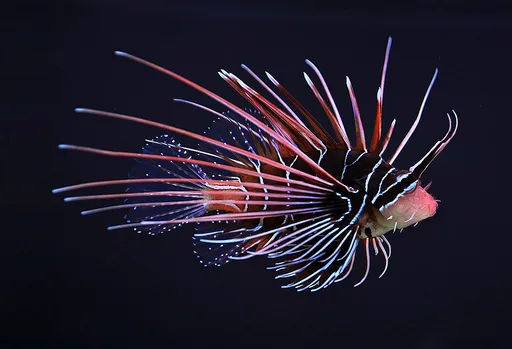 9.4 in (24 cm)70 gal (265 L)72–79°F (22–26°C)
Radiata lionfish
Pterois radiata
9.4 in (24 cm) · 70 gal (265 L)
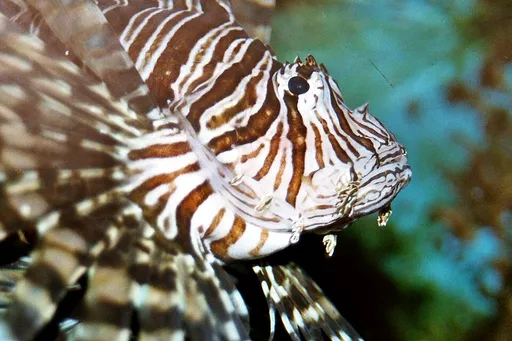 7.9 in (20 cm)79 gal (300 L)75–81°F (24–27°C)
Antennata lionfish
Pterois antennata
7.9 in (20 cm) · 79 gal (300 L)
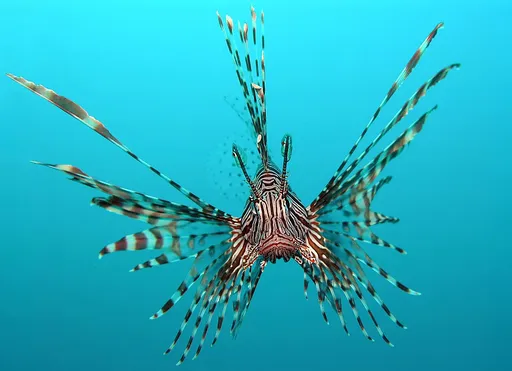 15 in (38 cm)119 gal (450 L)72–79°F (22–26°C)
Volitans lionfish
Pterois volitans
15 in (38 cm) · 119 gal (450 L)
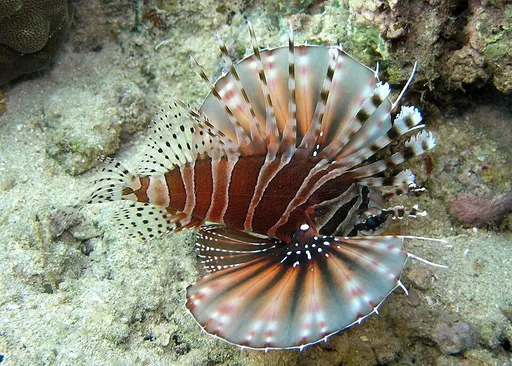 9.8 in (25 cm)60 gal (227 L)72–79°F (22–26°C)
Dwarf zebra lionfish
Dendrochirus zebra
9.8 in (25 cm) · 60 gal (227 L)
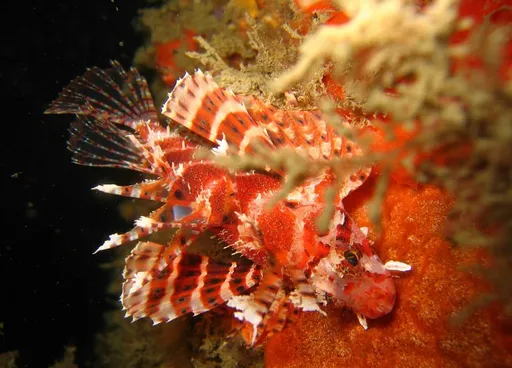 7.1 in (18 cm)50 gal (190 L)72–79°F (22–26°C)
Fuzzy dwarf lionfish
Dendrochirus brachypterus
7.1 in (18 cm) · 50 gal (190 L)
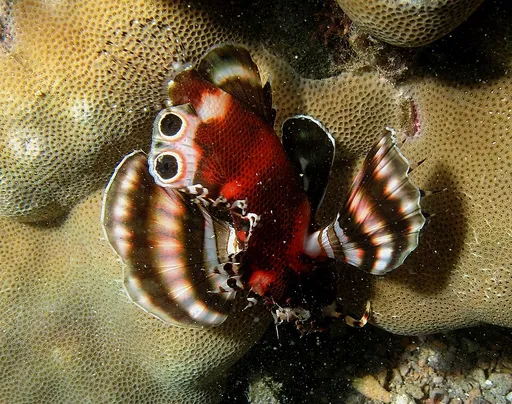 5.1 in (13 cm)29 gal (110 L)75–81°F (24–27°C)
Fu Manchu lionfish
Dendrochirus biocellatus
5.1 in (13 cm) · 29 gal (110 L)