Longhorn cowfish
Lactoria cornuta
Also known as Horned Boxfish, Cow Trunkfish, Longhorn Boxfish
SaltwaterFish
Care at a glance
- Temperature
- 75–81°F
- 24–27°C
- pH
- 8.1–8.4
- Adult size
- 18.1 in
- 46 cm
- Minimum tank
- 250 gal
- 946 L
- Temperament
- Peaceful
- Social behavior
- Solitary
- Tankmates
- With caution
- Swim level
- Bottom
- Difficulty
- Difficult
- Breeding
- Hard
- Rarity
- Common
- Reef safe
- Not reef safe
- Family
- Ostraciidae
- Origin
- Indo-Pacific reefs, from the Red Sea and East Africa to the Marquesas, north to southern Japan
Overview
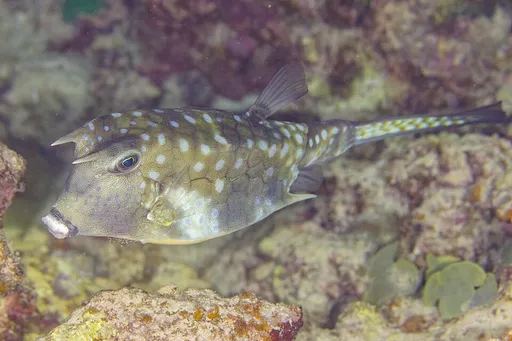
Peaceful and slow, easily outcompeted for food by faster tankmates, so it does best introduced to the tank before more assertive fish and fed somewhere it can find food at its own pace. It is not reef safe: it picks at coral polyps, tubeworms, and small invertebrates, and its toxin risk rules out a tank that can't be fully evacuated in an emergency anyway. Offer small meals several times a day of chopped clam, shrimp, mysis, and marine algae, since it is a slow, deliberate eater with a small mouth. Keep only one per tank, since it won't tolerate another longhorn cowfish, and treat this as an expert-only fish for a large, established system: sudden stress, illness, or a rough net can trigger the toxin release that has wiped out entire tanks.
In the wild
Native to Indo-Pacific reefs from the Red Sea and East Africa to the Marquesas Islands, north to southern Japan, in lagoons, reef flats, estuaries, and sheltered bays down to about 45 m. Juveniles shelter around branching Acropora coral, while adults range more widely over sand, rubble, and weedy areas near reefs. It needs a large, mature tank of at least 946 litres (250 US gal), with soft sand for its sand-blowing foraging habit and open water it can cruise without bumping into decor.
Good to know
Its rigid, box-shaped carapace of fused bony plates leaves almost no room for the body to flex, so instead of swimming like a typical fish it sculls through the water using only its dorsal, anal, and pectoral fins, saving the tail fin for quick bursts of speed. The pair of long, permanent horns above its eyes, plus a shorter pair near the tail, are fixed bony spines rather than the erectile spines of a porcupinefish, there to make the fish harder to swallow rather than to inflate or retract. Like other boxfish, it can release a skin toxin called ostracitoxin (pahutoxin) into the water when badly stressed or dying, capable of poisoning every other fish in a closed aquarium system.
Did you know
Its rigid shell forces an unusual swimming style called ostraciiform locomotion: with the body held essentially motionless, the fish moves through the water on rapid beats of its small fins alone, trading speed for a kind of precise, hovering control few reef fish can match.
Common questions
What size tank does a Longhorn cowfish need?
A Longhorn cowfish needs at least 250 gal (946 L). It spends most of its time in the bottom.
What temperature and pH does a Longhorn cowfish need?
A Longhorn cowfish is comfortable at 75–81°F (24–27°C) with a pH of 8.1–8.4.
How big does a Longhorn cowfish get?
An adult Longhorn cowfish reaches about 18.1 in (46 cm).
Related species
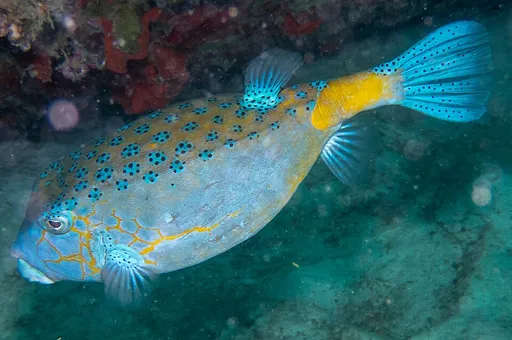 17.7 in (45 cm)250 gal (946 L)75–81°F (24–27°C)
Yellow boxfish
Ostracion cubicus
17.7 in (45 cm) · 250 gal (946 L)
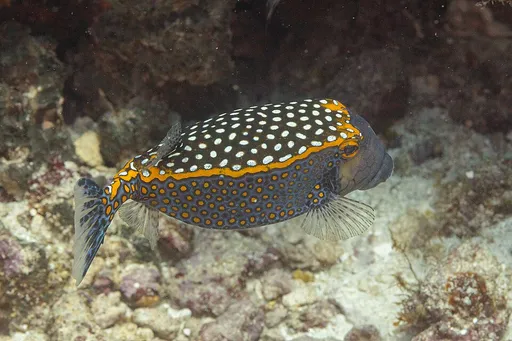 7.9 in (20 cm)90 gal (340 L)75–81°F (24–27°C)
Spotted boxfish
Ostracion meleagris
7.9 in (20 cm) · 90 gal (340 L)
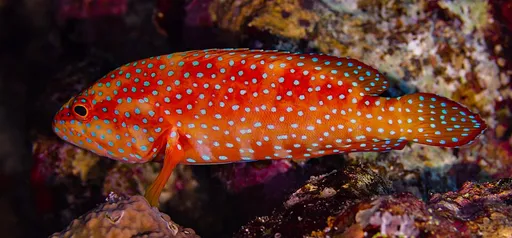 17.7 in (45 cm)180 gal (680 L)72–79°F (22–26°C)
Miniatus grouper
Cephalopholis miniata
17.7 in (45 cm) · 180 gal (680 L)
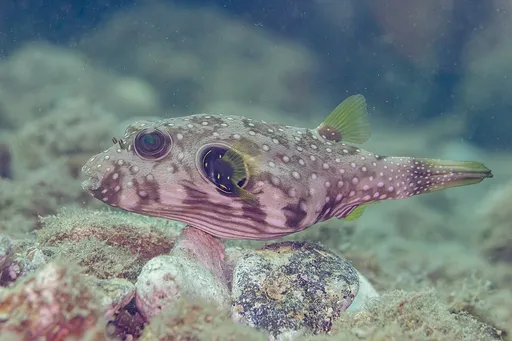 19.7 in (50 cm)180 gal (680 L)75–81°F (24–27°C)
Stars-and-stripes puffer
Arothron hispidus
19.7 in (50 cm) · 180 gal (680 L)
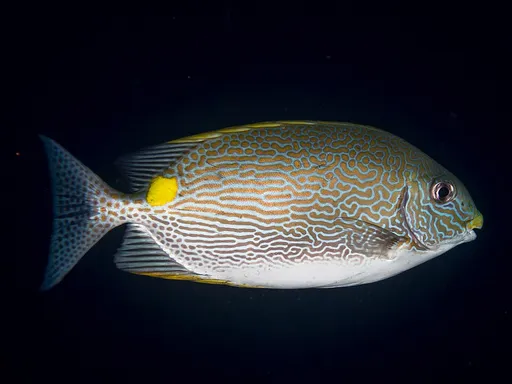 16.9 in (43 cm)125 gal (473 L)72–79°F (22–26°C)
Goldline rabbitfish
Siganus lineatus
16.9 in (43 cm) · 125 gal (473 L)
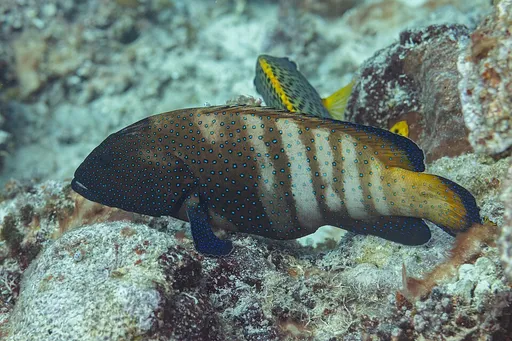 23.6 in (60 cm)251 gal (950 L)75–81°F (24–27°C)
Peacock grouper
Cephalopholis argus
23.6 in (60 cm) · 251 gal (950 L)