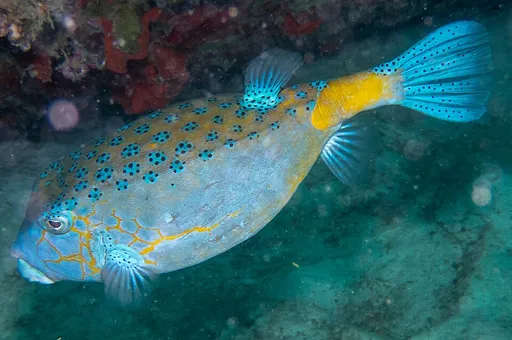
Yellow boxfish
Ostracion cubicus
Also known as Cube Boxfish, Cubicus Boxfish, Polka-Dot Boxfish
SaltwaterFish
Care at a glance
- Temperature
- 75–81°F
- 24–27°C
- pH
- 8.1–8.4
- Adult size
- 17.7 in
- 45 cm
- Minimum tank
- 250 gal
- 946 L
- Temperament
- Peaceful
- Social behavior
- Solitary
- Tankmates
- With caution
- Swim level
- Bottom
- Difficulty
- Difficult
- Breeding
- Hard
- Rarity
- Common
- Reef safe
- Not reef safe
- Family
- Ostraciidae
- Origin
- Indo-Pacific reefs, from the Red Sea and East Africa to Hawaii and the Tuamotus
Overview
Peaceful and slow moving, more likely to be picked on than to start trouble, and often described as having real personality once it settles in. It is not reef safe: it will pick at coral polyps, tubeworms, and small invertebrates, and even without that habit its toxin risk makes it a poor match for a tank full of animals that can't be evacuated in an emergency. Feed live brine shrimp or mysis at first, moving on to chopped clam, squid, mussel, and marine algae once it settles in. Keep it alone, since two boxfish rarely tolerate each other and any aggression or injury raises the risk of a toxin release. This is an expert-only fish for a large, mature, stable tank, not a new one, and it pays to have a plan for emergency water changes and carbon filtration if it ever looks stressed.
In the wild
Found on Indo-Pacific reefs from the Red Sea and East Africa to Hawaii and the Tuamotus, usually in lagoons and on shallow coral reefs less than 50 m deep. Juveniles are bright yellow with bold black spots and stay close to branching coral for cover, while adults range more openly over reef and rubble. It needs a genuinely large, mature tank of at least 946 litres (250 US gal), both for its adult size and because it does poorly in anything less than excellent, stable water quality.
Good to know
Unlike true puffers, it has small, individual conical teeth rather than a fused beak, and feeds by nipping at sponges, tunicates, algae, and small invertebrates instead of crushing shells. Its real defense is a rigid, box-shaped carapace of fused hexagonal bone plates under the skin, tough enough that the species inspired the boxy, low-drag shape of a Mercedes-Benz concept car. When badly stressed or dying, it releases a toxin called ostracitoxin (also known as pahutoxin) from glands in its skin into the surrounding water, and in a closed aquarium that toxin can wipe out every other fish before anyone notices something is wrong.
Did you know
Its hexagonal-plated shell was the direct inspiration for the Mercedes-Benz Bionic concept car of 2005, which borrowed the boxfish's boxy proportions in pursuit of a low drag coefficient, even though later research found the fish's own shape is not quite the aerodynamic marvel the designers first assumed.
Common questions
What size tank does a Yellow boxfish need?
A Yellow boxfish needs at least 250 gal (946 L). It spends most of its time in the bottom.
What temperature and pH does a Yellow boxfish need?
A Yellow boxfish is comfortable at 75–81°F (24–27°C) with a pH of 8.1–8.4.
How big does a Yellow boxfish get?
An adult Yellow boxfish reaches about 17.7 in (45 cm).
Related species
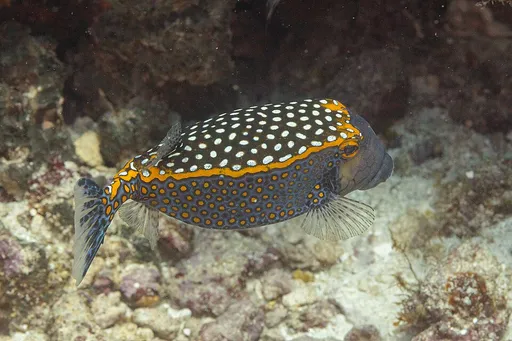 7.9 in (20 cm)90 gal (340 L)75–81°F (24–27°C)
Spotted boxfish
Ostracion meleagris
7.9 in (20 cm) · 90 gal (340 L)
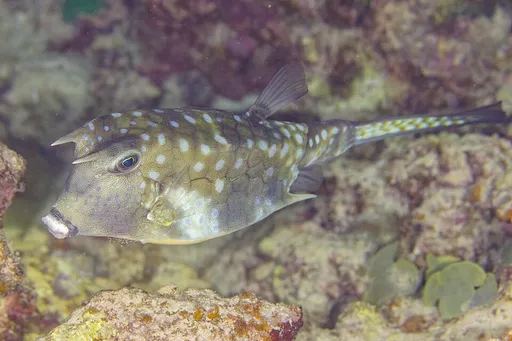 18.1 in (46 cm)250 gal (946 L)75–81°F (24–27°C)
Longhorn cowfish
Lactoria cornuta
18.1 in (46 cm) · 250 gal (946 L)
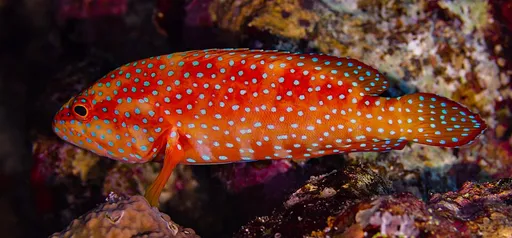 17.7 in (45 cm)180 gal (680 L)72–79°F (22–26°C)
Miniatus grouper
Cephalopholis miniata
17.7 in (45 cm) · 180 gal (680 L)
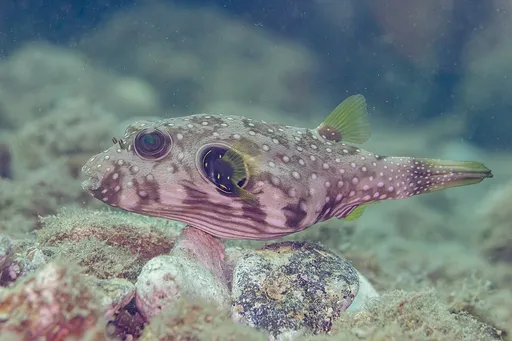 19.7 in (50 cm)180 gal (680 L)75–81°F (24–27°C)
Stars-and-stripes puffer
Arothron hispidus
19.7 in (50 cm) · 180 gal (680 L)
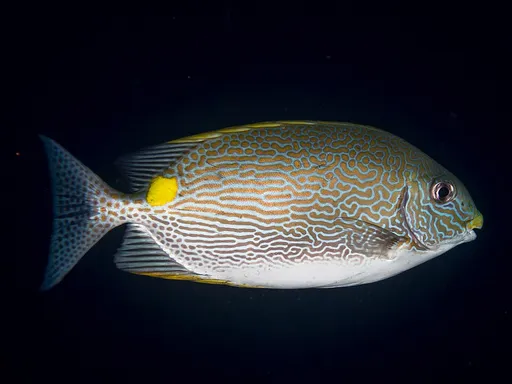 16.9 in (43 cm)125 gal (473 L)72–79°F (22–26°C)
Goldline rabbitfish
Siganus lineatus
16.9 in (43 cm) · 125 gal (473 L)
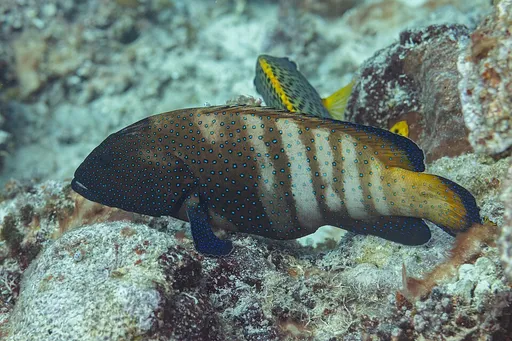 23.6 in (60 cm)251 gal (950 L)75–81°F (24–27°C)
Peacock grouper
Cephalopholis argus
23.6 in (60 cm) · 251 gal (950 L)