Spotted boxfish
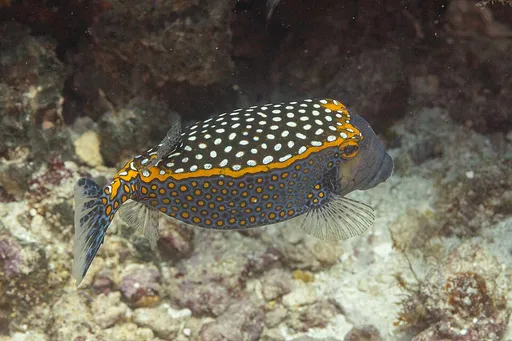
Ostracion meleagris
Also known as Whitespotted boxfish, Blue boxfish, Pacific boxfish, Spotted trunkfish
SaltwaterFish
Care at a glance
- Temperature
- 75–81°F
- 24–27°C
- pH
- 8.0–8.4
- Adult size
- 7.9 in
- 20 cm
- Minimum tank
- 90 gal
- 340 L
- Temperament
- Mostly peaceful
- Social behavior
- Solitary
- Own kind
- One male per tank
- Tankmates
- With caution
- Swim level
- Middle
- Diet
- Omnivore
- Difficulty
- Difficult
- Breeding
- No record
- Rarity
- Common
- Reef safe
- Reef safe with caution
- Family
- Ostraciidae
- Origin
- Native to the Indo-Pacific, living on coral reefs and lagoon slopes where it drifts slowly over the bottom.
Overview
The spotted boxfish is a slow, box-shaped reef fish for a large, peaceful saltwater tank. It is a fish for experienced keepers.
Did you know
A badly stressed spotted boxfish can leak a skin toxin called ostracitoxin into the water. The toxin can be potent enough to kill every fish in the tank, including the boxfish itself.
Caring for the spotted boxfish
Keep a spotted boxfish in a peaceful tank of at least 90 gal (340 L), with rockwork. It leaves corals alone but may pick at small invertebrates, so add it to a reef tank only with caution.
Hold the water at 75 to 81°F (24 to 27°C) and a pH of 8.0 to 8.4. Feed a varied diet of meaty foods, marine algae and some hard-shelled items several times a week.
The spotted boxfish is a slow, clumsy swimmer that is easily nipped or outcompeted, so avoid aggressive or fast fish. Choose calm tank mates with caution. Its toxin is the real risk, so never house it with fish that harass it.
It is a solitary fish, and a tank should hold no more than one male. Males are dark blue on the sides, with a black back covered in white spots. Females and juveniles are black all over with white dots.
Good to know
Ostracion meleagris is a member of the family Ostraciidae. It is also known as the whitespotted, blue or Pacific boxfish, or as the spotted trunkfish. Its body is encased in a solid carapace of fused hexagonal plates, leaving only the fins, mouth and tail free to move. It swims by whirring its fins while the body stays stiff. Males and females are so differently colored that they were once mistaken for separate species.
In the wild
The spotted boxfish is native to the Indo-Pacific, where it lives on coral reefs and lagoon slopes. It drifts slowly over the bottom, hovering and humming over the reef as it looks for small prey.
Common questions
What size tank does a spotted boxfish need?
A spotted boxfish needs at least 90 gal (340 L). It spends most of its time in the middle.
What temperature and pH does a spotted boxfish need?
A spotted boxfish is comfortable at 75–81°F (24–27°C) with a pH of 8.0–8.4.
What does a spotted boxfish eat?
A spotted boxfish eats a varied diet of meaty foods, marine algae and some hard-shelled items. Feed it several times a week.
How big does a spotted boxfish get?
An adult spotted boxfish reaches about 7.9 in (20 cm).
How can you tell a male spotted boxfish from a female?
Males are dark blue on the sides, with a black back covered in white spots. Females are black all over with white dots, like the juveniles.
Related species
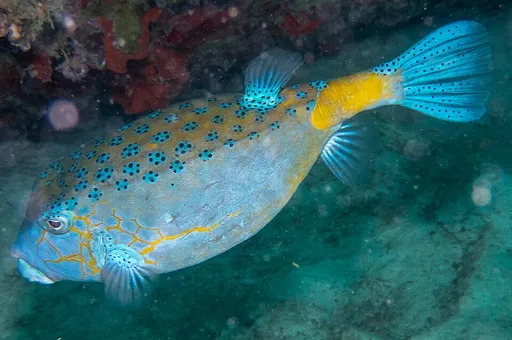 17.7 in (45 cm)250 gal (946 L)75–81°F (24–27°C)
Yellow boxfish
Ostracion cubicus
17.7 in (45 cm) · 250 gal (946 L)
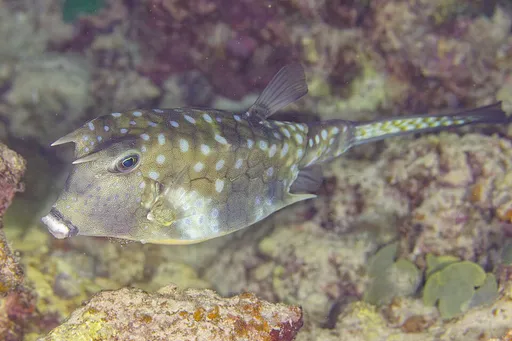 18.1 in (46 cm)250 gal (946 L)75–81°F (24–27°C)
Longhorn cowfish
Lactoria cornuta
18.1 in (46 cm) · 250 gal (946 L)
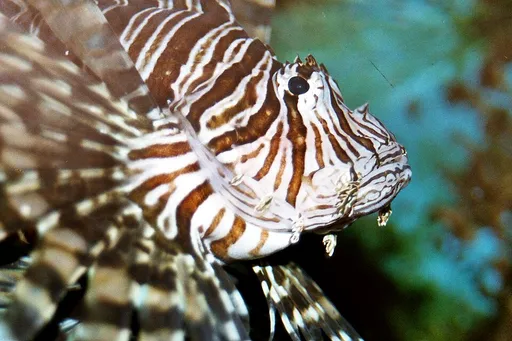 7.9 in (20 cm)79 gal (300 L)75–81°F (24–27°C)
Antennata lionfish
Pterois antennata
7.9 in (20 cm) · 79 gal (300 L)
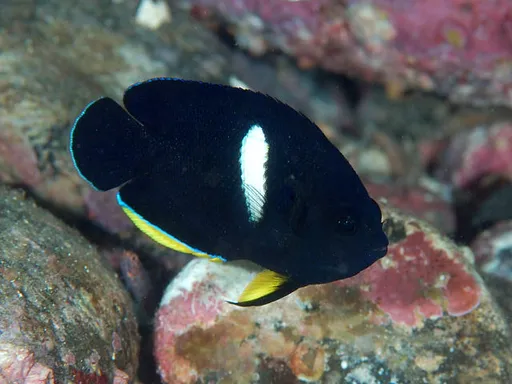 7.9 in (20 cm)70 gal (265 L)72–79°F (22–26°C)
Keyhole angelfish
Centropyge tibicen
7.9 in (20 cm) · 70 gal (265 L)
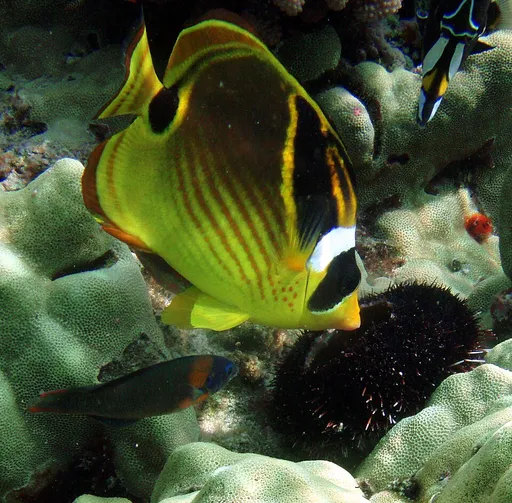 7.9 in (20 cm)106 gal (400 L)75–81°F (24–27°C)
Raccoon butterflyfish
Chaetodon lunula
7.9 in (20 cm) · 106 gal (400 L)
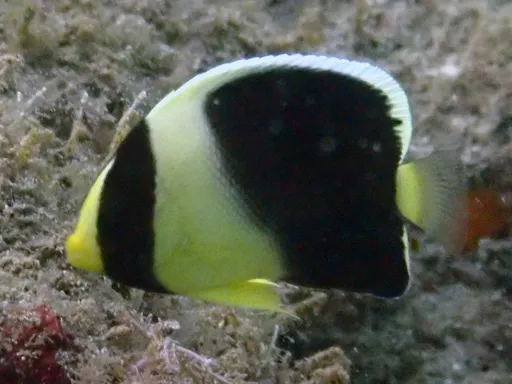 7.9 in (20 cm)125 gal (475 L)72–81°F (22–27°C)
Red Sea angelfish
Apolemichthys xanthotis
7.9 in (20 cm) · 125 gal (475 L)