Keyhole angelfish
Centropyge tibicen
Also known as Keyhole Angel, Melas Angelfish, Black Angelfish
SaltwaterFish
Care at a glance
- Temperature
- 72–79°F
- 22–26°C
- pH
- 8.1–8.4
- Adult size
- 7.9 in
- 20 cm
- Minimum tank
- 70 gal
- 265 L
- Temperament
- Mostly peaceful
- Social behavior
- Solitary
- Own kind
- One male per tank
- Tankmates
- With caution
- Swim level
- Middle
- Difficulty
- Medium
- Breeding
- Hard
- Rarity
- Common
- Reef safe
- Reef safe with caution
- Family
- Pomacanthidae
- Origin
- Western Pacific, from Christmas Island in the eastern Indian Ocean to Fiji, north to southern Japan and Taiwan, south to Lord Howe Island
Overview
A hardy grazer that eats a wide mix of algae-based and meaty foods once settled, though it often starts out shy and takes time to come out and feed confidently in a new tank. Once established it becomes bold and territorial, so it should not share a tank with other Centropyge, pygmy angels, or similarly shaped fish. Reef keepers rate it caution: it has a stronger reputation than most dwarf angels for nipping large-polyp stony corals and soft corals, and it may pick at clam mantles or tubeworms too.
In the wild
Found in lagoons and on coral reefs across the western Pacific, typically in mixed coral-and-rubble zones with plentiful hiding places. It grazes algae and picks at sponges and other growth on the rock through the day. Being the largest of the commonly kept dwarf angels, it needs generous, mature live rock structure to establish a territory in.
Good to know
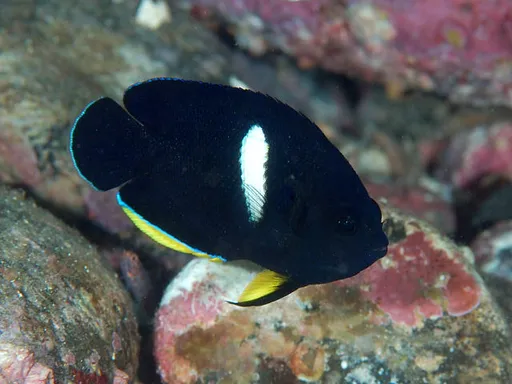
Centropyge tibicen is one of the largest members of the genus, reaching around 20 cm, and is a protogynous hermaphrodite that lives in a harem led by one male. Its coloring changes dramatically with age: juveniles are mostly black with a single white vertical bar, which develops into an elongated white blotch on the flank of the mostly blue-black adult, set off by yellow fins with a blue-edged dorsal and tail.
Did you know
The bold white blotch on its dark flank, which some keepers see as keyhole-shaped, gives the species both its common name and its other trade name, the melas (Greek for 'black') angelfish.
Common questions
What size tank does a Keyhole angelfish need?
A Keyhole angelfish needs at least 70 gal (265 L). It spends most of its time in the middle.
What temperature and pH does a Keyhole angelfish need?
A Keyhole angelfish is comfortable at 72–79°F (22–26°C) with a pH of 8.1–8.4.
How big does a Keyhole angelfish get?
An adult Keyhole angelfish reaches about 7.9 in (20 cm).
Related species
 5.9 in (15 cm)55 gal (210 L)72–81°F (22–27°C)
Bicolor angelfish
Centropyge bicolor
5.9 in (15 cm) · 55 gal (210 L)
 5.9 in (15 cm)55 gal (210 L)72–79°F (22–26°C)
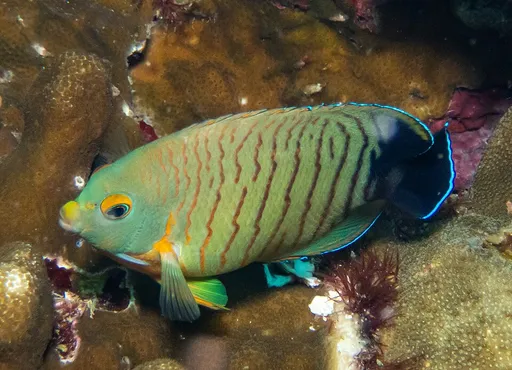
Eibli angelfish
Centropyge eibli
5.9 in (15 cm) · 55 gal (210 L)
 5.5 in (14 cm)55 gal (210 L)72–79°F (22–26°C)
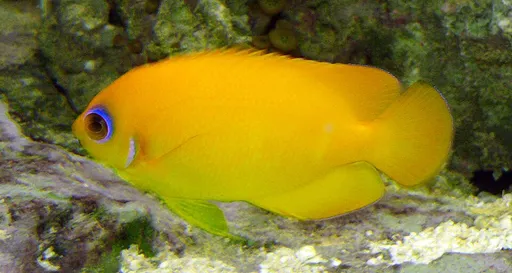
Lemonpeel angelfish
Centropyge flavissima
5.5 in (14 cm) · 55 gal (210 L)
 5.1 in (13 cm)65 gal (245 L)72–79°F (22–26°C)
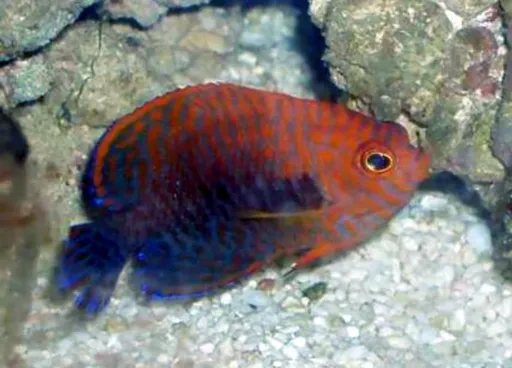
Potter's angelfish
Centropyge potteri
5.1 in (13 cm) · 65 gal (245 L)
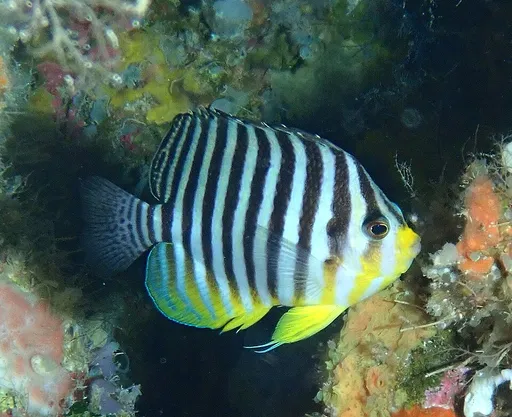 4.7 in (12 cm)59 gal (225 L)72–79°F (22–26°C)
Multibarred angelfish
Centropyge multifasciata
4.7 in (12 cm) · 59 gal (225 L)
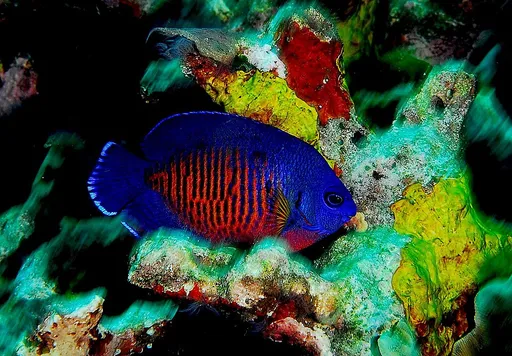 3.9 in (10 cm)50 gal (190 L)72–79°F (22–26°C)
Coral beauty angelfish
Centropyge bispinosa
3.9 in (10 cm) · 50 gal (190 L)