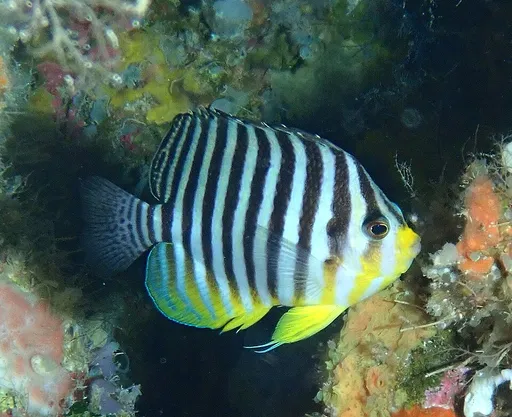
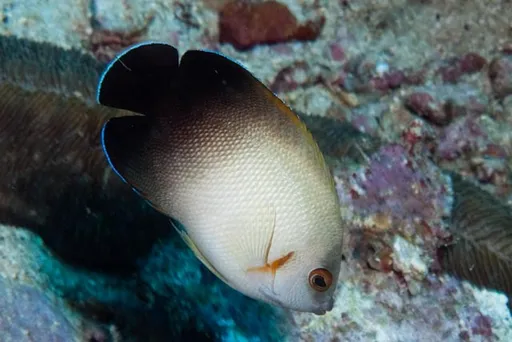
Multibarred angelfish
Centropyge multifasciata
Also known as Paracentropyge multifasciata, Multibar Angelfish, Many-banded Angelfish, Barred Angelfish
SaltwaterFish
Care at a glance
- Temperature
- 72–79°F
- 22–26°C
- pH
- 8.1–8.4
- Adult size
- 4.7 in
- 12 cm
- Minimum tank
- 59 gal
- 225 L
- Temperament
- Mostly peaceful
- Social behavior
- Solitary
- Swim level
- Middle
- Difficulty
- Difficult
- Breeding
- Hard
- Rarity
- Rare
- Reef safe
- Reef safe with caution
- Family
- Pomacanthidae
- Origin
- Indo-Pacific, from the Cocos-Keeling Islands to the Society Islands, north to the Ryukyu Islands and south to the Great Barrier Reef
Overview
Newly imported fish are often shy, reclusive, and slow to accept anything but live rock grazing at first, so patient feeding with a wide variety of foods matters early on; captive-bred individuals settle in and eat far more readily than wild-caught ones. Once established it grazes steadily and holds a territory around its favorite cave, tolerating most tankmates but not other angelfish. Reef keepers rate it caution: it is better behaved around coral than many dwarf angels, but it can still nip soft corals or clam mantles.
In the wild
A deepwater specialist found on steep outer reef slopes from roughly 20 to 70 meters down, well past where most reef fish in the trade are collected. It lives in caves and crevices and is rarely seen far from shelter, often resting with its body angled against a cave wall or ceiling. A tank needs a maze of mature live rock caves and dim, sheltered spots for it to feel secure in.
Good to know
Paracentropyge multifasciata tops out around 12 cm and is a protogynous hermaphrodite like its Centropyge relatives, living in harems with one dominant male. It was long grouped in the genus Centropyge, and some authorities still treat Paracentropyge as a subgenus, but molecular studies support keeping it as its own genus of three closely related deepwater angelfish. Juveniles carry a blue eyespot near the back of the dorsal fin that fades with age.
Did you know
It spends so much time wedged into caves with its body pressed against the rock that divers and aquarists often find it resting upside down against a ceiling, using the cave surface the way other fish use the open water.
Weekly picks
Tank mates
Multibarred angelfish is a mostly peaceful, solitary species that keeps to the middle. These picks share a community profile with it, are safe together in both directions, and overlap on water type, temperature and pH.
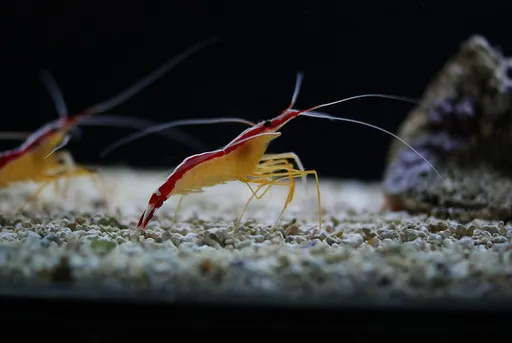
Skunk cleaner shrimp
Lysmata amboinensis
Saltwater2.4 in (6 cm) · 20 gal (75 L)73–81°F (23–27°C)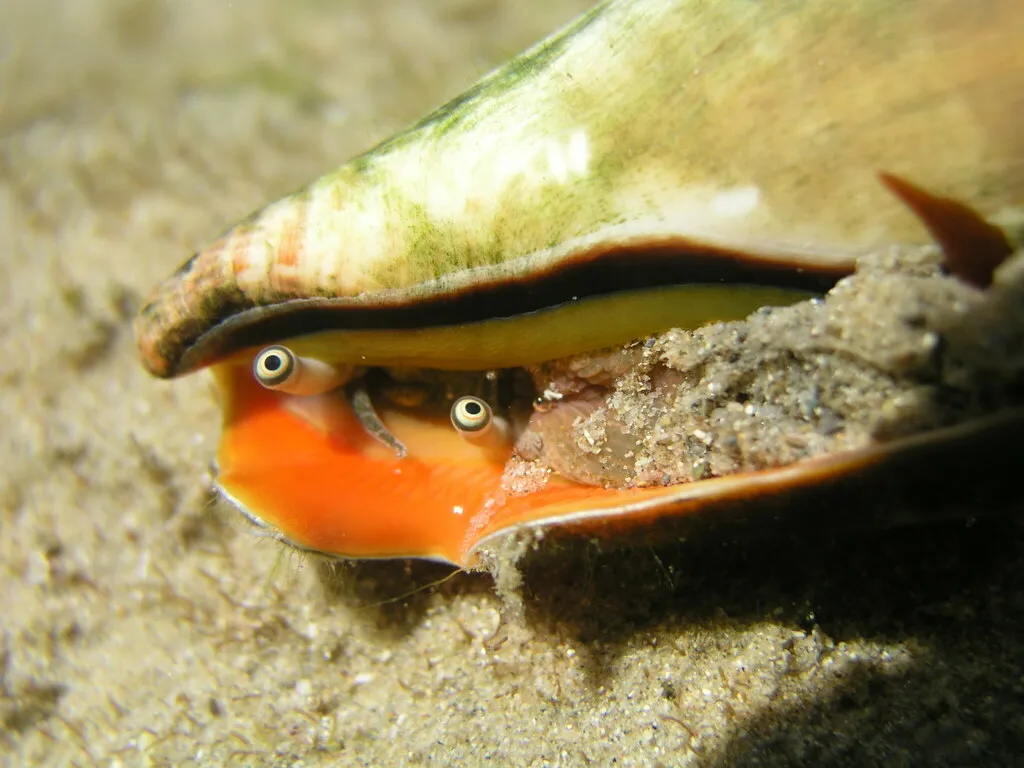
Tiger / strawberry conch
Conomurex luhuanus
Saltwater2.8 in (7 cm) · 20 gal (75 L)75–81°F (24–27°C)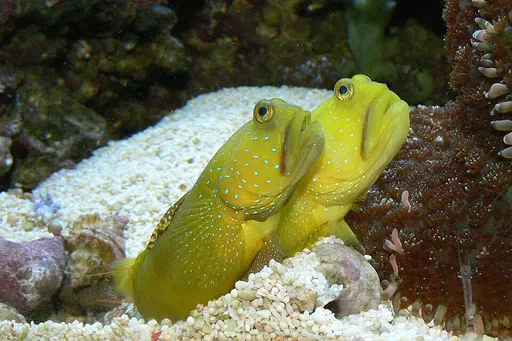
Yellow watchman goby
Cryptocentrus cinctus
Saltwater3.5 in (9 cm) · 20 gal (75 L)72–81°F (22–27°C)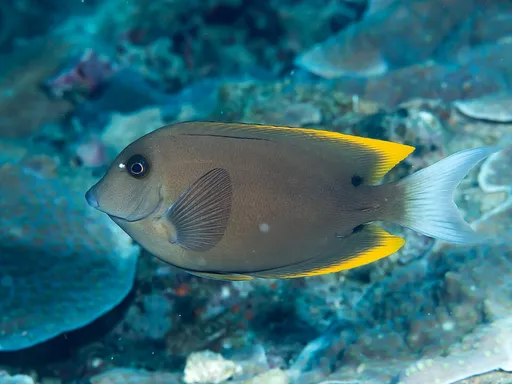
Tomini tang
Ctenochaetus tominiensis
Saltwater6.3 in (16 cm) · 70 gal (265 L)75–81°F (24–27°C)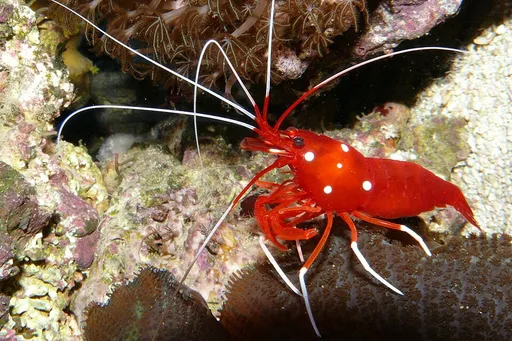
Fire shrimp
Lysmata debelius
Saltwater2.4 in (6 cm) · 20 gal (75 L)72–79°F (22–26°C)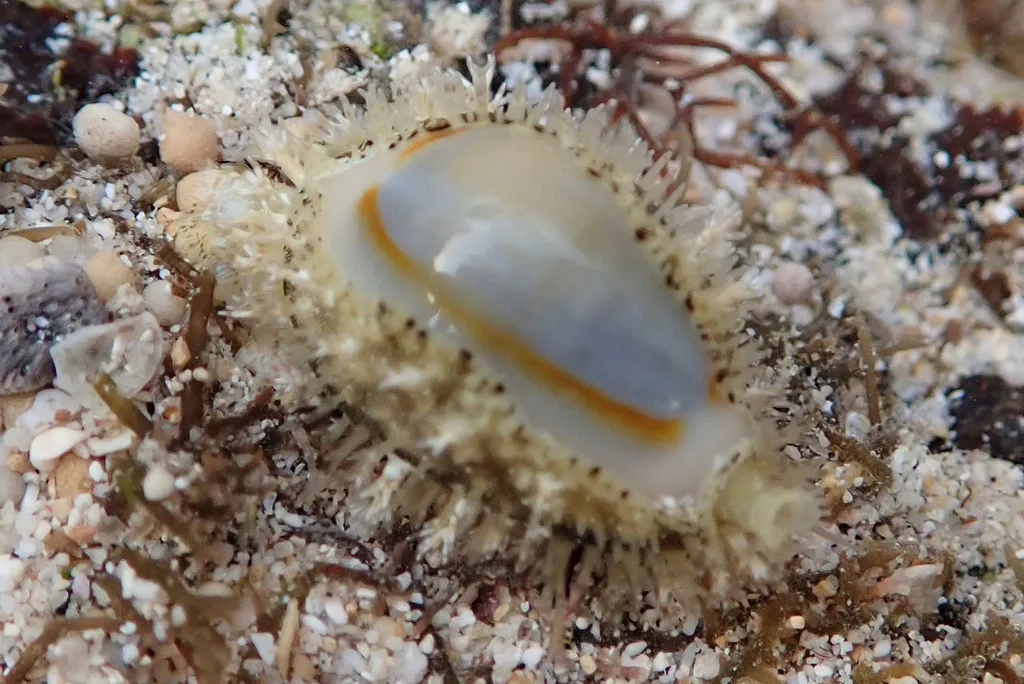
Ring cowrie
Monetaria annulus
Saltwater1.2 in (3 cm) · 20 gal (75 L)75–81°F (24–27°C)
Common questions
What size tank does a Multibarred angelfish need?
A Multibarred angelfish needs at least 59 gal (225 L). It spends most of its time in the middle.
What temperature and pH does a Multibarred angelfish need?
A Multibarred angelfish is comfortable at 72–79°F (22–26°C) with a pH of 8.1–8.4.
How big does a Multibarred angelfish get?
An adult Multibarred angelfish reaches about 4.7 in (12 cm).
Related species
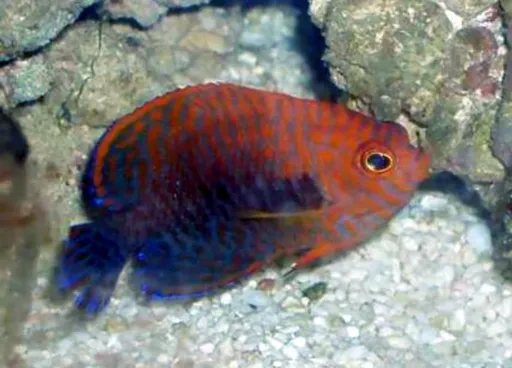 5.1 in (13 cm)65 gal (245 L)72–79°F (22–26°C)
Potter's angelfish
Centropyge potteri
5.1 in (13 cm) · 65 gal (245 L)
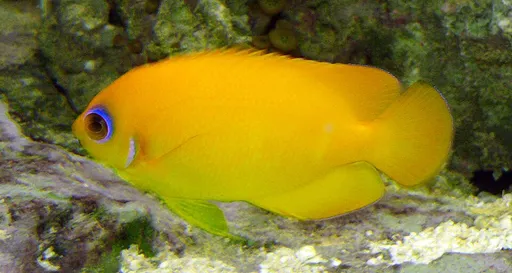 5.5 in (14 cm)55 gal (210 L)72–79°F (22–26°C)
Lemonpeel angelfish
Centropyge flavissima
5.5 in (14 cm) · 55 gal (210 L)
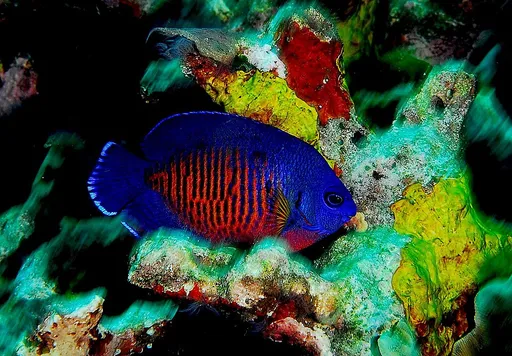 3.9 in (10 cm)50 gal (190 L)72–79°F (22–26°C)
Coral beauty angelfish
Centropyge bispinosa
3.9 in (10 cm) · 50 gal (190 L)
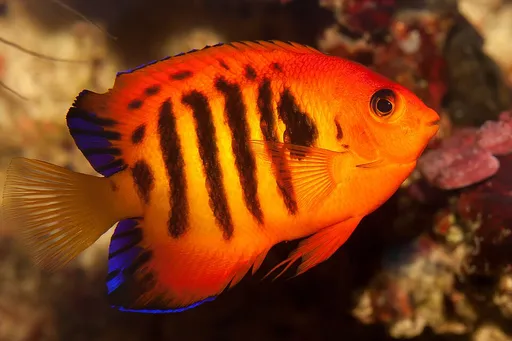 3.9 in (10 cm)50 gal (190 L)72–79°F (22–26°C)
Flame angelfish
Centropyge loriculus
3.9 in (10 cm) · 50 gal (190 L)
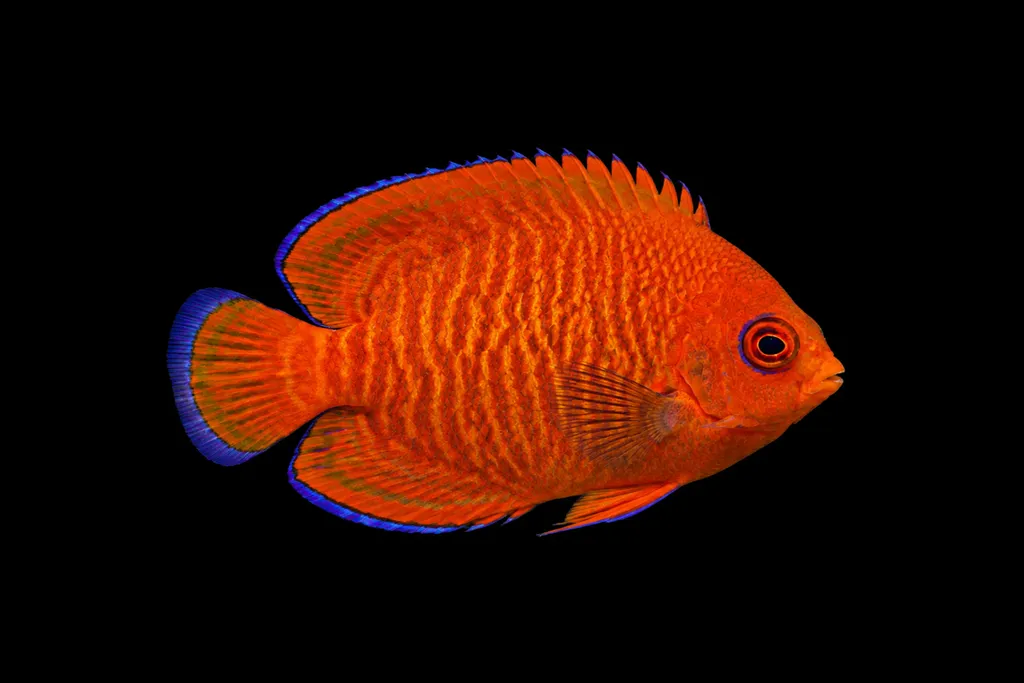 3.9 in (10 cm)55 gal (210 L)72–79°F (22–26°C)
Golden angelfish
Centropyge aurantia
3.9 in (10 cm) · 55 gal (210 L)
 3.9 in (10 cm)55 gal (210 L)72–79°F (22–26°C)
Half-black angelfish
Centropyge vroliki
3.9 in (10 cm) · 55 gal (210 L)