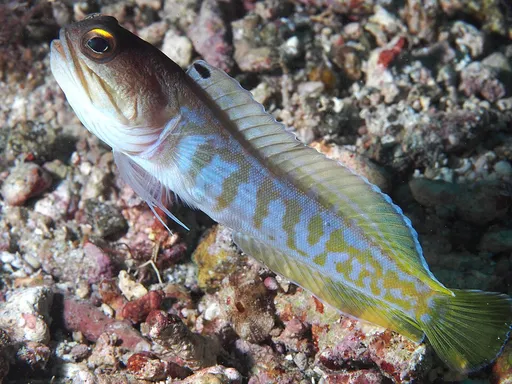
Gold-specs jawfish
Opistognathus randalli
Also known as Randall's Jawfish, Black Cap Jawfish, Goldspecs Jawfish
SaltwaterFish
Care at a glance
- Temperature
- 73–81°F
- 23–27°C
- pH
- 8.1–8.4
- Adult size
- 3.9 in
- 10 cm
- Minimum tank
- 30 gal
- 115 L
- Temperament
- Peaceful
- Social behavior
- Social
- Swim level
- Bottom
- Diet
- Carnivore
- Difficulty
- Easy
- Breeding
- Mouthbrooder · Hard
- Rarity
- Common
- Reef safe
- Reef safe
- Family
- Opistognathidae
- Origin
- Native to the western Pacific, from Indonesia and the Philippines to Micronesia, in sandy rubble areas near reefs.
Overview
The gold-specs jawfish is a small, peaceful reef fish that digs its own home in the sand bed. It is an easy jawfish to keep.
Did you know
The gold-specs jawfish rebuilds its burrow one mouthful of gravel at a time. Watching it work is one of the more entertaining sights in a sand bed tank.
Caring for the gold-specs jawfish
Give the gold-specs jawfish at least 30 gal (115 L), with at least 8 cm of mixed sand and rubble. A deep bed of mixed grain sizes lets it dig and line its home. Fit a secure lid.
Keep the water at 73 to 81°F (23 to 27°C) with a pH of 8.1 to 8.4. Feed small meaty foods such as mysis, enriched brine shrimp and chopped seafood.
It is peaceful toward other species and reef safe. It does fine alone or in a group, but it is territorial toward its own kind, so more than one needs a large footprint. Keep tiny ornamental shrimp out of reach of its mouth.
It is a mouthbrooder, and the male incubates the eggs in his mouth. Breeding it is rated hard.
Good to know
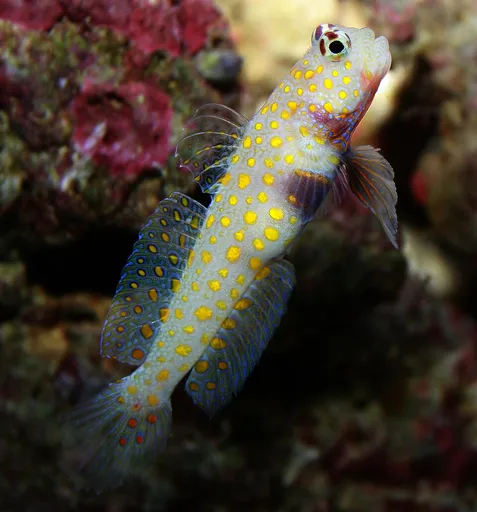
Opistognathus randalli is a western Pacific jawfish in the family Opistognathidae. It is named after the ichthyologist John Randall, and the trade also calls it Randall's, black cap or goldspecs jawfish. It is pale, with a dark cap on the head and a gold ring around the eye.
In the wild
The gold-specs jawfish is native to the western Pacific, from Indonesia and the Philippines to Micronesia. It lives in sandy rubble areas near reefs, where it builds a burrow in mixed sand and rubble. It hovers above the burrow, watching for food and threats, and reinforces the entrance with shells and coral bits.
Weekly picks
Tank mates
The gold-specs jawfish is a peaceful, social species that keeps to the bottom. These picks share a community profile with it, are safe together in both directions, and overlap on water type, temperature and pH.
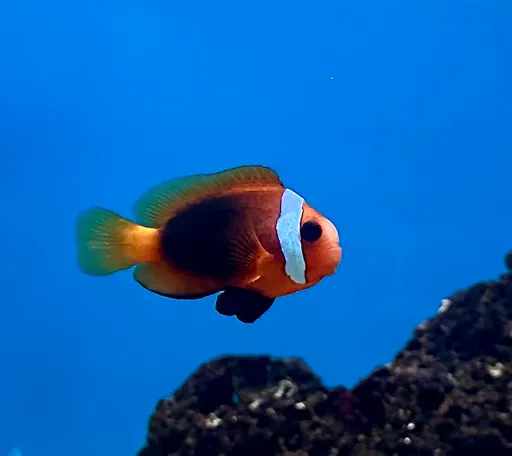
Cinnamon clownfish
Amphiprion melanopus
Saltwater4.7 in (12 cm) · 30 gal (115 L)75–82°F (24–28°C)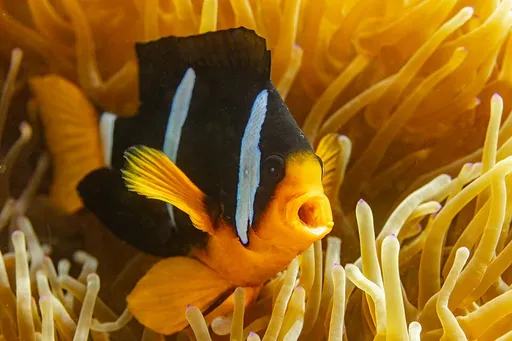
Clark's clownfish
Amphiprion clarkii
Saltwater5.5 in (14 cm) · 30 gal (115 L)75–82°F (24–28°C)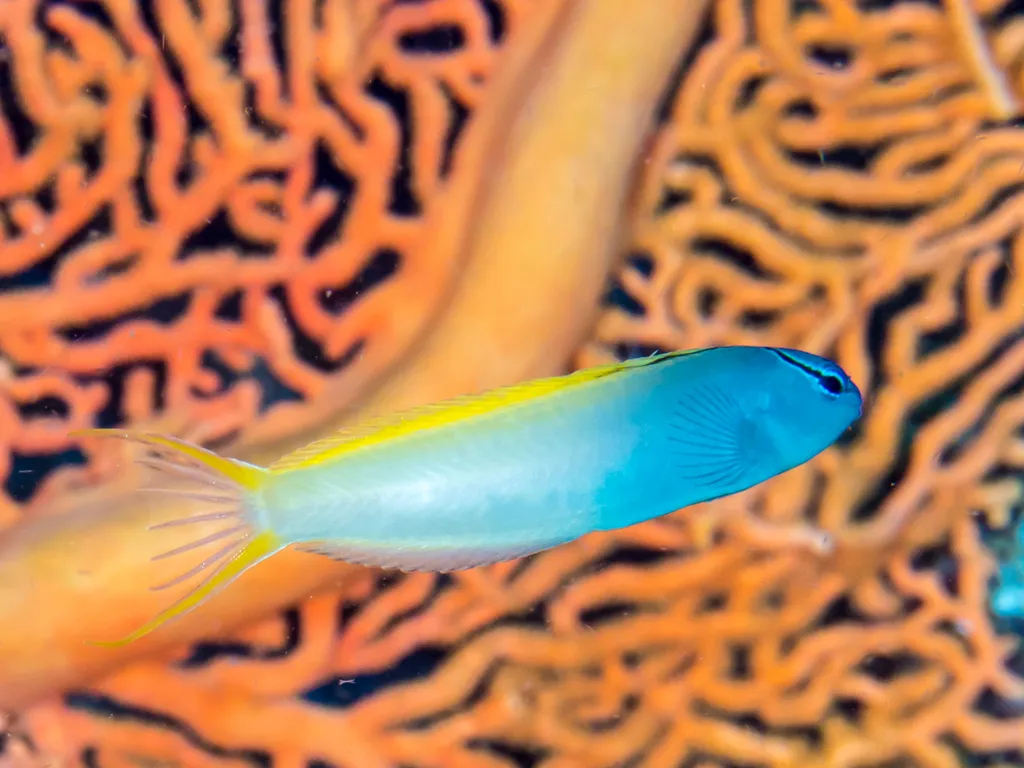
Forktail fang blenny
Meiacanthus atrodorsalis
Saltwater4.3 in (11 cm) · 30 gal (114 L)72–79°F (22–26°C)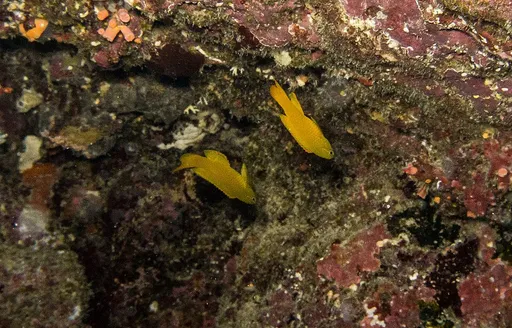
Yellow assessor
Assessor flavissimus
Saltwater2.8 in (7 cm) · 29 gal (110 L)72–79°F (22–26°C)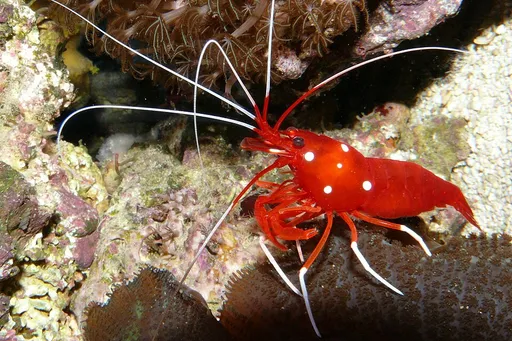
Fire shrimp
Lysmata debelius
Saltwater2.4 in (6 cm) · 20 gal (75 L)72–79°F (22–26°C)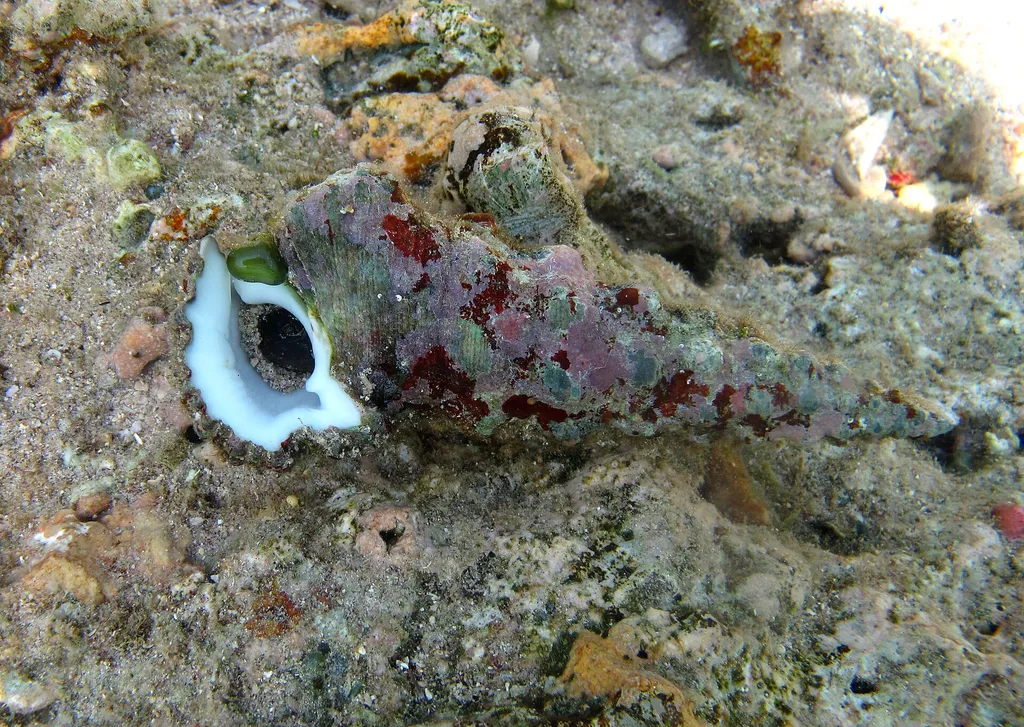
Cerith snail
Cerithium sp.
Saltwater1.6 in (4 cm) · 11 gal (40 L)72–79°F (22–26°C)
Common questions
What size tank does a gold-specs jawfish need?
A gold-specs jawfish needs at least 30 gal (115 L). It spends most of its time in the bottom.
What temperature and pH does a gold-specs jawfish need?
A gold-specs jawfish is comfortable at 73–81°F (23–27°C) with a pH of 8.1–8.4.
What does a gold-specs jawfish eat?
A gold-specs jawfish eats small meaty foods such as mysis, enriched brine shrimp and chopped seafood.
How big does a gold-specs jawfish get?
An adult gold-specs jawfish reaches about 3.9 in (10 cm).
How does a gold-specs jawfish breed?
Gold-specs jawfish are mouthbrooders. The male incubates the eggs in his mouth, and breeding them is rated hard.
Related species
 3.9 in (10 cm)30 gal (115 L)70–77°F (21–25°C)
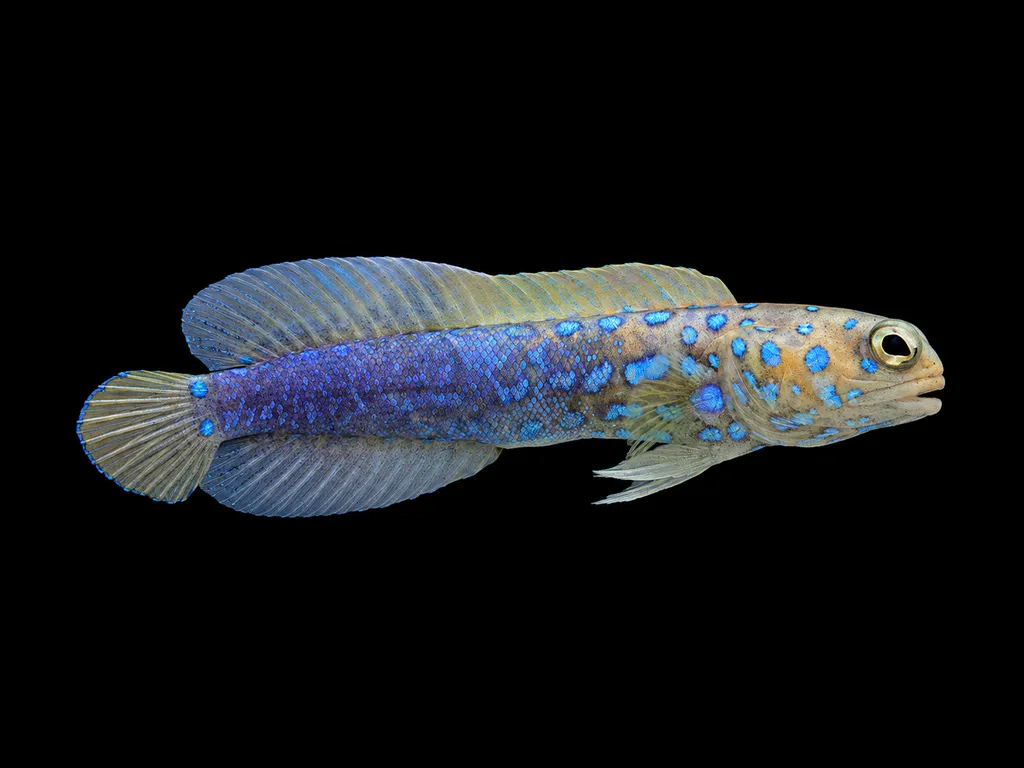
Blue-spotted jawfish
Opistognathus rosenblatti
3.9 in (10 cm) · 30 gal (115 L)
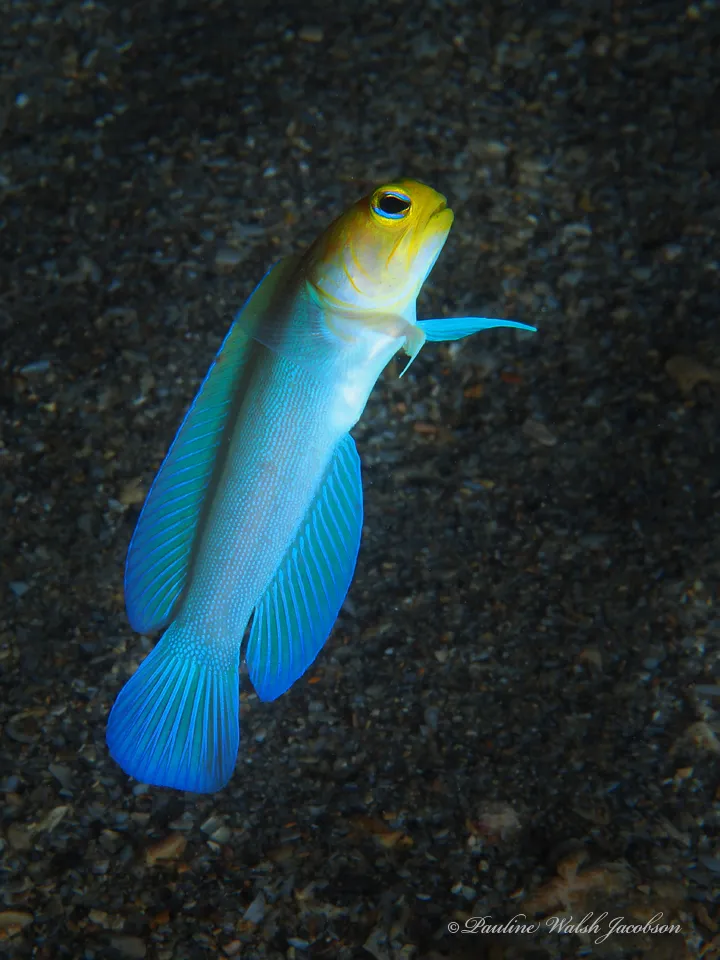 3.9 in (10 cm)29 gal (110 L)73–81°F (23–27°C)
Pearly jawfish
Opistognathus aurifrons
3.9 in (10 cm) · 29 gal (110 L)
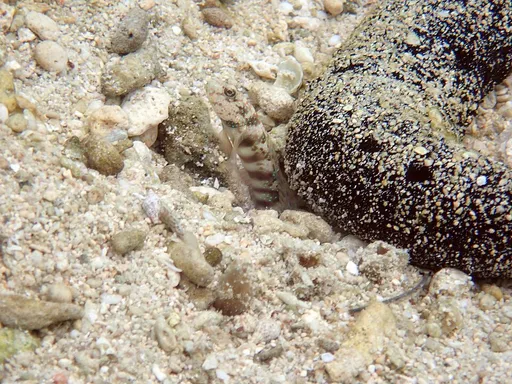 3.9 in (10 cm)30 gal (115 L)73–81°F (23–27°C)
Pink-spotted watchman goby
Cryptocentrus leptocephalus
3.9 in (10 cm) · 30 gal (115 L)
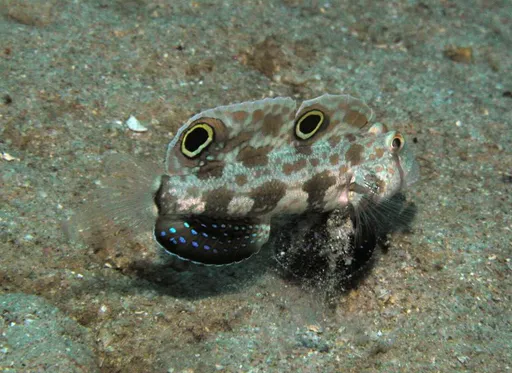 3.9 in (10 cm)30 gal (115 L)73–81°F (23–27°C)
Twinspot goby
Signigobius biocellatus
3.9 in (10 cm) · 30 gal (115 L)
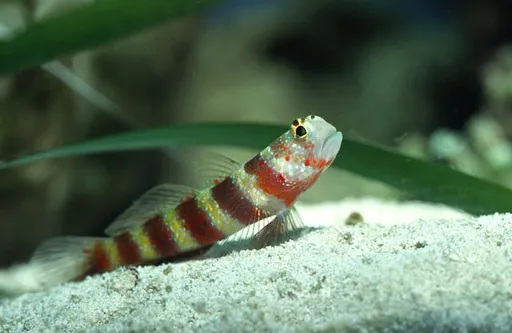 3.9 in (10 cm)30 gal (114 L)72–79°F (22–26°C)
Wheeler's prawn goby
Amblyeleotris wheeleri
3.9 in (10 cm) · 30 gal (114 L)
 4.3 in (11 cm)30 gal (114 L)72–79°F (22–26°C)
Orange-spot prawn goby
Amblyeleotris guttata
4.3 in (11 cm) · 30 gal (114 L)