Pink-spotted watchman goby
Cryptocentrus leptocephalus
Also known as Pink-Spotted Shrimp Goby, Singapore Shrimp Goby, Pink-Spotted Prawn Goby
SaltwaterFish
Care at a glance
- Temperature
- 73–81°F
- 23–27°C
- pH
- 8.1–8.4
- Adult size
- 3.9 in
- 10 cm
- Minimum tank
- 30 gal
- 115 L
- Temperament
- Peaceful
- Social behavior
- Solitary
- Tankmates
- With caution
- Swim level
- Bottom
- Difficulty
- Easy
- Breeding
- No record
- Rarity
- Common
- Reef safe
- Reef safe
- Family
- Gobiidae
- Origin
- Native to the western Pacific from Indonesia and the Philippines to southern Japan, on silty sand bottoms near reefs.
Overview
Provide a 115 litre or larger tank with a deep, soft sand bed and a lid, kept at 23 to 27 C and pH 8.1 to 8.4. It is reef safe, though a large adult may eye very small ornamental shrimp. Feed small meaty foods such as mysis, enriched brine, and chopped seafood. It is peaceful with other fish but territorial toward its own kind, and it pairs beautifully with a tiger pistol shrimp.
In the wild
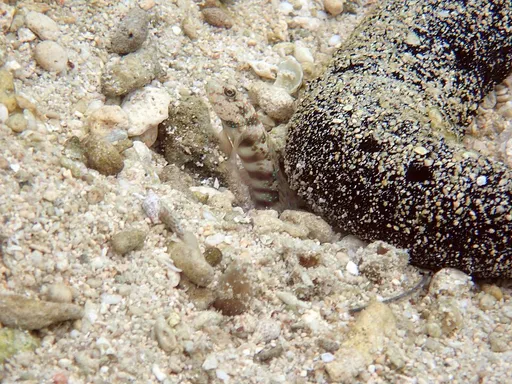
The pink-spotted watchman goby is a grey fish dusted with blue and pink spots that lives on silty sand near reefs. It shares a burrow with a pistol shrimp in one of the reef's best known partnerships. The nearly blind shrimp digs and maintains the burrow while the sharp eyed goby stands guard at the entrance. It needs a sand bed it can burrow into and rocks to shelter under.
Good to know
Cryptocentrus leptocephalus is a shrimp goby in the family Gobiidae. Its partnership with a pistol shrimp is a classic example of mutualism, where each animal gives the other something it lacks. The shrimp keeps a claw or antenna on the goby and reads its tail flicks as danger signals.
Did you know
If you add a pistol shrimp, the goby and shrimp will often team up within days and share a burrow for life.
Symbiotic relationships
Shrimp gobies and pistol shrimp
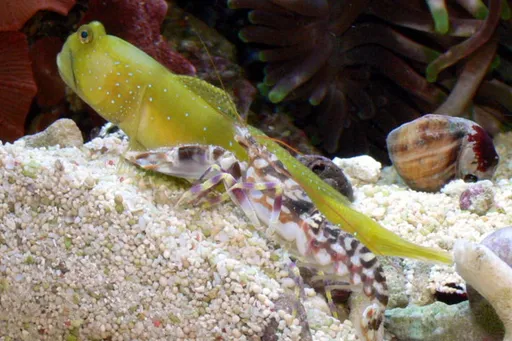
A pistol shrimp can barely see, but it digs and maintains a burrow all day. The goby that shares it has sharp eyes and does no digging. It sits at the entrance as a lookout, and the shrimp keeps one antenna resting on the goby's body whenever it is outside. A flick of the goby's tail sends the shrimp back down the hole, and a harder threat sends them both. At dusk they retire together and the shrimp seals the entrance for the night. The shrimp gets an early warning system, and the goby gets a home it could not build.
This partnership is easy to keep and it rewards watching. Give them a sand bed at least 2 inches (5 cm) deep with some rubble to hold the tunnel, add the two together or the shrimp first, and feed sinking food near the burrow mouth. The snap of the shrimp's claw is a small cavitation bubble collapsing, and you will hear it across the room. Pairs form readily between strangers, but the genera matter: the yellow watchman, pink-spotted, Wheeler's, orange-spot and Randall's gobies take a tiger pistol shrimp, while the yasha, hi-fin red banded and pinkbar gobies pair with Randall's pistol shrimp.
Common questions
What size tank does a Pink-spotted watchman goby need?
A Pink-spotted watchman goby needs at least 30 gal (115 L). It spends most of its time in the bottom.
What temperature and pH does a Pink-spotted watchman goby need?
A Pink-spotted watchman goby is comfortable at 73–81°F (23–27°C) with a pH of 8.1–8.4.
How big does a Pink-spotted watchman goby get?
An adult Pink-spotted watchman goby reaches about 3.9 in (10 cm).
Related species
 3.5 in (9 cm)20 gal (75 L)72–81°F (22–27°C)
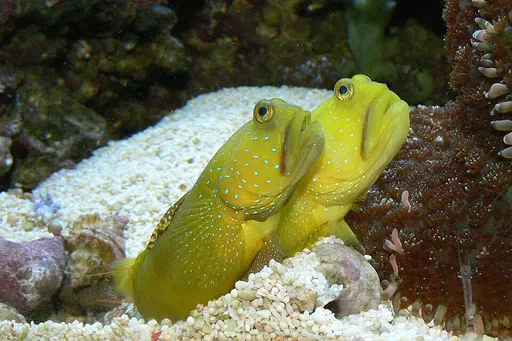
Yellow watchman goby
Cryptocentrus cinctus
3.5 in (9 cm) · 20 gal (75 L)
 3.9 in (10 cm)30 gal (115 L)73–81°F (23–27°C)
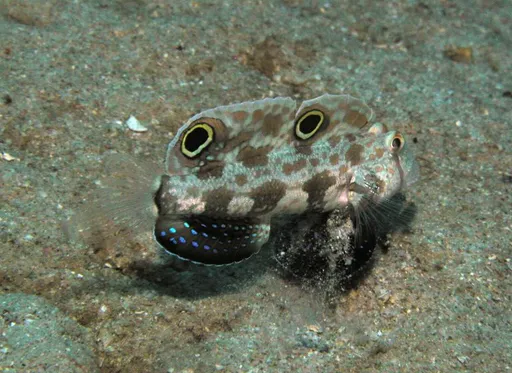
Twinspot goby
Signigobius biocellatus
3.9 in (10 cm) · 30 gal (115 L)
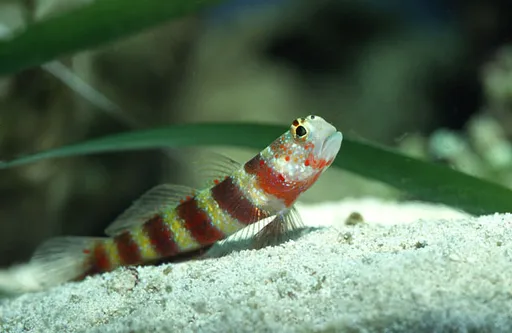 3.9 in (10 cm)30 gal (114 L)72–79°F (22–26°C)
Wheeler's prawn goby
Amblyeleotris wheeleri
3.9 in (10 cm) · 30 gal (114 L)
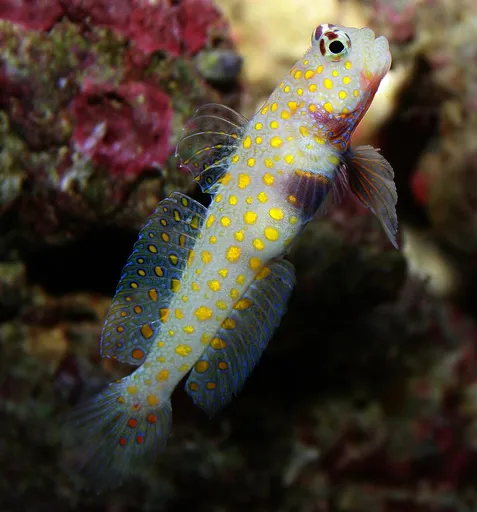 4.3 in (11 cm)30 gal (114 L)72–79°F (22–26°C)
Orange-spot prawn goby
Amblyeleotris guttata
4.3 in (11 cm) · 30 gal (114 L)
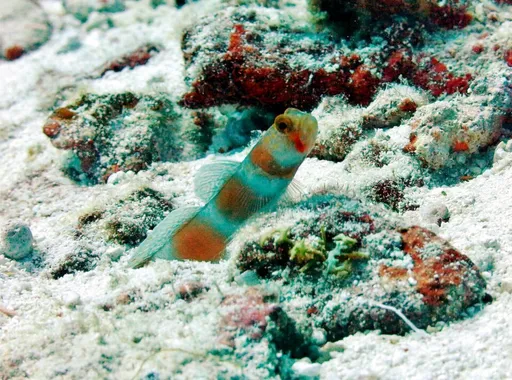 4.3 in (11 cm)30 gal (115 L)73–81°F (23–27°C)
Pinkbar goby
Amblyeleotris aurora
4.3 in (11 cm) · 30 gal (115 L)
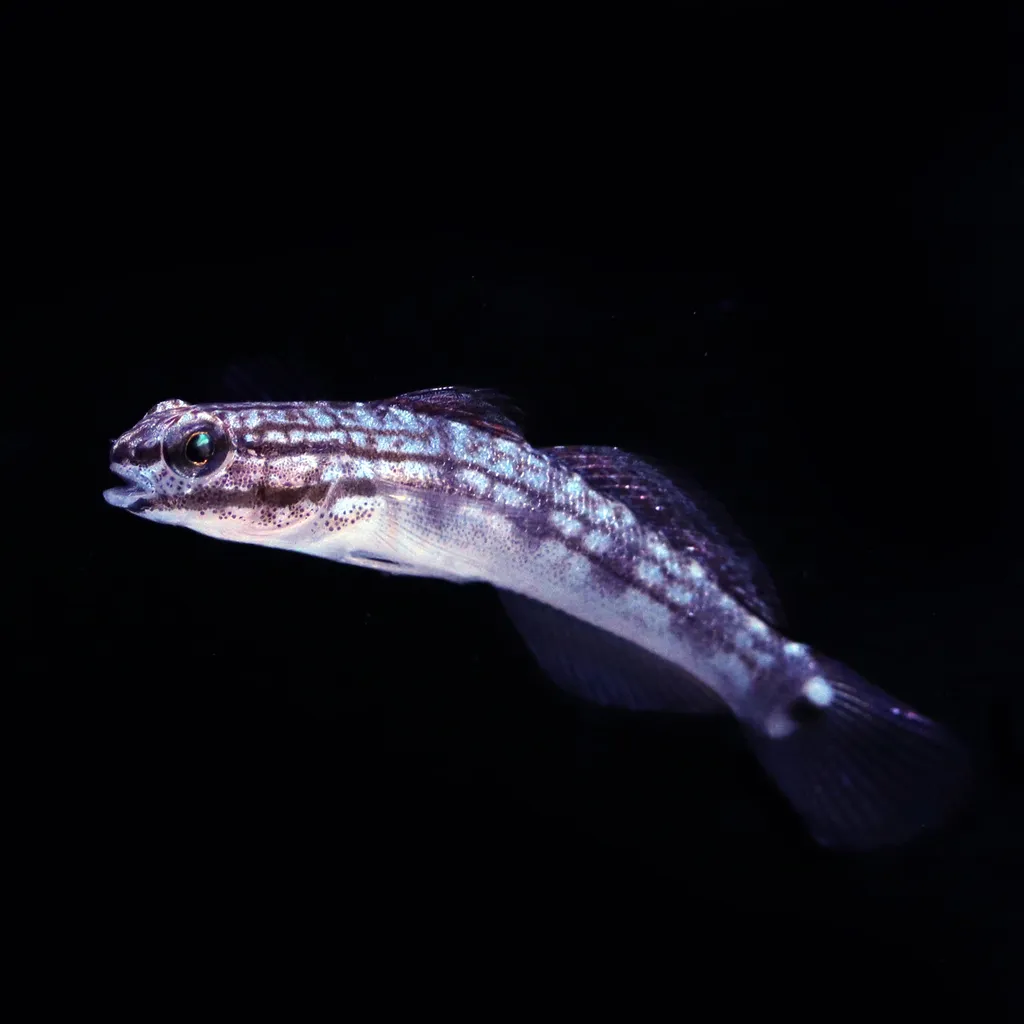 3.1 in (8 cm)20 gal (75 L)73–81°F (23–27°C)
Buan's sleeper goby
Amblygobius buanensis
3.1 in (8 cm) · 20 gal (75 L)