Pinkbar goby
Amblyeleotris aurora
Also known as Aurora Goby, Pink-Bar Shrimp Goby, Aurora Shrimp Goby, Pinkbar Shrimpgoby
SaltwaterFish
Care at a glance
- Temperature
- 73–81°F
- 23–27°C
- pH
- 8.1–8.4
- Adult size
- 4.3 in
- 11 cm
- Minimum tank
- 30 gal
- 115 L
- Temperament
- Peaceful
- Social behavior
- Social
- Tankmates
- With caution
- Swim level
- Bottom
- Difficulty
- Easy
- Breeding
- No record
- Rarity
- Common
- Reef safe
- Reef safe
- Family
- Gobiidae
- Origin
- Found in the western Indian Ocean, from the Red Sea and East Africa to the Maldives and Mauritius, on sandy lagoon floors.
Overview
Keep it in a 115 litre or larger tank with a sand and rubble bed and a secure lid, at 23 to 27 C and pH 8.1 to 8.4. It is fully reef safe and can be kept with corals, clams, and other inverts. Feed small meaty foods such as mysis, brine shrimp, and frozen preparations a few times a day. It is peaceful and does especially well paired with a pistol shrimp.
In the wild
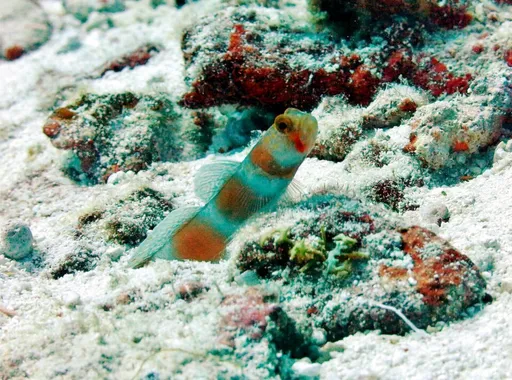
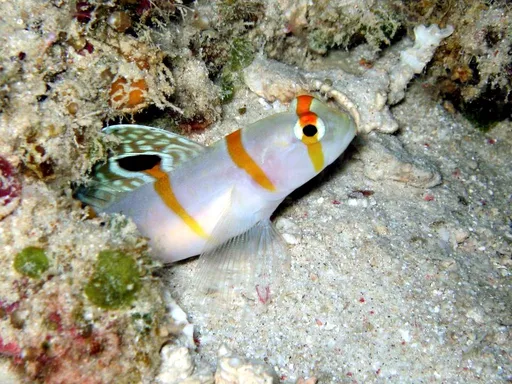
The pinkbar goby is a white to cream fish crossed by bold pink to orange bars, with a spotted tail. It lives on sandy lagoon floors and shares a burrow with a pistol shrimp. It hovers at the burrow mouth and darts inside when threatened, signaling the shrimp with its tail. A soft sand bed with some rubble lets the pair dig and reinforce the burrow.
Good to know
Amblyeleotris aurora is a shrimp goby in the family Gobiidae. It forms a mutual partnership with pistol shrimp of the genus Alpheus, trading lookout duty for a ready made burrow. The bars brighten and fade with the fish's mood and surroundings.
Did you know
A bonded goby and shrimp keep in constant contact, with the shrimp resting an antenna on the goby so it can feel the tail flick that warns of danger.
Symbiotic relationships
Shrimp gobies and pistol shrimp
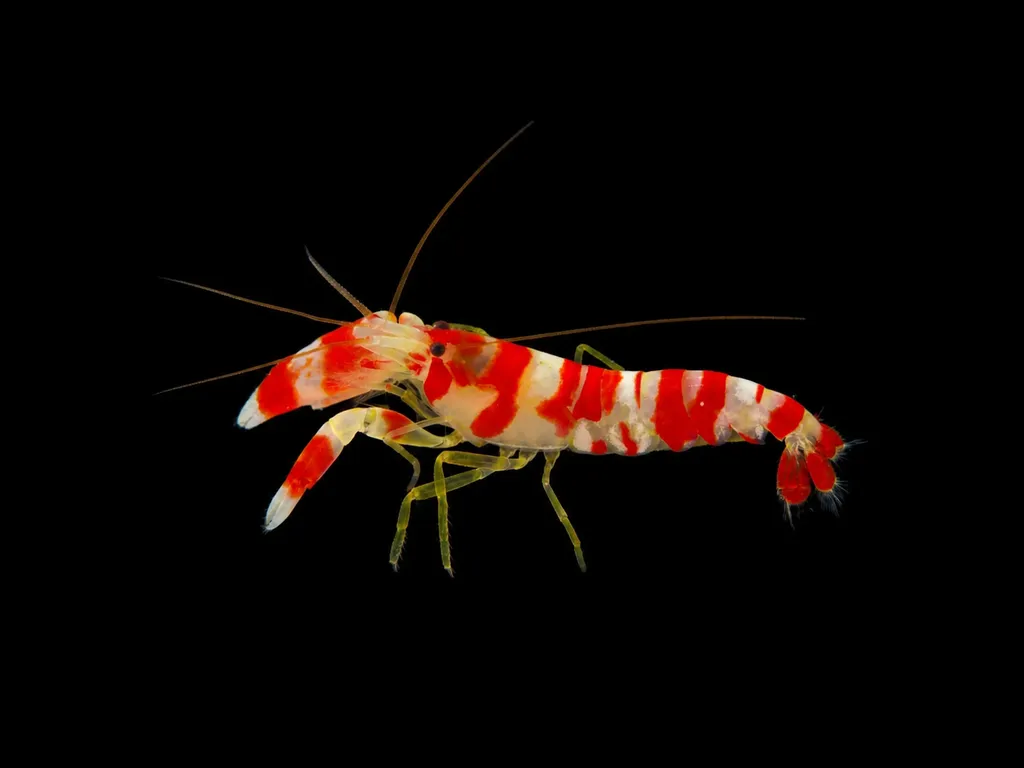
A pistol shrimp can barely see, but it digs and maintains a burrow all day. The goby that shares it has sharp eyes and does no digging. It sits at the entrance as a lookout, and the shrimp keeps one antenna resting on the goby's body whenever it is outside. A flick of the goby's tail sends the shrimp back down the hole, and a harder threat sends them both. At dusk they retire together and the shrimp seals the entrance for the night. The shrimp gets an early warning system, and the goby gets a home it could not build.
This partnership is easy to keep and it rewards watching. Give them a sand bed at least 2 inches (5 cm) deep with some rubble to hold the tunnel, add the two together or the shrimp first, and feed sinking food near the burrow mouth. The snap of the shrimp's claw is a small cavitation bubble collapsing, and you will hear it across the room. Pairs form readily between strangers, but the genera matter: the yellow watchman, pink-spotted, Wheeler's, orange-spot and Randall's gobies take a tiger pistol shrimp, while the yasha, hi-fin red banded and pinkbar gobies pair with Randall's pistol shrimp.
Common questions
What size tank does a Pinkbar goby need?
A Pinkbar goby needs at least 30 gal (115 L). It spends most of its time in the bottom.
What temperature and pH does a Pinkbar goby need?
A Pinkbar goby is comfortable at 73–81°F (23–27°C) with a pH of 8.1–8.4.
How big does a Pinkbar goby get?
An adult Pinkbar goby reaches about 4.3 in (11 cm).
Related species
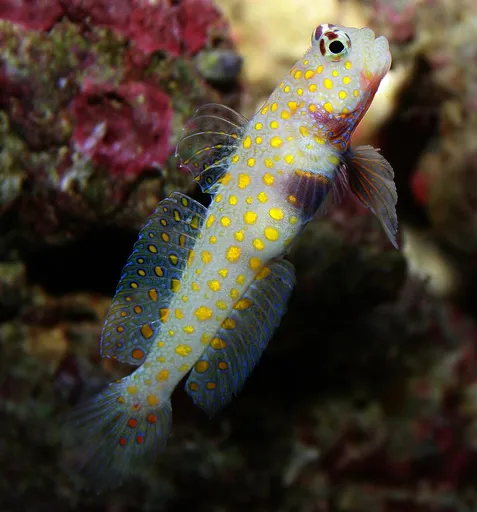 4.3 in (11 cm)30 gal (114 L)72–79°F (22–26°C)
Orange-spot prawn goby
Amblyeleotris guttata
4.3 in (11 cm) · 30 gal (114 L)
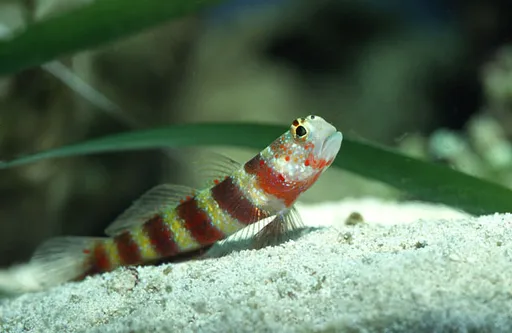 3.9 in (10 cm)30 gal (114 L)72–79°F (22–26°C)
Wheeler's prawn goby
Amblyeleotris wheeleri
3.9 in (10 cm) · 30 gal (114 L)
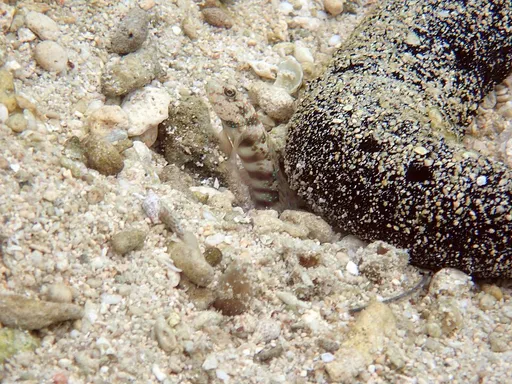
 4.7 in (12 cm)30 gal (114 L)72–79°F (22–26°C)
Randall's prawn goby
Amblyeleotris randalli
4.7 in (12 cm) · 30 gal (114 L)
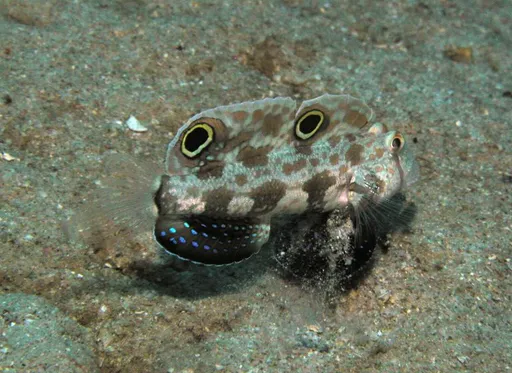
 3.9 in (10 cm)30 gal (115 L)73–81°F (23–27°C)
Pink-spotted watchman goby
Cryptocentrus leptocephalus
3.9 in (10 cm) · 30 gal (115 L)
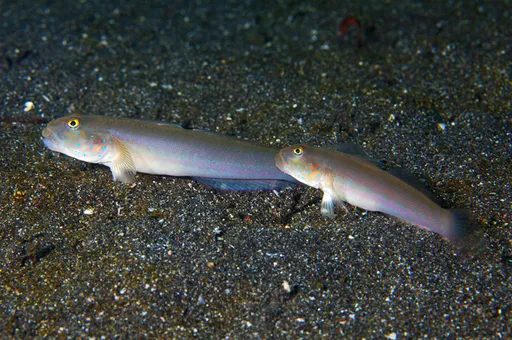
 3.9 in (10 cm)30 gal (115 L)73–81°F (23–27°C)
Twinspot goby
Signigobius biocellatus
3.9 in (10 cm) · 30 gal (115 L)
 5.5 in (14 cm)40 gal (150 L)72–79°F (22–26°C)
Sixspot sleeper goby
Valenciennea sexguttata
5.5 in (14 cm) · 40 gal (150 L)