Randall's pistol shrimp
Alpheus randalli
Also known as Candy Stripe Pistol Shrimp, Red Banded Pistol Shrimp, Candy Cane Pistol Shrimp, Randall's Snapping Shrimp
SaltwaterShrimp
Care at a glance
- Temperature
- 75–81°F
- 24–27°C
- pH
- 8.1–8.4
- Adult size
- 1.6 in
- 4 cm
- Minimum tank
- 11 gal
- 40 L
- Temperament
- Peaceful
- Social behavior
- Solitary
- Tankmates
- With caution
- Swim level
- Bottom
- Difficulty
- Easy
- Breeding
- No record
- Rarity
- Common
- Reef safe
- Reef safe
- Family
- Alpheidae
- Origin
- Indian and western Pacific oceans, sharing sand burrows with partner gobies on reef slopes.
Overview
A single shrimp or a bonded pair does well in 40 litres or more at 24 to 27 C and pH 8.1 to 8.4 with a deep sand bed and some rubble to shore up the burrow. It is reef safe and peaceful, eating detritus and meaty scraps, and is best paired with a partner goby for the full behavior. The snapping is harmless to corals and fish, though you will hear it clicking through the glass.
In the wild
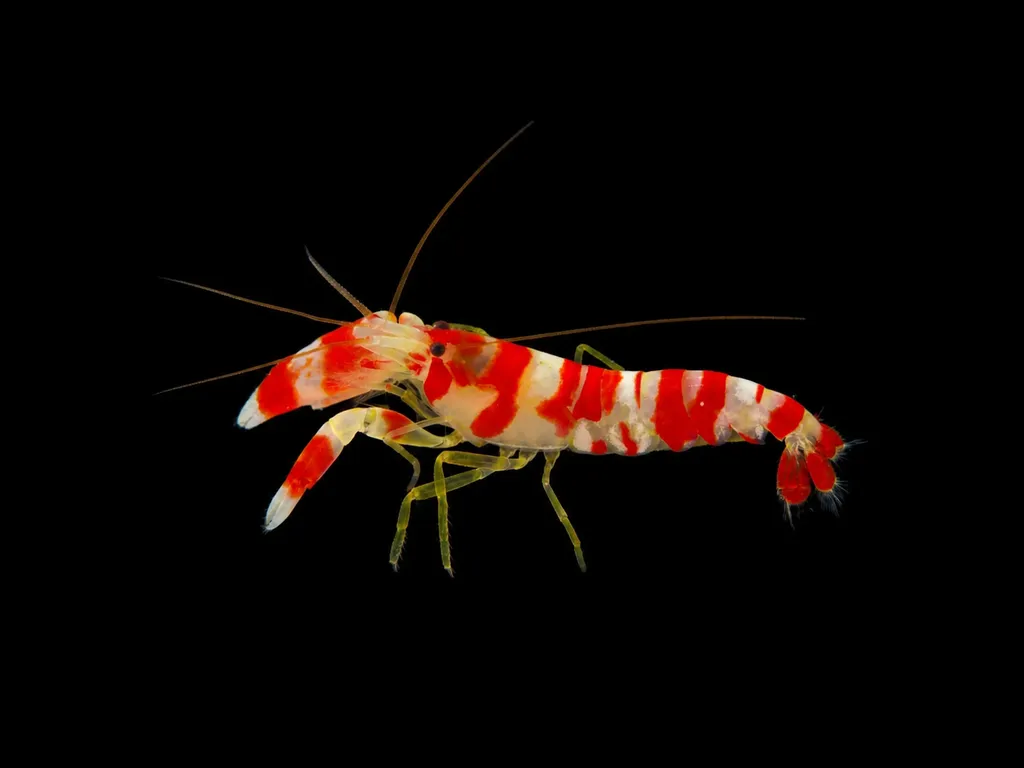
Randall's pistol shrimp is a small striped shrimp banded in red and white with one oversized snapping claw. It spends most of its time excavating and maintaining a burrow in the sand. Its eyesight is poor, so it keeps one antenna on a partner goby that watches for danger.
Good to know
Like other pistol shrimp, Alpheus randalli snaps its enlarged claw so fast it fires a cavitation bubble whose collapse makes a loud crack and a flash of light. In the wild it pairs with watchman gobies such as Stonogobiops and Amblyeleotris in a classic partnership.
Did you know
The claw snap is one of the loudest sounds made by any animal its size and briefly heats the water at the collapsing bubble to extreme temperatures.
Symbiotic relationships
Shrimp gobies and pistol shrimp
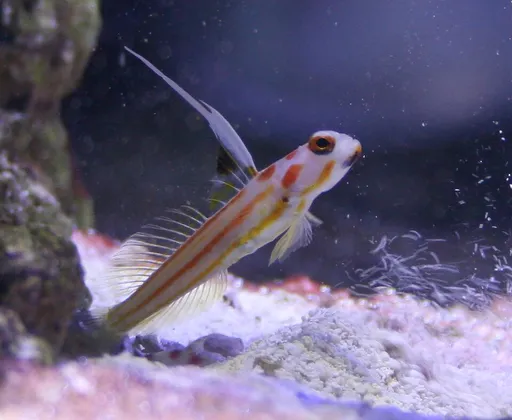
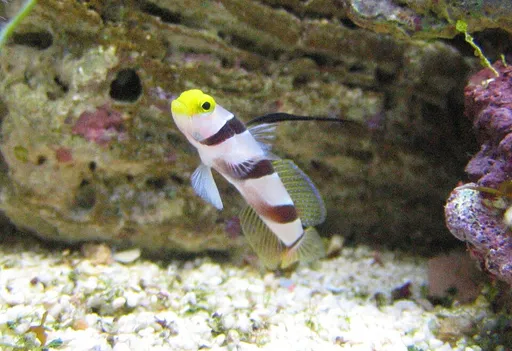
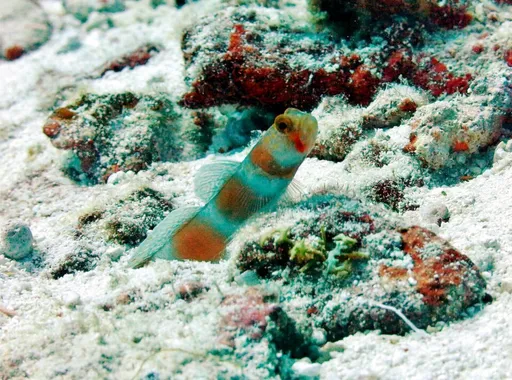
A pistol shrimp can barely see, but it digs and maintains a burrow all day. The goby that shares it has sharp eyes and does no digging. It sits at the entrance as a lookout, and the shrimp keeps one antenna resting on the goby's body whenever it is outside. A flick of the goby's tail sends the shrimp back down the hole, and a harder threat sends them both. At dusk they retire together and the shrimp seals the entrance for the night. The shrimp gets an early warning system, and the goby gets a home it could not build.
This partnership is easy to keep and it rewards watching. Give them a sand bed at least 2 inches (5 cm) deep with some rubble to hold the tunnel, add the two together or the shrimp first, and feed sinking food near the burrow mouth. The snap of the shrimp's claw is a small cavitation bubble collapsing, and you will hear it across the room. Pairs form readily between strangers, but the genera matter: the yellow watchman, pink-spotted, Wheeler's, orange-spot and Randall's gobies take a tiger pistol shrimp, while the yasha, hi-fin red banded and pinkbar gobies pair with Randall's pistol shrimp.
Common questions
What size tank does a Randall's pistol shrimp need?
A Randall's pistol shrimp needs at least 11 gal (40 L). It spends most of its time in the bottom.
What temperature and pH does a Randall's pistol shrimp need?
A Randall's pistol shrimp is comfortable at 75–81°F (24–27°C) with a pH of 8.1–8.4.
How big does a Randall's pistol shrimp get?
An adult Randall's pistol shrimp reaches about 1.6 in (4 cm).
Related species
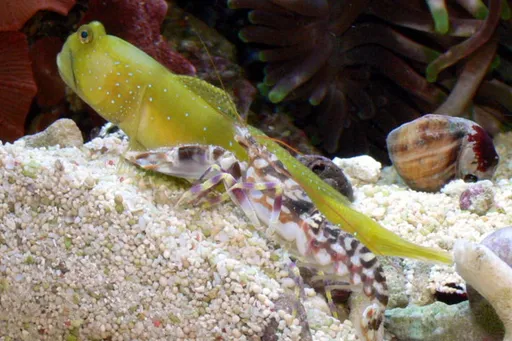 2 in (5 cm)11 gal (40 L)75–81°F (24–27°C)
Tiger pistol shrimp
Alpheus bellulus
2 in (5 cm) · 11 gal (40 L)
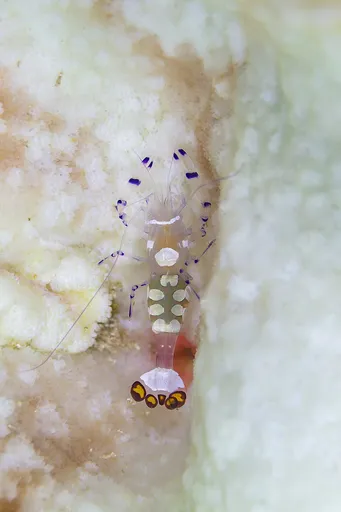 1.6 in (4 cm)11 gal (40 L)75–81°F (24–27°C)
White-spot anemone shrimp
Periclimenes brevicarpalis
1.6 in (4 cm) · 11 gal (40 L)
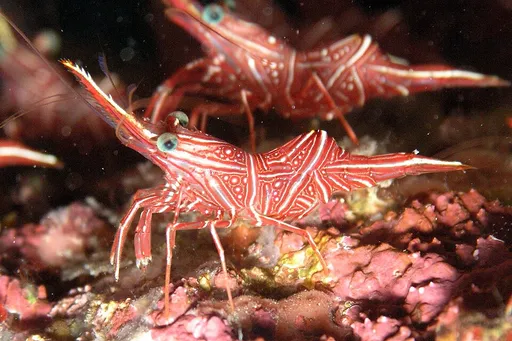 2 in (5 cm)16 gal (60 L)75–81°F (24–27°C)
Camel / dancing shrimp
Rhynchocinetes durbanensis
2 in (5 cm) · 16 gal (60 L)
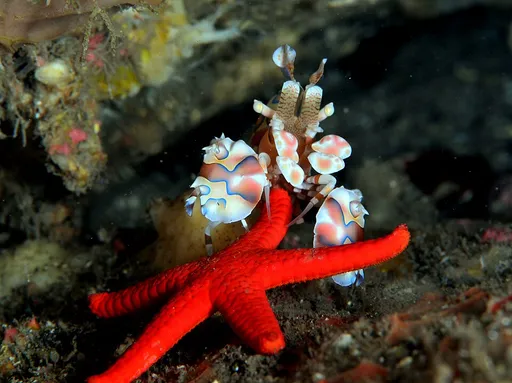 2 in (5 cm)11 gal (40 L)75–81°F (24–27°C)
Harlequin shrimp
Hymenocera picta
2 in (5 cm) · 11 gal (40 L)
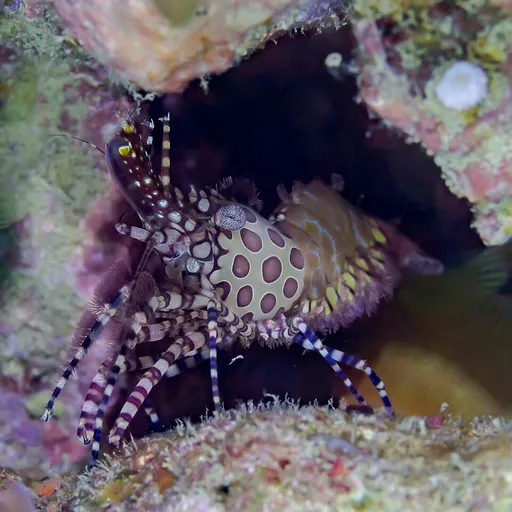 2 in (5 cm)11 gal (40 L)75–81°F (24–27°C)
Marble shrimp
Saron marmoratus
2 in (5 cm) · 11 gal (40 L)
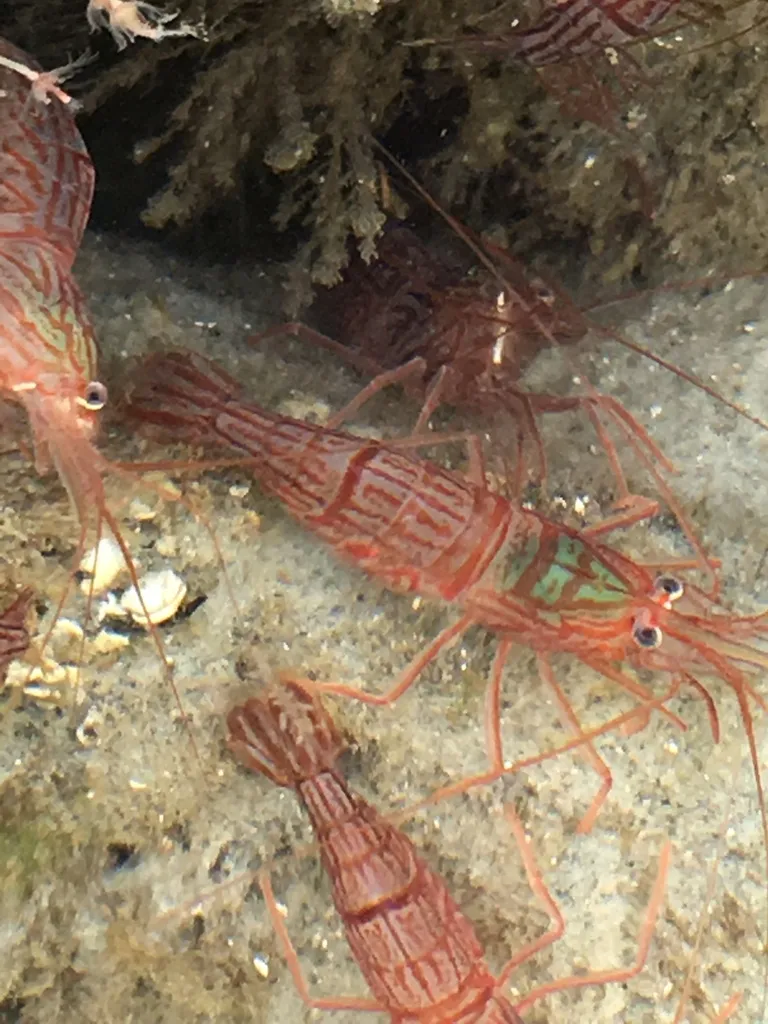 2 in (5 cm)11 gal (40 L)72–81°F (22–27°C)
Peppermint shrimp
Lysmata wurdemanni
2 in (5 cm) · 11 gal (40 L)