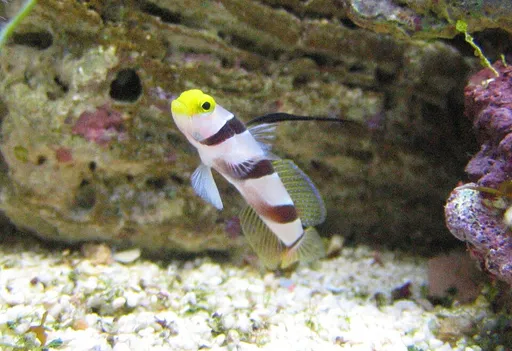
Hi-fin red banded goby
Stonogobiops nematodes
Also known as Blackray Goby, Striped Goby, Filament-Finned Prawn Goby
SaltwaterFish
Care at a glance
- Temperature
- 72–81°F
- 22–27°C
- pH
- 8.1–8.4
- Adult size
- 2.4 in
- 6 cm
- Minimum tank
- 20 gal
- 75 L
- Temperament
- Peaceful
- Social behavior
- Social
- Tankmates
- With caution
- Swim level
- Bottom
- Difficulty
- Medium
- Breeding
- Hard
- Rarity
- Common
- Reef safe
- Reef safe
- Family
- Gobiidae
- Origin
- Indo-West Pacific coral reefs (Philippines, Indonesia, Seychelles)
Overview
Peaceful and a bit shy, this goby spends most of the day hovering close to its burrow entrance and rarely strays far. It is fully reef safe and does well with other peaceful, small fish, but can be territorial toward other shrimp gobies sharing the same tank. Offer finely chopped mysis and enriched brine shrimp at least twice a day, since new arrivals sometimes take several days to settle in and start eating.
In the wild
Lives on sand and rubble flats along deep reef slopes, usually 15 to 25 meters down, where it hovers just above a shared burrow. Needs a tank with several inches of sand mixed with fine rubble so a partner pistol shrimp can dig and maintain a stable tunnel. A tight-fitting lid is essential since this goby is a strong jumper, especially when startled.
Good to know
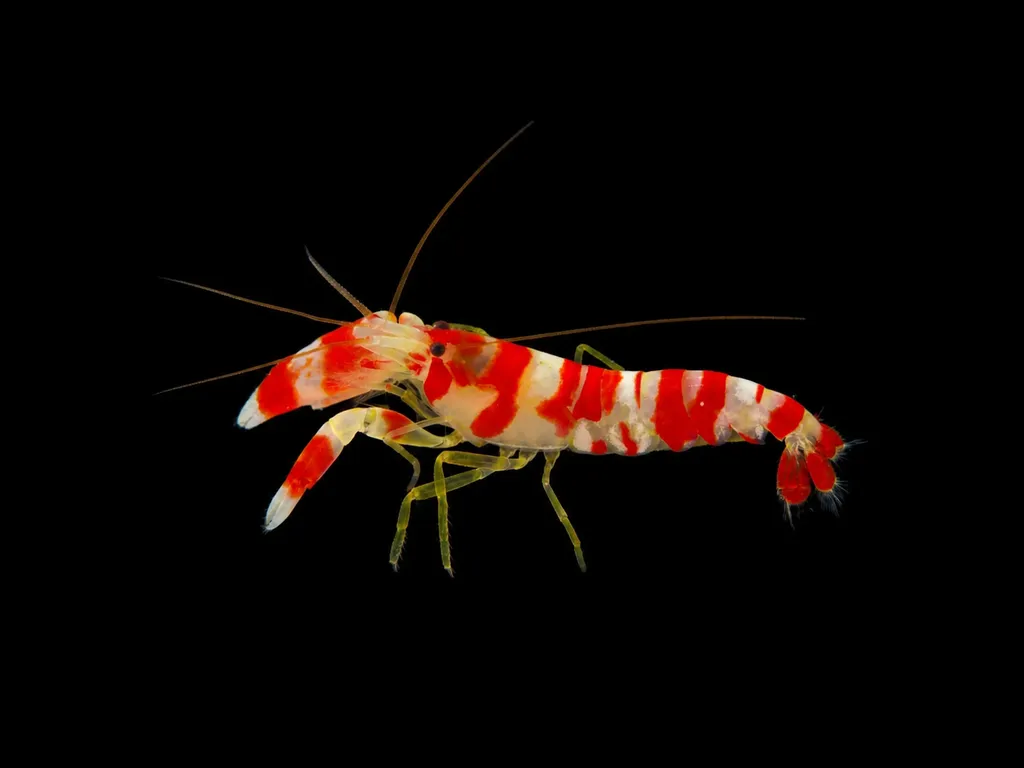
This goby pairs with a pistol shrimp of the genus Alpheus, most often Alpheus randalli, in an obligate mutualism seen on dark sand patches near reef bases. The nearly blind shrimp keeps an antenna on the goby at all times while excavating, and the goby's tail flick or dash into the burrow is the shrimp's cue to retreat underground. Adults reach about 6 cm and typically live in male-female pairs at the burrow entrance.
Did you know
The goby and its pistol shrimp roommate rely on each other to survive on the open sand, the shrimp builds and defends the burrow but has poor eyesight, while the sharp-eyed goby stands guard outside and signals danger with a flick of its tail.
Symbiotic relationships
Shrimp gobies and pistol shrimp
A pistol shrimp can barely see, but it digs and maintains a burrow all day. The goby that shares it has sharp eyes and does no digging. It sits at the entrance as a lookout, and the shrimp keeps one antenna resting on the goby's body whenever it is outside. A flick of the goby's tail sends the shrimp back down the hole, and a harder threat sends them both. At dusk they retire together and the shrimp seals the entrance for the night. The shrimp gets an early warning system, and the goby gets a home it could not build.
This partnership is easy to keep and it rewards watching. Give them a sand bed at least 2 inches (5 cm) deep with some rubble to hold the tunnel, add the two together or the shrimp first, and feed sinking food near the burrow mouth. The snap of the shrimp's claw is a small cavitation bubble collapsing, and you will hear it across the room. Pairs form readily between strangers, but the genera matter: the yellow watchman, pink-spotted, Wheeler's, orange-spot and Randall's gobies take a tiger pistol shrimp, while the yasha, hi-fin red banded and pinkbar gobies pair with Randall's pistol shrimp.
Common questions
What size tank does a Hi-fin red banded goby need?
A Hi-fin red banded goby needs at least 20 gal (75 L). It spends most of its time in the bottom.
What temperature and pH does a Hi-fin red banded goby need?
A Hi-fin red banded goby is comfortable at 72–81°F (22–27°C) with a pH of 8.1–8.4.
How big does a Hi-fin red banded goby get?
An adult Hi-fin red banded goby reaches about 2.4 in (6 cm).
Related species
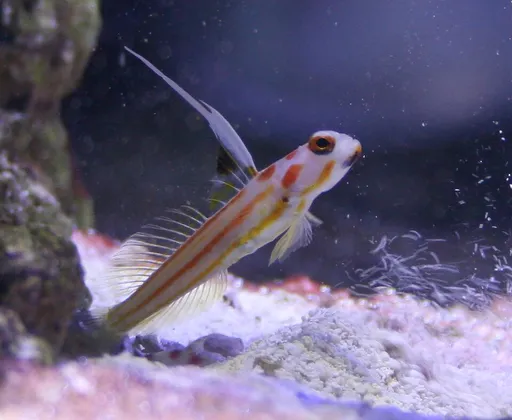 2.4 in (6 cm)15 gal (57 L)72–79°F (22–26°C)
Yasha goby
Stonogobiops yasha
2.4 in (6 cm) · 15 gal (57 L)
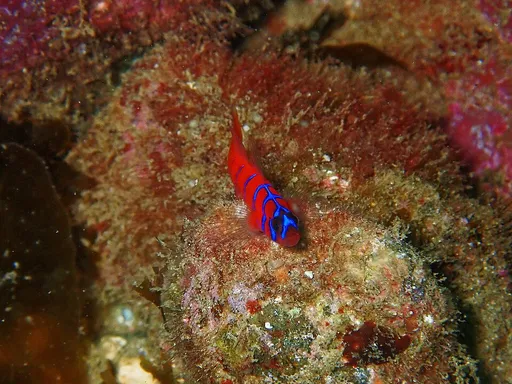 2.4 in (6 cm)11 gal (40 L)59–72°F (15–22°C)
Catalina goby
Lythrypnus dalli
2.4 in (6 cm) · 11 gal (40 L)
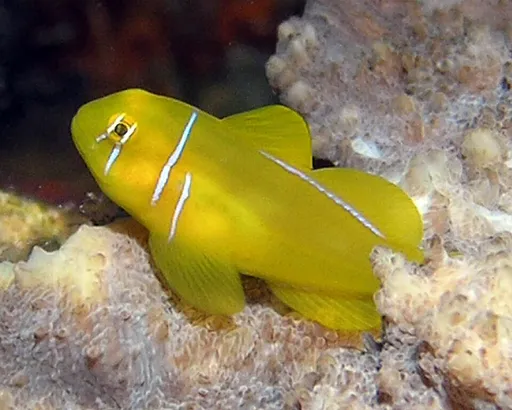 2.6 in (6.5 cm)11 gal (40 L)72–81°F (22–27°C)
Citron clown goby
Gobiodon citrinus
2.6 in (6.5 cm) · 11 gal (40 L)
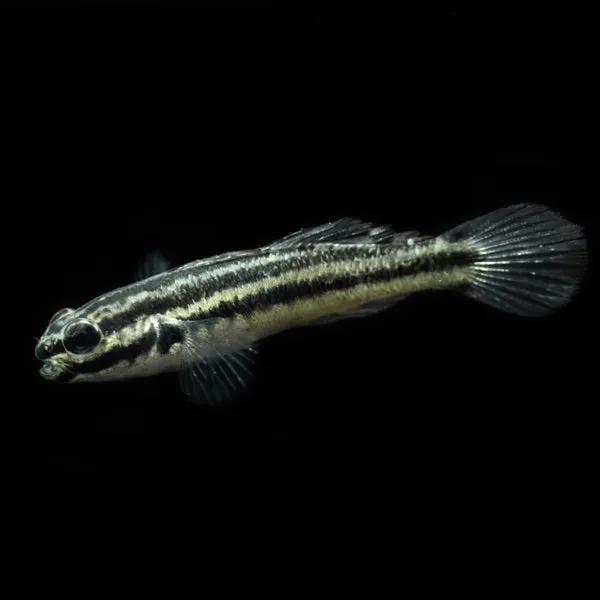 2.8 in (7 cm)20 gal (75 L)73–81°F (23–27°C)
Link's goby
Amblygobius linki
2.8 in (7 cm) · 20 gal (75 L)
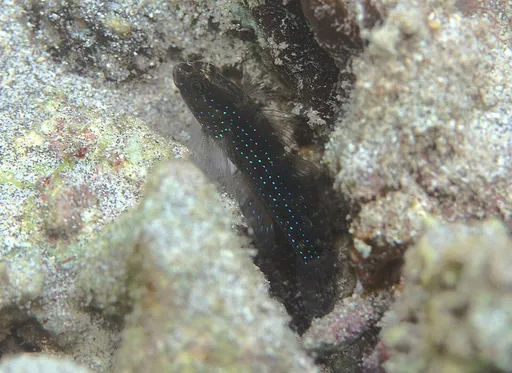 2.8 in (7 cm)13 gal (50 L)73–81°F (23–27°C)
Starry goby
Asterropteryx semipunctata
2.8 in (7 cm) · 13 gal (50 L)
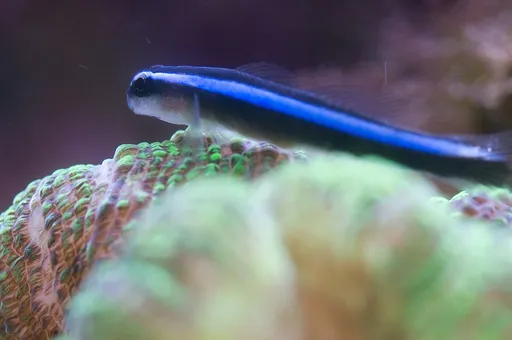 2 in (5 cm)11 gal (40 L)72–79°F (22–26°C)
Neon goby
Elacatinus oceanops
2 in (5 cm) · 11 gal (40 L)