Catalina goby
Lythrypnus dalli
Also known as Blue-Banded Goby, Bluebanded Goby, Catalina Blue-Banded Goby
SaltwaterFish
Care at a glance
- Temperature
- 59–72°F
- 15–22°C
- pH
- 8.1–8.4
- Adult size
- 2.4 in
- 6 cm
- Minimum tank
- 11 gal
- 40 L
- Temperament
- Peaceful
- Social behavior
- Social
- Tankmates
- With caution
- Swim level
- Bottom
- Difficulty
- Medium
- Breeding
- Medium
- Rarity
- Common
- Reef safe
- Reef safe
- Family
- Gobiidae
- Origin
- Native to the temperate eastern Pacific from central California to the Gulf of California, on rocky reefs in cool, subtropical water.
Overview
This nano species can live in a 40 litre or larger tank, but it needs cool water of about 15 to 22 C, which usually means a chiller, plus pH 8.1 to 8.4. It is reef safe, though it may snap up very small invertebrates. Feed small meaty foods such as mysis, enriched brine, and cyclops. It is peaceful and can be kept in a small group given enough hiding spots.
In the wild
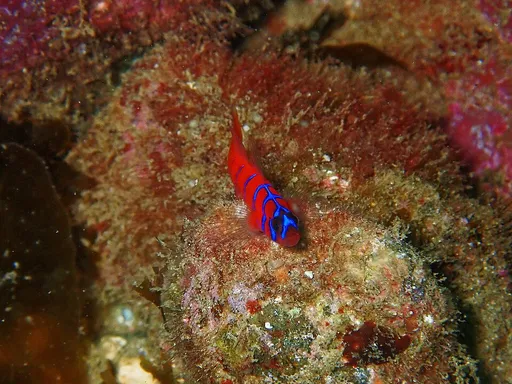
The Catalina goby is a tiny fish with a bright red to orange body crossed by neon blue bars. It perches on rock and in crevices on cool temperate reefs, often near the shelter of sea urchins. It is not a tropical fish and comes from water in the low to mid 60s Fahrenheit. Keeping it warm shortens its life sharply.
Good to know
Lythrypnus dalli is a goby in the family Gobiidae from the temperate eastern Pacific. It can change sex in both directions depending on the makeup of its group, which is unusual even among gobies. Its blue bars are a form of structural color that shifts with the light.
Did you know
Because most reef tanks run too warm for it, the Catalina goby is best kept in a dedicated cool water tank rather than a tropical reef.
Common questions
What size tank does a Catalina goby need?
A Catalina goby needs at least 11 gal (40 L). It spends most of its time in the bottom.
What temperature and pH does a Catalina goby need?
A Catalina goby is comfortable at 59–72°F (15–22°C) with a pH of 8.1–8.4.
How big does a Catalina goby get?
An adult Catalina goby reaches about 2.4 in (6 cm).
Related species
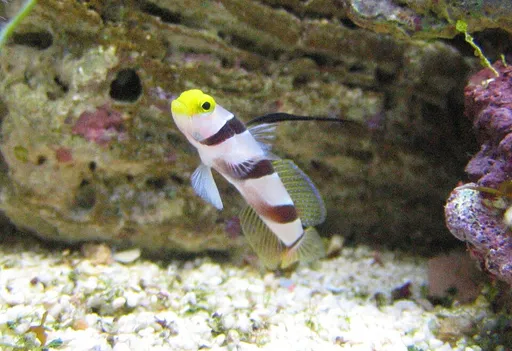 2.4 in (6 cm)20 gal (75 L)72–81°F (22–27°C)
Hi-fin red banded goby
Stonogobiops nematodes
2.4 in (6 cm) · 20 gal (75 L)
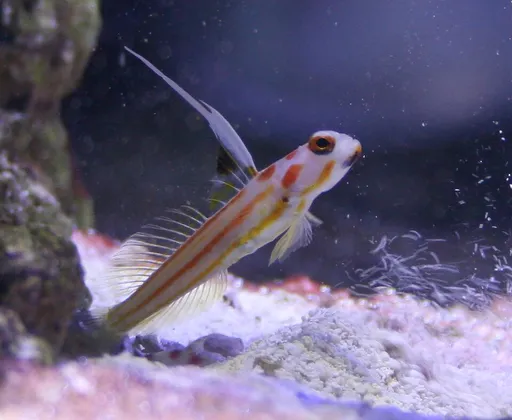 2.4 in (6 cm)15 gal (57 L)72–79°F (22–26°C)
Yasha goby
Stonogobiops yasha
2.4 in (6 cm) · 15 gal (57 L)
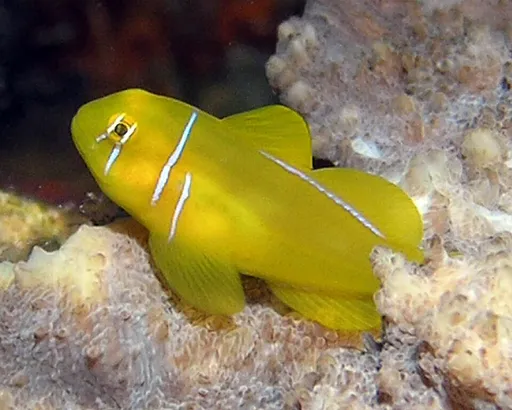 2.6 in (6.5 cm)11 gal (40 L)72–81°F (22–27°C)
Citron clown goby
Gobiodon citrinus
2.6 in (6.5 cm) · 11 gal (40 L)
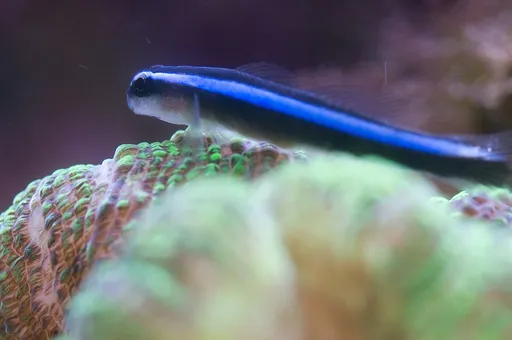 2 in (5 cm)11 gal (40 L)72–79°F (22–26°C)
Neon goby
Elacatinus oceanops
2 in (5 cm) · 11 gal (40 L)
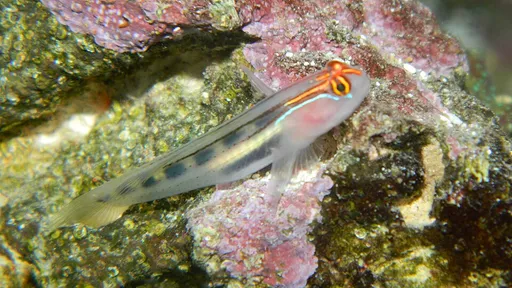 2 in (5 cm)11 gal (40 L)72–79°F (22–26°C)
Red head goby
Elacatinus puncticulatus
2 in (5 cm) · 11 gal (40 L)
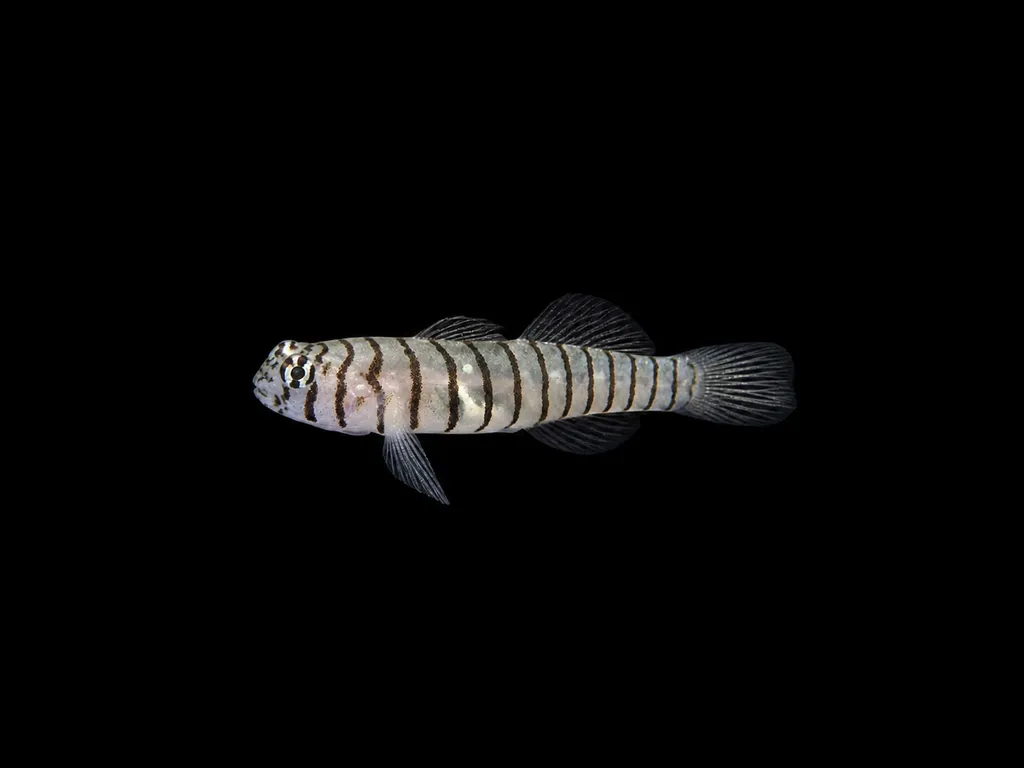 2 in (5 cm)11 gal (40 L)72–81°F (22–27°C)
Tiger goby
Tigrigobius macrodon
2 in (5 cm) · 11 gal (40 L)