Citron clown goby
Gobiodon citrinus
Also known as Citron Goby, Citrinis Goby, Poison Goby
SaltwaterFish
Care at a glance
- Temperature
- 72–81°F
- 22–27°C
- pH
- 8.1–8.4
- Adult size
- 2.6 in
- 6.5 cm
- Minimum tank
- 11 gal
- 40 L
- Temperament
- Peaceful
- Social behavior
- Social
- Swim level
- Bottom
- Difficulty
- Easy
- Breeding
- Medium
- Rarity
- Common
- Reef safe
- Reef safe with caution
- Family
- Gobiidae
- Origin
- Indo-West Pacific reefs, from the Red Sea and Mozambique to Samoa, north to southern Japan and south to the Great Barrier Reef
Overview
Citron clown gobies are peaceful toward other fish and make an easy, undemanding community member, though two unrelated individuals housed together will often fight until one asserts dominance or they pair off. Reef safety is rated caution: they present little to no risk in LPS or soft coral tanks, but are known to nip at the flesh and polyps of their host Acropora, which will not kill a large healthy colony but can seriously set back a small frag. Giving them a few coral heads or one large colony to work over helps keep any nipping spread out and minor. Feed small meaty foods like mysis shrimp, enriched brine, and frozen carnivore preparations close to their perch, since they do not forage widely.
In the wild
Native to Indo-West Pacific reefs from the Red Sea and Mozambique east to Samoa, and from southern Japan south to the Great Barrier Reef, usually in depths of 2 to 20 meters. Like other clown gobies it lives its adult life perched on a single coral colony, typically the branches of Acropora or similar stony corals, and rarely swims far from that spot. It needs a mature reef aquarium with a coral head or sturdy branching rock to call home rather than open water or sand.
Good to know
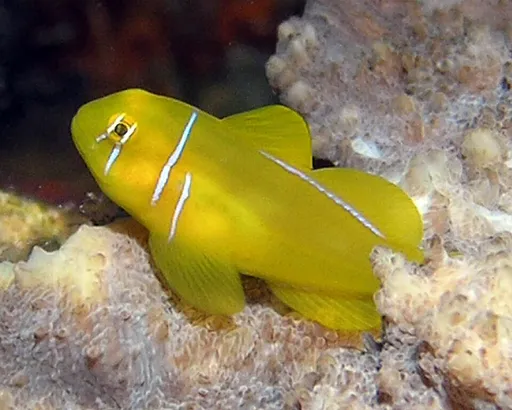
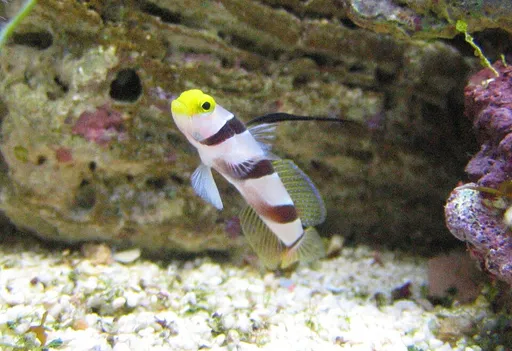
A member of the family Gobiidae, growing to around 6.5 cm, bright lemon yellow overall with a pair of thin blue lines running from the snout through the eye. Like its relatives it lacks a swim bladder and rests propped on fused pelvic fins. Its common name poison goby comes from the same bitter, toxic skin mucus that protects most Gobiodon species from predators. It is a protogynous hermaphrodite, and a paired fish can switch sex if its partner is lost.
Did you know
The bright yellow color and toxic mucus coating work well enough as a deterrent that citron clown gobies will often sit fully exposed on top of a coral head in broad daylight, a spot that would be a death sentence for most fish this size.
Symbiotic relationships
Clown gobies and their Acropora
Clown gobies spend their lives wedged in the branches of Acropora corals, eating the coral's mucus and the small animals that live on it. Their skin carries a toxin that puts off predators, so the coral becomes a safe house. The coral is paid back in a way nobody expected: when a toxic seaweed touches an Acropora, the coral releases a chemical signal within minutes, and the gobies swim out and trim the seaweed back. Corals with gobies lose far less tissue to seaweed than corals without them.
A clown goby wants a branching coral to sit in, and Acropora is the natural choice, though it will settle for other branching stony corals. It is tiny, peaceful and needs small food several times a day. The one caution is the coral itself: a pair may nip a patch of Acropora or Montipora bare to lay eggs on the skeleton, and a small colony can lose a branch that way. Keep one, or a pair, per tank; two males fight.
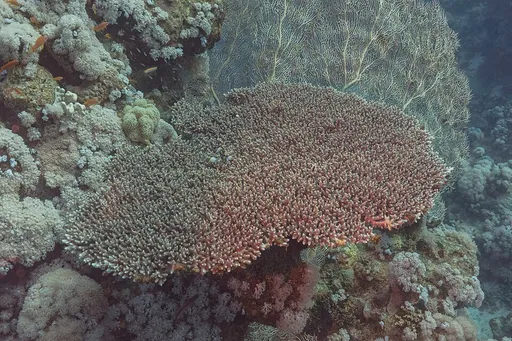
Table acropora
Acropora hyacinthus
Saltwater17.7 in (45 cm) · 53 gal (200 L)75–81°F (24–27°C)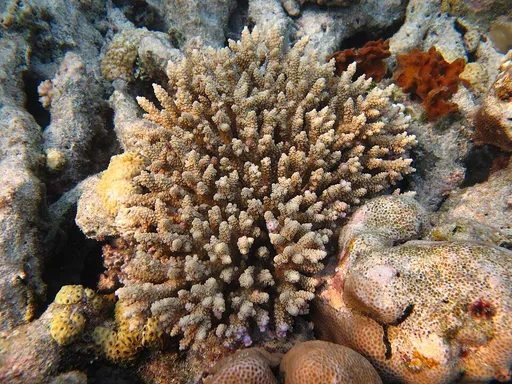
Smooth skin acropora
Acropora tenuis
Saltwater9.8 in (25 cm) · 40 gal (150 L)75–81°F (24–27°C)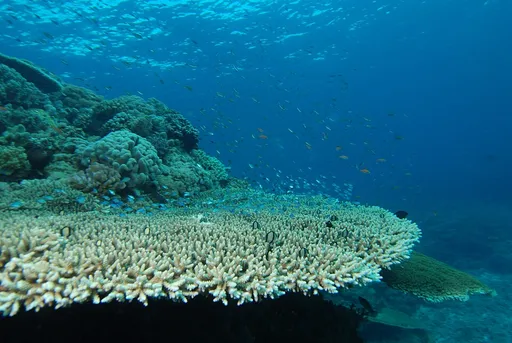
Staghorn acropora
Acropora
Saltwater9.8 in (25 cm) · 40 gal (150 L)75–81°F (24–27°C)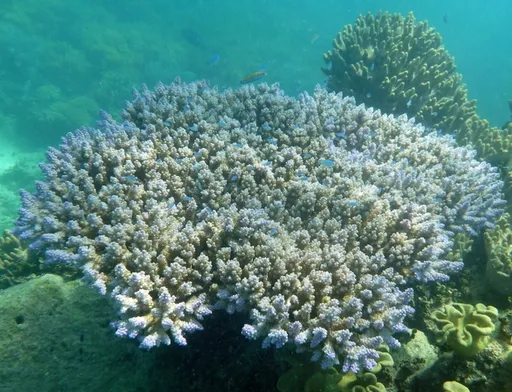
Tricolor acropora
Acropora valida
Saltwater9.8 in (25 cm) · 40 gal (150 L)75–81°F (24–27°C)
Weekly picks
Tank mates
Citron clown goby is a peaceful, social species that keeps to the bottom. These picks share a community profile with it, are safe together in both directions, and overlap on water type, temperature and pH.
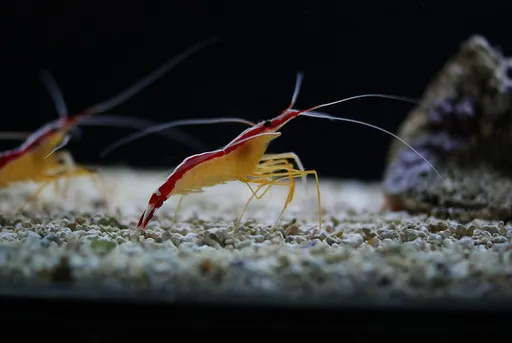
Skunk cleaner shrimp
Lysmata amboinensis
Saltwater2.4 in (6 cm) · 20 gal (75 L)73–81°F (23–27°C)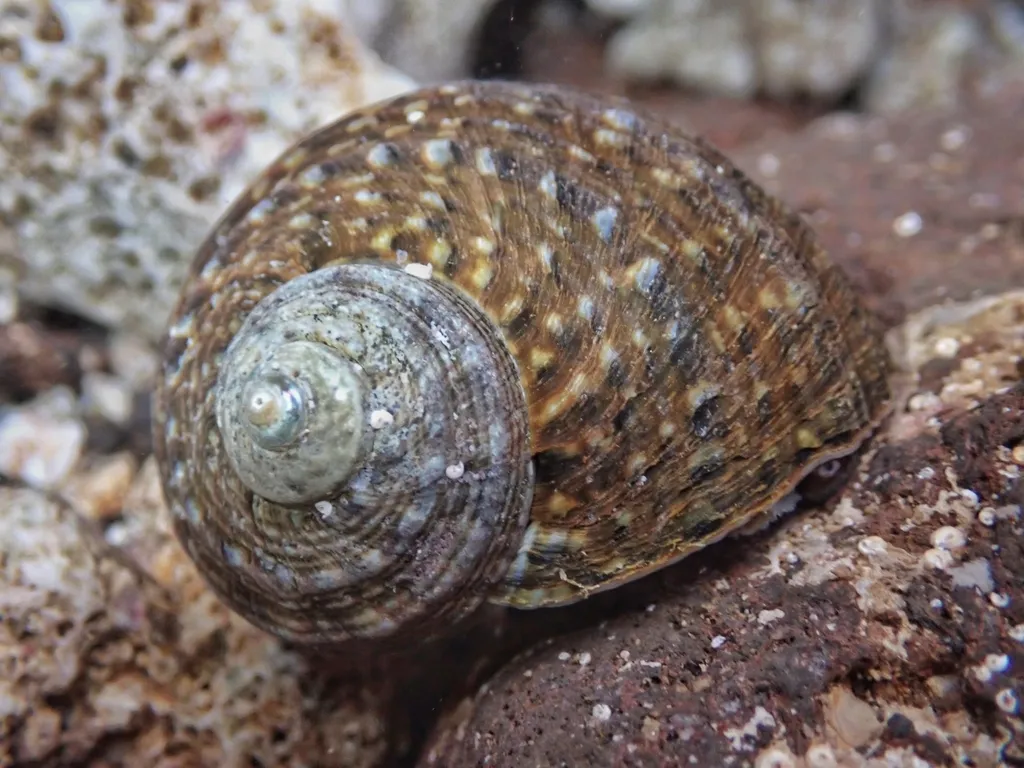
Mexican turbo snail
Turbo fluctuosus
Saltwater2.4 in (6 cm) · 11 gal (40 L)75–81°F (24–27°C)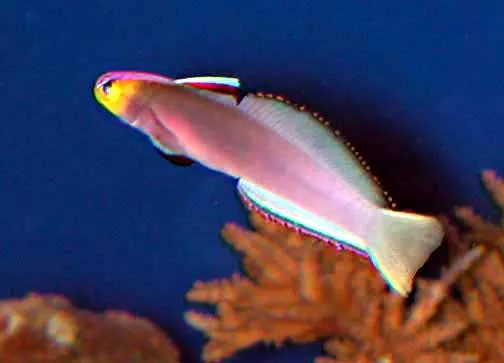
Helfrich's firefish
Nemateleotris helfrichi
Saltwater2.4 in (6 cm) · 20 gal (75 L)73–81°F (23–27°C)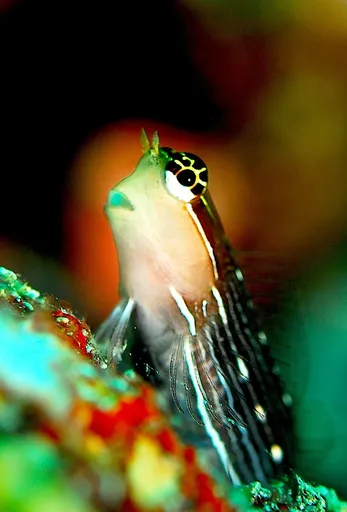
Pictus blenny
Ecsenius pictus
Saltwater2 in (5 cm) · 20 gal (75 L)73–81°F (23–27°C)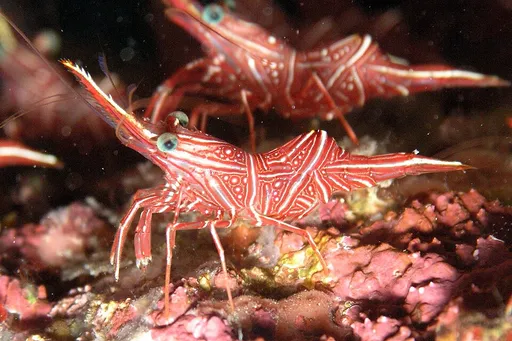
Camel / dancing shrimp
Rhynchocinetes durbanensis
Saltwater2 in (5 cm) · 16 gal (60 L)75–81°F (24–27°C)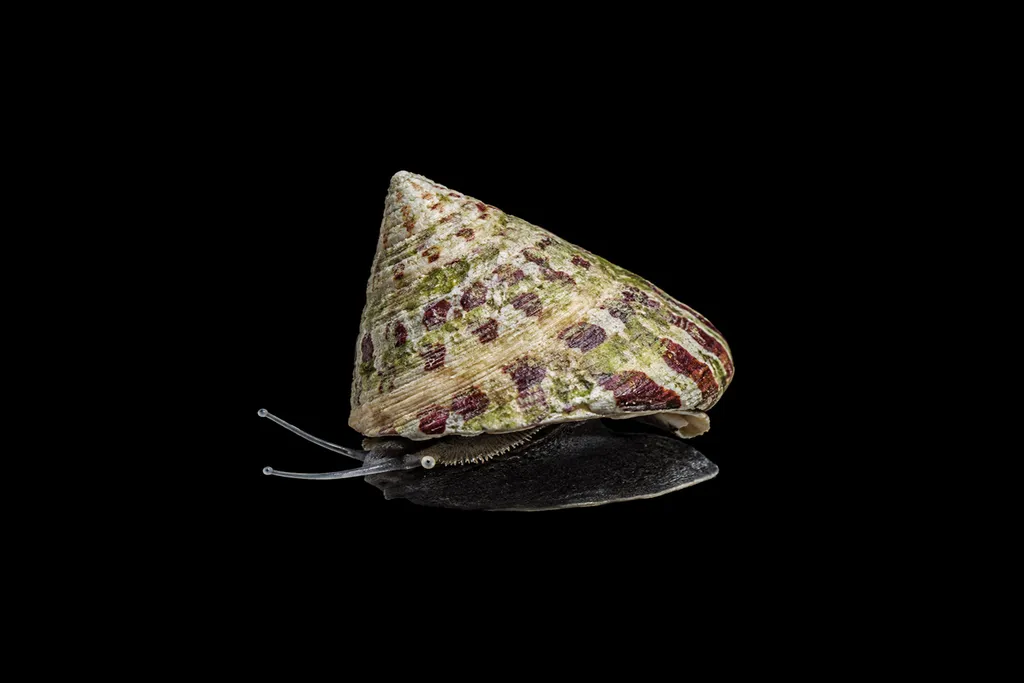
Trochus snail
Trochus sp.
Saltwater1.2 in (3 cm) · 11 gal (40 L)72–79°F (22–26°C)
Common questions
What size tank does a Citron clown goby need?
A Citron clown goby needs at least 11 gal (40 L). It spends most of its time in the bottom.
What temperature and pH does a Citron clown goby need?
A Citron clown goby is comfortable at 72–81°F (22–27°C) with a pH of 8.1–8.4.
How big does a Citron clown goby get?
An adult Citron clown goby reaches about 2.6 in (6.5 cm).
Related species
 1.8 in (4.5 cm)11 gal (40 L)72–79°F (22–26°C)
Green clown goby
Gobiodon histrio
1.8 in (4.5 cm) · 11 gal (40 L)
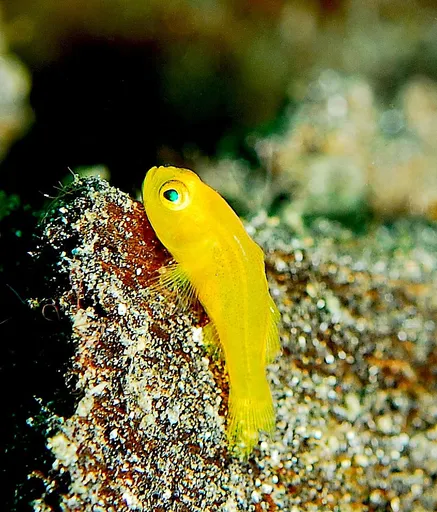 1.6 in (4 cm)11 gal (40 L)73–81°F (23–27°C)
Yellow clown goby
Gobiodon okinawae
1.6 in (4 cm) · 11 gal (40 L)
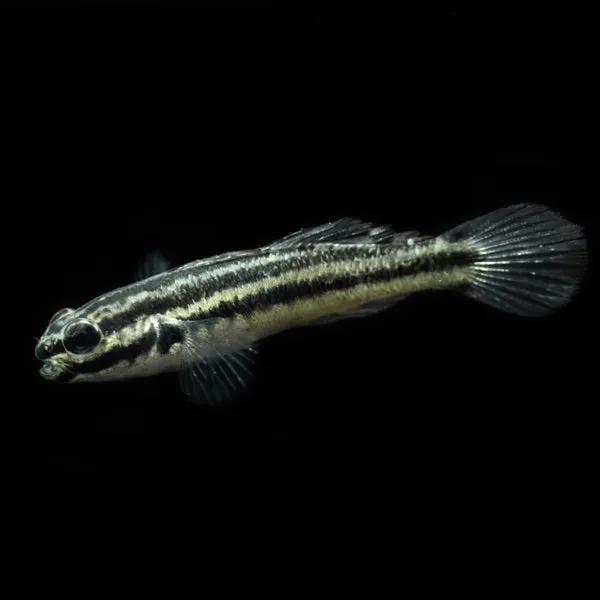 2.8 in (7 cm)20 gal (75 L)73–81°F (23–27°C)
Link's goby
Amblygobius linki
2.8 in (7 cm) · 20 gal (75 L)
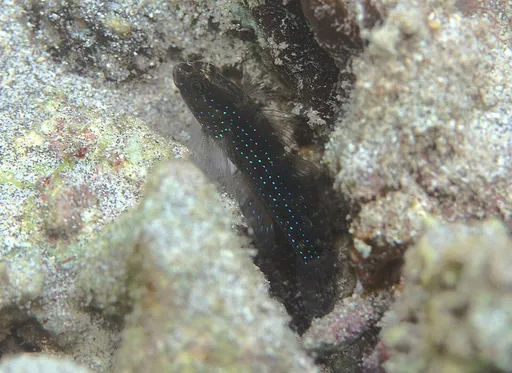 2.8 in (7 cm)13 gal (50 L)73–81°F (23–27°C)
Starry goby
Asterropteryx semipunctata
2.8 in (7 cm) · 13 gal (50 L)
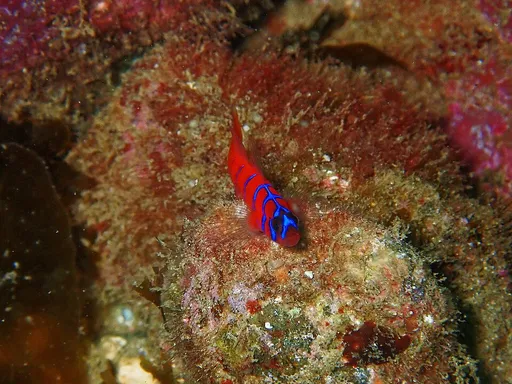 2.4 in (6 cm)11 gal (40 L)59–72°F (15–22°C)
Catalina goby
Lythrypnus dalli
2.4 in (6 cm) · 11 gal (40 L)
 2.4 in (6 cm)20 gal (75 L)72–81°F (22–27°C)
Hi-fin red banded goby
Stonogobiops nematodes
2.4 in (6 cm) · 20 gal (75 L)