Yellow clown goby
Gobiodon okinawae
Also known as Okinawa Goby, Yellow Coral Goby, Yellow Clown Fish Goby
SaltwaterFish
Care at a glance
- Temperature
- 73–81°F
- 23–27°C
- pH
- 8.1–8.4
- Adult size
- 1.6 in
- 4 cm
- Minimum tank
- 11 gal
- 40 L
- Temperament
- Peaceful
- Social behavior
- Social
- Swim level
- Bottom
- Difficulty
- Easy
- Breeding
- Medium
- Rarity
- Common
- Reef safe
- Reef safe with caution
- Family
- Gobiidae
- Origin
- Western Pacific (southern Japan to the Great Barrier Reef)
Overview
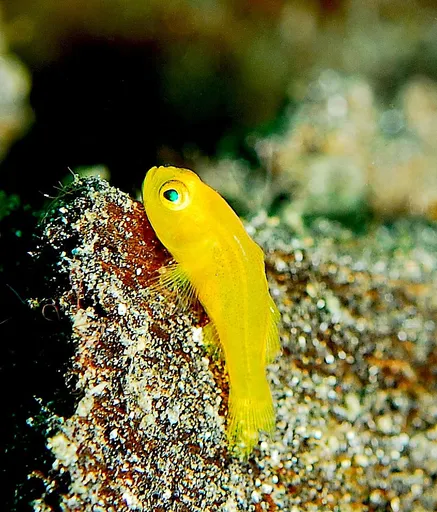
This one earns a reef safe caution rather than a clear yes. It will not eat corals as food, but it perches directly on SPS colonies and can nip small polyps, and its habit of laying eggs on Acropora branches can cause localized tissue recession. Keepers of prized SPS often see it as a risk, while it is essentially harmless in an LPS or soft coral tank that gives it fewer tempting branches. It is peaceful toward other fish but will scrap with its own kind, so keep one or a bonded pair. Feed small meaty foods and finely prepared fare.
In the wild
Unlike most gobies, the yellow clown goby does not sift sand or dig a burrow. In the wild it perches among the outer branches of Acropora and other branching stony corals in sheltered lagoons, usually in small groups. In the aquarium it will happily adopt an SPS colony or a branchy rock as its home base and dart out to grab passing food. It is tiny and undemanding, so a nano tank of around 40 liters is enough, ideally with branching structure to perch on.
Good to know
The species is a protogynous hermaphrodite, so a pair will sort out male and female roles among themselves. When breeding, the female lays eggs in bands wrapped around a coral branch and the male guards them until they hatch. Its main defense is a bitter, toxic skin mucus that makes it distasteful to predators, which is part of why such a small, slow fish can perch out in the open on a reef.
Did you know
Because it roosts in coral instead of the substrate, the yellow clown goby often sits right out in the open on top of a bright coral head, using its toxic slime coat rather than a hiding place to stay safe from would-be predators.
Symbiotic relationships
Clown gobies and their Acropora
Clown gobies spend their lives wedged in the branches of Acropora corals, eating the coral's mucus and the small animals that live on it. Their skin carries a toxin that puts off predators, so the coral becomes a safe house. The coral is paid back in a way nobody expected: when a toxic seaweed touches an Acropora, the coral releases a chemical signal within minutes, and the gobies swim out and trim the seaweed back. Corals with gobies lose far less tissue to seaweed than corals without them.
A clown goby wants a branching coral to sit in, and Acropora is the natural choice, though it will settle for other branching stony corals. It is tiny, peaceful and needs small food several times a day. The one caution is the coral itself: a pair may nip a patch of Acropora or Montipora bare to lay eggs on the skeleton, and a small colony can lose a branch that way. Keep one, or a pair, per tank; two males fight.
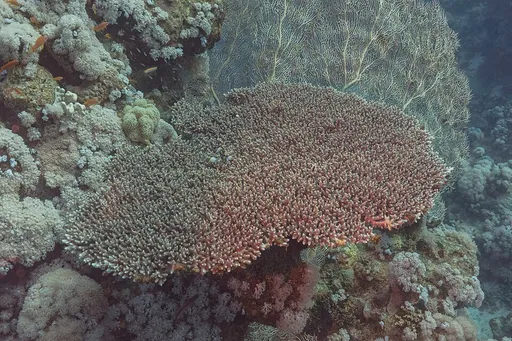
Table acropora
Acropora hyacinthus
Saltwater17.7 in (45 cm) · 53 gal (200 L)75–81°F (24–27°C)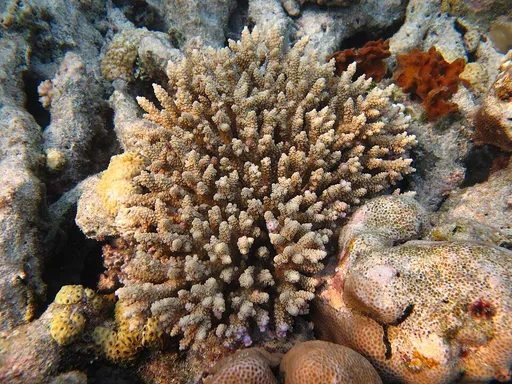
Smooth skin acropora
Acropora tenuis
Saltwater9.8 in (25 cm) · 40 gal (150 L)75–81°F (24–27°C)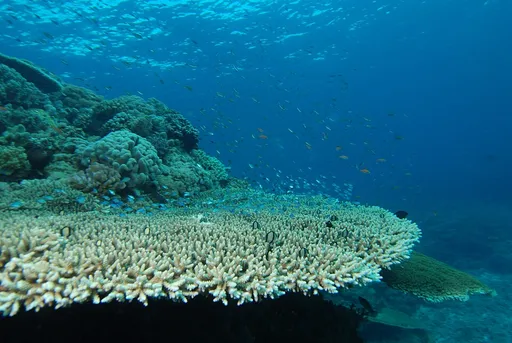
Staghorn acropora
Acropora
Saltwater9.8 in (25 cm) · 40 gal (150 L)75–81°F (24–27°C)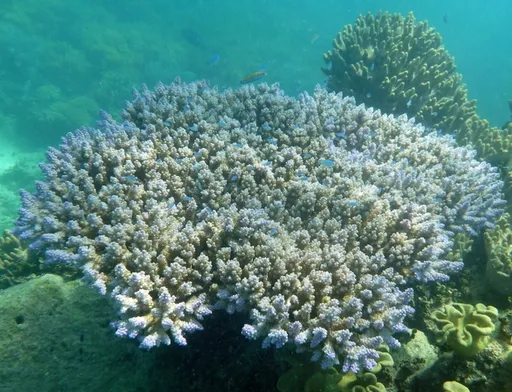
Tricolor acropora
Acropora valida
Saltwater9.8 in (25 cm) · 40 gal (150 L)75–81°F (24–27°C)
Weekly picks
Tank mates
Yellow clown goby is a peaceful, social species that keeps to the bottom. These picks share a community profile with it, are safe together in both directions, and overlap on water type, temperature and pH.
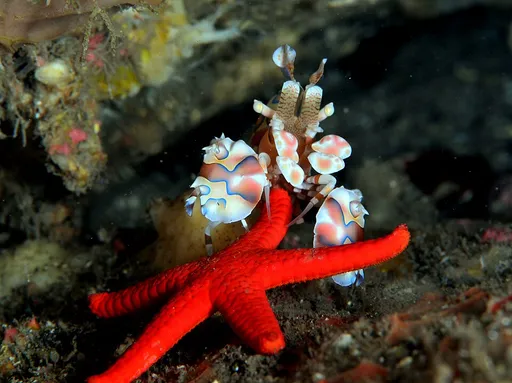
Harlequin shrimp
Hymenocera picta
Saltwater2 in (5 cm) · 11 gal (40 L)75–81°F (24–27°C)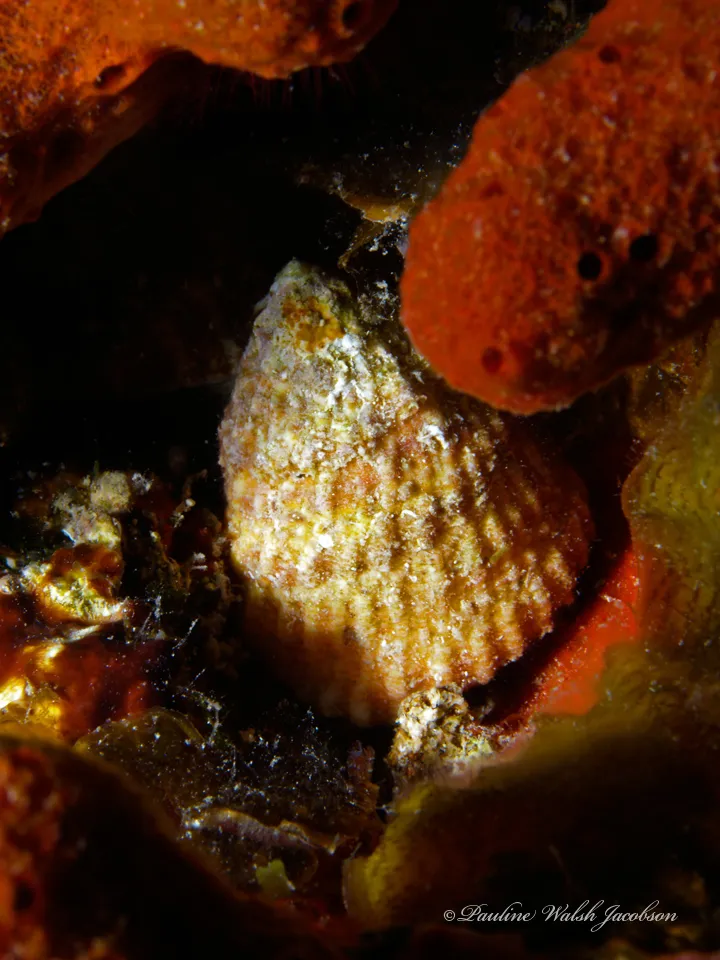
Astraea turbo snail
Astraea tecta
Saltwater1 in (2.5 cm) · 11 gal (40 L)72–79°F (22–26°C)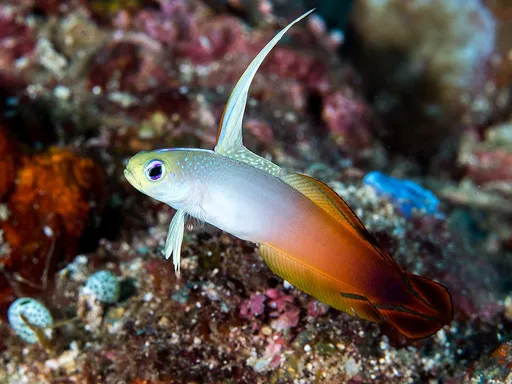
Firefish
Nemateleotris magnifica
Saltwater3.5 in (9 cm) · 20 gal (75 L)72–81°F (22–27°C)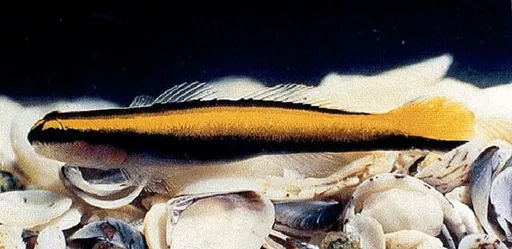
Barber goby
Elacatinus figaro
Saltwater1.6 in (4 cm) · 11 gal (40 L)72–79°F (22–26°C)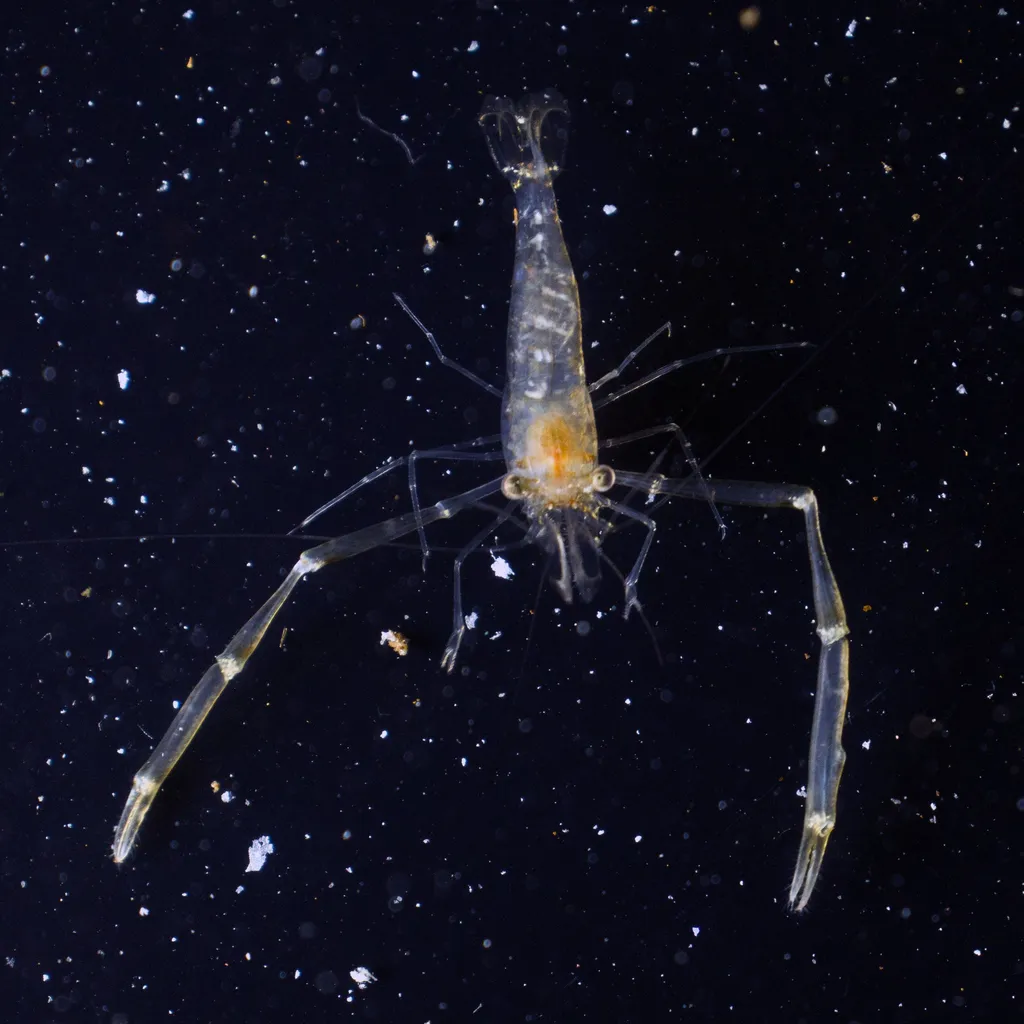
Long arm shrimp
Cuapetes sp.
Saltwater0.8 in (2 cm) · 5 gal (20 L)75–82°F (24–28°C)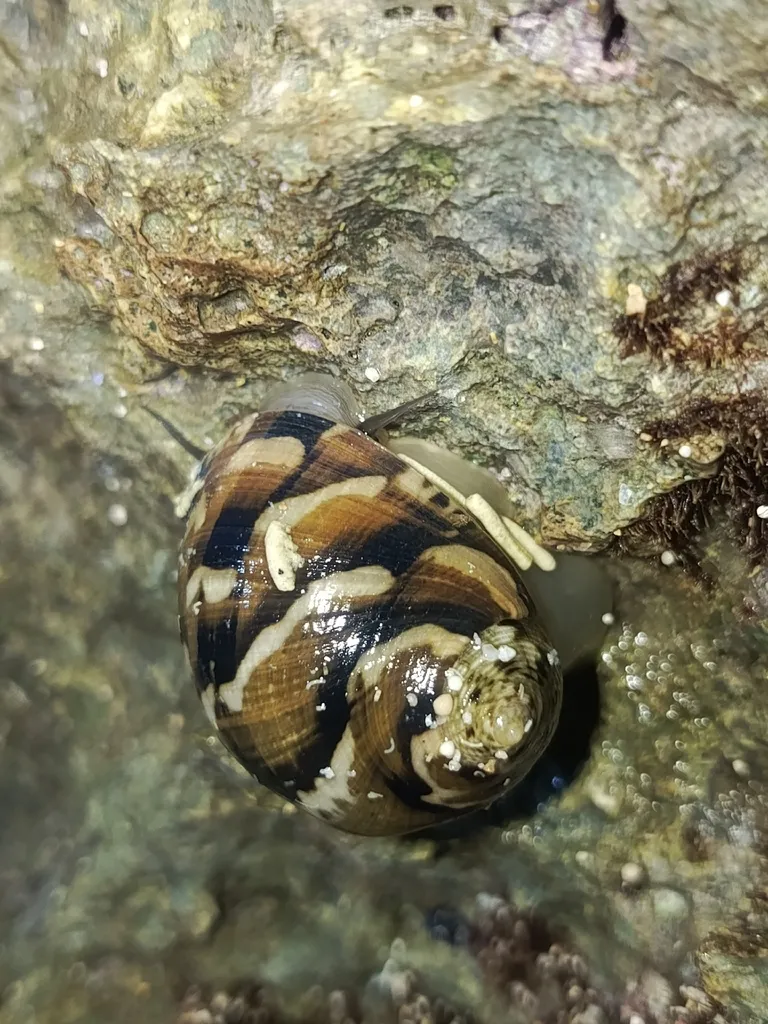
Marine nerite snail
Nerita sp.
Saltwater1 in (2.5 cm) · 11 gal (40 L)72–79°F (22–26°C)
Common questions
What size tank does a Yellow clown goby need?
A Yellow clown goby needs at least 11 gal (40 L). It spends most of its time in the bottom.
What temperature and pH does a Yellow clown goby need?
A Yellow clown goby is comfortable at 73–81°F (23–27°C) with a pH of 8.1–8.4.
How big does a Yellow clown goby get?
An adult Yellow clown goby reaches about 1.6 in (4 cm).
Related species
 1.8 in (4.5 cm)11 gal (40 L)72–79°F (22–26°C)
Green clown goby
Gobiodon histrio
1.8 in (4.5 cm) · 11 gal (40 L)
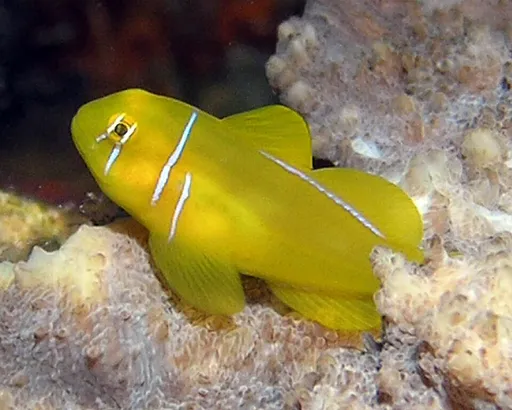 2.6 in (6.5 cm)11 gal (40 L)72–81°F (22–27°C)
Citron clown goby
Gobiodon citrinus
2.6 in (6.5 cm) · 11 gal (40 L)
- 1.6 in (4 cm)11 gal (40 L)72–79°F (22–26°C)
Barber goby
Elacatinus figaro
1.6 in (4 cm) · 11 gal (40 L)
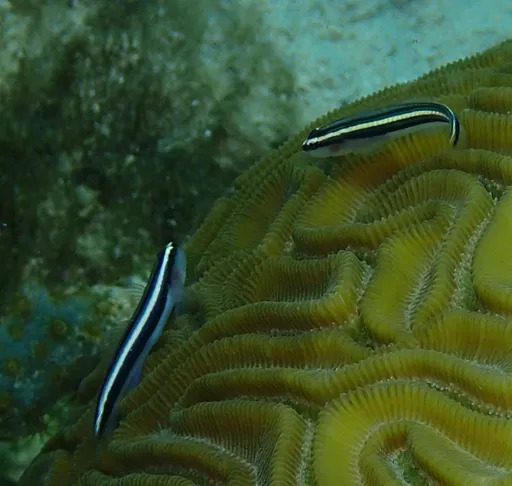 1.6 in (4 cm)11 gal (40 L)72–79°F (22–26°C)
Barsnout cleaner goby
Elacatinus illecebrosus
1.6 in (4 cm) · 11 gal (40 L)
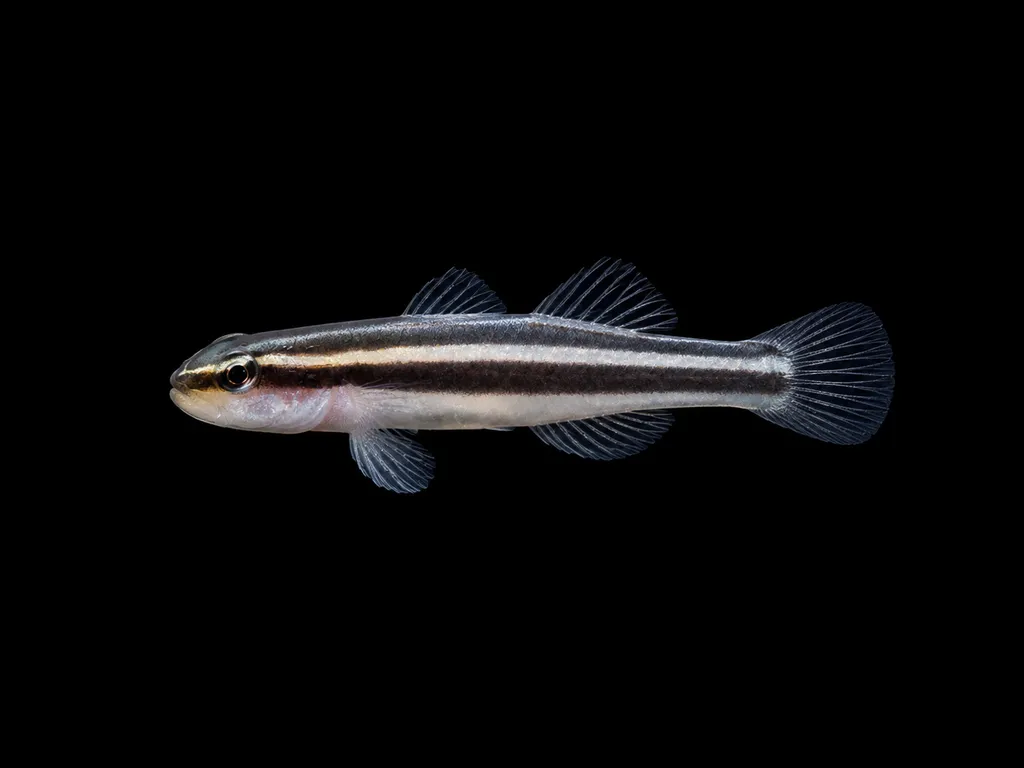 1.6 in (4 cm)11 gal (40 L)72–79°F (22–26°C)
Broadstripe cleaner goby
Elacatinus prochilos
1.6 in (4 cm) · 11 gal (40 L)
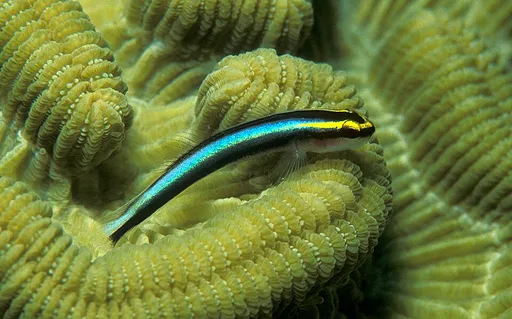 1.6 in (4 cm)13 gal (50 L)75–79°F (24–26°C)
Sharknose goby
Elacatinus evelynae
1.6 in (4 cm) · 13 gal (50 L)