Sharknose goby
Elacatinus evelynae
Also known as Caribbean Cleaner Goby, Cleaner Goby
SaltwaterFish
Care at a glance
- Temperature
- 75–79°F
- 24–26°C
- pH
- 8.1–8.4
- Adult size
- 1.6 in
- 4 cm
- Minimum tank
- 13 gal
- 50 L
- Temperament
- Peaceful
- Social behavior
- Social
- Swim level
- Bottom
- Difficulty
- Easy
- Breeding
- Medium
- Rarity
- Common
- Reef safe
- Reef safe
- Family
- Gobiidae
- Origin
- Western Atlantic and Caribbean, from the Bahamas and Lesser Antilles south to the northern coast of South America
Overview
Sharknose gobies are peaceful, shy, and reef safe, posing no threat to corals or invertebrates and rarely bothering other fish. They are territorial toward their own kind unless bonded as a proven pair, so add a single fish or a mated pair rather than unrelated individuals. In the tank they will often set up a cleaning station and service willing tankmates for bits of parasite and dead skin, though they should still be target fed small meaty foods like mysis, brine shrimp, and chopped seafood several times a day since they cannot live on cleaning alone. They are sensitive during shipping and acclimation, so a slow drip acclimation and a calm, established tank help them settle in.
In the wild
Found on Caribbean and western Atlantic reefs from the Bahamas and Lesser Antilles south to northern South America, where it sets up cleaning stations on coral heads and prominent rocks. In the aquarium it wants live rock offering open perches and small crevices, since it spends most of its time stationed in the open waiting for clients rather than swimming through the water column.
Good to know
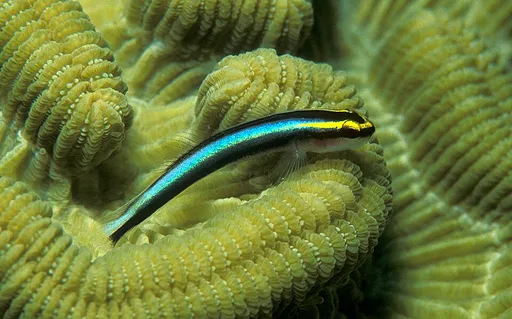
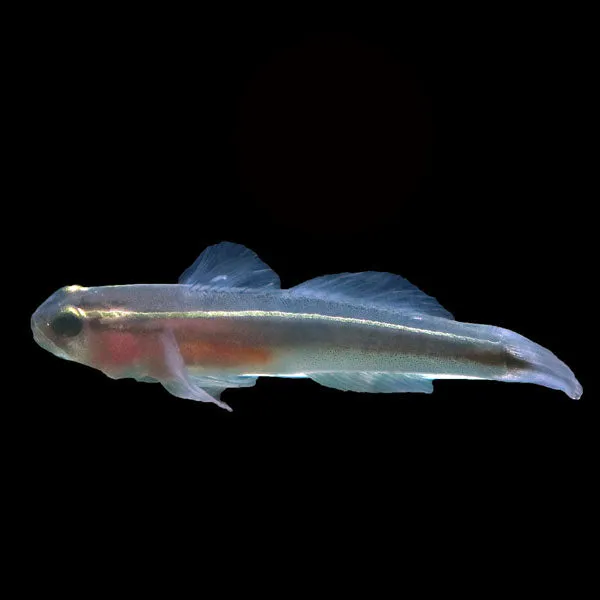
A tiny goby in the family Gobiidae, maxing out around 4 cm, with a bright yellow stripe running from the snout down the back that fades into an electric blue line along the body. It is a facultative cleaner fish, meaning it removes parasites and dead tissue from larger fish at a fixed station but does not depend on that behavior to survive, unlike obligate cleaners such as the bluestreak cleaner wrasse. That makes it far easier to keep well fed in an aquarium than true obligate cleaners.
Did you know
A sharknose goby's cleaning station works like a tiny car wash for reef fish. Regular clients learn the spot and hover in place with fins spread and gills flared to signal they are ready, letting the goby pick over their body, gills, and even inside their mouth without being eaten.
Symbiotic relationships
Cleaner shrimp, cleaner gobies and their clients
A cleaner holds a station on the reef and advertises it: cleaner shrimp wave their long white antennae and rock from side to side, cleaner wrasses swim a bobbing dance. Fish arrive and pose, head up or head down with fins spread, and hold still while the cleaner picks off parasitic isopods, dead skin and loose scales, working into the mouth and under the gill covers of fish that could swallow it in one bite. The client leaves with fewer parasites and the cleaner eats a meal it never had to hunt. Reef fish queue for it, and a busy station is visited hundreds of times a day.
The skunk cleaner shrimp is the one that does this reliably in an aquarium: it sets up on a rock ledge, and tank fish, tangs and wrasses especially, learn to stop by within days. The fire shrimp cleans too but hides more and works at dusk. Pederson's cleaner shrimp does the same job from the tentacles of its anemone. The neon goby and its relatives are small, hardy cleaners for tanks that cannot take a shrimp. The cleaner wrasses are the difficult ones: many never take prepared food, and both are marked difficult here. None of them will cure an outbreak of ich; they pick off some parasites and keep a healthy fish tidier, and that is the honest claim. Keep every cleaner away from predators such as large hawkfish, triggers, lionfish and big wrasses.
Weekly picks
Tank mates
Sharknose goby is a peaceful, social species that keeps to the bottom. These picks share a community profile with it, are safe together in both directions, and overlap on water type, temperature and pH.
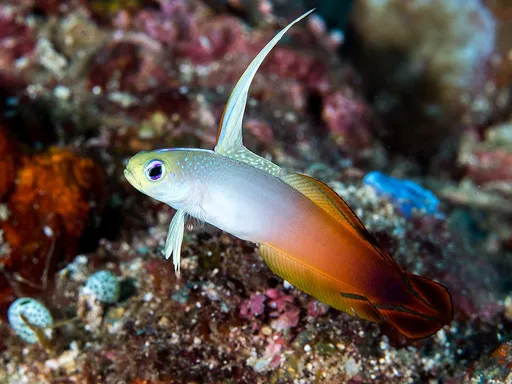
Firefish
Nemateleotris magnifica
Saltwater3.5 in (9 cm) · 20 gal (75 L)72–81°F (22–27°C)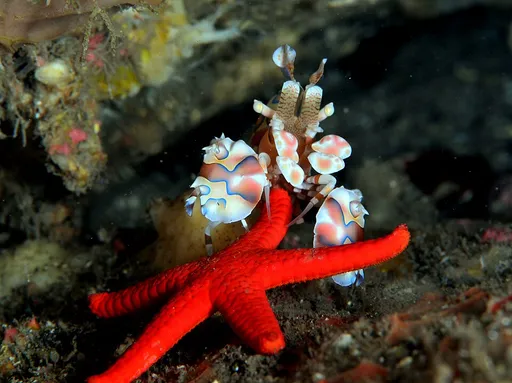
Harlequin shrimp
Hymenocera picta
Saltwater2 in (5 cm) · 11 gal (40 L)75–81°F (24–27°C)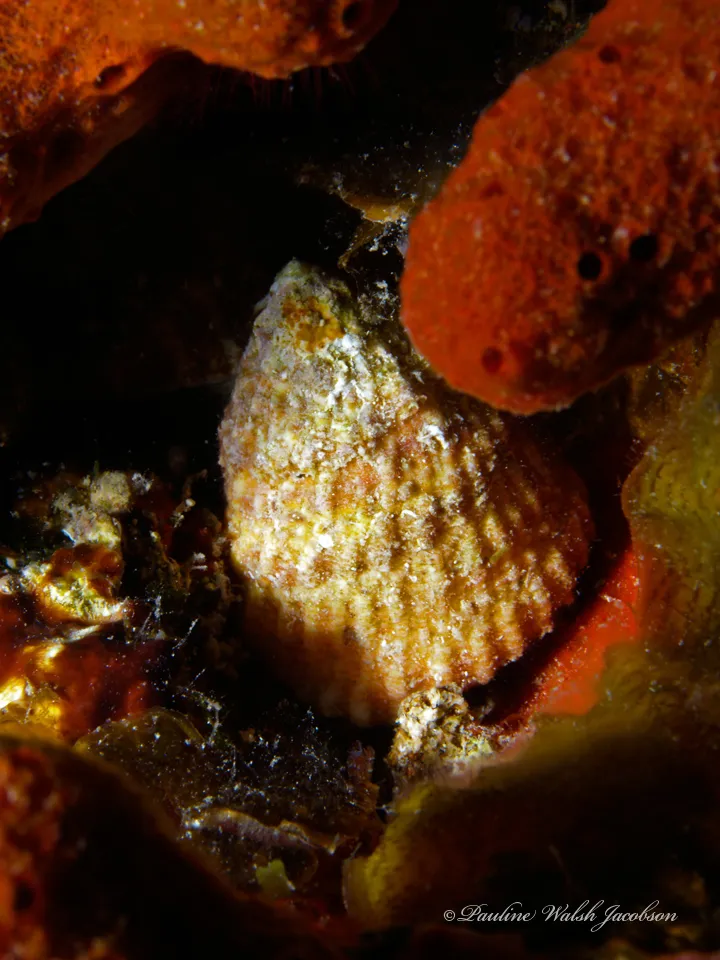
Astraea turbo snail
Astraea tecta
Saltwater1 in (2.5 cm) · 11 gal (40 L)72–79°F (22–26°C)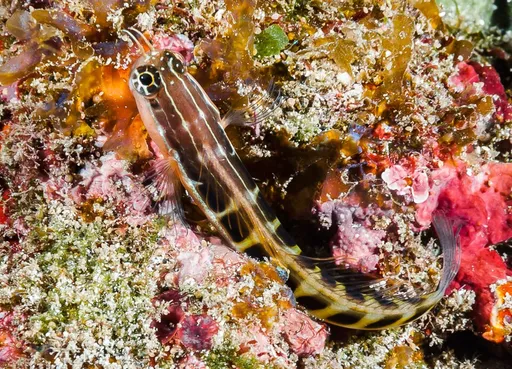
Lined blenny
Ecsenius lineatus
Saltwater3.5 in (9 cm) · 20 gal (75 L)72–79°F (22–26°C)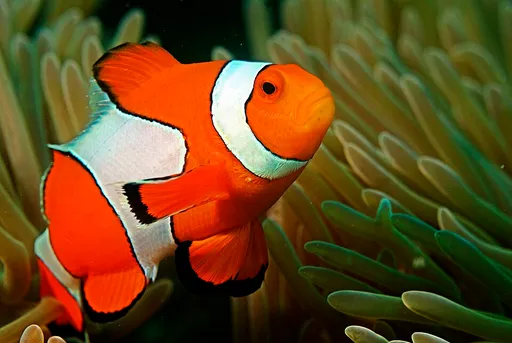
Ocellaris clownfish
Amphiprion ocellaris
Saltwater3.1 in (8 cm) · 20 gal (75 L)75–82°F (24–28°C)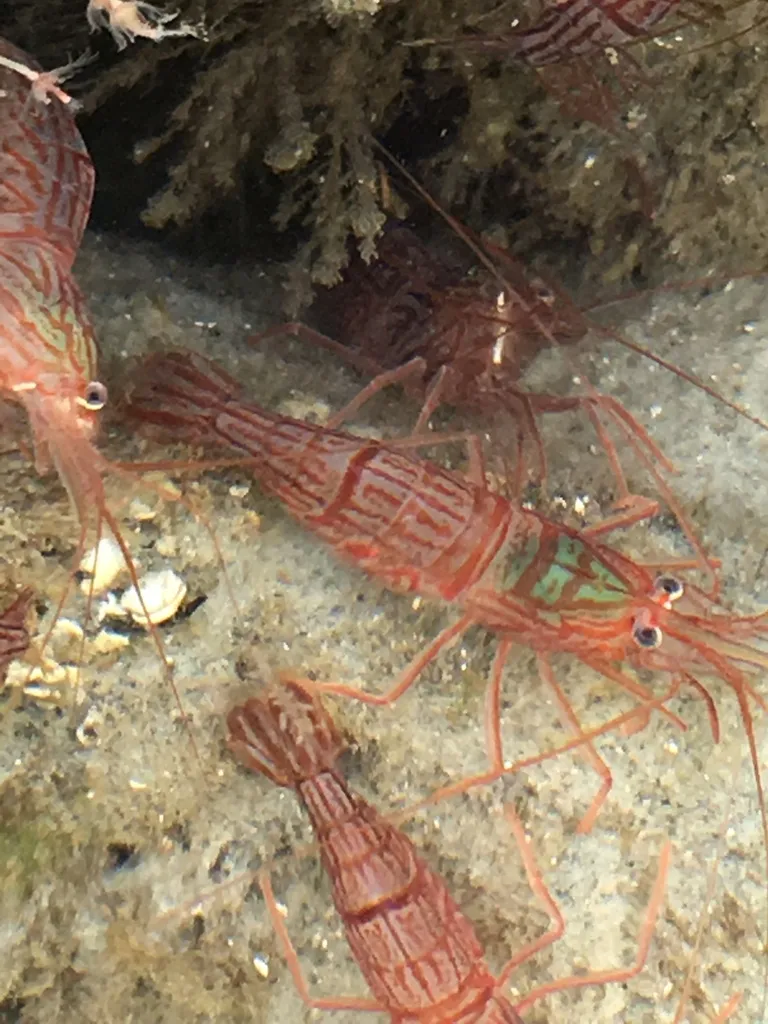
Peppermint shrimp
Lysmata wurdemanni
Saltwater2 in (5 cm) · 11 gal (40 L)72–81°F (22–27°C)
Common questions
What size tank does a Sharknose goby need?
A Sharknose goby needs at least 13 gal (50 L). It spends most of its time in the bottom.
What temperature and pH does a Sharknose goby need?
A Sharknose goby is comfortable at 75–79°F (24–26°C) with a pH of 8.1–8.4.
How big does a Sharknose goby get?
An adult Sharknose goby reaches about 1.6 in (4 cm).
Related species
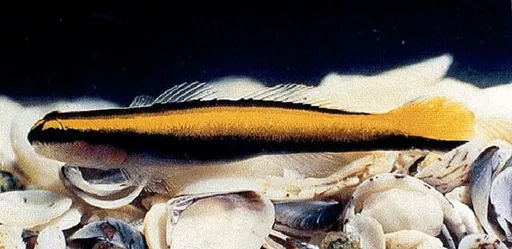 1.6 in (4 cm)11 gal (40 L)72–79°F (22–26°C)
Barber goby
Elacatinus figaro
1.6 in (4 cm) · 11 gal (40 L)
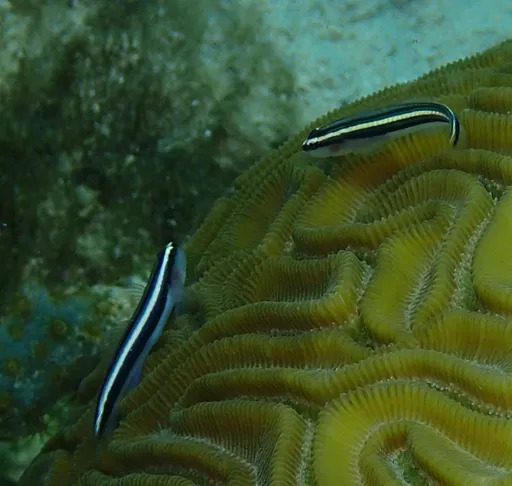 1.6 in (4 cm)11 gal (40 L)72–79°F (22–26°C)
Barsnout cleaner goby
Elacatinus illecebrosus
1.6 in (4 cm) · 11 gal (40 L)
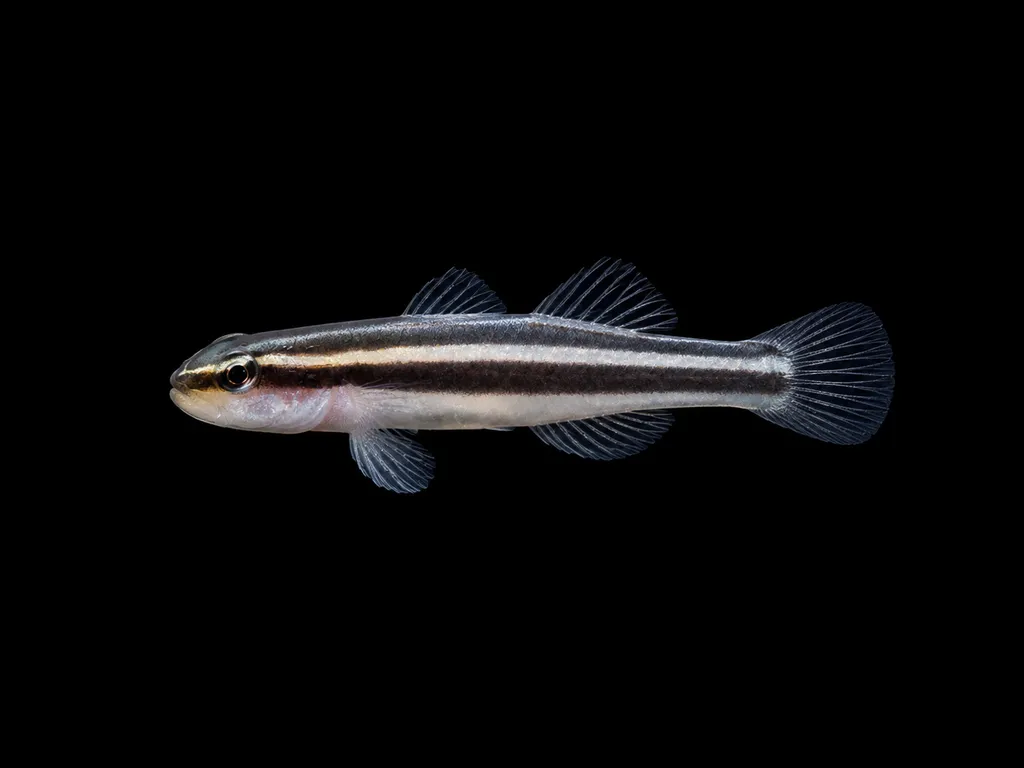 1.6 in (4 cm)11 gal (40 L)72–79°F (22–26°C)
Broadstripe cleaner goby
Elacatinus prochilos
1.6 in (4 cm) · 11 gal (40 L)
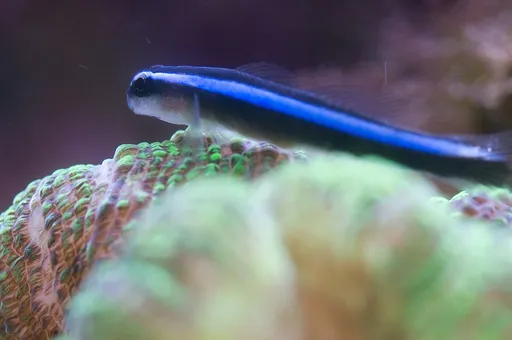 2 in (5 cm)11 gal (40 L)72–79°F (22–26°C)
Neon goby
Elacatinus oceanops
2 in (5 cm) · 11 gal (40 L)
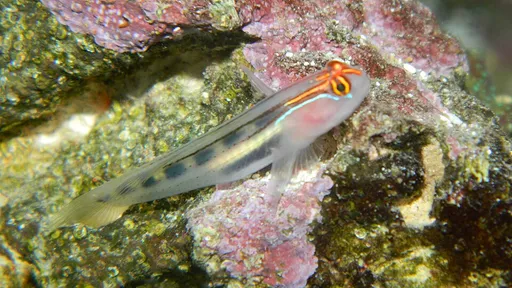 2 in (5 cm)11 gal (40 L)72–79°F (22–26°C)
Red head goby
Elacatinus puncticulatus
2 in (5 cm) · 11 gal (40 L)
 2 in (5 cm)11 gal (40 L)72–79°F (22–26°C)
Yellowline sponge goby
Elacatinus horsti
2 in (5 cm) · 11 gal (40 L)