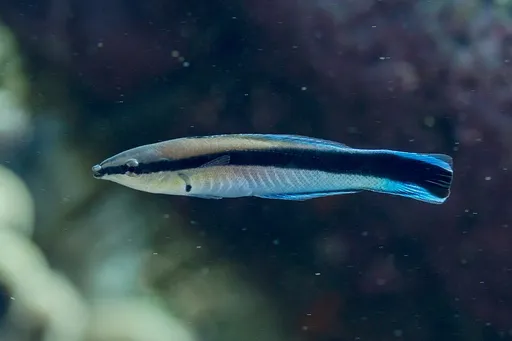
Bluestreak cleaner wrasse
Labroides dimidiatus
Also known as Cleaner Wrasse, Common Cleaner Wrasse, Bluestreak Cleaner Fish
SaltwaterFish
Care at a glance
- Temperature
- 75–81°F
- 24–27°C
- pH
- 8.1–8.4
- Adult size
- 4.3 in
- 11 cm
- Minimum tank
- 106 gal
- 400 L
- Temperament
- Peaceful
- Social behavior
- Social
- Tankmates
- With caution
- Swim level
- Middle
- Difficulty
- Difficult
- Breeding
- Hard
- Rarity
- Common
- Reef safe
- Reef safe
- Family
- Labridae
- Origin
- Indo-Pacific and Red Sea
Overview
Very peaceful and tolerated even by aggressive fish because it is recognized as a cleaner. It is completely reef safe with corals and inverts. The problem is diet: it is specialized on parasites and fish mucus, has a high metabolism, and frequently refuses prepared food, so it has a poor survival record in captivity and often slowly starves. Best left on the reef unless you have a very large, heavily stocked mature system and a specimen already eating frozen food. Not a beginner fish.
In the wild
Ranges from East Africa and the Red Sea to French Polynesia on coral reefs, where it sets up cleaning stations that other fish visit to have parasites and dead tissue picked off. It needs an established reef with a lot of live rock and, critically, a large well-stocked fish community that gives it something to clean.
Good to know
A Labridae cleaner wrasse in the genus Labroides. It lives in a mutualistic relationship, eating ectoparasites, mucus, dead scales and dead tissue off other fish, and its cleaning behavior gives real health benefits to reef fish populations. It is a protogynous hermaphrodite that lives in harems where a dominant male controls a group of females.
Did you know
It performs a bobbing dance to advertise its cleaning services and is trusted enough to swim inside the mouths and gills of predators many times its size, safely picking off parasites without being eaten.
Symbiotic relationships
Cleaner shrimp, cleaner gobies and their clients
A cleaner holds a station on the reef and advertises it: cleaner shrimp wave their long white antennae and rock from side to side, cleaner wrasses swim a bobbing dance. Fish arrive and pose, head up or head down with fins spread, and hold still while the cleaner picks off parasitic isopods, dead skin and loose scales, working into the mouth and under the gill covers of fish that could swallow it in one bite. The client leaves with fewer parasites and the cleaner eats a meal it never had to hunt. Reef fish queue for it, and a busy station is visited hundreds of times a day.
The skunk cleaner shrimp is the one that does this reliably in an aquarium: it sets up on a rock ledge, and tank fish, tangs and wrasses especially, learn to stop by within days. The fire shrimp cleans too but hides more and works at dusk. Pederson's cleaner shrimp does the same job from the tentacles of its anemone. The neon goby and its relatives are small, hardy cleaners for tanks that cannot take a shrimp. The cleaner wrasses are the difficult ones: many never take prepared food, and both are marked difficult here. None of them will cure an outbreak of ich; they pick off some parasites and keep a healthy fish tidier, and that is the honest claim. Keep every cleaner away from predators such as large hawkfish, triggers, lionfish and big wrasses.
Common questions
What size tank does a Bluestreak cleaner wrasse need?
A Bluestreak cleaner wrasse needs at least 106 gal (400 L). It spends most of its time in the middle.
What temperature and pH does a Bluestreak cleaner wrasse need?
A Bluestreak cleaner wrasse is comfortable at 75–81°F (24–27°C) with a pH of 8.1–8.4.
How big does a Bluestreak cleaner wrasse get?
An adult Bluestreak cleaner wrasse reaches about 4.3 in (11 cm).
Related species
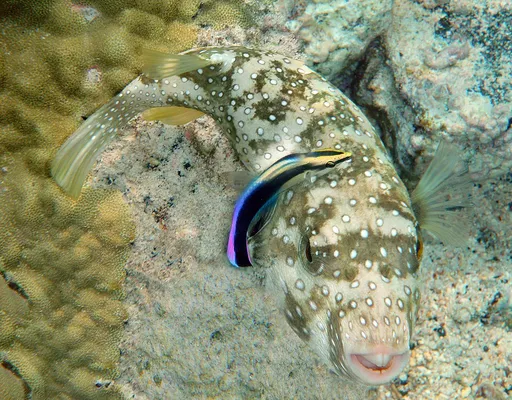 3.9 in (10 cm)70 gal (265 L)75–81°F (24–27°C)
Hawaiian cleaner wrasse
Labroides phthirophagus
3.9 in (10 cm) · 70 gal (265 L)
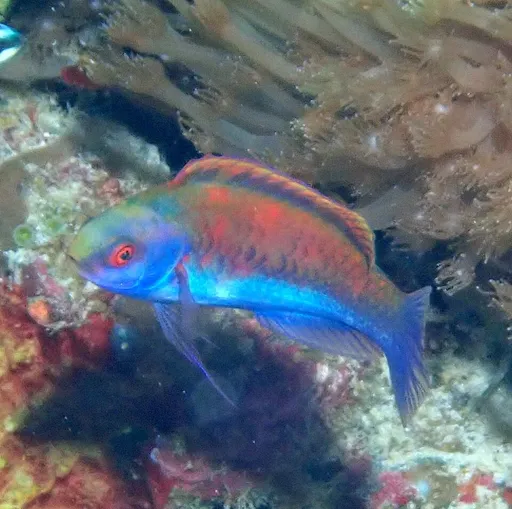 4.3 in (11 cm)90 gal (340 L)72–79°F (22–26°C)
Solar fairy wrasse
Cirrhilabrus solorensis
4.3 in (11 cm) · 90 gal (340 L)
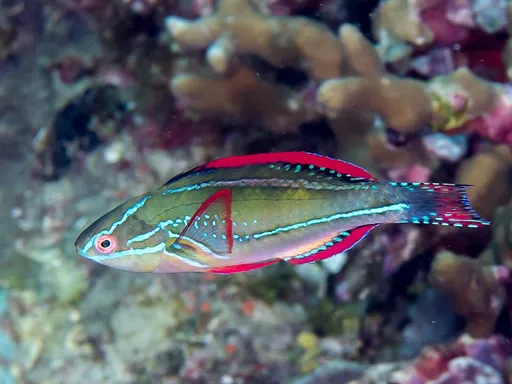 4.7 in (12 cm)90 gal (340 L)72–79°F (22–26°C)
Exquisite fairy wrasse
Cirrhilabrus exquisitus
4.7 in (12 cm) · 90 gal (340 L)
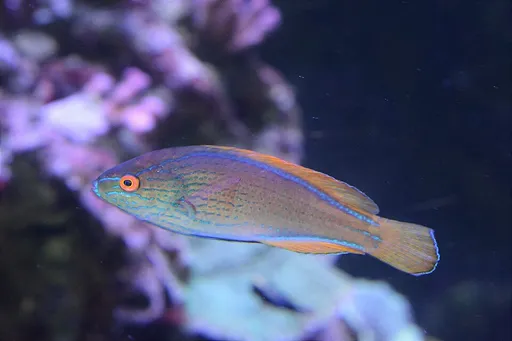 4.7 in (12 cm)90 gal (340 L)73–81°F (23–27°C)
Lineatus fairy wrasse
Cirrhilabrus lineatus
4.7 in (12 cm) · 90 gal (340 L)
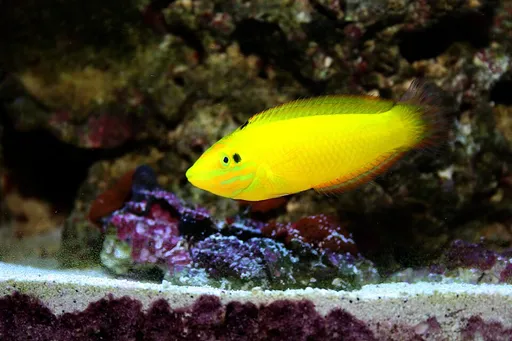 4.7 in (12 cm)40 gal (150 L)73–81°F (23–27°C)
Yellow coris wrasse
Halichoeres chrysus
4.7 in (12 cm) · 40 gal (150 L)
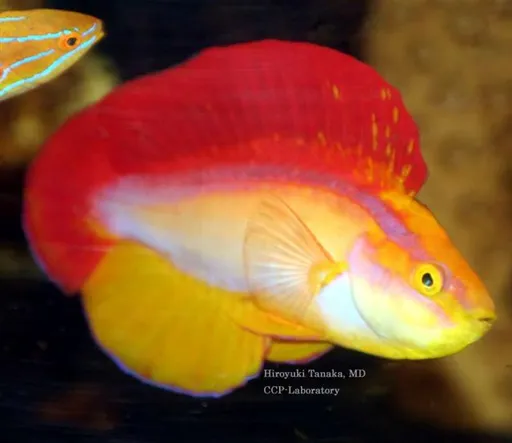 3.9 in (10 cm)90 gal (340 L)72–79°F (22–26°C)
Flame fairy wrasse
Cirrhilabrus jordani
3.9 in (10 cm) · 90 gal (340 L)