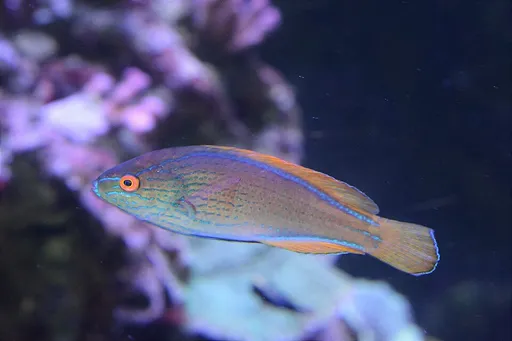
Yellow coris wrasse
Halichoeres chrysus
Also known as Yellow Wrasse, Canary Wrasse, Golden Rainbowfish, Coris Yellow Wrasse
SaltwaterFish
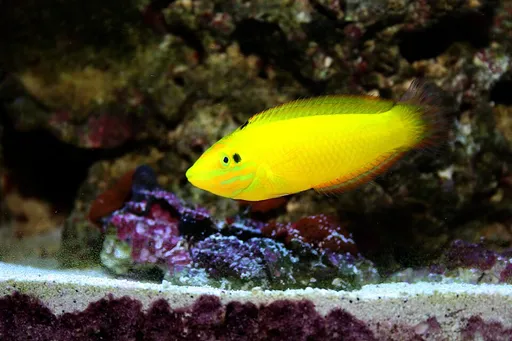
Care at a glance
- Temperature
- 73–81°F
- 23–27°C
- pH
- 8.1–8.4
- Adult size
- 4.7 in
- 12 cm
- Minimum tank
- 40 gal
- 150 L
- Temperament
- Peaceful
- Social behavior
- Solitary
- Swim level
- Middle
- Difficulty
- Easy
- Breeding
- Hard
- Rarity
- Common
- Reef safe
- Reef safe with caution
- Family
- Labridae
- Origin
- Indo-Pacific
Overview
Peaceful and one of the easier reef wrasses, mixing well with most community fish. It is reef safe with caution: it will not bother corals but it hunts and eats bristle worms, spaghetti worms, feather dusters and other small polychaetes, and may go after tiny ornamental shrimp or snails. It needs a deep fine sand bed to burrow into and a tight lid because it jumps when startled. A useful natural control for pyramidellid snails and flatworms.
In the wild
Found in the tropical Indo-Pacific over sand and rubble at the base of reefs. It is a Halichoeres wrasse that dives into the sand to sleep and to escape danger, so a fine-grained sand bed of at least 5 to 8 cm is a survival requirement, not a preference. It patrols the whole length of the tank all day looking for food among the rock and sand.
Good to know
A member of the family Labridae, genus Halichoeres. Like most wrasses it is a protogynous hermaphrodite, able to change from female to male, and it buries itself in sand at night rather than making a mucus cocoon. It is a diurnal hunter of small benthic invertebrates.
Did you know
Many reefers add a yellow coris wrasse specifically as pest control, because its constant hunting of the rockwork helps knock back nuisance flatworms and the pyramidellid snails that prey on clams.
Weekly picks
Tank mates
Yellow coris wrasse is a peaceful, solitary species that keeps to the middle. These picks share a community profile with it, are safe together in both directions, and overlap on water type, temperature and pH.
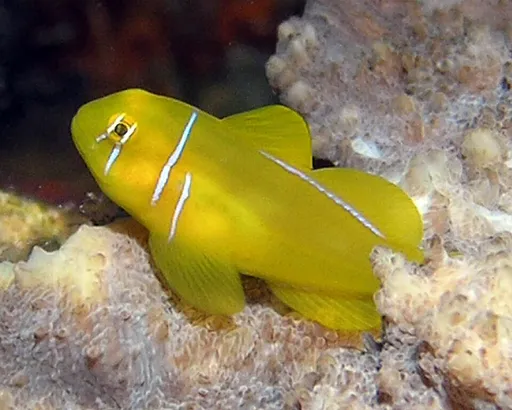
Citron clown goby
Gobiodon citrinus
Saltwater2.6 in (6.5 cm) · 11 gal (40 L)72–81°F (22–27°C)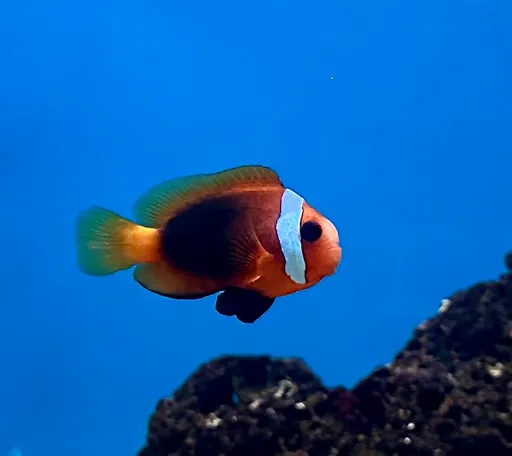
Cinnamon clownfish
Amphiprion melanopus
Saltwater4.7 in (12 cm) · 30 gal (115 L)75–82°F (24–28°C)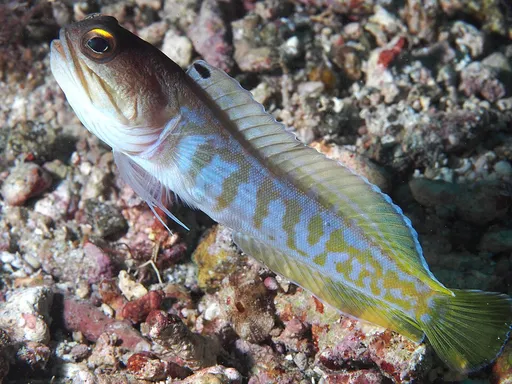
Gold-specs jawfish
Opistognathus randalli
Saltwater3.9 in (10 cm) · 30 gal (115 L)73–81°F (23–27°C)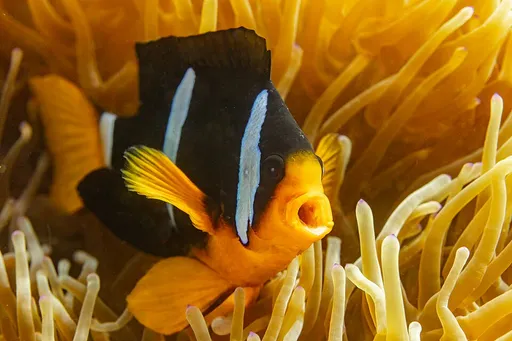
Clark's clownfish
Amphiprion clarkii
Saltwater5.5 in (14 cm) · 30 gal (115 L)75–82°F (24–28°C)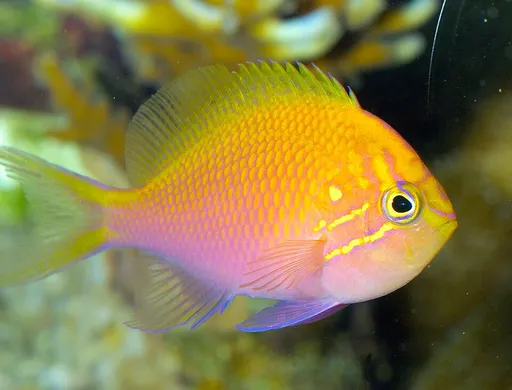
Sunburst anthias
Serranocirrhitus latus
Saltwater5.1 in (13 cm) · 70 gal (265 L)72–81°F (22–27°C)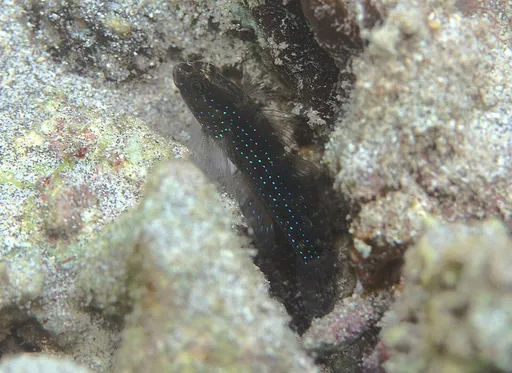
Starry goby
Asterropteryx semipunctata
Saltwater2.8 in (7 cm) · 13 gal (50 L)73–81°F (23–27°C)
Common questions
What size tank does a Yellow coris wrasse need?
A Yellow coris wrasse needs at least 40 gal (150 L). It spends most of its time in the middle.
What temperature and pH does a Yellow coris wrasse need?
A Yellow coris wrasse is comfortable at 73–81°F (23–27°C) with a pH of 8.1–8.4.
How big does a Yellow coris wrasse get?
An adult Yellow coris wrasse reaches about 4.7 in (12 cm).
Related species
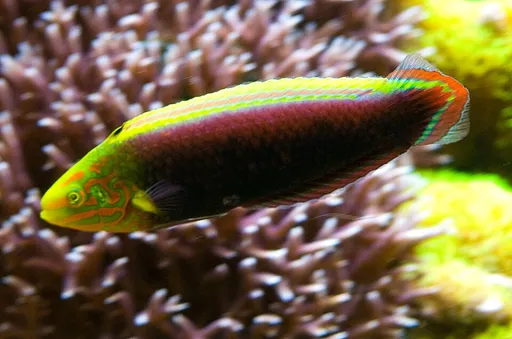 4.5 in (11.5 cm)75 gal (284 L)72–79°F (22–26°C)
Radiant wrasse
Halichoeres iridis
4.5 in (11.5 cm) · 75 gal (284 L)
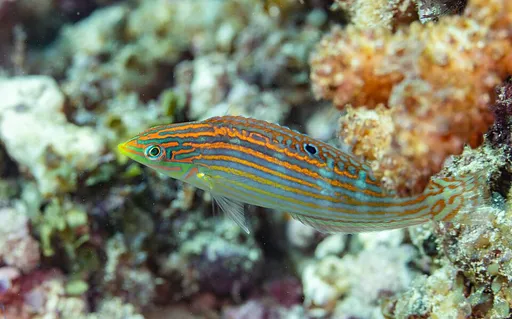 5.1 in (13 cm)50 gal (190 L)73–81°F (23–27°C)
Adorned wrasse
Halichoeres cosmetus
5.1 in (13 cm) · 50 gal (190 L)
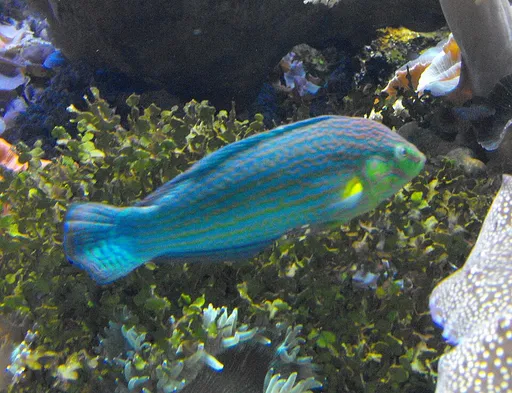 5.5 in (14 cm)100 gal (380 L)72–79°F (22–26°C)
Melanurus wrasse
Halichoeres melanurus
5.5 in (14 cm) · 100 gal (380 L)
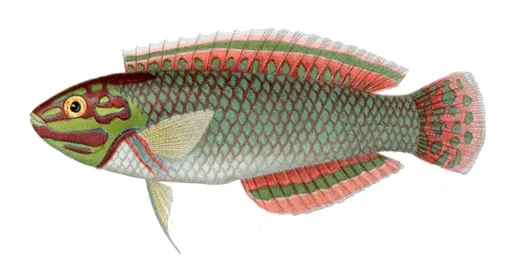 5.9 in (15 cm)70 gal (265 L)72–79°F (22–26°C)
Christmas wrasse
Halichoeres ornatissimus
5.9 in (15 cm) · 70 gal (265 L)
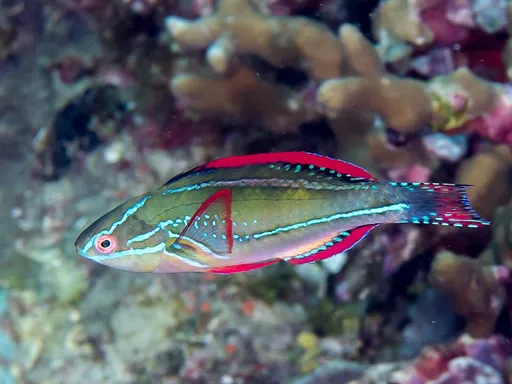 4.7 in (12 cm)90 gal (340 L)72–79°F (22–26°C)
Exquisite fairy wrasse
Cirrhilabrus exquisitus
4.7 in (12 cm) · 90 gal (340 L)
 4.7 in (12 cm)90 gal (340 L)73–81°F (23–27°C)
Lineatus fairy wrasse
Cirrhilabrus lineatus
4.7 in (12 cm) · 90 gal (340 L)