Christmas wrasse
Halichoeres ornatissimus
Also known as Ornate Wrasse, Ornamented Wrasse, Hawaiian Christmas Wrasse
SaltwaterFish
Care at a glance
- Temperature
- 72–79°F
- 22–26°C
- pH
- 8.1–8.4
- Adult size
- 5.9 in
- 15 cm
- Minimum tank
- 70 gal
- 265 L
- Temperament
- Mostly peaceful
- Social behavior
- Solitary
- Tankmates
- With caution
- Swim level
- Bottom
- Diet
- Carnivore
- Difficulty
- Easy
- Breeding
- No record
- Rarity
- Common
- Reef safe
- Reef safe
- Family
- Labridae
- Origin
- Indo-Pacific reefs, from the Cocos and Christmas Islands to Hawaii and the Tuamotu Islands, north to southern Japan, south to the Great Barrier Reef
Overview
The Christmas wrasse is one of the hardier, more adaptable Halichoeres wrasses, suited to a reef tank with open sand. It is easy to keep.
Did you know
The name Christmas wrasse gets used loosely in the aquarium trade. Hawaii's dive and fish community applies it to this species, but a few other brightly colored Indo-Pacific wrasses share the nickname elsewhere. The scientific name Halichoeres ornatissimus is the only sure way to know which fish is being sold.
Caring for the Christmas wrasse
Give a Christmas wrasse at least 70 gal (265 L), with open sand at least 5 to 7.5 cm deep. It buries itself in the sand to sleep at night and to escape anything that startles it during the day. Fit a tight lid, since it can find any gap and jump.
Keep the water at 72 to 79°F (22 to 26°C) with a pH of 8.1 to 8.4. Feed a varied diet of mysis, brine shrimp and other small meaty foods a few times a day.
The Christmas wrasse is generally peaceful with other fish, but noticeably more assertive toward other wrasses than most of its relatives. If you mix wrasses, add the more timid species first. It is reef safe and hunts fireworms and pyramidellid snails that prey on corals and clams. It cannot tell a pest snail from an ornamental one, and it may pick off small hermit crabs and shrimp along the way.
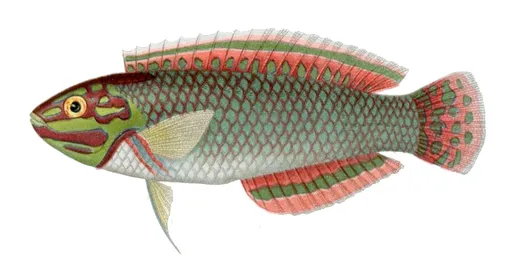
Terminal phase males have a green body crossed with broken red stripes and a pale belly. They also carry a black spot in the middle of the dorsal fin. Females have red-edged green scales along the upper body and a green stripe from the eye to the base of the tail.
Good to know
Halichoeres ornatissimus is a protogynous hermaphrodite in the wrasse family Labridae. Juveniles are black with yellow stripes and two blue-centered eyespots on the dorsal fin. It also goes by ornate wrasse and ornamented wrasse.
In the wild
The Christmas wrasse lives on reef flats and slopes across much of the Indo-Pacific, typically at 10 to 40 m. Its range runs from the Cocos and Christmas Islands to Hawaii and the Tuamotu Islands. It reaches north to southern Japan and south to the Great Barrier Reef.
Common questions
What size tank does a Christmas wrasse need?
A Christmas wrasse needs at least 70 gal (265 L). It spends most of its time in the bottom.
What temperature and pH does a Christmas wrasse need?
A Christmas wrasse is comfortable at 72–79°F (22–26°C) with a pH of 8.1–8.4.
What does a Christmas wrasse eat?
A Christmas wrasse eats a varied diet of mysis, brine shrimp and other small meaty foods, fed a few times a day. It also hunts fireworms and pyramidellid snails, and may pick off small hermit crabs and shrimp.
How big does a Christmas wrasse get?
An adult Christmas wrasse reaches about 5.9 in (15 cm).
How can you tell a male Christmas wrasse from a female?
Males in terminal phase have a green body crossed with broken red stripes, a pale belly and a black spot on the dorsal fin. Females have red-edged green scales along the upper body and a green stripe from eye to tail.
Related species
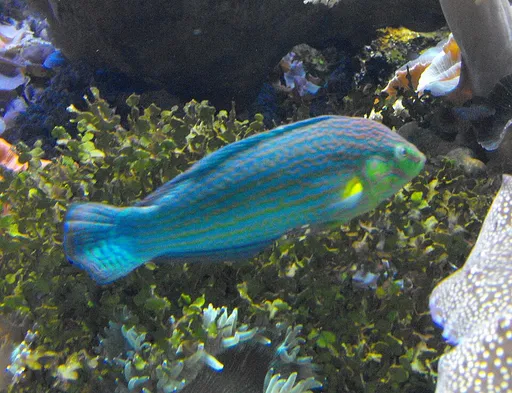 5.5 in (14 cm)100 gal (380 L)72–79°F (22–26°C)
Melanurus wrasse
Halichoeres melanurus
5.5 in (14 cm) · 100 gal (380 L)
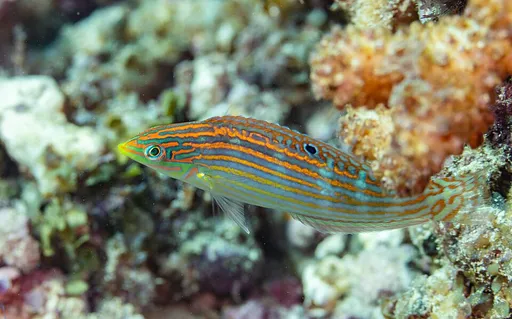 5.1 in (13 cm)50 gal (190 L)73–81°F (23–27°C)
Adorned wrasse
Halichoeres cosmetus
5.1 in (13 cm) · 50 gal (190 L)
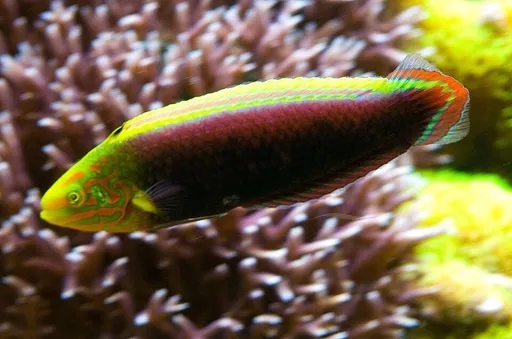 4.5 in (11.5 cm)50 gal (190 L)72–79°F (22–26°C)
Radiant wrasse
Halichoeres iridis
4.5 in (11.5 cm) · 50 gal (190 L)
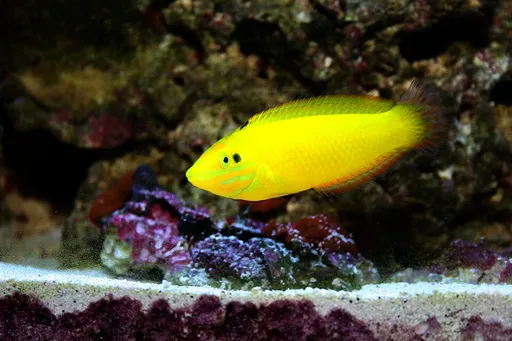 4.7 in (12 cm)40 gal (150 L)73–81°F (23–27°C)
Yellow coris wrasse
Halichoeres chrysus
4.7 in (12 cm) · 40 gal (150 L)
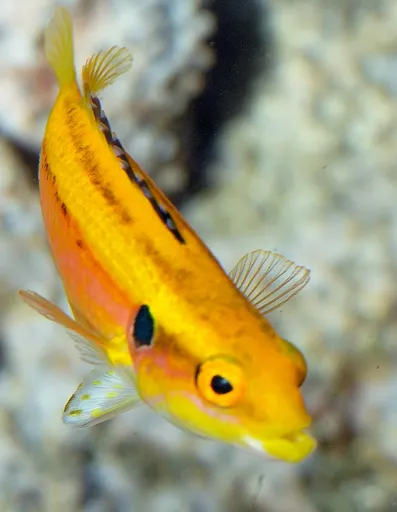 3.9 in (10 cm)30 gal (114 L)72–79°F (22–26°C)
Twospot hogfish
Bodianus bimaculatus
3.9 in (10 cm) · 30 gal (114 L)
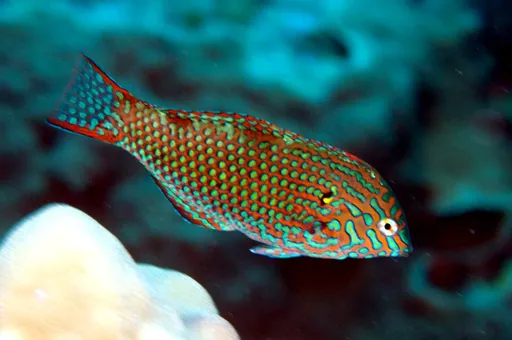 5.9 in (15 cm)90 gal (340 L)72–79°F (22–26°C)
Leopard wrasse
Macropharyngodon meleagris
5.9 in (15 cm) · 90 gal (340 L)