Radiant wrasse
Halichoeres iridis
Also known as Orangehead Wrasse, Iridis Wrasse, Radiant Africa Wrasse
SaltwaterFish
Care at a glance
- Temperature
- 72–79°F
- 22–26°C
- pH
- 8.1–8.4
- Adult size
- 4.5 in
- 11.5 cm
- Minimum tank
- 75 gal
- 284 L
- Temperament
- Peaceful
- Social behavior
- Social
- Swim level
- Bottom
- Difficulty
- Difficult
- Breeding
- No record
- Rarity
- Rare
- Reef safe
- Reef safe
- Family
- Labridae
- Origin
- Western Indian Ocean reefs, East Africa to the Chagos Archipelago
Overview
Peaceful toward tankmates and its own kind, it can often be kept in small groups where most Halichoeres cannot, and it never touches corals or large invertebrates, though it will pick off small feather dusters, tubeworms, and ornamental shrimp along with the fireworms and pyramidellid snails it is valued for controlling. Only add it to a fully cycled, established tank with a healthy population of copepods, since newly imported fish often refuse anything but live food at first and are easily lost to stress during shipping and acclimation. Feed small meals of mysis, brine shrimp, and vitamin-soaked frozen foods several times a day once it is established, and keep the lid sealed since it jumps.
In the wild
Endemic to the western Indian Ocean, from the East African coast south to Natal and out to Madagascar, the Seychelles, and the Chagos Archipelago, where it lives on steep seaward reefs of sand and rubble at 6–43 m. It needs an established tank of at least 284 litres (75 gallons) with a fine sand bed at least 7.5 cm deep to dive into, since like other Halichoeres it sleeps and hides by burying itself. A tight-fitting lid is required, as it jumps well.
Good to know
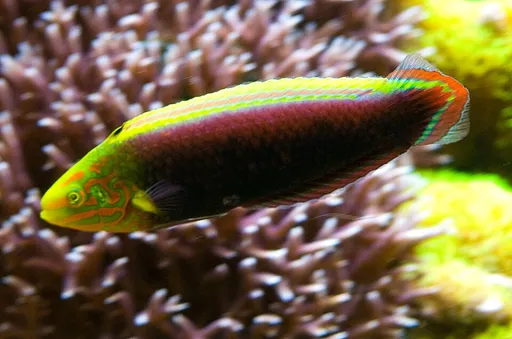
Halichoeres iridis is a protogynous hermaphrodite: fish mature first as females or initial-phase males, and the most dominant individual can change into a terminal-phase male with an orange-yellow head grading to red near the gills, a black spot behind the eye, and a dark body crossed with green, magenta, and pink stripes. Adults reach about 11.5 cm. It is noticeably more delicate than hardier Halichoeres relatives like the melanurus wrasse, with far less tolerance for swings in water quality.
Did you know
Radiant wrasses ship and acclimate so poorly that most retailers list them as an expert-only fish; the usual trick for getting a new arrival eating is to offer live saltwater feeder shrimp or copepods straight from a refugium, since a fish that refuses frozen food in its first days will often still snap at something moving.
Weekly picks
Tank mates
Radiant wrasse is a peaceful, social species that keeps to the bottom. These picks share a community profile with it, are safe together in both directions, and overlap on water type, temperature and pH.
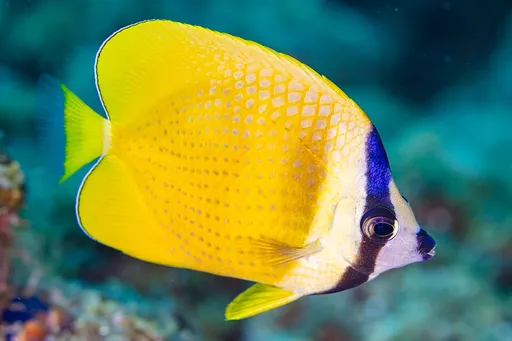
Klein's butterflyfish
Chaetodon kleinii
Saltwater5.9 in (15 cm) · 79 gal (300 L)75–81°F (24–27°C)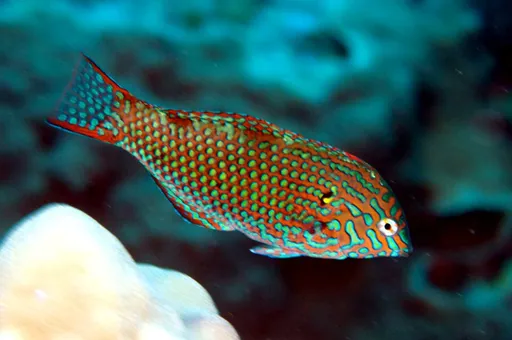
Leopard wrasse
Macropharyngodon meleagris
Saltwater5.9 in (15 cm) · 90 gal (340 L)72–79°F (22–26°C)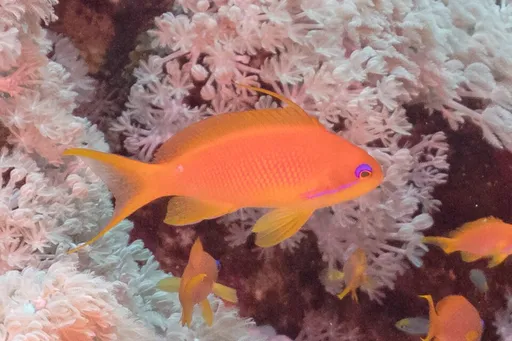
Lyretail anthias
Pseudanthias squamipinnis
Saltwater5.1 in (13 cm) · 79 gal (300 L)75–81°F (24–27°C)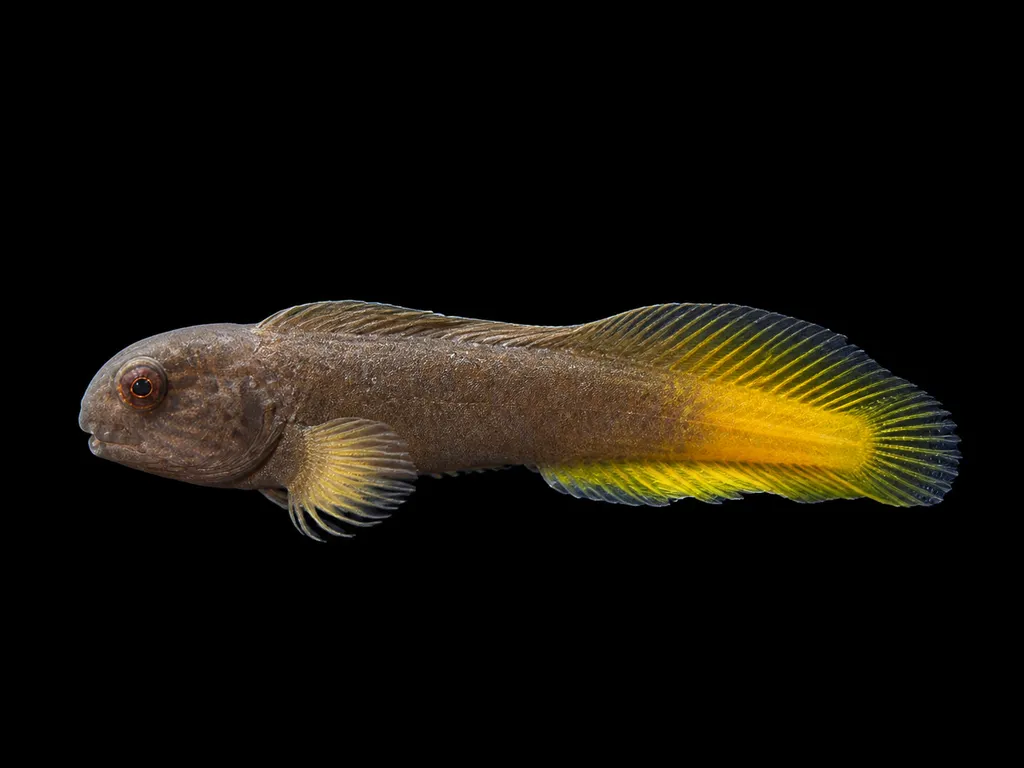
Flametail blenny
Enchelyurus flavipes
Saltwater3 in (7.5 cm) · 29 gal (110 L)72–79°F (22–26°C)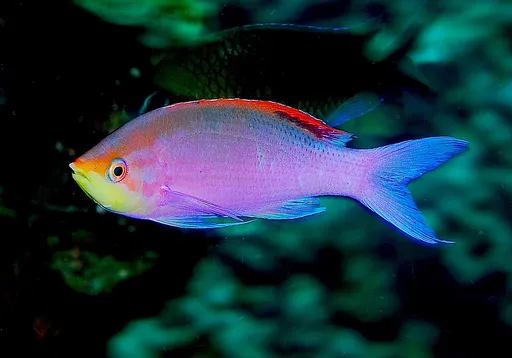
Purple queen anthias
Pseudanthias tuka
Saltwater4.7 in (12 cm) · 75 gal (285 L)75–81°F (24–27°C)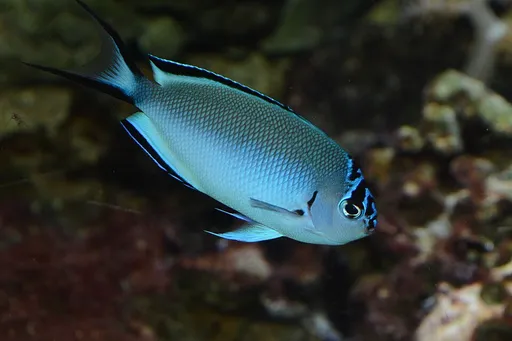
Watanabei angelfish
Genicanthus watanabei
Saltwater5.9 in (15 cm) · 79 gal (300 L)72–79°F (22–26°C)
Common questions
What size tank does a Radiant wrasse need?
A Radiant wrasse needs at least 75 gal (284 L). It spends most of its time in the bottom.
What temperature and pH does a Radiant wrasse need?
A Radiant wrasse is comfortable at 72–79°F (22–26°C) with a pH of 8.1–8.4.
How big does a Radiant wrasse get?
An adult Radiant wrasse reaches about 4.5 in (11.5 cm).
Related species
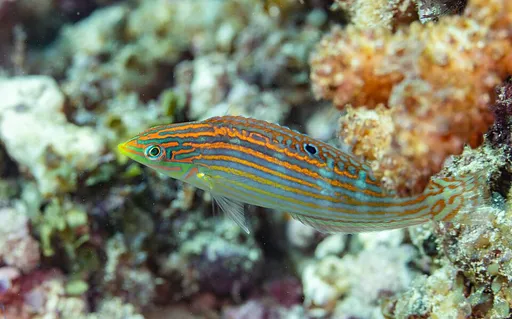 5.1 in (13 cm)50 gal (190 L)73–81°F (23–27°C)
Adorned wrasse
Halichoeres cosmetus
5.1 in (13 cm) · 50 gal (190 L)
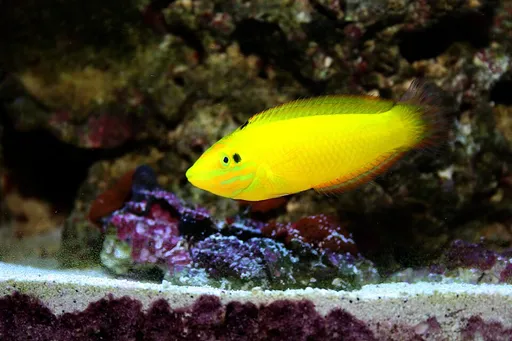
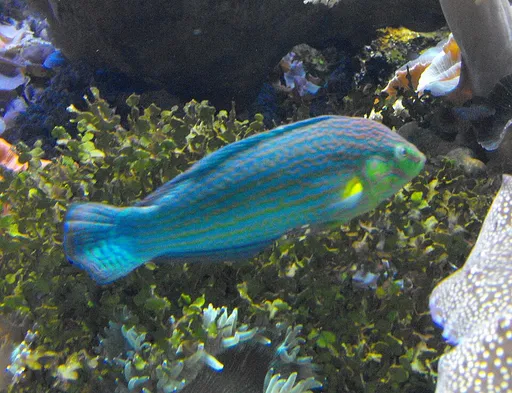 5.5 in (14 cm)100 gal (380 L)72–79°F (22–26°C)
Melanurus wrasse
Halichoeres melanurus
5.5 in (14 cm) · 100 gal (380 L)
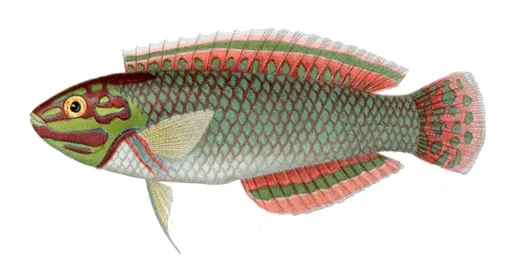
 4.7 in (12 cm)40 gal (150 L)73–81°F (23–27°C)
Yellow coris wrasse
Halichoeres chrysus
4.7 in (12 cm) · 40 gal (150 L)
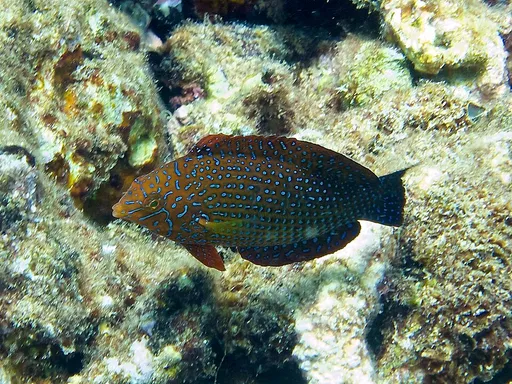
 5.9 in (15 cm)70 gal (265 L)72–79°F (22–26°C)
Christmas wrasse
Halichoeres ornatissimus
5.9 in (15 cm) · 70 gal (265 L)
 5.1 in (13 cm)55 gal (208 L)72–79°F (22–26°C)
Divided leopard wrasse
Macropharyngodon bipartitus
5.1 in (13 cm) · 55 gal (208 L)
- 5.9 in (15 cm)90 gal (340 L)72–79°F (22–26°C)
Leopard wrasse
Macropharyngodon meleagris
5.9 in (15 cm) · 90 gal (340 L)