Adorned wrasse
Halichoeres cosmetus
Also known as Orange-Lined Wrasse, Adorned Coris Wrasse, Cosmetus Wrasse
SaltwaterFish
Care at a glance
- Temperature
- 73–81°F
- 23–27°C
- pH
- 8.1–8.4
- Adult size
- 5.1 in
- 13 cm
- Minimum tank
- 50 gal
- 190 L
- Temperament
- Peaceful
- Social behavior
- Solitary
- Swim level
- Bottom
- Difficulty
- Easy
- Breeding
- No record
- Rarity
- Common
- Reef safe
- Reef safe with caution
- Family
- Labridae
- Origin
- Ranges across the Indian Ocean from the East African coast and the Maldives south to KwaZulu-Natal, over rubble near reefs.
Overview
A 190 litre or larger tank with a soft sand bed and a secure lid suits it, kept at 23 to 27 C and pH 8.1 to 8.4. It leaves corals alone but is reef safe with caution, since it may eat ornamental shrimp, small snails, and fan worms. Feed mysis, enriched brine shrimp, and other meaty foods. It is peaceful and active, and it helps control pest bristleworms and small snails.
In the wild
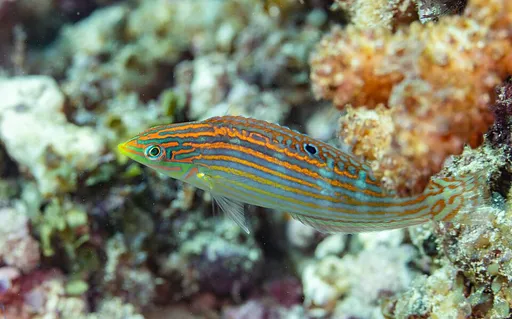
The adorned wrasse works over rubble and sand at the base of reefs, picking small invertebrates from the substrate. It has orange and green stripes with an eyespot on the dorsal fin. Like other Halichoeres wrasses it dives into the sand to sleep and to escape threats. A fine sand bed a few centimetres deep is essential.
Good to know
Halichoeres cosmetus is an Indian Ocean member of the wrasse family Labridae. Sleeping buried in sand is a genus trait that also helps it avoid predators. It changes sex from female to male as it matures.
Did you know
If startled it can vanish into the sand in an instant and stay buried until it feels safe again.
Weekly picks
Tank mates
Adorned wrasse is a peaceful, solitary species that keeps to the bottom. These picks share a community profile with it, are safe together in both directions, and overlap on water type, temperature and pH.
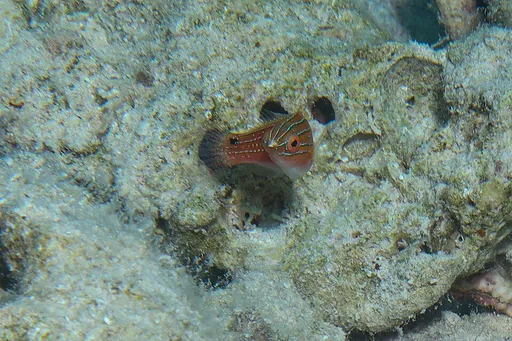
Social fairy wrasse
Cirrhilabrus rubriventralis
Saltwater2.8 in (7 cm) · 53 gal (200 L)73–81°F (23–27°C)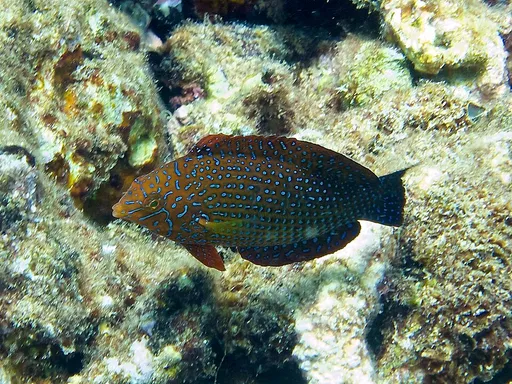
Divided leopard wrasse
Macropharyngodon bipartitus
Saltwater5.1 in (13 cm) · 55 gal (208 L)72–79°F (22–26°C)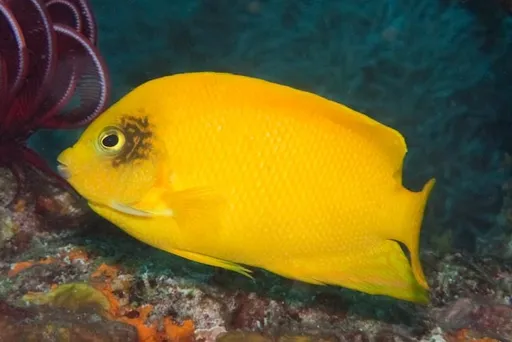
Herald's angelfish
Centropyge heraldi
Saltwater3.9 in (10 cm) · 55 gal (210 L)72–79°F (22–26°C)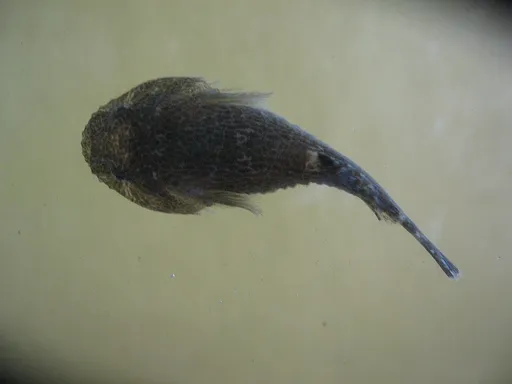
Skilletfish
Gobiesox strumosus
Saltwater3.1 in (8 cm) · 20 gal (76 L)72–79°F (22–26°C)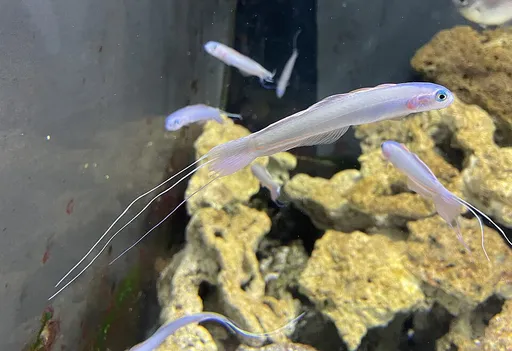
Blue hana goby
Ptereleotris hanae
Saltwater4.7 in (12 cm) · 40 gal (150 L)73–81°F (23–27°C)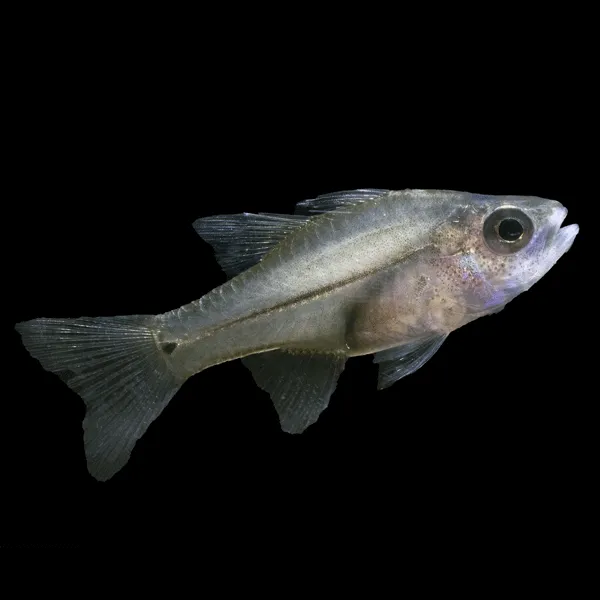
Amboina cardinalfish
Fibramia amboinensis
Saltwater3.5 in (9 cm) · 50 gal (190 L)72–79°F (22–26°C)
Common questions
What size tank does an Adorned wrasse need?
An Adorned wrasse needs at least 50 gal (190 L). It spends most of its time in the bottom.
What temperature and pH does an Adorned wrasse need?
An Adorned wrasse is comfortable at 73–81°F (23–27°C) with a pH of 8.1–8.4.
How big does an Adorned wrasse get?
An adult Adorned wrasse reaches about 5.1 in (13 cm).
Related species
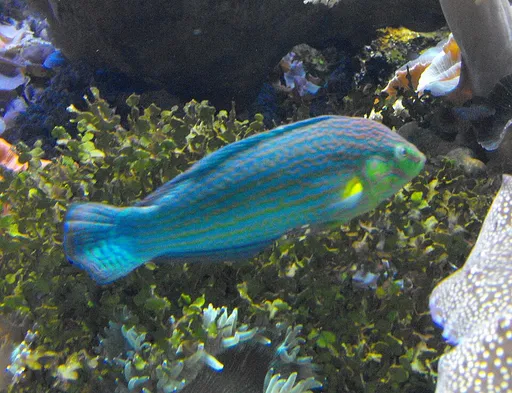 5.5 in (14 cm)100 gal (380 L)72–79°F (22–26°C)
Melanurus wrasse
Halichoeres melanurus
5.5 in (14 cm) · 100 gal (380 L)
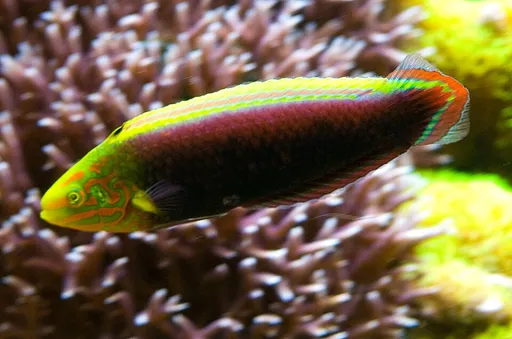 4.5 in (11.5 cm)75 gal (284 L)72–79°F (22–26°C)
Radiant wrasse
Halichoeres iridis
4.5 in (11.5 cm) · 75 gal (284 L)
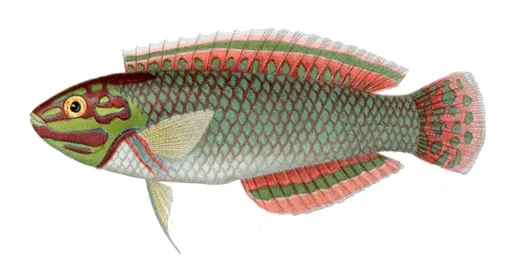 5.9 in (15 cm)70 gal (265 L)72–79°F (22–26°C)
Christmas wrasse
Halichoeres ornatissimus
5.9 in (15 cm) · 70 gal (265 L)
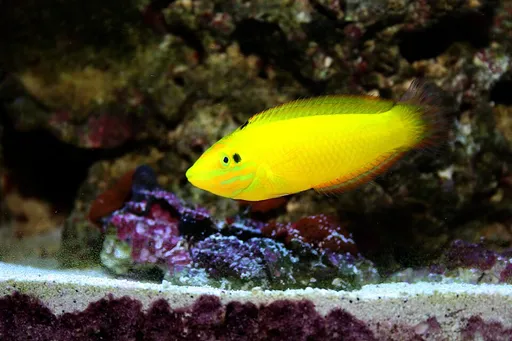 4.7 in (12 cm)40 gal (150 L)73–81°F (23–27°C)
Yellow coris wrasse
Halichoeres chrysus
4.7 in (12 cm) · 40 gal (150 L)
- 5.1 in (13 cm)55 gal (208 L)72–79°F (22–26°C)
Divided leopard wrasse
Macropharyngodon bipartitus
5.1 in (13 cm) · 55 gal (208 L)
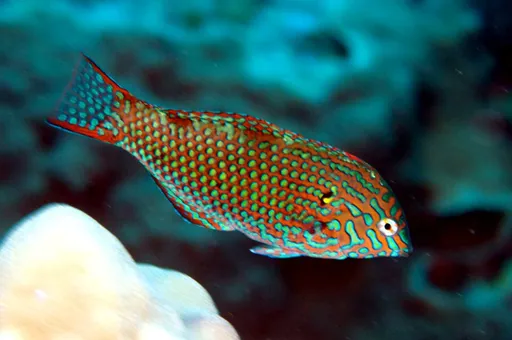 5.9 in (15 cm)90 gal (340 L)72–79°F (22–26°C)
Leopard wrasse
Macropharyngodon meleagris
5.9 in (15 cm) · 90 gal (340 L)