Melanurus wrasse
Halichoeres melanurus
Also known as Tailspot Wrasse, Hoeven's Wrasse, Neon Wrasse
SaltwaterFish
Care at a glance
- Temperature
- 72–79°F
- 22–26°C
- pH
- 8.1–8.4
- Adult size
- 5.5 in
- 14 cm
- Minimum tank
- 100 gal
- 380 L
- Temperament
- Peaceful
- Social behavior
- Solitary
- Swim level
- Bottom
- Difficulty
- Easy
- Breeding
- No record
- Rarity
- Very common
- Reef safe
- Reef safe
- Family
- Labridae
- Origin
- Indo-Pacific reefs, from Indonesia to Micronesia and Japan
Overview
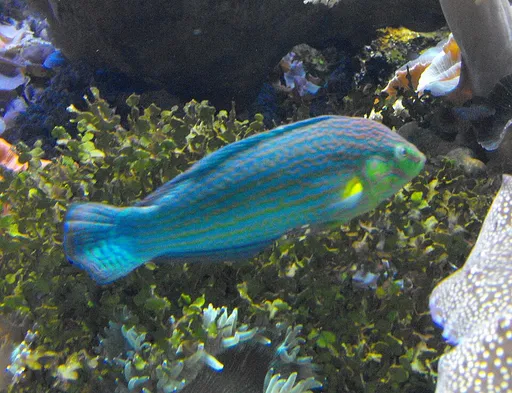
Peaceful with other fish but best kept one to a tank, since adult males become territorial toward their own species and will harass a second melanurus added later. It is completely reef safe and earns its keep by hunting down pyramidellid snails, flatworms, and bristleworms that prey on corals and clams, making it one of the more useful pest-control wrasses for a reef tank. Feed a varied mix of mysis, brine shrimp, and marine pellet or flake food. It buries itself in the sand bed to sleep and whenever it feels threatened, so a deep, soft sand layer is not optional, and the lid needs to be secure since it jumps well.
In the wild
Found across the Indo-Pacific from Indonesia to Micronesia and southern Japan, on shallow reef flats and lagoons down to about 15 m. Because it can reach 14 cm and is a constant, active swimmer, plan for a tank of at least 380 litres (100 gallons) once it is full grown, even though juveniles can start out in smaller systems. It needs a bed of fine, soft sand at least 5–7.5 cm deep to dive into when startled or asleep, plus a tight-fitting lid, since it jumps readily.
Good to know
Halichoeres melanurus is a protogynous hermaphrodite, maturing first as a female or initial-phase male and later transitioning to a brightly colored terminal-phase male if it becomes the dominant fish in its group. Terminal males show a blue-green body crossed with pink or yellow stripes and the dark tail-base spot that gives the species its name, from the Greek for black-tailed. It reaches about 14 cm as an adult, making it the largest of the commonly kept Halichoeres reef wrasses.
Did you know
A melanurus wrasse that dives into the sand and vanishes the moment it is startled can look like it has disappeared entirely during its first day or two in a new tank; it has simply buried itself while it settles in, and normal foraging resumes once it feels safe enough to resurface.
Weekly picks
Tank mates
Melanurus wrasse is a peaceful, solitary species that keeps to the bottom. These picks share a community profile with it, are safe together in both directions, and overlap on water type, temperature and pH.
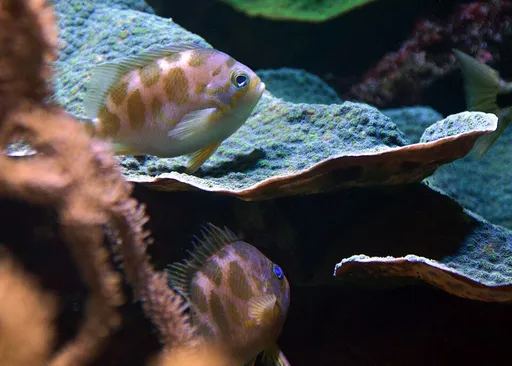
Blotched anthias
Odontanthias borbonius
Saltwater5.9 in (15 cm) · 100 gal (380 L)72–79°F (22–26°C)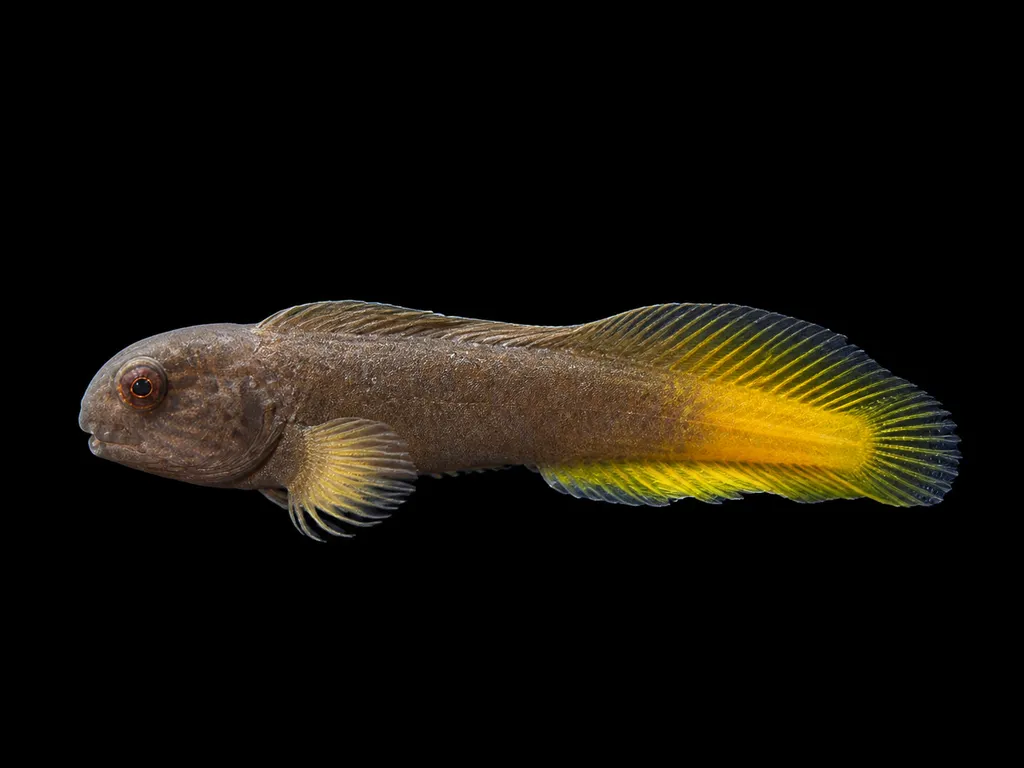
Flametail blenny
Enchelyurus flavipes
Saltwater3 in (7.5 cm) · 29 gal (110 L)72–79°F (22–26°C)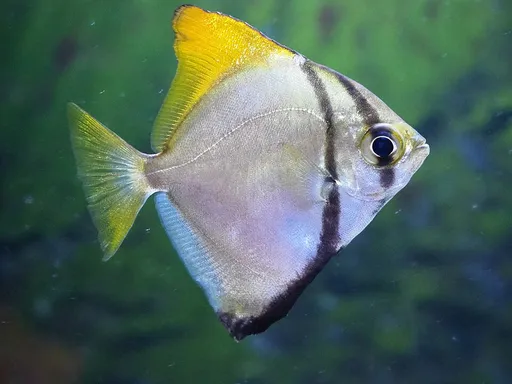
Silver mono
Monodactylus argenteus
BrackishSaltwater9.8 in (25 cm) · 106 gal (400 L)75–82°F (24–28°C)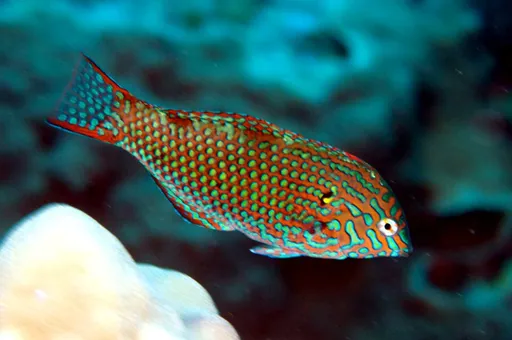
Leopard wrasse
Macropharyngodon meleagris
Saltwater5.9 in (15 cm) · 90 gal (340 L)72–79°F (22–26°C)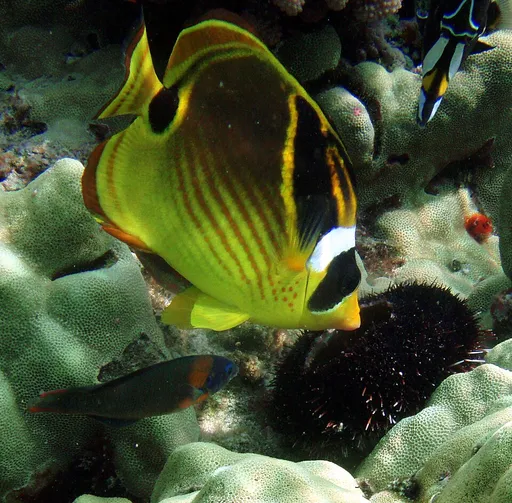
Raccoon butterflyfish
Chaetodon lunula
Saltwater7.9 in (20 cm) · 106 gal (400 L)75–81°F (24–27°C)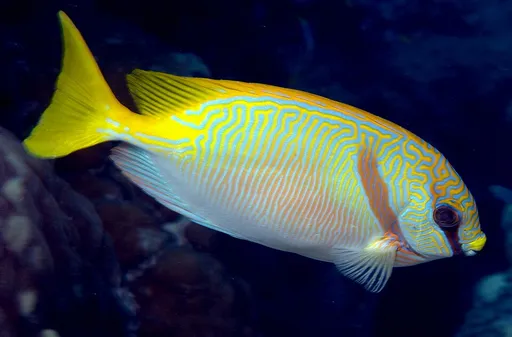
Barred rabbitfish
Siganus doliatus
Saltwater9.8 in (25 cm) · 106 gal (400 L)75–81°F (24–27°C)
Common questions
What size tank does a Melanurus wrasse need?
A Melanurus wrasse needs at least 100 gal (380 L). It spends most of its time in the bottom.
What temperature and pH does a Melanurus wrasse need?
A Melanurus wrasse is comfortable at 72–79°F (22–26°C) with a pH of 8.1–8.4.
How big does a Melanurus wrasse get?
An adult Melanurus wrasse reaches about 5.5 in (14 cm).
Related species
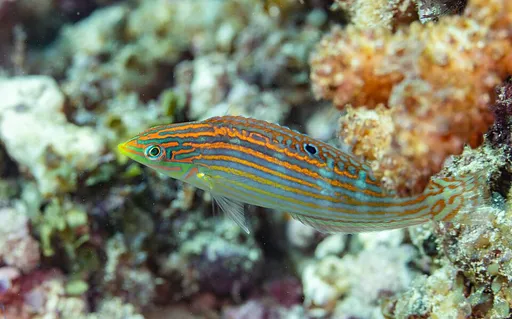 5.1 in (13 cm)50 gal (190 L)73–81°F (23–27°C)
Adorned wrasse
Halichoeres cosmetus
5.1 in (13 cm) · 50 gal (190 L)
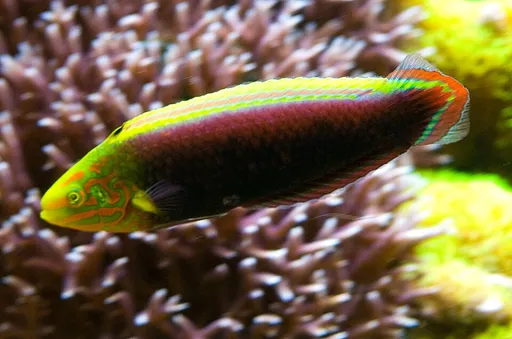 4.5 in (11.5 cm)75 gal (284 L)72–79°F (22–26°C)
Radiant wrasse
Halichoeres iridis
4.5 in (11.5 cm) · 75 gal (284 L)
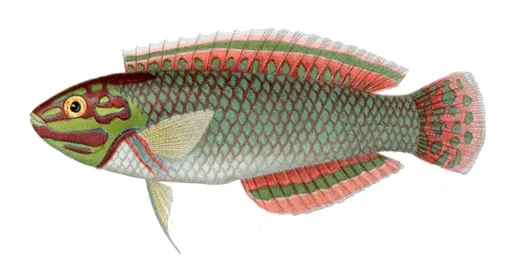 5.9 in (15 cm)70 gal (265 L)72–79°F (22–26°C)
Christmas wrasse
Halichoeres ornatissimus
5.9 in (15 cm) · 70 gal (265 L)
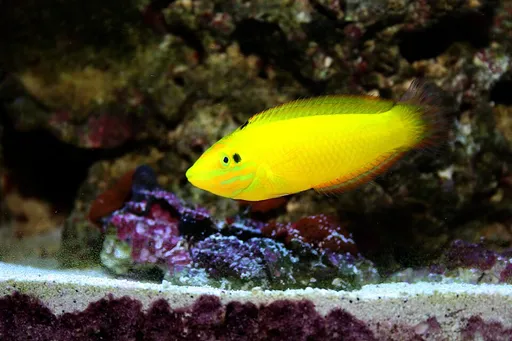 4.7 in (12 cm)40 gal (150 L)73–81°F (23–27°C)
Yellow coris wrasse
Halichoeres chrysus
4.7 in (12 cm) · 40 gal (150 L)
- 5.9 in (15 cm)90 gal (340 L)72–79°F (22–26°C)
Leopard wrasse
Macropharyngodon meleagris
5.9 in (15 cm) · 90 gal (340 L)
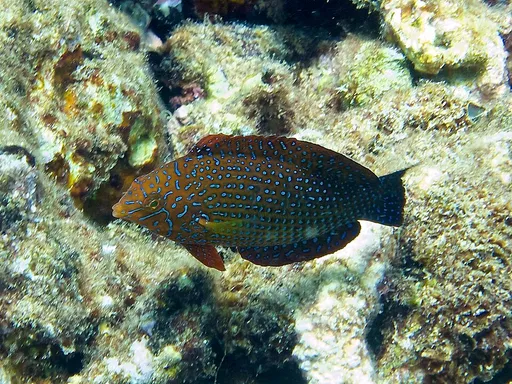 5.1 in (13 cm)55 gal (208 L)72–79°F (22–26°C)
Divided leopard wrasse
Macropharyngodon bipartitus
5.1 in (13 cm) · 55 gal (208 L)