Majestic angelfish
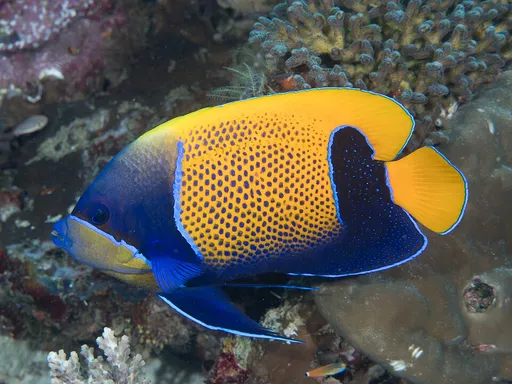
Pomacanthus navarchus
Also known as Blue-girdled Angelfish, Navarchus Angelfish, Blue-girdle Angelfish
SaltwaterFish
Care at a glance
- Temperature
- 73–81°F
- 23–27°C
- pH
- 8.1–8.4
- Adult size
- 11.8 in
- 30 cm
- Minimum tank
- 145 gal
- 550 L
- Temperament
- Mostly peaceful
- Social behavior
- Solitary
- Own kind
- One male per tank
- Swim level
- Middle
- Difficulty
- Difficult
- Breeding
- Hard
- Rarity
- Common
- Reef safe
- Not reef safe
- Family
- Pomacanthidae
- Origin
- Western Pacific, from Indonesia and the Philippines east to the Great Barrier Reef and Fiji
Overview
A large but relatively shy angelfish that shows aggression mainly toward other angels, including its own kind, so it is kept one per tank. It needs a mature sponge-rich system and a varied diet high in both algae and marine protein, fed several times a day. Its difficult rating comes from sensitivity to water quality and a tendency to fare poorly if introduced to an immature tank.
In the wild
Majestic angels inhabit protected coastal and lagoon reefs of the western Pacific, usually in areas rich in sponge, tunicate, and coral growth, often near caves and ledges at moderate depth. They are more secretive than emperor angels and stay close to shelter. In the aquarium they need a large mature tank with heavy live rock, caves, and pristine stable water.
Good to know
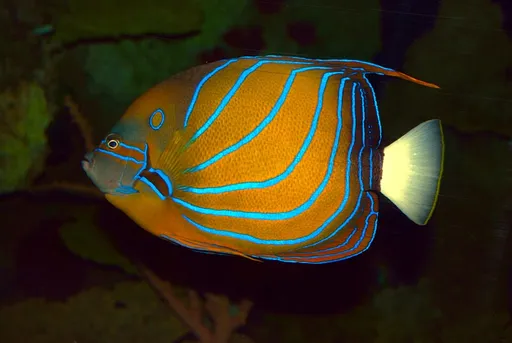
Pomacanthus navarchus reaches about 30 cm. It is named for its striking pattern of a blue-bordered orange body with a blue mask and yellow tail. Like other Pomacanthus, juveniles wear a different blue-and-white barred pattern and transform as they mature. It is considered one of the more delicate large angels, demanding excellent water quality.
Did you know
Captive-bred majestic angels are now produced commercially, and because they never encounter coral before entering your tank, tank-raised individuals are often better behaved around corals than wild-caught ones.
Weekly picks
Tank mates
Majestic angelfish is a mostly peaceful, solitary species that keeps to the middle. Keep only one male per tank. These picks share a community profile with it, are safe together in both directions, and overlap on water type, temperature and pH.
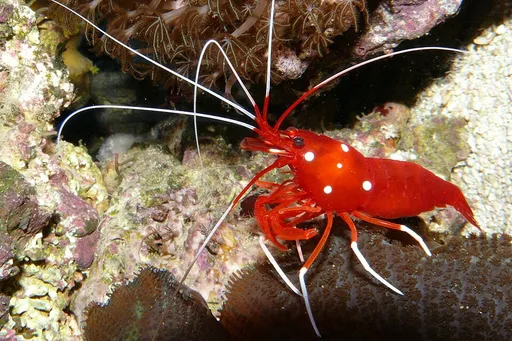
Fire shrimp
Lysmata debelius
Saltwater2.4 in (6 cm) · 20 gal (75 L)72–79°F (22–26°C)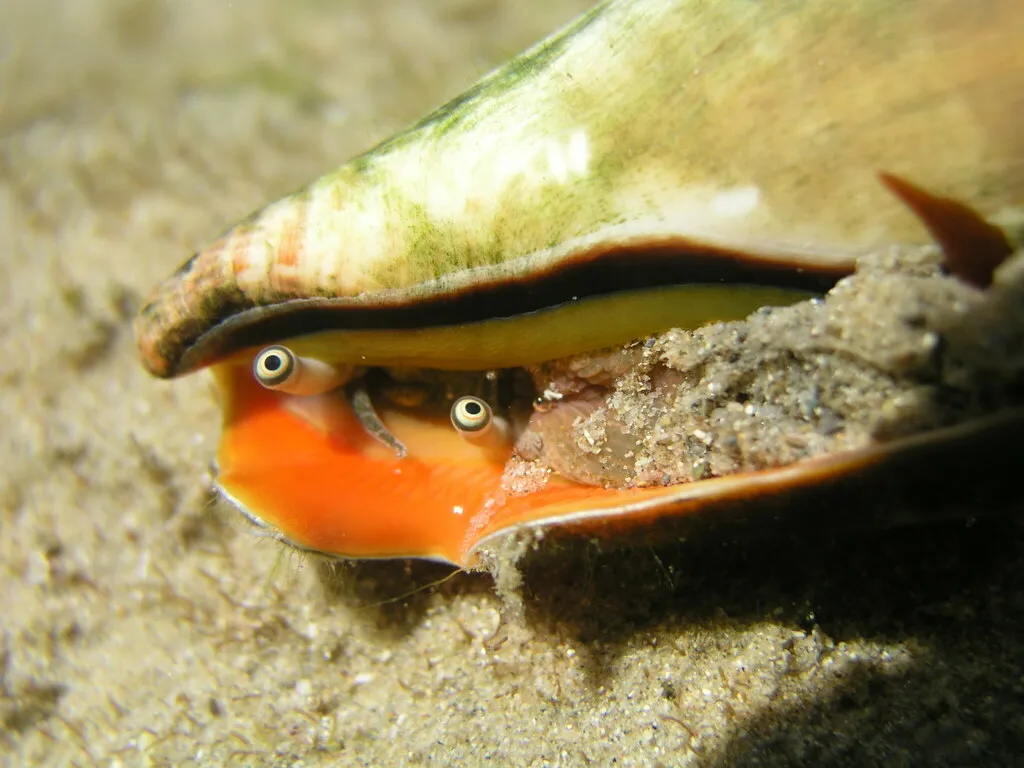
Tiger / strawberry conch
Conomurex luhuanus
Saltwater2.8 in (7 cm) · 20 gal (75 L)75–81°F (24–27°C)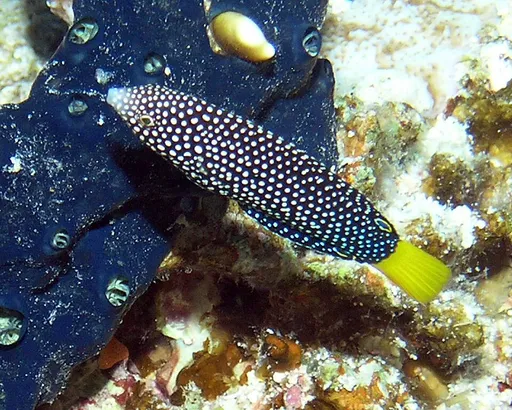
Yellowtail tamarin wrasse
Anampses meleagrides
Saltwater8.7 in (22 cm) · 90 gal (340 L)73–81°F (23–27°C)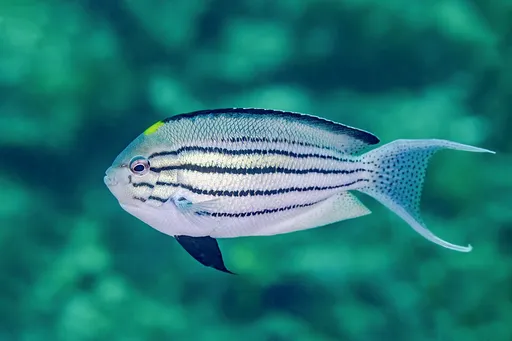
Lamarck's angelfish
Genicanthus lamarck
Saltwater9.8 in (25 cm) · 124 gal (470 L)72–79°F (22–26°C)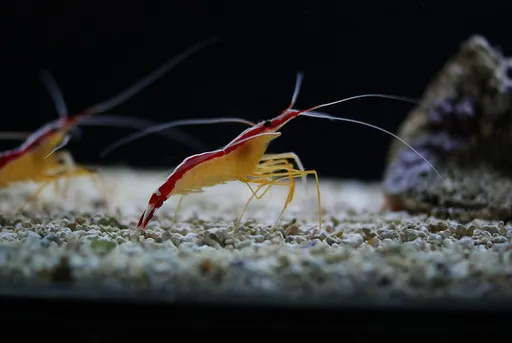
Skunk cleaner shrimp
Lysmata amboinensis
Saltwater2.4 in (6 cm) · 20 gal (75 L)73–81°F (23–27°C)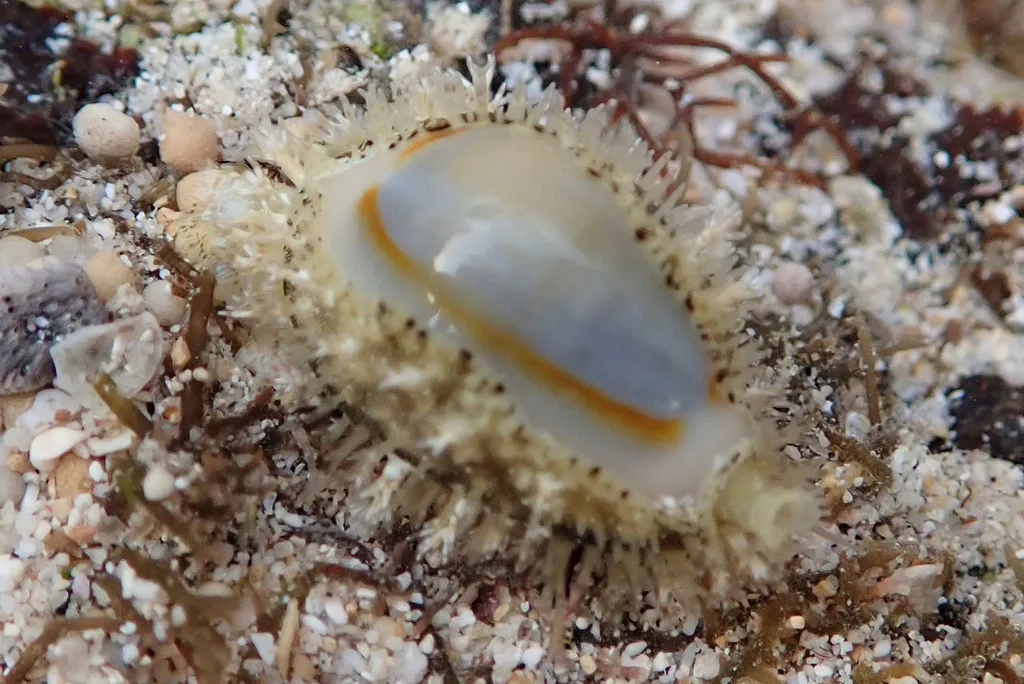
Ring cowrie
Monetaria annulus
Saltwater1.2 in (3 cm) · 20 gal (75 L)75–81°F (24–27°C)
Common questions
What size tank does a Majestic angelfish need?
A Majestic angelfish needs at least 145 gal (550 L). It spends most of its time in the middle.
What temperature and pH does a Majestic angelfish need?
A Majestic angelfish is comfortable at 73–81°F (23–27°C) with a pH of 8.1–8.4.
How big does a Majestic angelfish get?
An adult Majestic angelfish reaches about 11.8 in (30 cm).
Related species
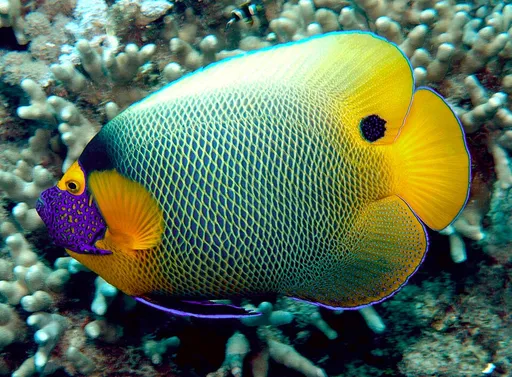 15 in (38 cm)219 gal (830 L)73–81°F (23–27°C)
Blueface angelfish
Pomacanthus xanthometopon
15 in (38 cm) · 219 gal (830 L)
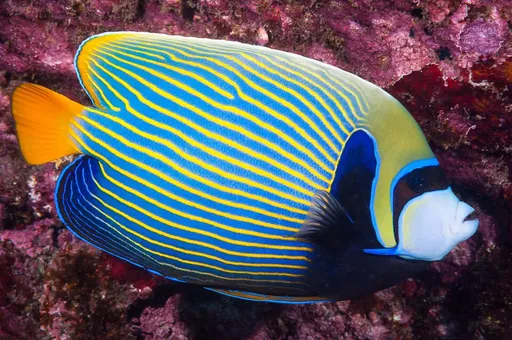 15 in (38 cm)185 gal (700 L)73–81°F (23–27°C)
Emperor angelfish
Pomacanthus imperator
15 in (38 cm) · 185 gal (700 L)
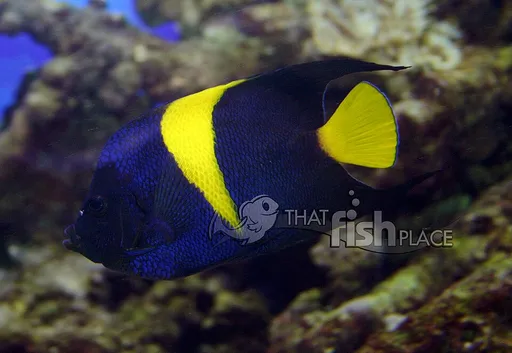 15.7 in (40 cm)135 gal (510 L)75–82°F (24–28°C)
Asfur angelfish
Pomacanthus asfur
15.7 in (40 cm) · 135 gal (510 L)
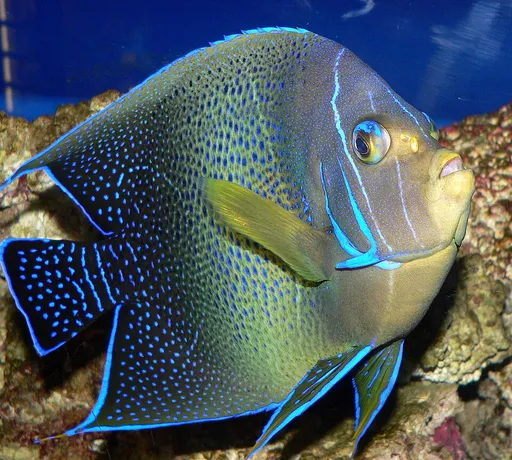 15.7 in (40 cm)132 gal (500 L)73–81°F (23–27°C)
Koran angelfish
Pomacanthus semicirculatus
15.7 in (40 cm) · 132 gal (500 L)
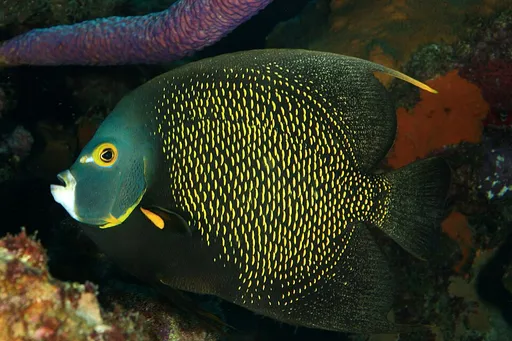 16.1 in (41 cm)201 gal (760 L)72–81°F (22–27°C)
French angelfish
Pomacanthus paru
16.1 in (41 cm) · 201 gal (760 L)
 17.7 in (45 cm)219 gal (830 L)73–81°F (23–27°C)
Annularis angelfish
Pomacanthus annularis
17.7 in (45 cm) · 219 gal (830 L)