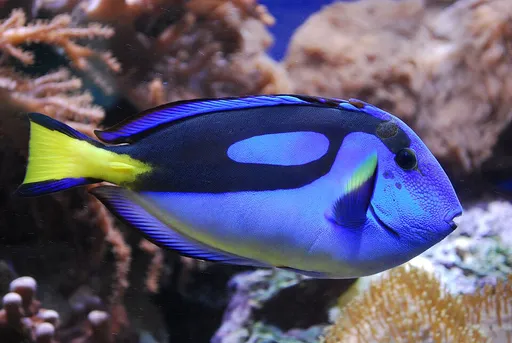
Blue hippo tang
Paracanthurus hepatus
Also known as Blue Tang, Regal Tang, Pacific Blue Tang, Palette Surgeonfish, Hippo Tang
SaltwaterFish
Care at a glance
- Temperature
- 73–81°F
- 23–27°C
- pH
- 8.1–8.4
- Adult size
- 11.8 in
- 30 cm
- Minimum tank
- 180 gal
- 680 L
- Temperament
- Mostly peaceful
- Social behavior
- Social
- Swim level
- Middle
- Difficulty
- Difficult
- Breeding
- Hard
- Rarity
- Common
- Reef safe
- Reef safe
- Family
- Acanthuridae
- Origin
- Indo-Pacific, from East Africa and the Red Sea across to the central Pacific including the Great Barrier Reef
Overview
A large, fast, open-water swimmer that is reef safe because it ignores corals and inverts when kept well fed on algae and meaty foods. It is generally peaceful toward other fish, but it can squabble with its own kind and other tangs in tight quarters, so give it room and add it with care. Its real challenge is health rather than aggression: it stresses badly during shipping and is one of the most ich-prone fish in the hobby, so a proper quarantine and a stable, low-stress tank are essential. When frightened it can play dead by lying on its side, and the tail spine is sharp.
In the wild
Found on clear seaward reefs where there is current, usually in loose groups that hover above staghorn coral and dart into the branches when threatened. Juveniles stay close to a single coral head while adults range more widely to feed on plankton and algae in the water column and off the rock. In the aquarium it needs a long tank with strong flow, high oxygen, open swimming lanes, and rockwork with crevices it can wedge into when startled.
Good to know
Paracanthurus hepatus is the only species in its genus and carries the same folding tail spine as other surgeonfish. Unlike the strictly herbivorous tangs it feeds heavily on zooplankton in the wild, so it is both a grazer and a planktivore. It has been bred in captivity and captive-bred juveniles are now sold, but the larvae are difficult to raise so most stock is still wild caught. Adults can reach about 30 cm.
Did you know
When alarmed it will wedge into a rock crevice and lock itself in place with its spines, and it sometimes lies motionless on its side as if dead to avoid predators.
Weekly picks
Tank mates
Blue hippo tang is a mostly peaceful, social species that keeps to the middle. These picks share a community profile with it, are safe together in both directions, and overlap on water type, temperature and pH.
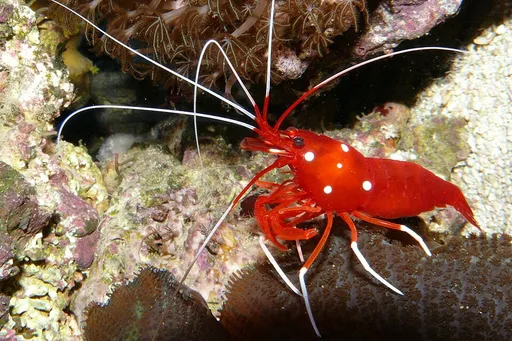
Fire shrimp
Lysmata debelius
Saltwater2.4 in (6 cm) · 20 gal (75 L)72–79°F (22–26°C)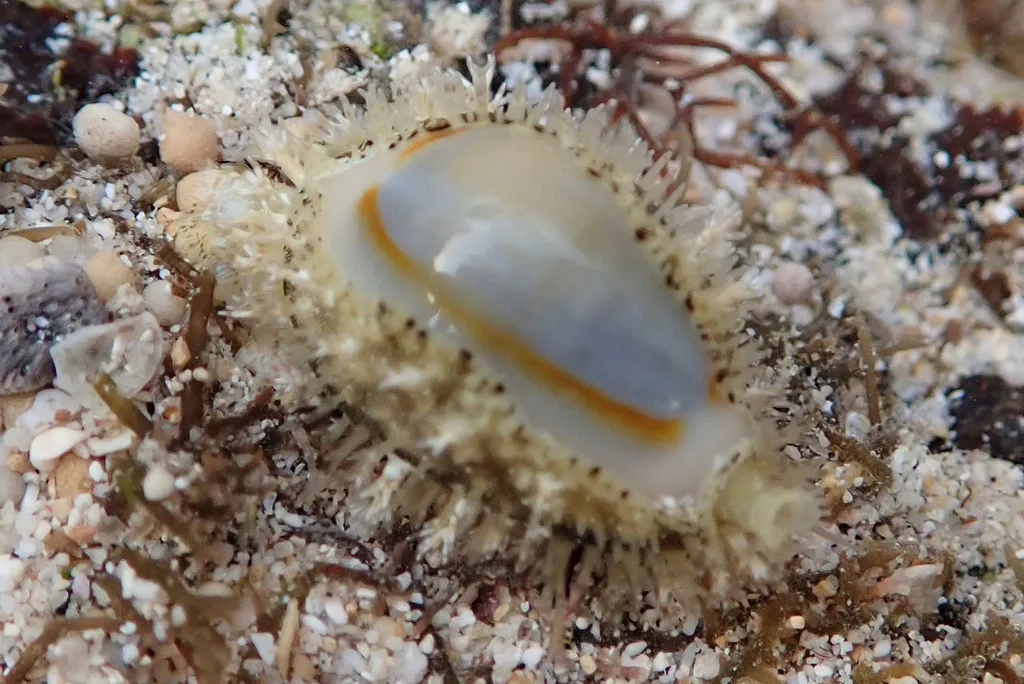
Ring cowrie
Monetaria annulus
Saltwater1.2 in (3 cm) · 20 gal (75 L)75–81°F (24–27°C)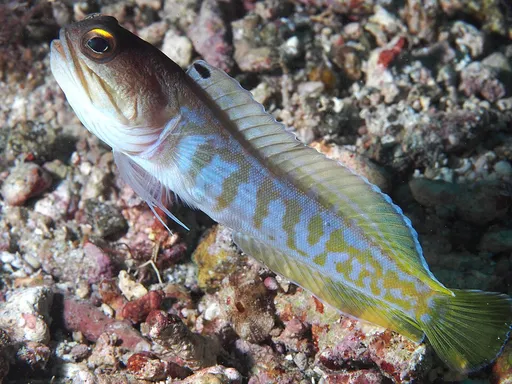
Gold-specs jawfish
Opistognathus randalli
Saltwater3.9 in (10 cm) · 30 gal (115 L)73–81°F (23–27°C)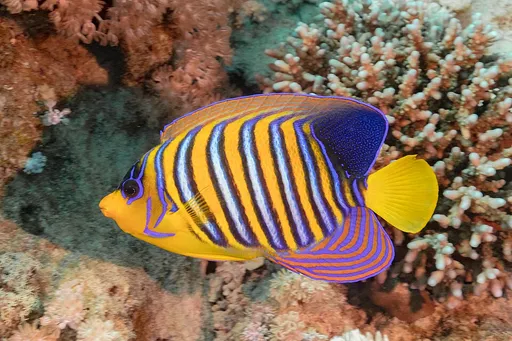
Regal angelfish
Pygoplites diacanthus
Saltwater9.8 in (25 cm) · 124 gal (470 L)73–81°F (23–27°C)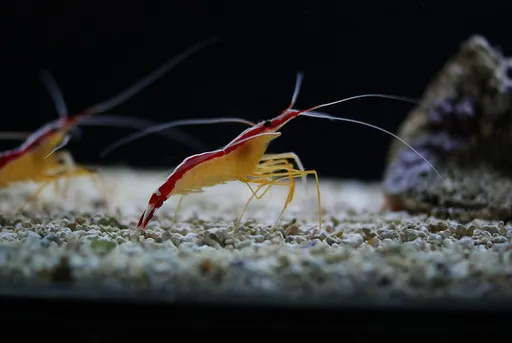
Skunk cleaner shrimp
Lysmata amboinensis
Saltwater2.4 in (6 cm) · 20 gal (75 L)73–81°F (23–27°C)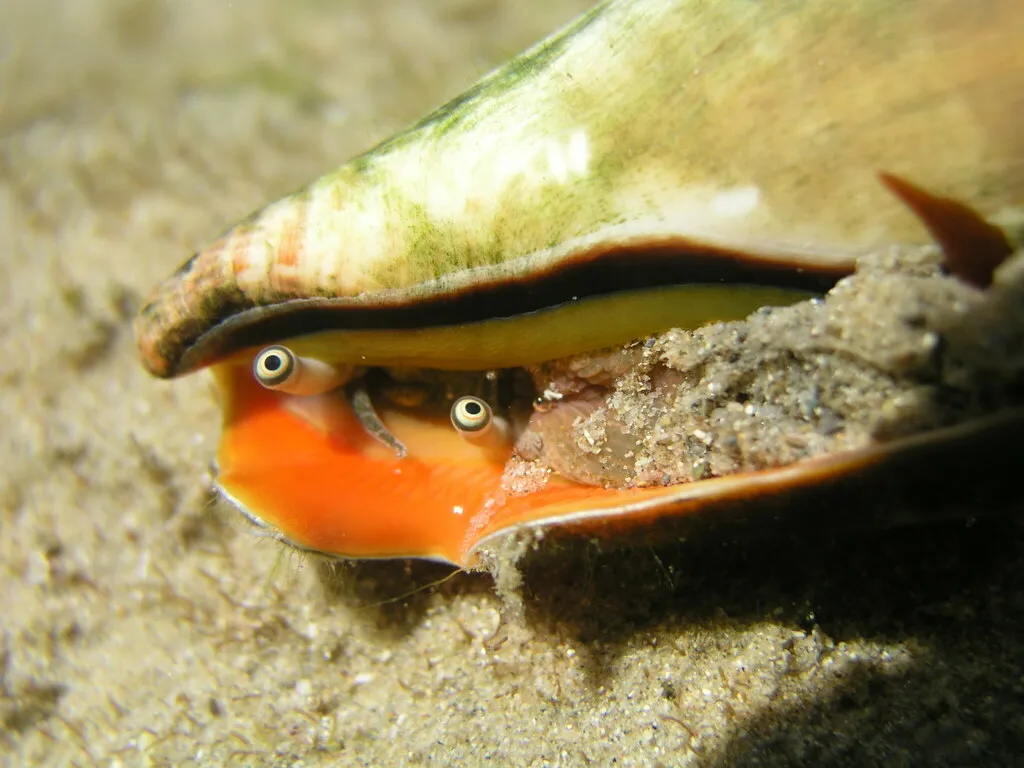
Tiger / strawberry conch
Conomurex luhuanus
Saltwater2.8 in (7 cm) · 20 gal (75 L)75–81°F (24–27°C)
Common questions
What size tank does a Blue hippo tang need?
A Blue hippo tang needs at least 180 gal (680 L). It spends most of its time in the middle.
What temperature and pH does a Blue hippo tang need?
A Blue hippo tang is comfortable at 73–81°F (23–27°C) with a pH of 8.1–8.4.
How big does a Blue hippo tang get?
An adult Blue hippo tang reaches about 11.8 in (30 cm).
Related species
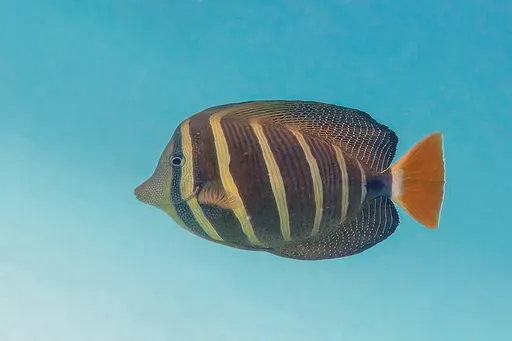 11.8 in (30 cm)145 gal (550 L)75–82°F (24–28°C)
Sailfin tang
Zebrasoma veliferum
11.8 in (30 cm) · 145 gal (550 L)
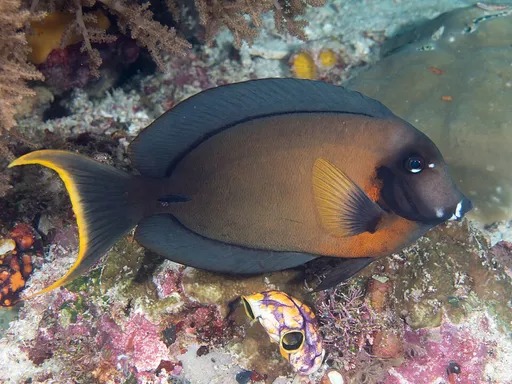 11.4 in (29 cm)129 gal (490 L)75–82°F (24–28°C)
Mimic tang
Acanthurus pyroferus
11.4 in (29 cm) · 129 gal (490 L)
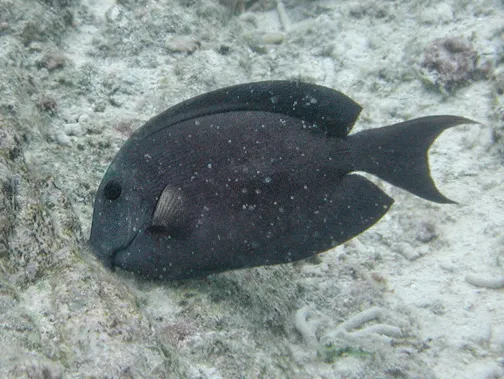 11 in (28 cm)180 gal (680 L)75–81°F (24–27°C)
Chevron tang
Ctenochaetus hawaiiensis
11 in (28 cm) · 180 gal (680 L)
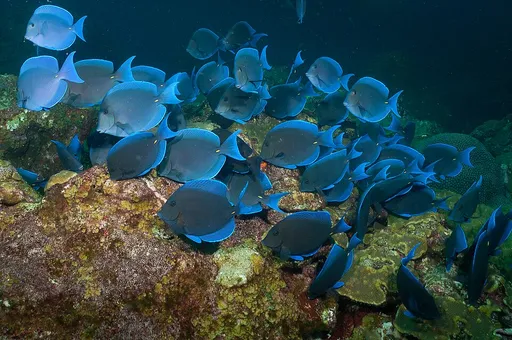 13.8 in (35 cm)151 gal (570 L)75–81°F (24–27°C)
Atlantic blue tang
Acanthurus coeruleus
13.8 in (35 cm) · 151 gal (570 L)
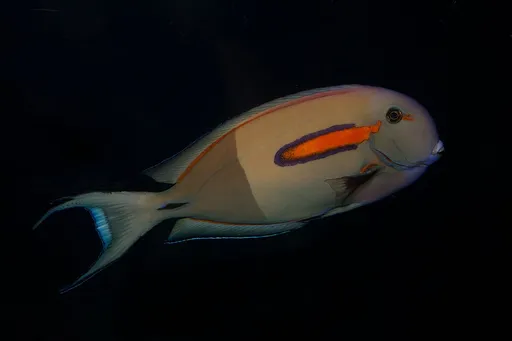 13.8 in (35 cm)180 gal (680 L)75–82°F (24–28°C)
Orangeshoulder tang
Acanthurus olivaceus
13.8 in (35 cm) · 180 gal (680 L)
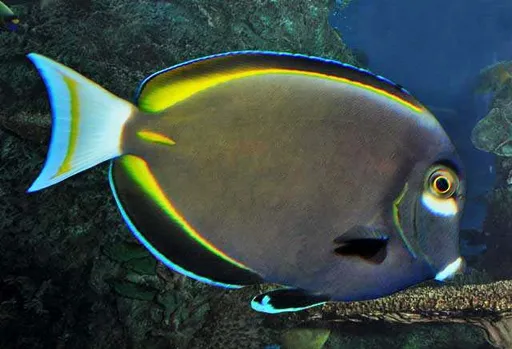 13.8 in (35 cm)129 gal (490 L)75–81°F (24–27°C)
Whitecheek tang
Acanthurus nigricans
13.8 in (35 cm) · 129 gal (490 L)