Mimic tang
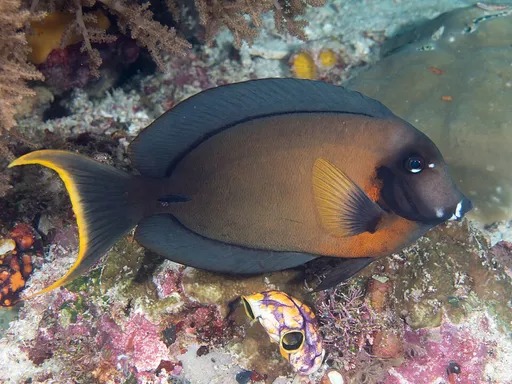
Acanthurus pyroferus
Also known as Chocolate Tang, Chocolate Surgeonfish, Mimic Surgeonfish, Yellow Mimic Tang
SaltwaterFish
Care at a glance
- Temperature
- 75–82°F
- 24–28°C
- pH
- 8.1–8.4
- Adult size
- 11.4 in
- 29 cm
- Minimum tank
- 129 gal
- 490 L
- Temperament
- Mostly peaceful
- Social behavior
- Solitary
- Own kind
- One per tank
- Tankmates
- With caution
- Swim level
- Middle
- Difficulty
- Easy
- Breeding
- No record
- Rarity
- Common
- Reef safe
- Reef safe
- Family
- Acanthuridae
- Origin
- Indo-Pacific reefs, from East Africa to French Polynesia
Overview
Peaceful with unrelated fish but increasingly territorial toward other tangs and surgeonfish as it ages, so it is best kept singly as an adult. Reef safe with corals and invertebrates. Offer nori or dried seaweed regularly along with algae-based flake or pellet food and the occasional meaty frozen food. It settles in well once established, though like other tangs it can come down with marine ich if stressed during shipping or acclimation, so ease it into the tank slowly.
In the wild
Ranges across Indo-Pacific reefs from East Africa to French Polynesia, usually living as a solitary fish on coral and rocky reef faces from just below the surface down to 60 m. It needs open water for cruising plus large amounts of live rock to claim as a territory, since it grows more territorial with age. Plan for a tank of at least 490 litres (130 US gal) with room to grow into its adult size.
Good to know
Carries the folding scalpel spine typical of the genus Acanthurus at the base of the tail, used in defense or in disputes with other tangs. Juveniles take mimicry further than most reef fish: depending on where they hatch, they copy the color and shape of a local dwarf angelfish almost exactly, switching model species from one part of the Pacific to another, before losing the disguise and turning chocolate brown to blackish as they mature into adults around 29 cm long.
Did you know
As a juvenile it impersonates a dwarf angelfish so convincingly that it can fool other fish on the reef, mimicking the lemonpeel angelfish in the central and eastern Pacific and the half-black angelfish farther west near Palau, then dropping the disguise entirely once it is large enough to fend for itself.
Common questions
What size tank does a Mimic tang need?
A Mimic tang needs at least 129 gal (490 L). It spends most of its time in the middle.
What temperature and pH does a Mimic tang need?
A Mimic tang is comfortable at 75–82°F (24–28°C) with a pH of 8.1–8.4.
How big does a Mimic tang get?
An adult Mimic tang reaches about 11.4 in (29 cm).
Related species
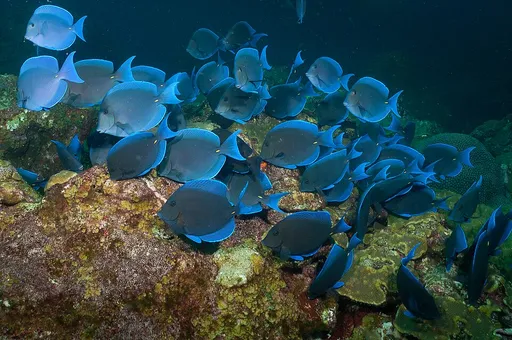 13.8 in (35 cm)151 gal (570 L)75–81°F (24–27°C)
Atlantic blue tang
Acanthurus coeruleus
13.8 in (35 cm) · 151 gal (570 L)
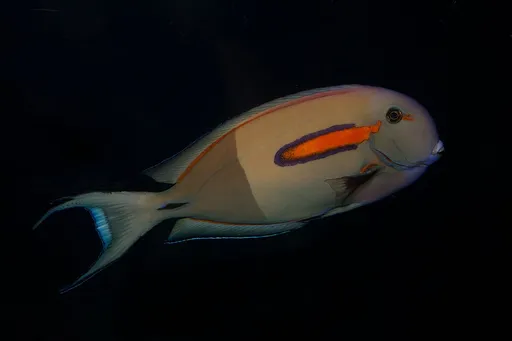 13.8 in (35 cm)180 gal (680 L)75–82°F (24–28°C)
Orangeshoulder tang
Acanthurus olivaceus
13.8 in (35 cm) · 180 gal (680 L)
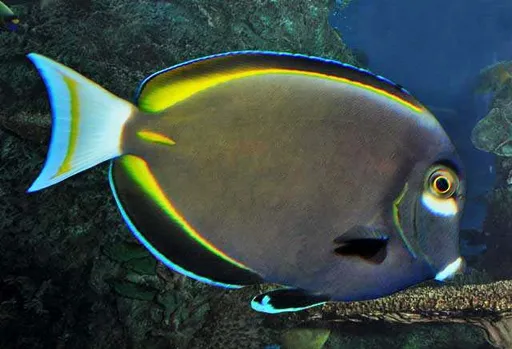 13.8 in (35 cm)129 gal (490 L)75–81°F (24–27°C)
Whitecheek tang
Acanthurus nigricans
13.8 in (35 cm) · 129 gal (490 L)
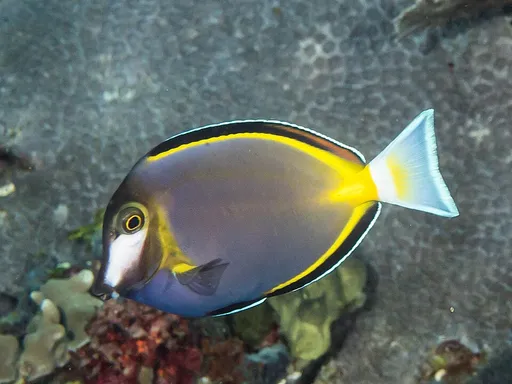 8.3 in (21 cm)129 gal (490 L)75–81°F (24–27°C)
Powder brown tang
Acanthurus japonicus
8.3 in (21 cm) · 129 gal (490 L)
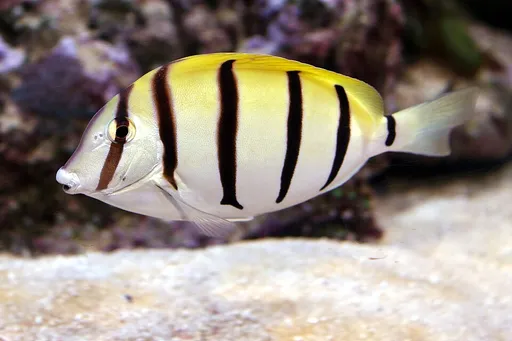 10.6 in (27 cm)124 gal (470 L)75–82°F (24–28°C)
Convict tang
Acanthurus triostegus
10.6 in (27 cm) · 124 gal (470 L)
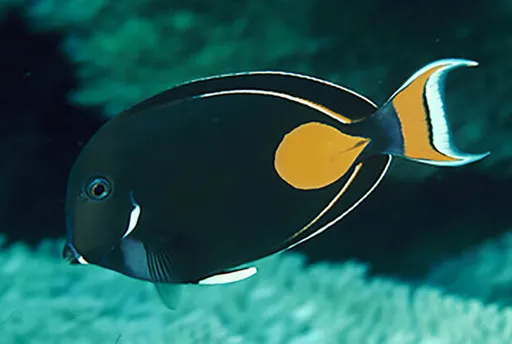 9.4 in (24 cm)180 gal (680 L)75–81°F (24–27°C)
Achilles tang
Acanthurus achilles
9.4 in (24 cm) · 180 gal (680 L)