Whitecheek tang
Acanthurus nigricans
Also known as Gold Rim Tang, Whitecheek Surgeonfish, Goldrim Surgeonfish
SaltwaterFish
Care at a glance
- Temperature
- 75–81°F
- 24–27°C
- pH
- 8.1–8.4
- Adult size
- 13.8 in
- 35 cm
- Minimum tank
- 129 gal
- 490 L
- Temperament
- Mostly peaceful
- Social behavior
- Solitary
- Tankmates
- With caution
- Swim level
- Middle
- Diet
- Herbivore
- Difficulty
- Medium
- Breeding
- No record
- Rarity
- Common
- Reef safe
- Reef safe
- Family
- Acanthuridae
- Origin
- Indo-Pacific reefs, from the Cocos-Keeling Islands to Hawaii and French Polynesia
Overview
The whitecheek tang is an Indo-Pacific surgeonfish that swims the middle of a large reef tank. It is less forgiving than the easier tangs, so it is best with a little experience.
Did you know
Whitecheek tangs occasionally hybridize with powder blue tangs where their ranges overlap in the Indo-Pacific. Mixed-pattern hybrids sometimes turn up in the aquarium trade.
Caring for the whitecheek tang
Keep a whitecheek tang in at least 129 gal (490 L), with open swimming room and plenty of rockwork. Hold the water at 75 to 81°F (24 to 27°C) with a pH of 8.1 to 8.4. It has a reputation as an ich magnet and does not forgive lapses in water quality. Stable parameters and a well-cycled tank matter more here than with easier tangs.
Feed it enough marine algae. A well-fed whitecheek tang generally leaves corals alone, but an underfed one will sometimes pick at large-polyp stony corals.
Whitecheek tangs are mostly peaceful toward other fish but will not tolerate other tangs, especially their own kind. Keep only one per tank.
Good to know
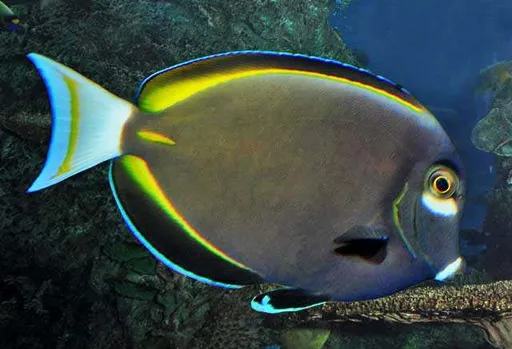
The whitecheek tang gets both of its common names, whitecheek and gold rim, from its markings. A small white patch sits on the cheek, and a gold band edges the dorsal and anal fins against a dark purplish black body. Like other Acanthurus species, it carries a sharp, scalpel-like spine on each side of the tail base. The spine folds out when the fish is threatened, and it gives surgeonfish their name.
In the wild
Whitecheek tangs range across a huge stretch of the Indo-Pacific. They are found from the Cocos-Keeling Islands and Christmas Island through the Great Barrier Reef to Hawaii and French Polynesia. They usually live alone along clear outer reef slopes, grazing algae off rock where the water moves strongly.
Common questions
What size tank does a whitecheek tang need?
A whitecheek tang needs at least 129 gal (490 L). It spends most of its time in the middle.
What temperature and pH does a whitecheek tang need?
A whitecheek tang is comfortable at 75–81°F (24–27°C) with a pH of 8.1–8.4.
What does a whitecheek tang eat?
A whitecheek tang eats marine algae, and it needs enough of it. A well-fed fish leaves corals alone, while an underfed one may pick at large-polyp stony corals.
How big does a whitecheek tang get?
An adult whitecheek tang reaches about 13.8 in (35 cm).
Related species
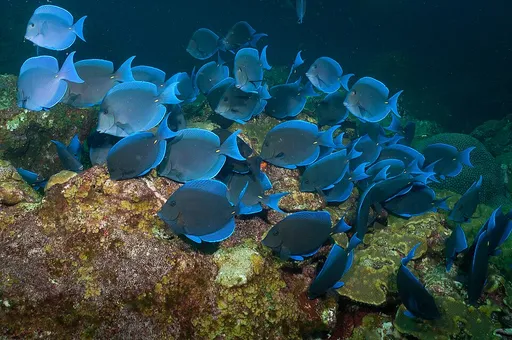 13.8 in (35 cm)151 gal (570 L)75–81°F (24–27°C)
Atlantic blue tang
Acanthurus coeruleus
13.8 in (35 cm) · 151 gal (570 L)
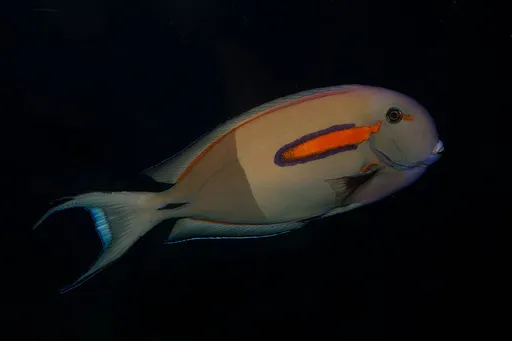 13.8 in (35 cm)180 gal (680 L)75–82°F (24–28°C)
Orangeshoulder tang
Acanthurus olivaceus
13.8 in (35 cm) · 180 gal (680 L)
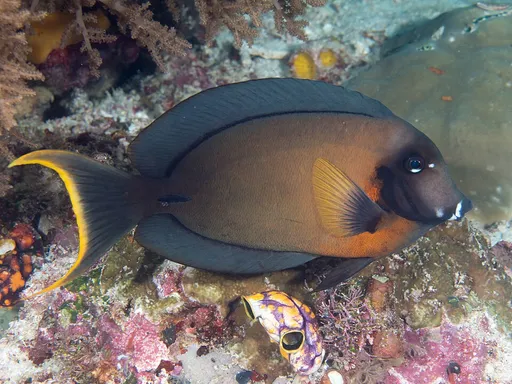 11.4 in (29 cm)129 gal (490 L)75–82°F (24–28°C)
Mimic tang
Acanthurus pyroferus
11.4 in (29 cm) · 129 gal (490 L)
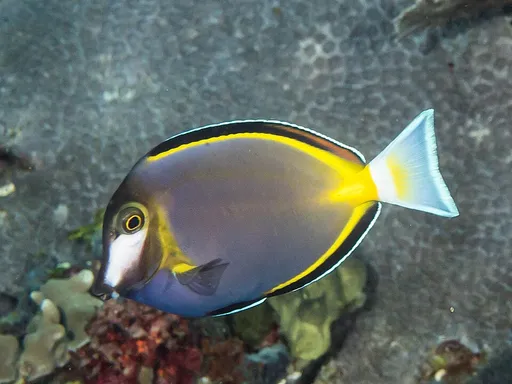 8.3 in (21 cm)129 gal (490 L)75–81°F (24–27°C)
Powder brown tang
Acanthurus japonicus
8.3 in (21 cm) · 129 gal (490 L)
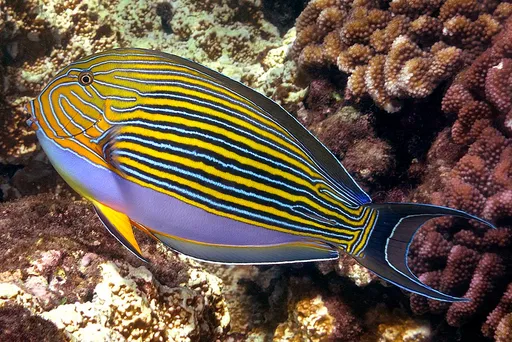 15 in (38 cm)238 gal (900 L)75–81°F (24–27°C)
Clown tang
Acanthurus lineatus
15 in (38 cm) · 238 gal (900 L)
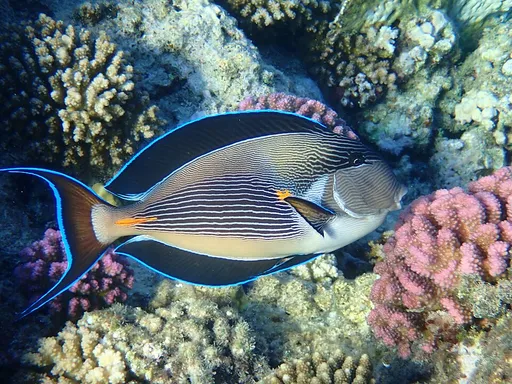 15.7 in (40 cm)180 gal (680 L)75–82°F (24–28°C)
Sohal tang
Acanthurus sohal
15.7 in (40 cm) · 180 gal (680 L)