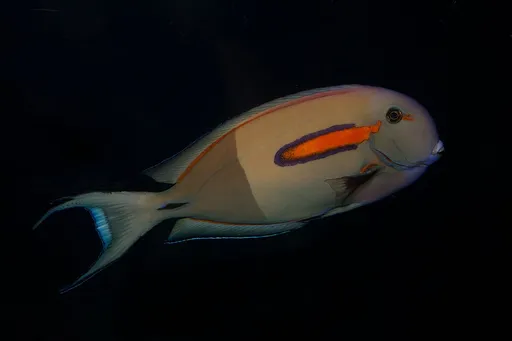
Orangeshoulder tang
Acanthurus olivaceus
Also known as Orangeband Surgeonfish, Orange-shoulder Surgeonfish, Orangebar Tang
SaltwaterFish
Care at a glance
- Temperature
- 75–82°F
- 24–28°C
- pH
- 8.1–8.4
- Adult size
- 13.8 in
- 35 cm
- Minimum tank
- 180 gal
- 680 L
- Temperament
- Mostly peaceful
- Social behavior
- Solitary
- Swim level
- Middle
- Difficulty
- Medium
- Breeding
- No record
- Rarity
- Common
- Reef safe
- Reef safe
- Family
- Acanthuridae
- Origin
- Indo-Pacific reefs, from Christmas Island to Hawaii and southern Japan
Overview
Semi-aggressive toward other tangs and surgeonfish but milder about it than many Acanthurus species, and generally easygoing with unrelated fish. Reef safe with corals and invertebrates. It grazes algae film and detritus off the substrate in the wild, so in the aquarium it needs regular nori or dried seaweed plus a steady supply of meaty frozen food to keep condition and reduce squabbling over food. Like other tangs it is vulnerable to marine ich when stressed, so give new arrivals a full quarantine before adding them to the display.
In the wild
Found on Indo-Pacific reefs from Christmas Island to Hawaii and southern Japan, with adults grazing sandy and rubble bottoms between about 9 and 46 m while juveniles shelter in shallower, more protected water. It is one of the larger tangs in the trade, so it needs a long tank with a wide-open swimming lane plus rockwork carrying a healthy film of algae. Give it at least 680 litres (180 US gal), since it outgrows a standard 125-gallon setup.
Good to know
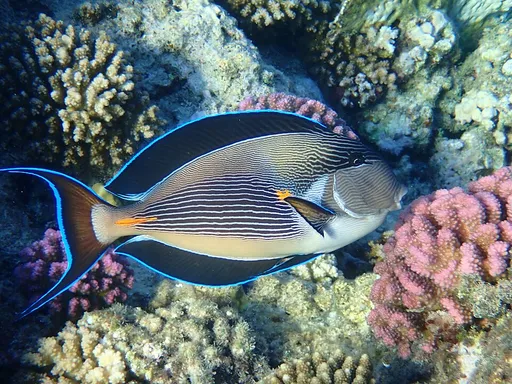
Carries the folding scalpel spine common to the genus Acanthurus at the base of the tail, used mainly against other tangs defending territory. It is a big grower for a reef tang, with a recorded maximum around 35 cm even though most aquarium specimens top out closer to 25 cm. Juveniles are solid yellow and easy to mistake for a young yellow tang; the grey body and orange comma-shaped shoulder patch that give the species its name only appear as it matures.
Did you know
Juveniles are such a close match for young yellow tangs that they are often mistaken for one another in dealer tanks, and the giveaway only shows up once the fish matures and its color splits into grey front, blue-grey back, and that bright orange shoulder stripe.
Weekly picks
Tank mates
Orangeshoulder tang is a mostly peaceful, solitary species that keeps to the middle. These picks share a community profile with it, are safe together in both directions, and overlap on water type, temperature and pH.
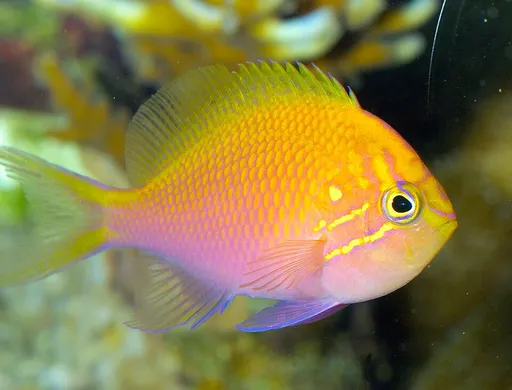
Sunburst anthias
Serranocirrhitus latus
Saltwater5.1 in (13 cm) · 70 gal (265 L)72–81°F (22–27°C)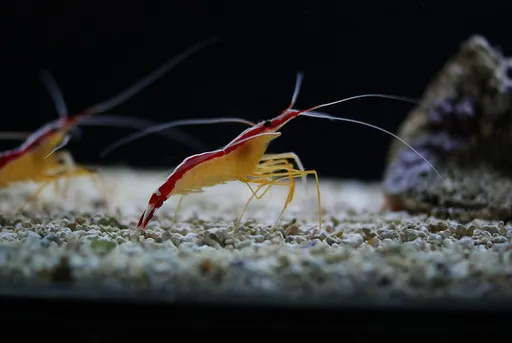
Skunk cleaner shrimp
Lysmata amboinensis
Saltwater2.4 in (6 cm) · 20 gal (75 L)73–81°F (23–27°C)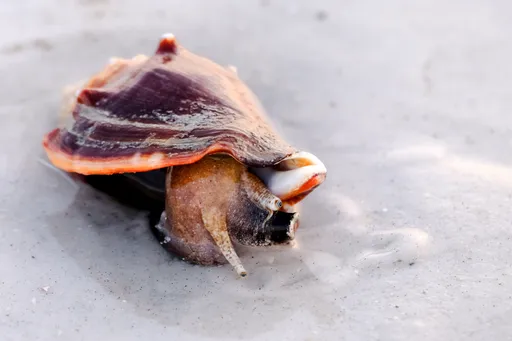
Fighting conch
Strombus alatus
Saltwater3.1 in (8 cm) · 20 gal (75 L)75–81°F (24–27°C)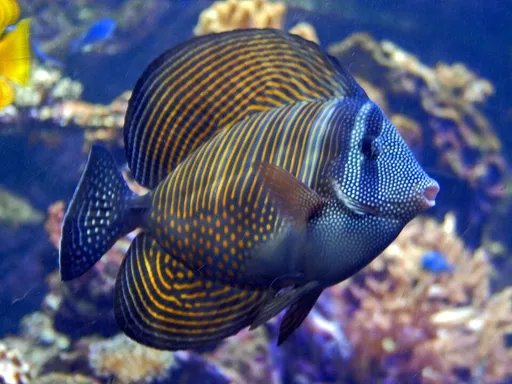
Red Sea sailfin tang
Zebrasoma desjardinii
Saltwater15.7 in (40 cm) · 180 gal (680 L)75–82°F (24–28°C)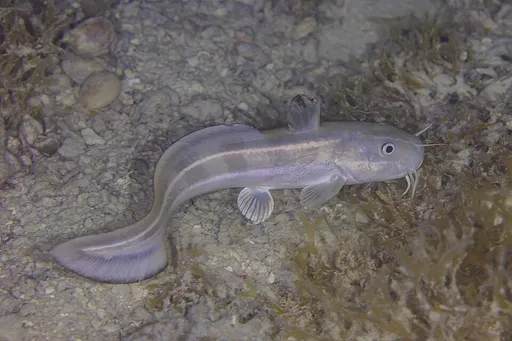
Striped eel catfish
Plotosus lineatus
Saltwater12.6 in (32 cm) · 106 gal (400 L)75–82°F (24–28°C)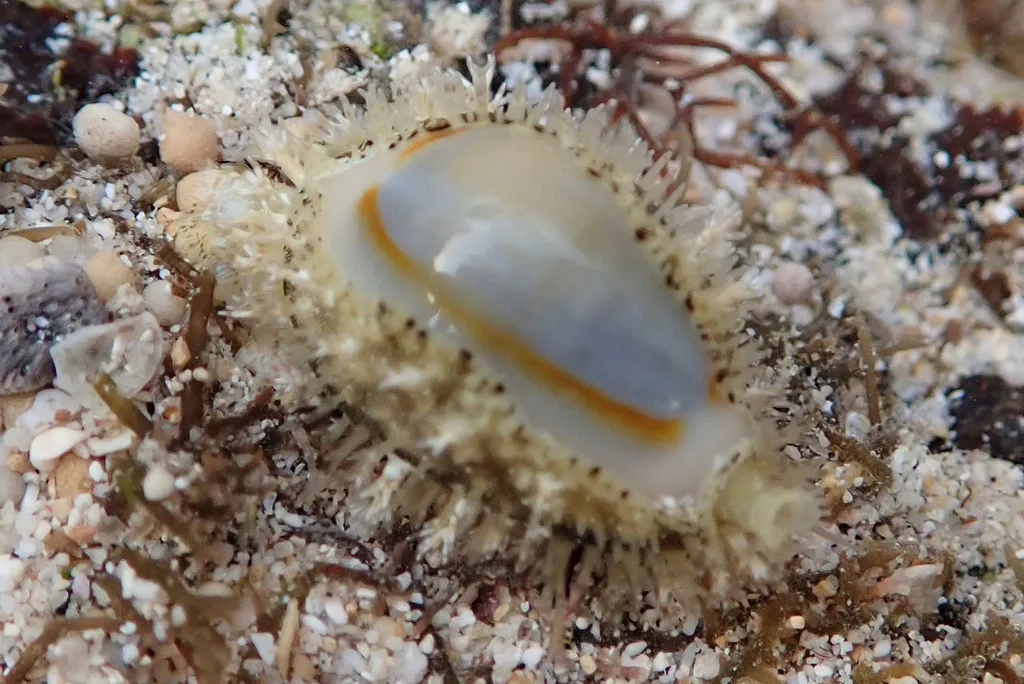
Ring cowrie
Monetaria annulus
Saltwater1.2 in (3 cm) · 20 gal (75 L)75–81°F (24–27°C)
Common questions
What size tank does an Orangeshoulder tang need?
An Orangeshoulder tang needs at least 180 gal (680 L). It spends most of its time in the middle.
What temperature and pH does an Orangeshoulder tang need?
An Orangeshoulder tang is comfortable at 75–82°F (24–28°C) with a pH of 8.1–8.4.
How big does an Orangeshoulder tang get?
An adult Orangeshoulder tang reaches about 13.8 in (35 cm).
Related species
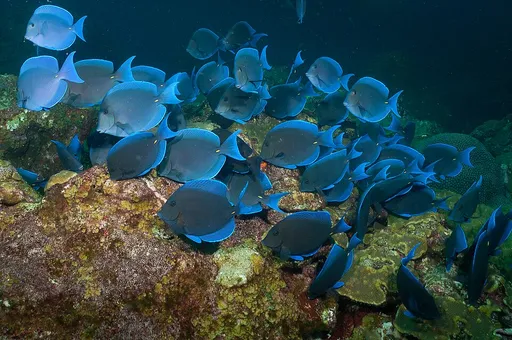 13.8 in (35 cm)151 gal (570 L)75–81°F (24–27°C)
Atlantic blue tang
Acanthurus coeruleus
13.8 in (35 cm) · 151 gal (570 L)
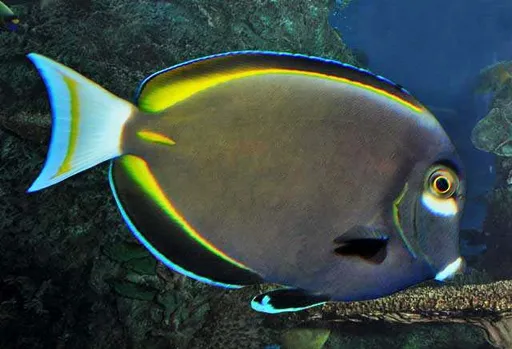 13.8 in (35 cm)129 gal (490 L)75–81°F (24–27°C)
Whitecheek tang
Acanthurus nigricans
13.8 in (35 cm) · 129 gal (490 L)
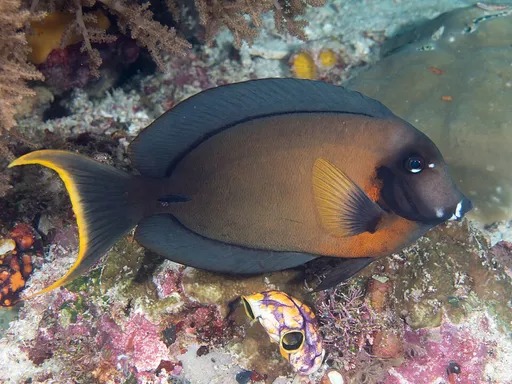 11.4 in (29 cm)129 gal (490 L)75–82°F (24–28°C)
Mimic tang
Acanthurus pyroferus
11.4 in (29 cm) · 129 gal (490 L)
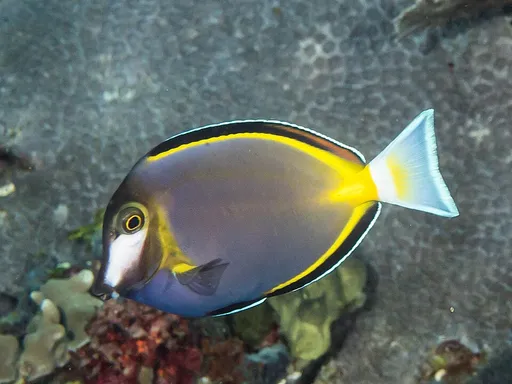 8.3 in (21 cm)129 gal (490 L)75–81°F (24–27°C)
Powder brown tang
Acanthurus japonicus
8.3 in (21 cm) · 129 gal (490 L)
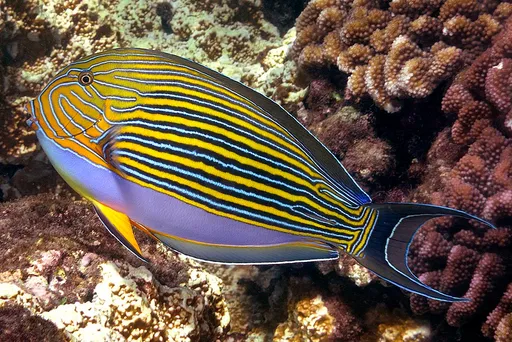 15 in (38 cm)238 gal (900 L)75–81°F (24–27°C)
Clown tang
Acanthurus lineatus
15 in (38 cm) · 238 gal (900 L)
 15.7 in (40 cm)180 gal (680 L)75–82°F (24–28°C)
Sohal tang
Acanthurus sohal
15.7 in (40 cm) · 180 gal (680 L)