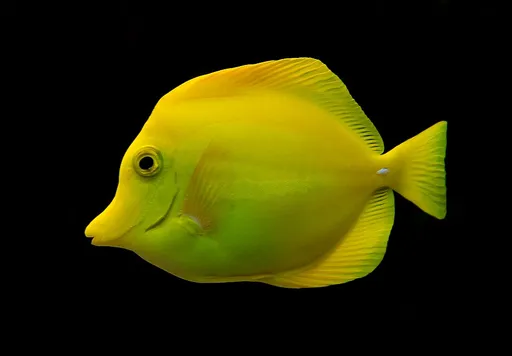
Yellow tang
Zebrasoma flavescens
Also known as Yellow Hawaiian Tang, Yellow Sailfin Tang, Yellow Surgeonfish
SaltwaterFish
Care at a glance
- Temperature
- 72–79°F
- 22–26°C
- pH
- 8.1–8.4
- Adult size
- 7.9 in
- 20 cm
- Minimum tank
- 100 gal
- 380 L
- Temperament
- Mostly peaceful
- Social behavior
- Solitary
- Tankmates
- With caution
- Swim level
- Middle
- Difficulty
- Medium
- Breeding
- Hard
- Rarity
- Very common
- Reef safe
- Reef safe
- Family
- Acanthuridae
- Origin
- Central and western Pacific, most abundant around the Hawaiian Islands, ranging to the Great Barrier Reef and Japan
Overview
An active daytime grazer that needs a large tank with open swimming room and abundant algae or supplemental nori. Reef safe as a herbivore, it does not eat coral and is a useful algae controller, though it may occasionally rasp at coral surfaces looking for film algae. It is peaceful toward unrelated fish but territorial toward its own kind and other tangs, especially other Zebrasoma, so it is best kept as the only yellow tang in most systems and added late in the stocking order. The tail spine can inflict cuts on other fish and on careless hands.
In the wild
Lives on shallow reef flats and lagoon slopes down to about 45 meters, usually in areas with plenty of rock and coral rubble covered in the algae films it grazes. In the wild it forages by day over hard surfaces, picking at filamentous and turf algae, and shelters in the reef structure at night. In the aquarium it wants a mature tank with lots of live rock to graze and open water in front of it to cruise.
Good to know
Zebrasoma flavescens is a member of the surgeonfish family Acanthuridae, named for the scalpel-like spine at the base of the tail that folds into a groove and flicks out for defense. It is one of the few surgeonfish now produced commercially through captive breeding, a breakthrough that reached the hobby in the mid 2010s and has eased pressure on Hawaiian wild stocks. Adults reach around 20 cm and can live well over ten years.
Did you know
The bright yellow color fades to a duller brownish tone at night and returns by morning, and a faint white lateral stripe appears while the fish sleeps.
Common questions
What size tank does a Yellow tang need?
A Yellow tang needs at least 100 gal (380 L). It spends most of its time in the middle.
What temperature and pH does a Yellow tang need?
A Yellow tang is comfortable at 72–79°F (22–26°C) with a pH of 8.1–8.4.
How big does a Yellow tang get?
An adult Yellow tang reaches about 7.9 in (20 cm).
Related species
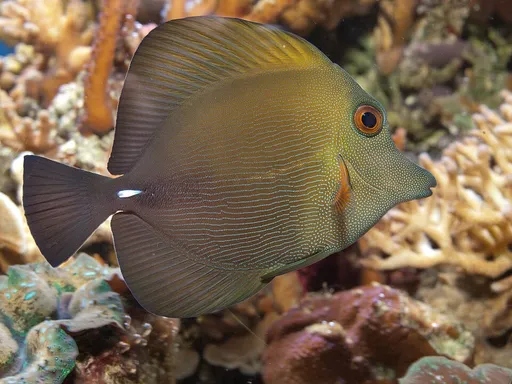 7.9 in (20 cm)90 gal (340 L)75–82°F (24–28°C)
Scopas tang
Zebrasoma scopas
7.9 in (20 cm) · 90 gal (340 L)
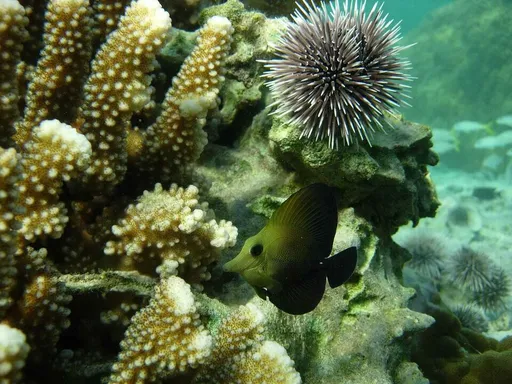 8.3 in (21 cm)119 gal (450 L)75–81°F (24–27°C)
Black tang
Zebrasoma rostratum
8.3 in (21 cm) · 119 gal (450 L)
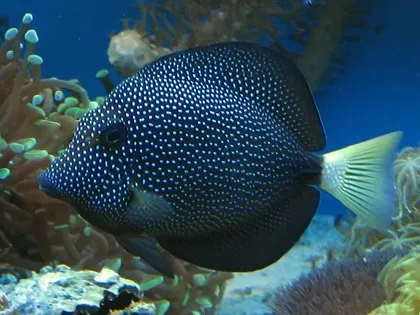 8.7 in (22 cm)151 gal (570 L)75–81°F (24–27°C)
Gem tang
Zebrasoma gemmatum
8.7 in (22 cm) · 151 gal (570 L)
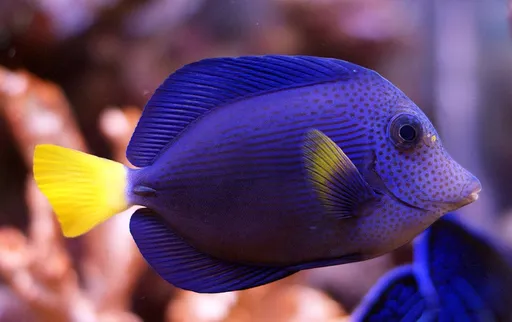 9.8 in (25 cm)106 gal (400 L)75–82°F (24–28°C)
Purple tang
Zebrasoma xanthurum
9.8 in (25 cm) · 106 gal (400 L)
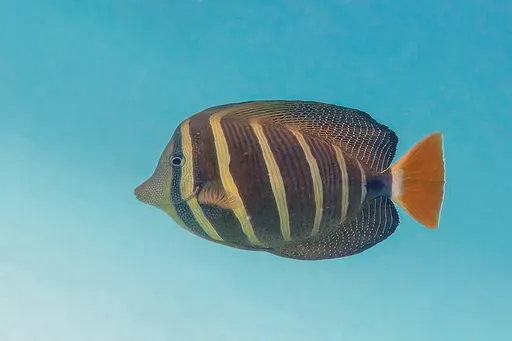 11.8 in (30 cm)145 gal (550 L)75–82°F (24–28°C)
Sailfin tang
Zebrasoma veliferum
11.8 in (30 cm) · 145 gal (550 L)
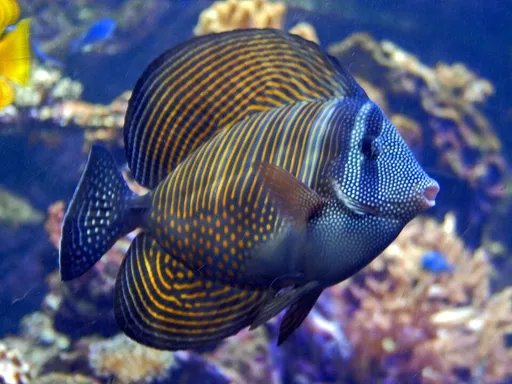 15.7 in (40 cm)180 gal (680 L)75–82°F (24–28°C)
Red Sea sailfin tang
Zebrasoma desjardinii
15.7 in (40 cm) · 180 gal (680 L)