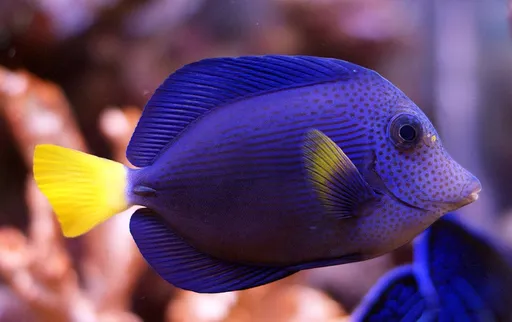
Purple tang
Zebrasoma xanthurum
Also known as Yellowtail Sailfin Tang, Yellowtail Tang
SaltwaterFish
Care at a glance
- Temperature
- 75–82°F
- 24–28°C
- pH
- 8.1–8.4
- Adult size
- 9.8 in
- 25 cm
- Minimum tank
- 106 gal
- 400 L
- Temperament
- Mostly peaceful
- Social behavior
- Solitary
- Tankmates
- With caution
- Swim level
- Middle
- Difficulty
- Medium
- Breeding
- No record
- Rarity
- Common
- Reef safe
- Reef safe
- Family
- Acanthuridae
- Origin
- Red Sea and western Indian Ocean
Overview
A hardy algae grazer that is reef safe with corals but has a reputation as one of the pushier Zebrasoma tangs, especially toward other tangs and similarly shaped fish. Keep only one per tank and add it last, and avoid pairing it with yellow or scopas tangs unless the system is very large. Feed dried marine algae (nori) on a clip daily in addition to whatever it grazes off the rock.
In the wild
A Red Sea and Arabian Sea surgeonfish that grazes filamentous algae over shallow rocky reefs and coral flats, often in loose groups on the wild reef but territorial in the confines of a tank. It roams constantly and needs long, open swimming lanes plus live rock covered in algae to browse. Strong flow and high oxygen suit it well.
Good to know
Zebrasoma xanthurum carries a scalpel-sharp, retractable spine at the base of the tail on each side, the surgeonfish hallmark, which it uses in disputes and which can inflict a nasty cut on a careless handler. Its deep purple body and contrasting yellow tail make it one of the few solid-purple reef fish, and the color comes from structural and pigment cells rather than diet.
Did you know
It is one of the classic Red Sea reef fish and, despite the deep purple adult color, juveniles can look almost blue-purple, deepening as they mature.
Common questions
What size tank does a Purple tang need?
A Purple tang needs at least 106 gal (400 L). It spends most of its time in the middle.
What temperature and pH does a Purple tang need?
A Purple tang is comfortable at 75–82°F (24–28°C) with a pH of 8.1–8.4.
How big does a Purple tang get?
An adult Purple tang reaches about 9.8 in (25 cm).
Related species
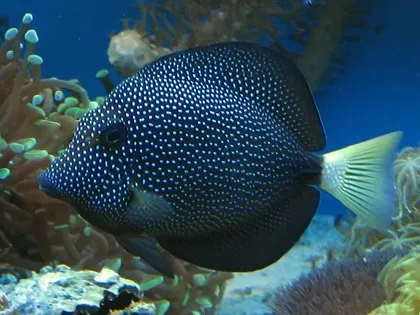 8.7 in (22 cm)151 gal (570 L)75–81°F (24–27°C)
Gem tang
Zebrasoma gemmatum
8.7 in (22 cm) · 151 gal (570 L)
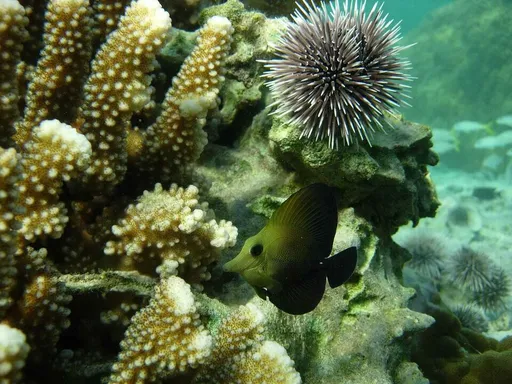 8.3 in (21 cm)119 gal (450 L)75–81°F (24–27°C)
Black tang
Zebrasoma rostratum
8.3 in (21 cm) · 119 gal (450 L)
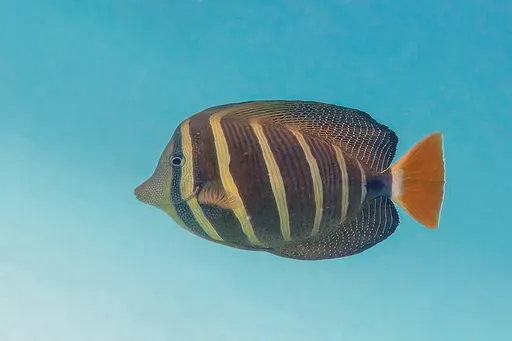 11.8 in (30 cm)145 gal (550 L)75–82°F (24–28°C)
Sailfin tang
Zebrasoma veliferum
11.8 in (30 cm) · 145 gal (550 L)
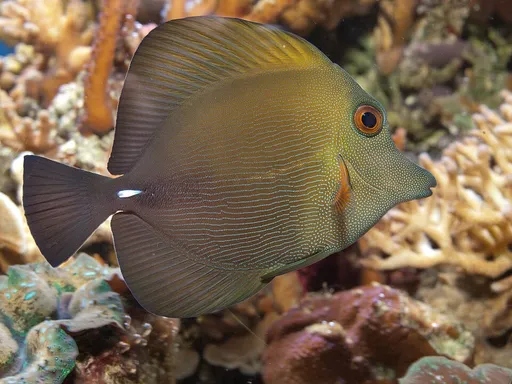 7.9 in (20 cm)90 gal (340 L)75–82°F (24–28°C)
Scopas tang
Zebrasoma scopas
7.9 in (20 cm) · 90 gal (340 L)
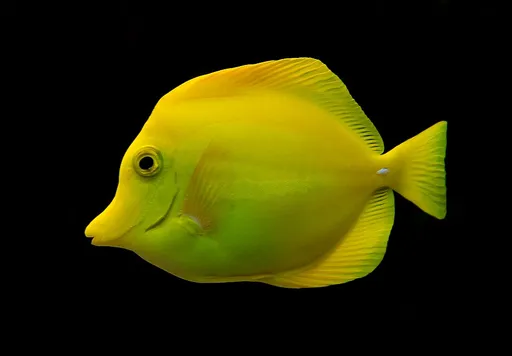 7.9 in (20 cm)100 gal (380 L)72–79°F (22–26°C)
Yellow tang
Zebrasoma flavescens
7.9 in (20 cm) · 100 gal (380 L)
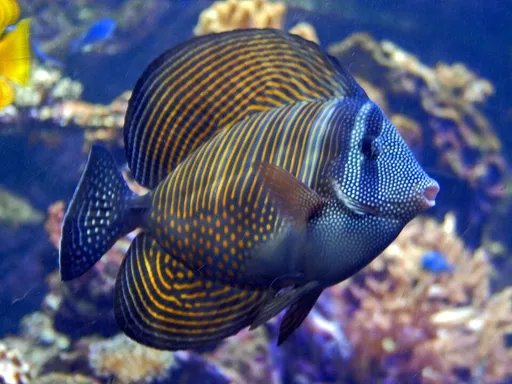 15.7 in (40 cm)180 gal (680 L)75–82°F (24–28°C)
Red Sea sailfin tang
Zebrasoma desjardinii
15.7 in (40 cm) · 180 gal (680 L)