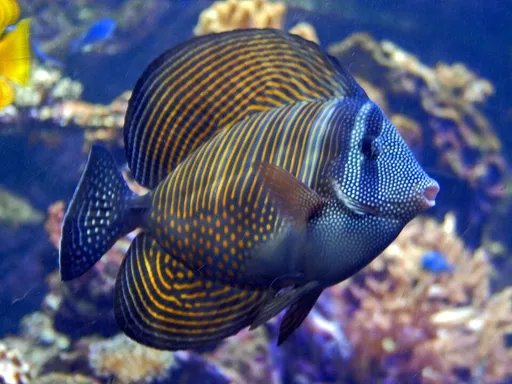
Red Sea sailfin tang
Zebrasoma desjardinii
Also known as Desjardini Sailfin Tang, Indian Ocean Sailfin Tang, Indian Sailfin Tang
SaltwaterFish
Care at a glance
- Temperature
- 75–82°F
- 24–28°C
- pH
- 8.1–8.4
- Adult size
- 15.7 in
- 40 cm
- Minimum tank
- 180 gal
- 680 L
- Temperament
- Mostly peaceful
- Social behavior
- Solitary
- Swim level
- Middle
- Difficulty
- Medium
- Breeding
- No record
- Rarity
- Common
- Reef safe
- Reef safe
- Family
- Acanthuridae
- Origin
- Red Sea and Indian Ocean reefs, from East Africa to Indonesia
Overview
Territorial toward its own species and other Zebrasoma tangs but generally peaceful with unrelated fish, so keep only one per tank unless the aquarium is large enough to break sightlines. Reef safe with corals and invertebrates. Its diet is almost entirely algae based, so offer nori or dried seaweed at least three times a week, ideally daily, to keep its color and immune system in good shape and to curb aggression that often flares up when it is underfed. Like other tangs it can develop marine ich when stressed, so quarantine new fish and keep water quality stable.
In the wild
Found on Red Sea and Indian Ocean reefs from East Africa to Indonesia, on lagoon and seaward reefs down to about 30 m, with juveniles favoring sheltered shallows. Its tall dorsal and anal fins mean it needs real width as well as length to turn around comfortably, so a tank of at least 680 litres (180 US gal) with a long open swimming lane and plenty of algae-coated rock to graze suits it far better than a tall, narrow setup.
Good to know
Carries the same folding tail spine as other surgeonfish, tucked into a groove near the base of the tail. Its most striking feature is the oversized, sail-like dorsal and anal fin, which it can raise to nearly double its apparent body size when threatening a rival or intimidating a tankmate. It is one of the larger Zebrasoma species, reaching around 40 cm, and was long treated as a subspecies of the similar-looking Pacific sailfin tang before taxonomists split it into its own species.
Did you know
Red Sea populations of this normally herbivorous tang have been observed picking at moon jellies and comb jellies drifting past the reef, an odd bit of opportunistic predation for a fish that spends most of its day grazing algae off rock.
Weekly picks
Tank mates
Red Sea sailfin tang is a mostly peaceful, solitary species that keeps to the middle. These picks share a community profile with it, are safe together in both directions, and overlap on water type, temperature and pH.
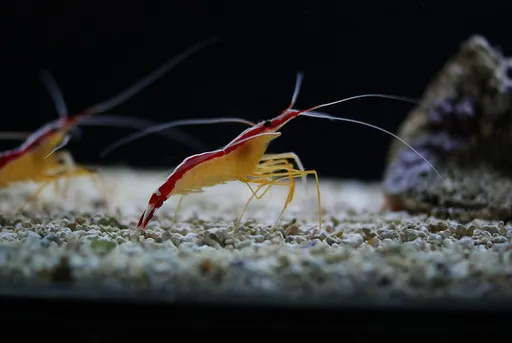
Skunk cleaner shrimp
Lysmata amboinensis
Saltwater2.4 in (6 cm) · 20 gal (75 L)73–81°F (23–27°C)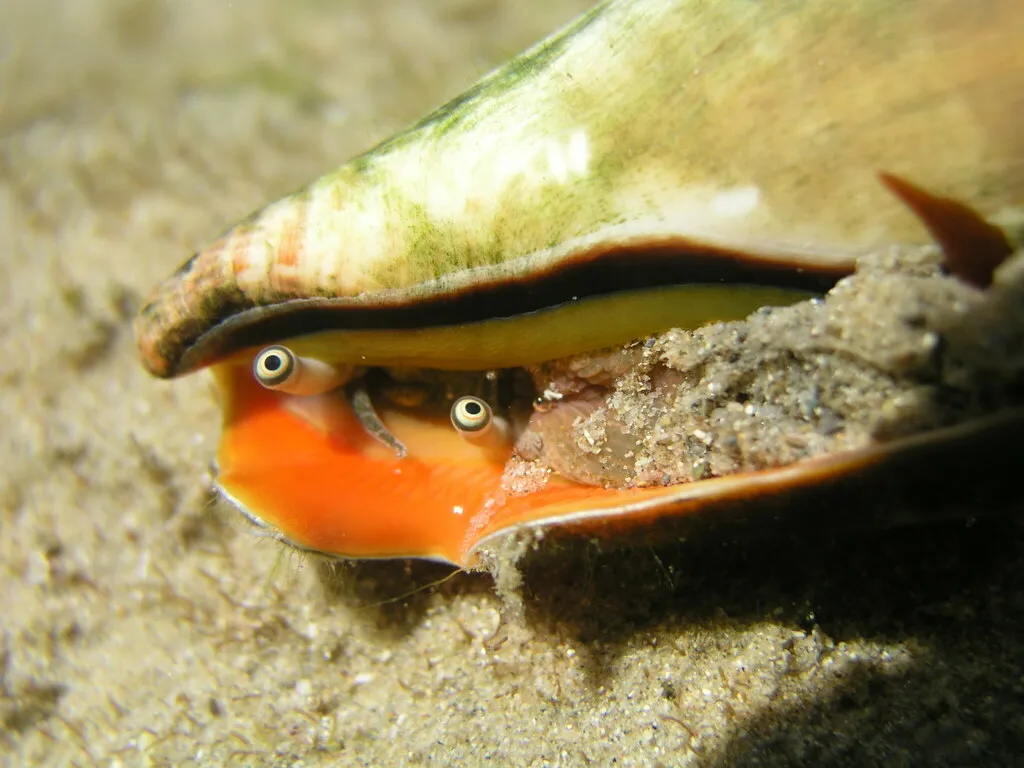
Tiger / strawberry conch
Conomurex luhuanus
Saltwater2.8 in (7 cm) · 20 gal (75 L)75–81°F (24–27°C)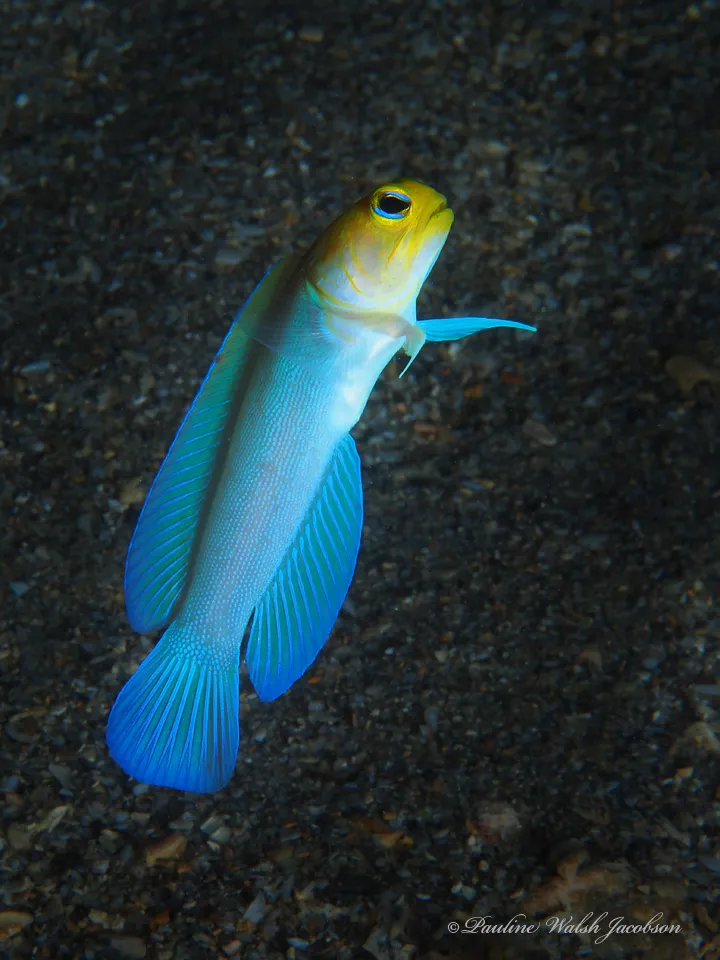
Pearly jawfish
Opistognathus aurifrons
Saltwater3.9 in (10 cm) · 29 gal (110 L)73–81°F (23–27°C)
Bicolor anthias
Pseudanthias bicolor
Saltwater5.1 in (13 cm) · 125 gal (475 L)72–79°F (22–26°C)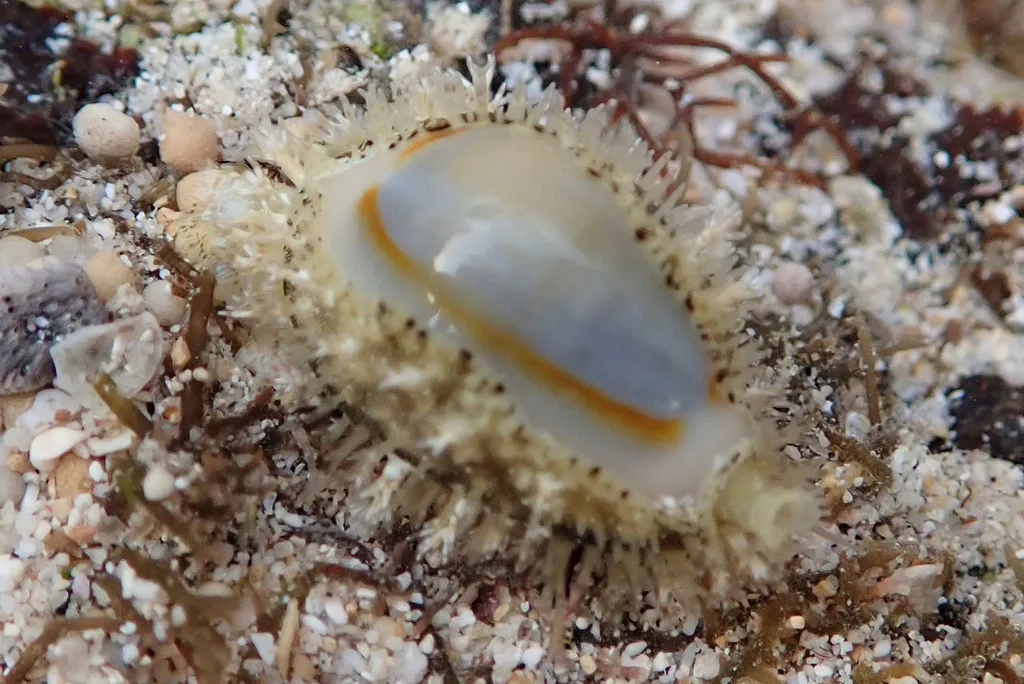
Ring cowrie
Monetaria annulus
Saltwater1.2 in (3 cm) · 20 gal (75 L)75–81°F (24–27°C)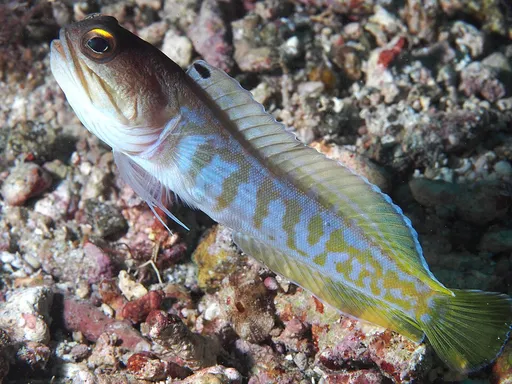
Gold-specs jawfish
Opistognathus randalli
Saltwater3.9 in (10 cm) · 30 gal (115 L)73–81°F (23–27°C)
Common questions
What size tank does a Red Sea sailfin tang need?
A Red Sea sailfin tang needs at least 180 gal (680 L). It spends most of its time in the middle.
What temperature and pH does a Red Sea sailfin tang need?
A Red Sea sailfin tang is comfortable at 75–82°F (24–28°C) with a pH of 8.1–8.4.
How big does a Red Sea sailfin tang get?
An adult Red Sea sailfin tang reaches about 15.7 in (40 cm).
Related species
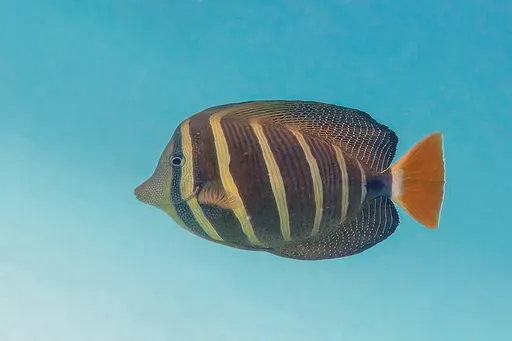 11.8 in (30 cm)145 gal (550 L)75–82°F (24–28°C)
Sailfin tang
Zebrasoma veliferum
11.8 in (30 cm) · 145 gal (550 L)
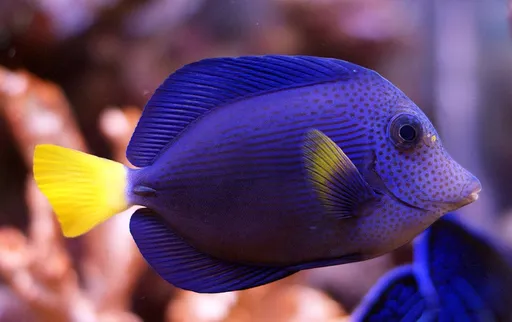 9.8 in (25 cm)106 gal (400 L)75–82°F (24–28°C)
Purple tang
Zebrasoma xanthurum
9.8 in (25 cm) · 106 gal (400 L)
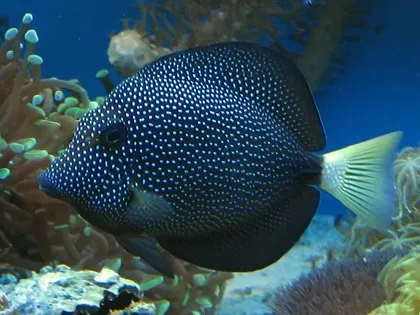 8.7 in (22 cm)151 gal (570 L)75–81°F (24–27°C)
Gem tang
Zebrasoma gemmatum
8.7 in (22 cm) · 151 gal (570 L)
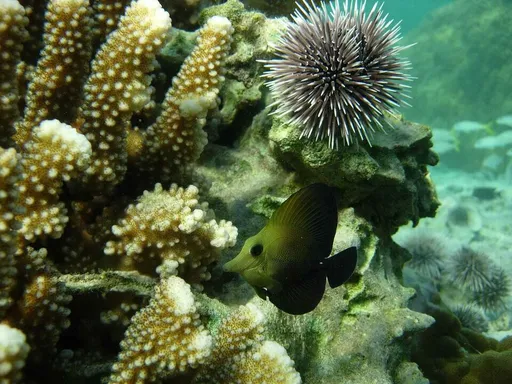 8.3 in (21 cm)119 gal (450 L)75–81°F (24–27°C)
Black tang
Zebrasoma rostratum
8.3 in (21 cm) · 119 gal (450 L)
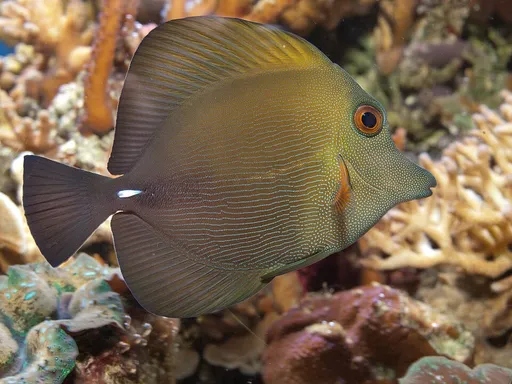 7.9 in (20 cm)90 gal (340 L)75–82°F (24–28°C)
Scopas tang
Zebrasoma scopas
7.9 in (20 cm) · 90 gal (340 L)
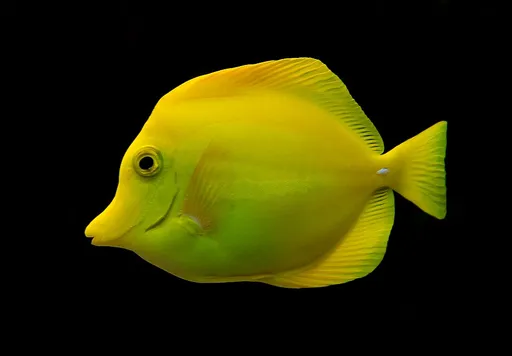 7.9 in (20 cm)100 gal (380 L)72–79°F (22–26°C)
Yellow tang
Zebrasoma flavescens
7.9 in (20 cm) · 100 gal (380 L)