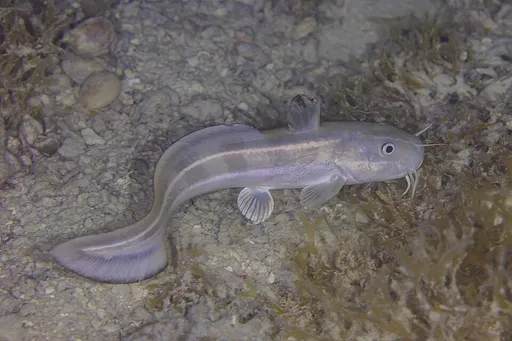
Striped eel catfish
Plotosus lineatus
Also known as Coral catfish, Striped catfish, Barber eel
SaltwaterFish
Care at a glance
- Temperature
- 75–82°F
- 24–28°C
- pH
- 8.1–8.4
- Adult size
- 12.6 in
- 32 cm
- Minimum tank
- 106 gal
- 400 L
- Temperament
- Mostly peaceful
- Social behavior
- Schooling
- Swim level
- Bottom
- Difficulty
- Difficult
- Breeding
- No record
- Rarity
- Rare
- Reef safe
- Reef safe with caution
- Family
- Plotosidae
- Origin
- Ranges across Indo-Pacific reefs and estuaries, with juveniles entering brackish and fresh water.
Overview
Treat this fish as a venomous animal first and an aquarium fish second, since a sting from its spines is a genuine medical emergency, so never handle it and take great care during maintenance. It is only reef safe with caution: it will not nip corals but hunts small fish, shrimp, snails, and other mobile invertebrates over the sand. Juveniles need to be kept in a group to feel secure, which means a large tank of at least 400 liters for a school that grows to a foot long. Feed meaty marine foods like mysis, chopped seafood, and pellets.
In the wild
The striped eel catfish is the only marine catfish widely seen in the trade, living over sandy and rubble bottoms of Indo-Pacific reefs, lagoons, and estuaries. Juveniles gather in dense, ball-shaped schools that swirl over the substrate, while adults spread out and become more solitary. It needs a mature marine tank with a sandy bed, plenty of rock cover, and stable full-strength saltwater at 24 to 28 degrees C.
Good to know
Plotosus lineatus reaches about 32 cm and is armed with highly venomous serrate spines in the first dorsal and each pectoral fin, capable of causing severe pain and, in rare cases, death. The eel-like body carries cream and dark brown lengthwise stripes that fade with age. It is amphidromous, moving between salt and fresh water at different life stages.
Did you know
The pretty striped juveniles that swirl in a tight ball on the reef are one of the most dangerous fish a diver can touch, since their venomous spines can put an adult in hospital.
Weekly picks
Tank mates
Striped eel catfish is a mostly peaceful, schooling species that keeps to the bottom. These picks share a community profile with it, are safe together in both directions, and overlap on water type, temperature and pH.
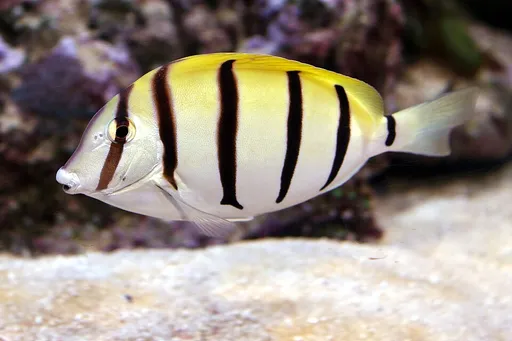
Convict tang
Acanthurus triostegus
Saltwater10.6 in (27 cm) · 124 gal (470 L)75–82°F (24–28°C)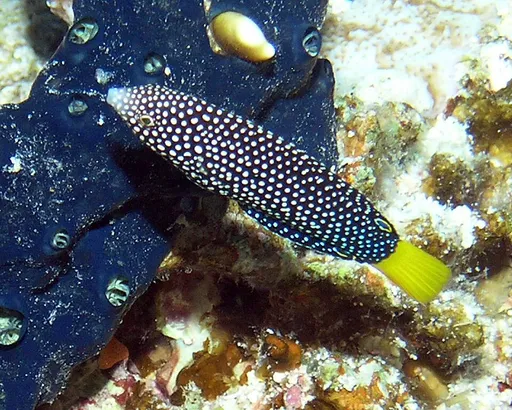
Yellowtail tamarin wrasse
Anampses meleagrides
Saltwater8.7 in (22 cm) · 90 gal (340 L)73–81°F (23–27°C)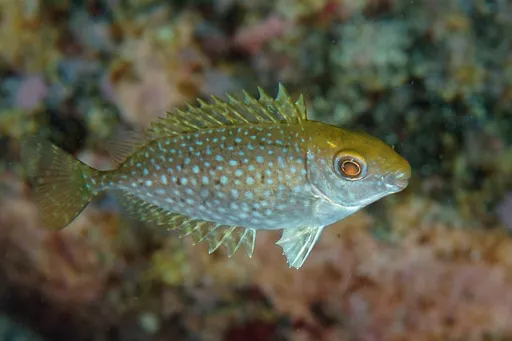
Dusky rabbitfish
Siganus fuscescens
Saltwater15.7 in (40 cm) · 120 gal (454 L)72–79°F (22–26°C)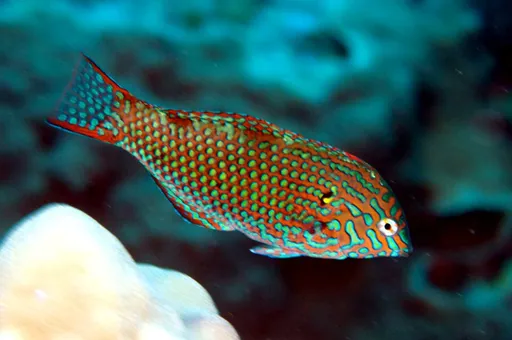
Leopard wrasse
Macropharyngodon meleagris
Saltwater5.9 in (15 cm) · 90 gal (340 L)72–79°F (22–26°C)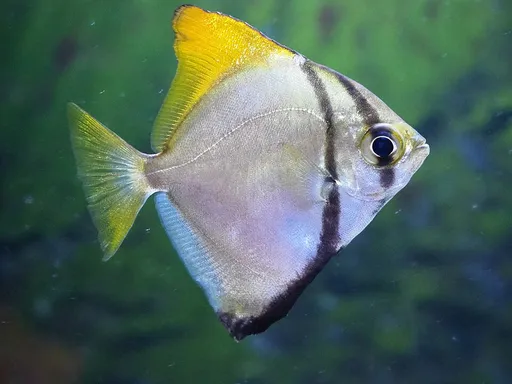
Silver mono
Monodactylus argenteus
BrackishSaltwater9.8 in (25 cm) · 106 gal (400 L)75–82°F (24–28°C)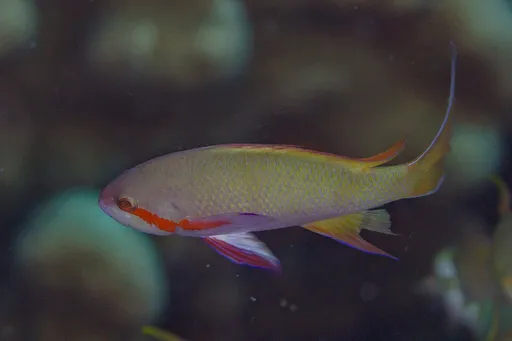
Huchtii anthias
Pseudanthias huchtii
Saltwater4.7 in (12 cm) · 90 gal (340 L)75–81°F (24–27°C)
Common questions
What size tank does a Striped eel catfish need?
A Striped eel catfish needs at least 106 gal (400 L). It spends most of its time in the bottom.
What temperature and pH does a Striped eel catfish need?
A Striped eel catfish is comfortable at 75–82°F (24–28°C) with a pH of 8.1–8.4.
How big does a Striped eel catfish get?
An adult Striped eel catfish reaches about 12.6 in (32 cm).
Does a Striped eel catfish need a group?
Yes. A Striped eel catfish is a schooling species and should be kept in a group, not singly.
Related species
 11.8 in (30 cm)65 gal (246 L)72–79°F (22–26°C)
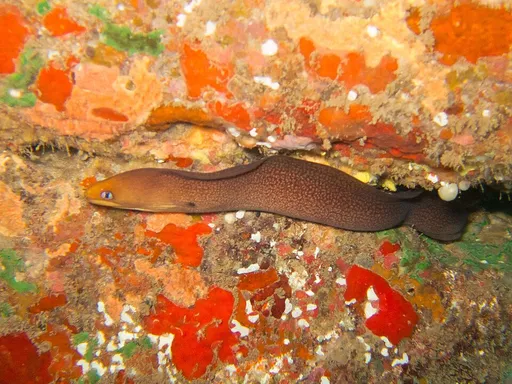
Golden dwarf moray
Gymnothorax melatremus
11.8 in (30 cm) · 65 gal (246 L)
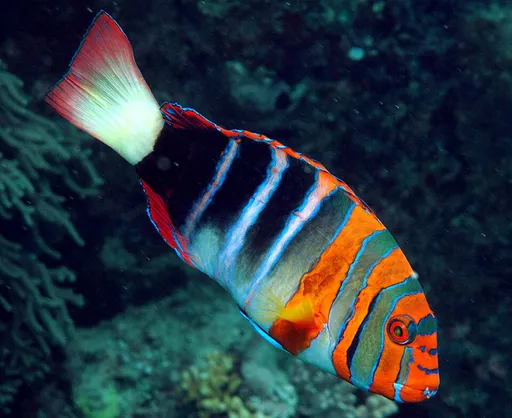 11.8 in (30 cm)125 gal (473 L)72–79°F (22–26°C)
Harlequin tuskfish
Choerodon fasciatus
11.8 in (30 cm) · 125 gal (473 L)
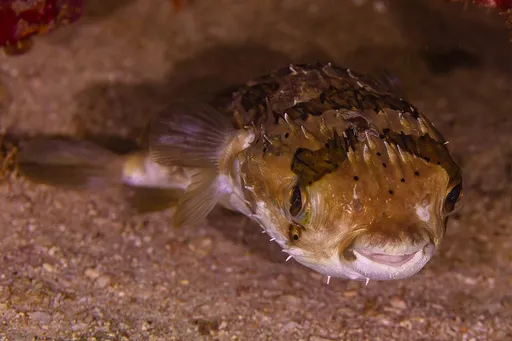 11.8 in (30 cm)180 gal (680 L)75–81°F (24–27°C)
Porcupine puffer
Diodon holocanthus
11.8 in (30 cm) · 180 gal (680 L)
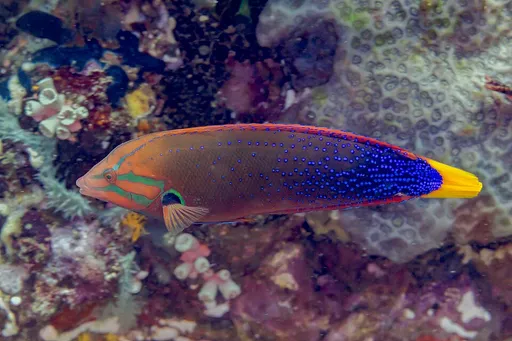 11.8 in (30 cm)150 gal (568 L)72–79°F (22–26°C)
Red coris wrasse
Coris gaimard
11.8 in (30 cm) · 150 gal (568 L)
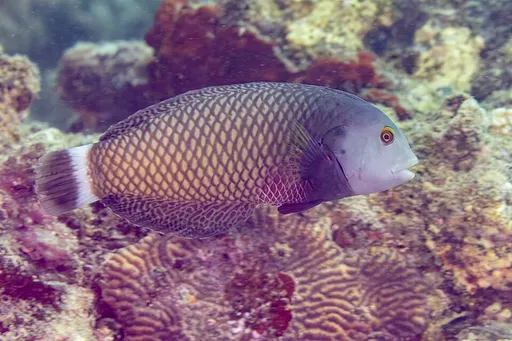 11.8 in (30 cm)106 gal (400 L)73–81°F (23–27°C)
Dragon wrasse
Novaculichthys taeniourus
11.8 in (30 cm) · 106 gal (400 L)
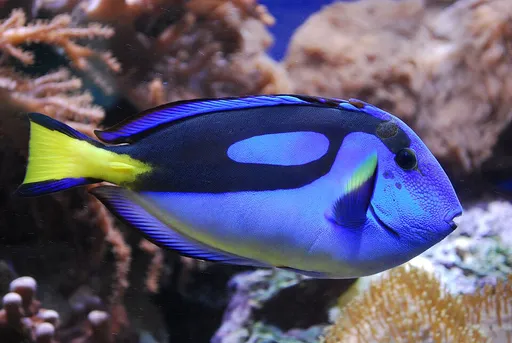 11.8 in (30 cm)180 gal (680 L)73–81°F (23–27°C)
Blue hippo tang
Paracanthurus hepatus
11.8 in (30 cm) · 180 gal (680 L)