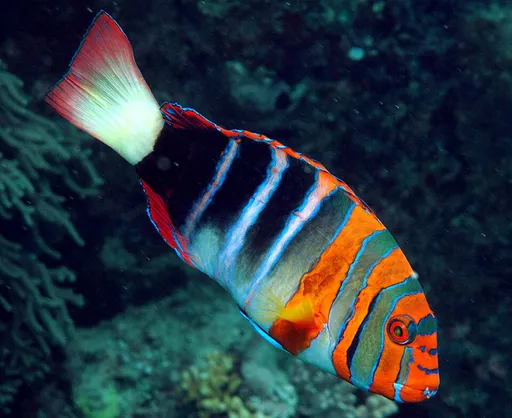
Harlequin tuskfish
Choerodon fasciatus
Also known as Harlequin Tusk, Harlequin Tusk Wrasse, Harlequin Wrasse
SaltwaterFish
Care at a glance
- Temperature
- 72–79°F
- 22–26°C
- pH
- 8.1–8.4
- Adult size
- 11.8 in
- 30 cm
- Minimum tank
- 125 gal
- 473 L
- Temperament
- Mostly peaceful
- Social behavior
- Solitary
- Own kind
- One per tank
- Tankmates
- With caution
- Swim level
- Bottom
- Difficulty
- Medium
- Breeding
- Hard
- Rarity
- Common
- Reef safe
- Reef safe with caution
- Family
- Labridae
- Origin
- Western Pacific reefs, from the Philippines and the Ryukyu Islands to New Caledonia and the Great Barrier Reef
Overview
Bold and confident rather than truly aggressive toward fish tankmates, it gets along with similarly sized, sturdy community fish but can be territorial with other tuskfish and is best kept one to a tank. It is not a coral eater and generally leaves sessile invertebrates alone, but it hunts down and eats crabs, hermit crabs, snails, and shrimp with its powerful teeth, so skip it if the plan includes a cleanup crew or ornamental shrimp. Offer a varied carnivore diet of shrimp, clams, krill, and other meaty foods several times a day; it is an intelligent, food driven fish that soon learns to recognize whoever feeds it.
In the wild
Native to lagoons and seaward reefs of the western Pacific, from the Philippines and Ryukyu Islands south to the Great Barrier Reef and New Caledonia, usually at 5–35 m. This is a big, bold showpiece wrasse that needs at least 473 litres (125 gallons) once grown, with a deep sand bed to forage through and enough open rock and rubble that it can rearrange the scenery, which it does constantly while hunting.
Good to know
The genus name Choerodon comes from the Greek for pig tooth, a reference to the prominent, forward pointing canine teeth that give this fish its tusks. Like other wrasses it is a protogynous hermaphrodite, starting out female and able to convert to male within a loose social group. Adults reach about 30 cm and use those blue tusk-like teeth to crush open shelled prey. In 2020 Bali Aquarich achieved the first documented captive breeding of the species, though nearly every harlequin tuskfish sold today is still wild caught.
Did you know
Those bright blue tusks are not just for show: a harlequin tuskfish uses them to pry snails and hermit crabs out of their shells and can even be heard grinding away at hard prey, a party trick that also explains how it earned its name.
Common questions
What size tank does a Harlequin tuskfish need?
A Harlequin tuskfish needs at least 125 gal (473 L). It spends most of its time in the bottom.
What temperature and pH does a Harlequin tuskfish need?
A Harlequin tuskfish is comfortable at 72–79°F (22–26°C) with a pH of 8.1–8.4.
How big does a Harlequin tuskfish get?
An adult Harlequin tuskfish reaches about 11.8 in (30 cm).
Related species
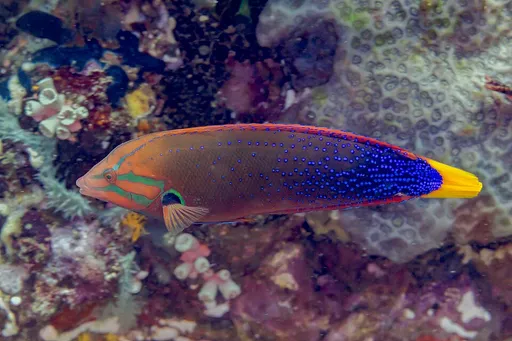 11.8 in (30 cm)150 gal (568 L)72–79°F (22–26°C)
Red coris wrasse
Coris gaimard
11.8 in (30 cm) · 150 gal (568 L)
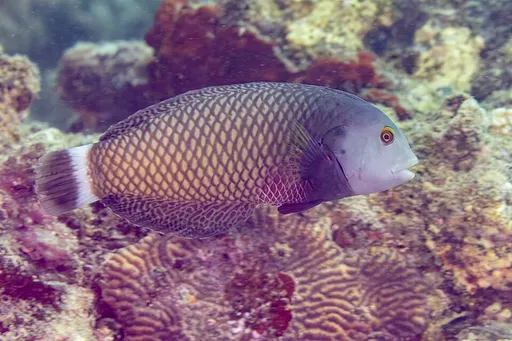 11.8 in (30 cm)106 gal (400 L)73–81°F (23–27°C)
Dragon wrasse
Novaculichthys taeniourus
11.8 in (30 cm) · 106 gal (400 L)
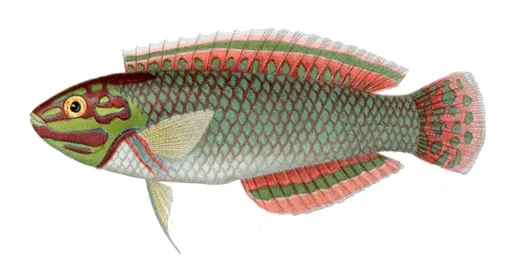 5.9 in (15 cm)70 gal (265 L)72–79°F (22–26°C)
Christmas wrasse
Halichoeres ornatissimus
5.9 in (15 cm) · 70 gal (265 L)
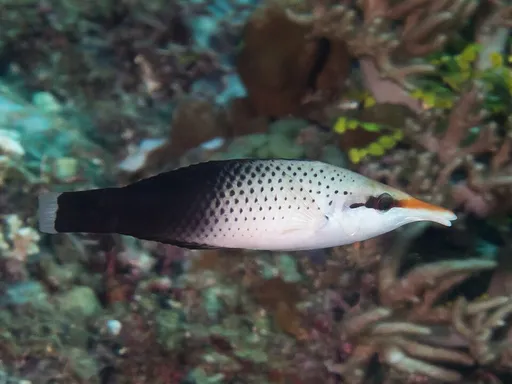 11.8 in (30 cm)125 gal (473 L)72–79°F (22–26°C)
Green bird wrasse
Gomphosus varius
11.8 in (30 cm) · 125 gal (473 L)
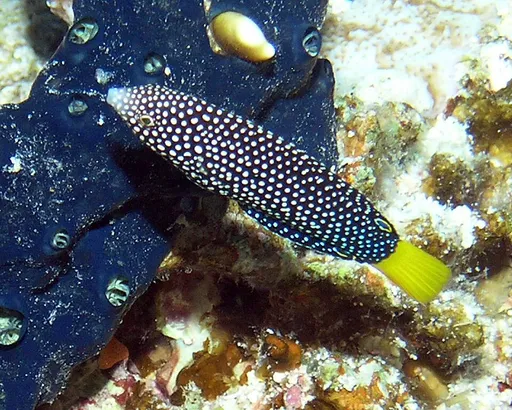 8.7 in (22 cm)90 gal (340 L)73–81°F (23–27°C)
Yellowtail tamarin wrasse
Anampses meleagrides
8.7 in (22 cm) · 90 gal (340 L)
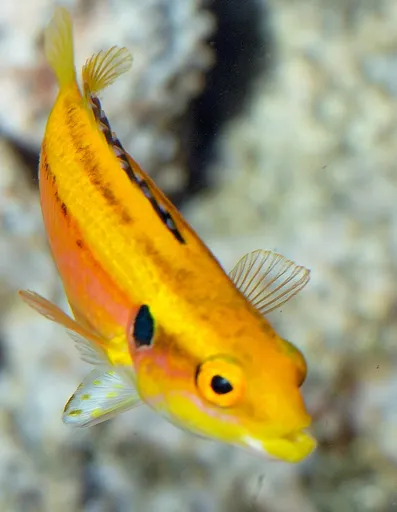 3.9 in (10 cm)30 gal (114 L)72–79°F (22–26°C)
Twospot hogfish
Bodianus bimaculatus
3.9 in (10 cm) · 30 gal (114 L)