Dragon wrasse
Novaculichthys taeniourus
Also known as Rockmover Wrasse, Reindeer Wrasse, Olive-Scribbled Wrasse, Carpet Wrasse
SaltwaterFish
Care at a glance
- Temperature
- 73–81°F
- 23–27°C
- pH
- 8.1–8.4
- Adult size
- 11.8 in
- 30 cm
- Minimum tank
- 106 gal
- 400 L
- Temperament
- Aggressive
- Social behavior
- Solitary
- Own kind
- One per tank
- Tankmates
- With caution
- Swim level
- Bottom
- Difficulty
- Medium
- Breeding
- No record
- Rarity
- Common
- Reef safe
- Not reef safe
- Family
- Labridae
- Origin
- Widespread across the Indo-Pacific from the Red Sea and East Africa to the tropical eastern Pacific, over open sand and rubble flats near reefs.
Overview
Plan for a 400 litre or larger tank with a sand bed several centimetres deep and a tight lid, since this fish jumps and rearranges the aquascape. Keep water at 23 to 27 C and pH 8.1 to 8.4. It is not reef safe and will eat shrimp, snails, crabs, and small clams while shoving rock and coral around. Feed meaty foods such as mysis, chopped clam, and krill, and house it only with bold tankmates like tangs, triggers, and larger angels.
In the wild
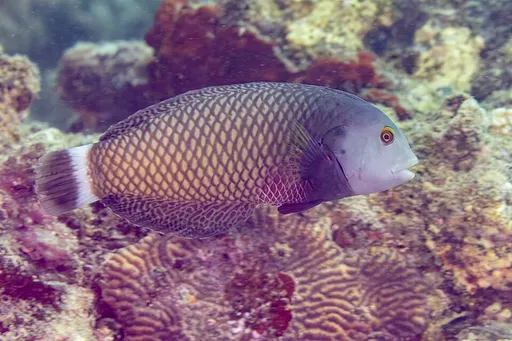
The dragon wrasse lives over sand, rubble, and broken coral where it forages by flipping stones to expose hidden prey. Juveniles drift near the bottom in a rocking, side to side motion that mimics a loose piece of algae. Adults claim a stretch of reef flat and dig a sand burrow where they sleep at night. It needs open bottom space and a sand bed at least 5 cm deep.
Good to know
Novaculichthys taeniourus is the only species in its genus and belongs to the wrasse family Labridae. Like most wrasses it starts life as a female and can change sex to male. Juveniles and adults look so different that they were once thought to be separate species.
Did you know
Its common name rockmover comes from its habit of turning over stones far larger than its own head to reach buried worms and crustaceans.
Common questions
What size tank does a Dragon wrasse need?
A Dragon wrasse needs at least 106 gal (400 L). It spends most of its time in the bottom.
What temperature and pH does a Dragon wrasse need?
A Dragon wrasse is comfortable at 73–81°F (23–27°C) with a pH of 8.1–8.4.
How big does a Dragon wrasse get?
An adult Dragon wrasse reaches about 11.8 in (30 cm).
Related species
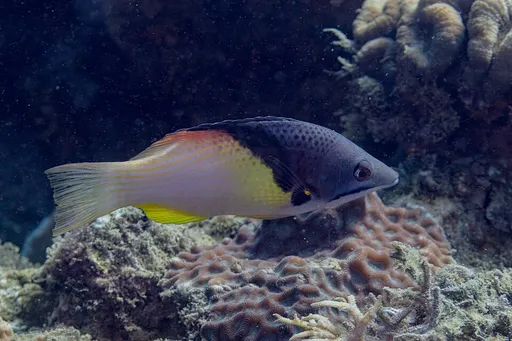 7.9 in (20 cm)90 gal (340 L)72–79°F (22–26°C)
Coral hogfish
Bodianus mesothorax
7.9 in (20 cm) · 90 gal (340 L)
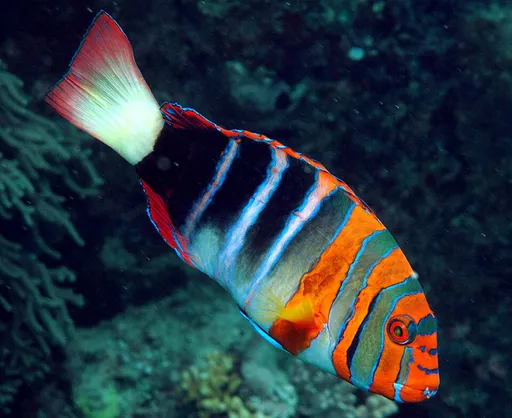 11.8 in (30 cm)125 gal (473 L)72–79°F (22–26°C)
Harlequin tuskfish
Choerodon fasciatus
11.8 in (30 cm) · 125 gal (473 L)
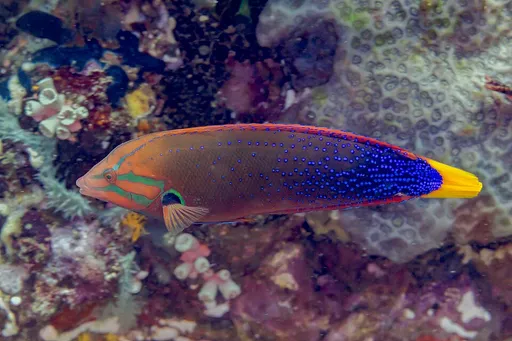 11.8 in (30 cm)150 gal (568 L)72–79°F (22–26°C)
Red coris wrasse
Coris gaimard
11.8 in (30 cm) · 150 gal (568 L)
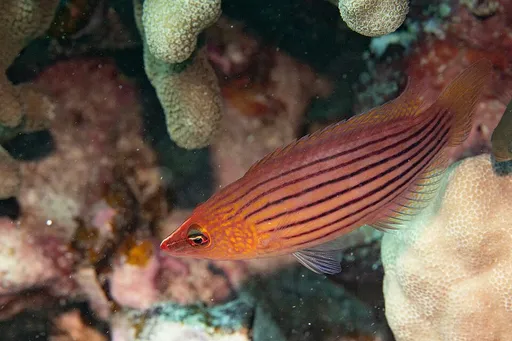 4.7 in (12 cm)55 gal (208 L)72–79°F (22–26°C)
Eightline wrasse
Pseudocheilinus octotaenia
4.7 in (12 cm) · 55 gal (208 L)
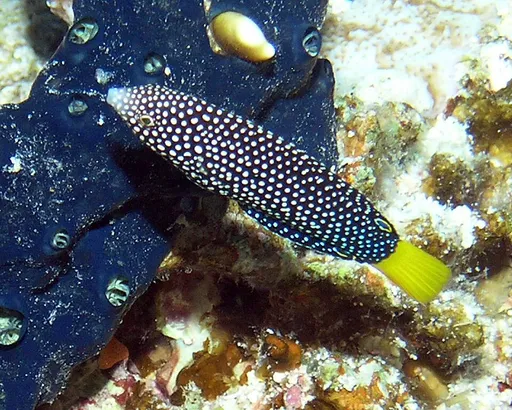 8.7 in (22 cm)90 gal (340 L)73–81°F (23–27°C)
Yellowtail tamarin wrasse
Anampses meleagrides
8.7 in (22 cm) · 90 gal (340 L)
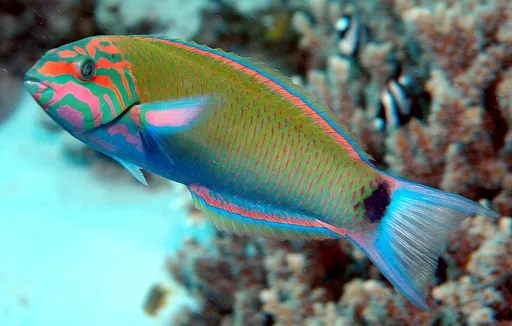 9.8 in (25 cm)125 gal (473 L)72–79°F (22–26°C)
Lunare wrasse
Thalassoma lunare
9.8 in (25 cm) · 125 gal (473 L)