Coral hogfish
Bodianus mesothorax
Also known as Eclipse Hogfish, Splitlevel Hogfish, Mesothorax Hogfish, Black-belt Hogfish
SaltwaterFish
Care at a glance
- Temperature
- 72–79°F
- 22–26°C
- pH
- 8.1–8.4
- Adult size
- 7.9 in
- 20 cm
- Minimum tank
- 90 gal
- 340 L
- Temperament
- Aggressive
- Social behavior
- Solitary
- Own kind
- One per tank
- Tankmates
- With caution
- Swim level
- Bottom
- Difficulty
- Medium
- Breeding
- No record
- Rarity
- Common
- Reef safe
- Reef safe with caution
- Family
- Labridae
- Origin
- Western Pacific and eastern Indian Ocean reefs, from the Andaman Sea to southern Japan, Fiji, and the Great Barrier Reef
Overview
As a juvenile it will pick parasites off tankmates, but do not expect that good behavior to last: adults are aggressive, territorial, and will bully smaller or more docile fish, so tankmates need to be chosen carefully and added before the hogfish if possible. It is reef safe with caution as a juvenile, but a full grown coral hogfish hunts snails, worms, small bivalves, crustaceans, and even small fish and ornamental shrimp with real efficiency, so it does not belong in a reef tank with anything it can swallow or crack open. Feed a varied carnivore diet of mysis, brine shrimp, krill, and chopped seafood.
In the wild
Ranges across the western Pacific and into the eastern Indian Ocean, from the Andaman Sea east to Fiji and south to the Great Barrier Reef, on reefs at 5–40 m though it rarely turns up below 20 m. Juveniles shelter in caves and crevices while adults range more openly over rubble and coral. In the aquarium it needs at least 340 litres (90 gallons) with a rockwork base full of caves plus open sand to dig through, since it spends much of the day rearranging rubble and substrate while hunting.
Good to know
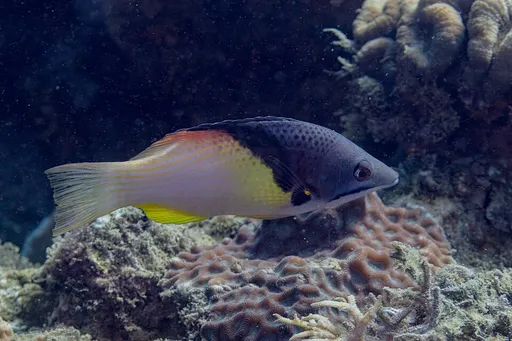
Bodianus mesothorax is a protogynous hermaphrodite: it starts life as a female, and a dominant female can change sex to male if the group's male is lost. Juveniles are burgundy with yellow spots; adults keep a burgundy face and a rosy yellow rear half, split down the middle by a black band, which is the source of the eclipse and split-level nicknames. Adults reach about 20 cm. Hogfish get their common name from this genus's habit of rooting through sand and rubble nose-first, much like a hog foraging in dirt.
Did you know
A young coral hogfish earns its keep by cleaning parasites off other fish in the tank, a helpful habit that fades as it matures into a bold, food-motivated predator that would just as soon eat a cleaner shrimp as accept its services.
Common questions
What size tank does a Coral hogfish need?
A Coral hogfish needs at least 90 gal (340 L). It spends most of its time in the bottom.
What temperature and pH does a Coral hogfish need?
A Coral hogfish is comfortable at 72–79°F (22–26°C) with a pH of 8.1–8.4.
How big does a Coral hogfish get?
An adult Coral hogfish reaches about 7.9 in (20 cm).
Related species
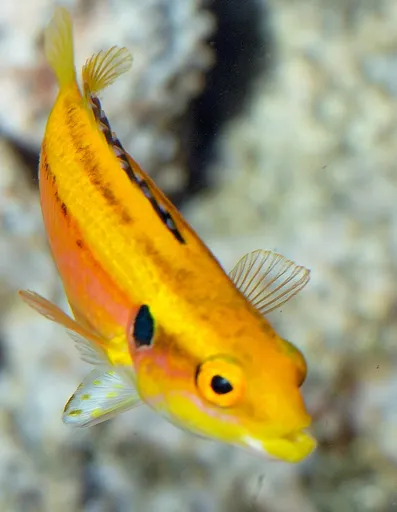 3.9 in (10 cm)30 gal (114 L)72–79°F (22–26°C)
Twospot hogfish
Bodianus bimaculatus
3.9 in (10 cm) · 30 gal (114 L)
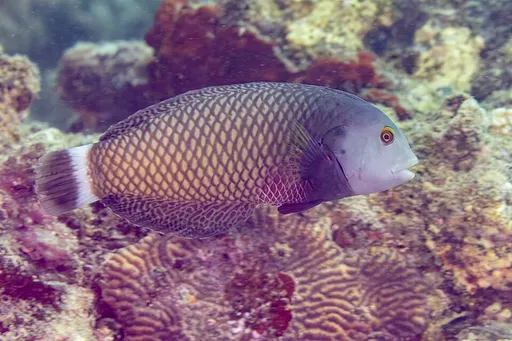 11.8 in (30 cm)106 gal (400 L)73–81°F (23–27°C)
Dragon wrasse
Novaculichthys taeniourus
11.8 in (30 cm) · 106 gal (400 L)
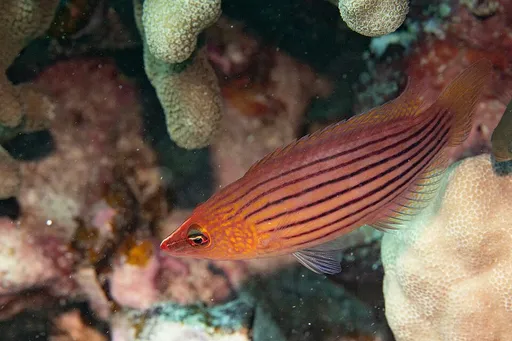 4.7 in (12 cm)55 gal (208 L)72–79°F (22–26°C)
Eightline wrasse
Pseudocheilinus octotaenia
4.7 in (12 cm) · 55 gal (208 L)
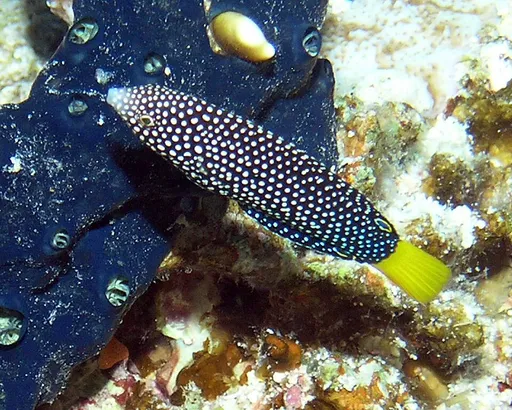 8.7 in (22 cm)90 gal (340 L)73–81°F (23–27°C)
Yellowtail tamarin wrasse
Anampses meleagrides
8.7 in (22 cm) · 90 gal (340 L)
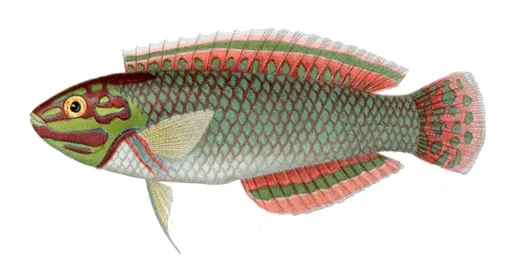 5.9 in (15 cm)70 gal (265 L)72–79°F (22–26°C)
Christmas wrasse
Halichoeres ornatissimus
5.9 in (15 cm) · 70 gal (265 L)
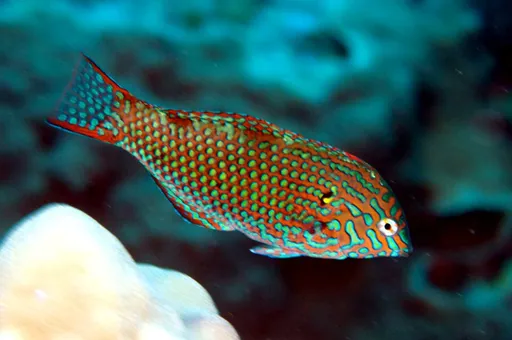 5.9 in (15 cm)90 gal (340 L)72–79°F (22–26°C)
Leopard wrasse
Macropharyngodon meleagris
5.9 in (15 cm) · 90 gal (340 L)